Who Buzzed: buzz & sporcle
- 18.00
- 4.8
- Installs
- 100.00K
- Price
- Free

Screenshots
Analysis by Reviewed
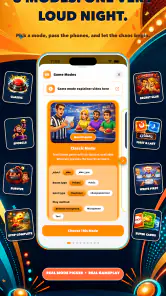
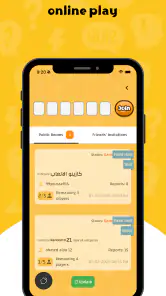
I enjoy trivia games most when they turn a quiet evening into a small event. That is the appeal I found in Who Buzzed: buzz & sporcle: it is built around shared play rather than solitary score chasing. The idea is simple enough to explain in seconds, but the combination of multiplayer questions, party buzzers, and guessing rounds gives a group several ways to compete without needing a complicated setup.
After spending time with it, I see it less as a replacement for every trivia app and more as a useful choice for people who want their phones to act as a lightweight game-night host. It is free to start, suitable for Everyone, and developed by Abdelrahman Sobhy. Its current version is 1.4.22, and it runs on Android 7.0 or later. Those details make it accessible to a broad range of players, although the real question is whether your group wants interactive party play or a quieter quiz experience.
What I looked for before recommending it
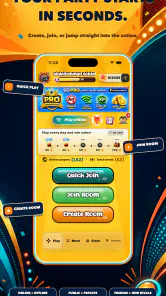
My first decision criterion was how quickly a group could begin. Party games often lose their energy when players have to create accounts, study instructions, or arrange too many devices. Here, the central idea is immediately understandable: someone answers, players react, and the group moves on to the next challenge. That matters when friends are already talking and nobody wants to pause the evening for a tutorial.
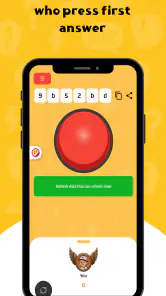
The second criterion was whether the game could keep several people involved. A standard trivia app can be enjoyable alone, but in a room it often turns into one person holding the phone while everyone else shouts answers. A buzzer-focused format changes that dynamic. It gives the group a reason to watch one another, respond quickly, and pay attention even when a question is not aimed directly at them.
I also considered variety. Repeating the same question-and-answer pattern can make a party game feel flat surprisingly quickly. The guessing elements help here because they ask for a different kind of participation. Instead of relying only on stored knowledge, players may need to judge, estimate, or read the room. That shift is valuable when one person is clearly stronger at traditional trivia than everyone else.
Finally, I paid attention to the practical trade-off between free access and optional spending. The game is free, with in-app purchases ranging from thirty-nine cents to five dollars and ninety-nine cents per item. I would treat those purchases as optional extras to evaluate carefully rather than as a reason to begin spending immediately. For a casual group, the best test is simple: play several sessions first and see whether the available experience already suits the occasion.
The first session is strongest when the group sets the tone
In my experience, the game works best when one person takes responsibility for starting the round and keeping everyone moving. That person does not need to become a formal host. They simply need to make sure every player understands when to buzz, when to guess, and when the group should accept the result and continue.
This small bit of organization is easy to overlook. Without it, the most confident player can dominate the room, while quieter friends hesitate or miss their chance. I found that a short agreement before starting—no shouting over the buzzer, no arguing every answer, and a quick decision when the group gets stuck—makes the experience much smoother than relying on the app alone to control the atmosphere.
A useful approach is to begin with a relaxed round rather than treating the first game like a championship. People need a moment to understand the rhythm of the questions and the timing of the buzzer. Once everyone knows what kind of reactions are expected, the competitive side becomes more enjoyable instead of stressful.
Where the party format genuinely wins
The clearest strength is social tension. In a solo quiz, a wrong answer disappears into your personal score. In this game, a fast response can change the mood of the entire group. Friends notice who is taking risks, who is waiting for clues, and who keeps surprising everyone with obscure knowledge. That shared reaction is something ordinary quiz apps rarely create.
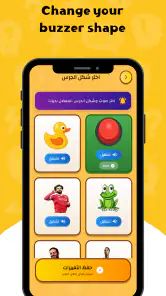
The buzzer idea also gives the game a stronger physical presence. Players are not just reading a screen; they are watching for an opening and trying to respond at the right moment. That makes it a natural fit for a living room, a small gathering, or a break between other activities. I would choose it over a conventional question bank when the main goal is conversation and laughter rather than quiet concentration.
The guessing rounds are another meaningful advantage. They can soften the gap between a trivia expert and a player who does not follow every subject. A person may not know a precise fact but can still make a clever estimate or recognize a pattern. That creates more opportunities for different personalities to contribute, which is important if you are inviting people with very different interests.
The best hidden strength is that it rewards group energy, not just raw knowledge. A player who listens carefully, notices hesitation, and chooses the right moment can remain competitive even without being the fastest person to recall facts. That makes the game more balanced in a mixed group than a strict speed quiz can be.
Three ways I would use it in real life
For a casual evening with friends, I would use short sessions rather than trying to play continuously for hours. Start while people are arriving, let everyone learn the format, and stop after the energy peaks. This keeps the game from becoming background noise. It is especially useful as a transition activity before dinner or while waiting for another part of the evening to begin.
For families, the Everyone rating makes it a more comfortable option to consider, but age suitability does not automatically make every round equally easy for every player. I would mix confident readers with younger or less experienced players and encourage teams if the group has a wide ability range. That approach keeps the focus on participation instead of making one child feel exposed by a difficult question.
For a small social gathering where not everyone knows one another, I would use the guessing side as an icebreaker. People can explain why they chose an answer, laugh at unexpected estimates, and learn something about how others think. That is more welcoming than starting with a highly specialized quiz that immediately rewards only the person with the narrowest expertise.
One less obvious use is a quick practice round before a larger party game. A group can use it to discover who reacts too early, who needs clearer instructions, and whether the room is comfortable with competitive play. That makes it a practical warm-up rather than merely the main attraction.
Where usual alternatives may fit better
I would not recommend this game automatically to someone who mainly wants a private knowledge test. If your ideal session involves headphones, careful reading, and improving your own score without interruptions, a solo trivia app is likely a better match. The party-buzzer design depends on other people being present and willing to participate, so it loses much of its special appeal when played as an isolated quiz.
It may also be the wrong choice for a group that prefers deep, subject-specific questions. A dedicated history, science, language, or sports quiz can offer a more focused challenge for enthusiasts. Who Buzzed: buzz & sporcle is more convincing as a broad social game than as a specialist examination tool.
Some groups may prefer a traditional board game or a physical buzzer set. Those alternatives can feel more substantial, especially when everyone wants a screen-free evening. They may also be easier to see across a large table. The advantage here is convenience: a phone-based game is easier to bring along and quicker to try, but it does not remove the need for good group management.
There is another trade-off with digital party play: the phone can become the center of attention in a way that is either helpful or distracting. If your group already spends the evening looking at separate screens, adding another phone-based activity may not create the shared feeling you want. In that situation, a physical game may be better even if it takes longer to set up.
I would also be cautious about choosing it for a very large gathering unless the room can clearly see and hear what is happening. The game’s social strengths are easiest to appreciate when players can follow the action. In a crowded environment, people at the edge may feel like spectators rather than participants, and the buzzer element can become harder to manage fairly.
What the free model means for switching
Moving from a normal trivia app to this one is not technically difficult, but the social cost is worth considering. You are not simply replacing one question bank with another. You are asking friends to change how they play: from taking turns reading answers to reacting quickly and accepting a more lively pace. A group that enjoys banter will probably adapt quickly. A group that dislikes interruptions may resist the format even if the questions themselves are enjoyable.
The free entry point makes experimentation easier. I would install it before a planned gathering, test the flow with one or two people, and decide whether the instructions feel clear enough for the rest of the group. That small rehearsal can prevent the common party-game problem where the host is learning the rules at the same time as everyone else.
Optional purchases deserve a measured approach. Because individual items can cost from thirty-nine cents up to five dollars and ninety-nine cents, I would avoid assuming that buying more content is necessary for a good first impression. Start with the free experience, identify what your group actually enjoys, and only then consider whether an optional item adds enough value for your style of play.
The game has reached over one hundred thousand installs and holds an average rating of 4.8 from around one thousand nine hundred ratings, with eighteen written reviews shown alongside that feedback. Those figures suggest that the party concept is connecting with many players, but they should not replace your own test. A high average can tell me that the general idea is well received; it cannot tell me whether my particular friends enjoy fast buzzing or guessing rounds.
Small habits that improve the experience
First, keep the phone visible to the people who need to follow the question, but do not let one player become the permanent owner of the device. Rotating that role gives everyone a chance to participate fully and reduces the feeling that one person controls the pace.
Second, decide how to handle disputed answers before the first competitive round. Trivia arguments can be funny once, but they quickly drain momentum when every point becomes a debate. I prefer a quick group vote or a host decision, followed by moving on. The goal is to preserve the rhythm rather than prove a legal case for every answer.
Third, use teams when the group has a wide range of ages or confidence levels. Teams make the buzzer mechanic less intimidating and let players talk through guessing challenges. They also create a useful compromise for people who enjoy trivia but dislike being singled out for a wrong answer.
Fourth, pay attention to the quiet players. A fast party format naturally favors people who speak first, not always those with the best ideas. Give everyone a chance to answer and avoid treating hesitation as a lack of knowledge. This is not a setting inside the game, but it has a major effect on whether the session feels inclusive.
Finally, stop before the game becomes repetitive. The strongest sessions I imagine for this title are compact, energetic, and surrounded by conversation. More rounds are not automatically better. A group that finishes wanting another game is more likely to return than one that keeps playing after the fun has faded.
Who should choose it, and who should skip it
I recommend it to friends who want a free multiplayer trivia game that can create immediate interaction. It is particularly suitable for casual hosts, families looking for an accessible group activity, and players who like the pressure of buzzing before someone else does. The guessing component makes it more flexible than a pure recall contest, while the Everyone rating keeps it approachable for mixed-age groups.
I would steer solo players toward a different kind of trivia app if personal progress is their main motivation. I would also suggest a focused quiz for specialists, and a physical board or buzzer game for groups that are deliberately avoiding phones. The choice depends less on whether you enjoy trivia and more on whether you want trivia to be a shared performance.
There is also a personality fit to consider. Competitive friends may love the quick reactions, but highly argumentative players can turn the buzzer into a source of friction. If your group struggles with interruptions or takes every score seriously, establish friendly rules first or choose a slower alternative.
My recommendation after weighing the trade-offs
My overall view is positive, with one clear condition: use it as a social party game, not as a universal trivia replacement. Abdelrahman Sobhy has focused the experience on the moments that happen between questions—the rush to buzz, the surprise of a guess, and the laughter when someone answers with total confidence and misses badly. That focus gives it a distinct reason to exist.
The free price makes it easy to try, and the broad device support means many Android users can test it without needing a recent phone. The optional purchase range means I would still keep an eye on spending, especially if children are using the device. For most groups, however, the sensible path is to play first and decide later whether anything extra is worth buying.
My recommendation is to download it when you have a real group ready to play. Give everyone a short explanation, use teams if the abilities are uneven, and treat the first session as a lively experiment rather than a serious tournament. If your friends respond to the buzzer and enjoy guessing together, this can become an easy repeat choice for gatherings. If they prefer quiet solo quizzes or screen-free competition, you will probably be happier with an alternative built around those priorities.
In short, this is a focused, friendly trivia game with enough social friction to make ordinary questions feel like an event. It wins through participation, not depth or formality. For the right group, that is exactly the point.
Pros
- Quick
- bite-sized quizzes are ideal for short breaks.
- Wide topic variety keeps the experience from feeling repetitive.
- Simple interface makes starting a quiz fast and effortless.
- Competitive scoring adds motivation for trivia fans.
- Useful for discovering new facts while playing casually.
Cons
- Some quizzes may feel too easy for experienced trivia players.
- Question quality and difficulty can vary between categories.
- Online features may depend heavily on an active player community.
- Frequent play can make repeated topics feel less fresh.
- Ads or optional purchases may interrupt the free experience.

- Category
- Trivia
- Version
- 1.4.22