Where Logic?
- 45.00
- 4.1
- Installs
- 5.00M
- Price
- Free

Screenshots




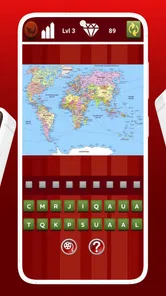



Analysis by Reviewed
I usually judge a quick-play puzzle game by whether its mood makes me want to pause and think rather than tap through on autopilot. Where Logic? caught my attention as a trivia game built around reasoning, and its first impression is deliberately simple: it asks for attention without making the screen itself feel like another puzzle. I found that restraint useful. It lets the challenge take center stage, though players looking for a story-rich world or elaborate presentation may find the experience plain.
A clear look that keeps the focus on the puzzle
With a minimalist interface and an easy-to-read palette, the game feels suited to short sessions in the middle of an ordinary day. The visual approach supports its central appeal: logic over general knowledge. I’d reach for it while waiting for a bus or taking a break, when I want something more absorbing than scrolling but don’t have time to settle into a long game. A practical tip is to stop after a puzzle that has taken real concentration; switching tasks while frustrated can make a small brain-teaser feel less satisfying than it is.
The quiet presentation is a trade-off rather than an automatic win. It avoids clutter, but it does not give me much of a sense of place or a strongly developed visual identity. That makes the game easy to return to, yet players who choose trivia for colorful themes, character-led settings, or a strong audiovisual spectacle may prefer a more theatrical alternative. Here, the atmosphere comes mostly from the act of working something out.
How the pace fits everyday play
I like puzzle games that leave a little room to think instead of demanding constant rapid answers. That slower mental rhythm works well when I’m playing alone and can give a question my full attention. In a shared setting, it can also make a casual conversation starter: I can show someone a puzzle and compare how we approached it, rather than needing a full multiplayer session. The limitation is that a group looking for lively rounds, quick scoring, or social competition may be better served by a conventional quiz game.
When a puzzle resists an obvious answer, I’d recommend reading it once for the literal details, then again to look for assumptions the wording encourages. That small reset is especially useful in a game whose central promise is reasoning rather than simply recalling facts. It also helps keep the experience fair: if I’m stuck, I can test my interpretation instead of guessing randomly. I wouldn’t choose this as background entertainment, because divided attention can make a logical question feel harder for the wrong reason.
Who will get the most from it
Where Logic? is a better fit for people who enjoy pausing over a question and testing possibilities than for players who want a narrative campaign or a fast stream of trivia facts. It is free to play, and Canopy Solutions has developed it as an approachable option for curious teens and adults; its Teen content rating is worth keeping in mind when choosing a game for a younger player. The current version is 4.7.0, and the game runs on Android 5.0 or later.
Its audience is sizable, with more than 5 million installs and an average rating of 4.1 from around 131,000 ratings. Those figures suggest that it has found an audience, but they don’t tell me whether its particular style suits you. I’d use the rating as a reason to consider it, not a guarantee that every puzzle will land. If you prefer conventional quizzes with broad subject categories, or need a game that explains every answer in a teaching-focused way, check that those priorities match what you want before settling in.
More From Our News Desk

 Instagram
’s Power Comes From Its Place in Your Phone
A close look at how Instagram turns Meta’s reach, recommendation systems and everyday camera habits into durable platform power—and what that costs users.

 Gmail
Gmail in a Busy Inbox: Who Benefits Most?
From first account to crowded workday, Gmail earns its place through dependable search and flexible sorting—but its best fit depends on how much inbox maintenance you can tolerate.

 Prime Video
Switching to Prime Video: What Changes in Your Viewing Routine
Prime Video can make a compelling second home for streaming, but switching means learning a different catalog, rental layer, and route from browsing to playback.

 Universal TV Remote Control
 Works Best as a Reliable Backup
A phone remote earns its place through quick setup and reliable habits. Here is how to get more from Universal TV Remote Control—and where its limits show.

 Weather - By Xiaomi
Weather by Xiaomi Review: Clear at a Glance, Less Clear Up Close
Xiaomi’s weather app makes everyday forecasts quick to scan, but its calm surface can leave useful details and recovery paths harder to find than they should be.

 X
X Under Pressure: Can It Recover When Posting Goes Wrong?
A resilience-focused review of X, examining setup, mistaken posts, interruptions, weak connections, and the gaps that matter when recovery needs to be dependable.
Latest News



As a small everyday test, I’d open it during a short break, tackle one puzzle without rushing, and notice whether the process feels enjoyable even before I solve it. That distinction matters: some players love the moment of deduction, while others mainly want the reward of a correct answer. This game is strongest for the first group. It can make an idle few minutes feel purposeful, but it is not the right pick when I want a polished fictional setting, a loud party atmosphere, or a quiz built around memorized facts.
When I first stumbled upon Where's Logic?, I was intrigued. The name itself piques curiosity, doesn’t it? So, I downloaded it, eager to see if this app could tickle my brain cells in the right way. And let me tell you, it didn’t disappoint.
First Impressions: The User Interface
Right off the bat, the user interface of Where's Logic? is a breath of fresh air. It sports a clean, minimalist design that makes navigation a breeze. I appreciate an app that doesn’t bombard me with too many elements on the screen, and this one gets it just right. The color palette is easy on the eyes, and the icons are intuitive, making my journey through the app smooth and enjoyable.
The Gameplay Experience
Now, let’s talk about the main event – the gameplay. Challenging is the word that comes to mind. The app offers a variety of puzzles that range from easy to mind-bendingly difficult. Each level presents a unique challenge that requires you to think outside the box. I found myself scratching my head more than once, but in the best way possible. The satisfaction of cracking a tough puzzle is unmatched!
What I particularly love is the diversity in the types of puzzles. Whether it’s a logic grid, a number puzzle, or a word game, Where's Logic? has it all. This variety keeps the app from getting stale, ensuring that there’s always something new to look forward to.
Engagement and Replayability
The game’s replayability factor is worth mentioning too. With regular updates and new levels frequently added, it keeps me coming back for more. The developers have done a stellar job in maintaining a balance between challenging and entertaining content, which is crucial for keeping users engaged over the long term.
Moreover, there’s a competitive edge to the app with its leaderboard feature. I found myself striving to beat my own scores and climb up the ranks, adding an extra layer of engagement to the overall experience.
Final Thoughts
In conclusion, Where's Logic? is a fantastic app for anyone who loves a good puzzle. It’s not just about passing the time; it’s about stretching your brain and enjoying every minute of it. The user-friendly interface, combined with the variety of challenging puzzles, makes it a must-have for puzzle enthusiasts. So, if you’re ready to put your logical thinking to the test, give this app a try. You won’t regret it!
Where Logic? Frequently Asked Questions
What kind of game is Where Logic?, and what should I expect from it?
Where Logic? is a trivia game built around reasoning rather than specialized knowledge. Its store summary puts the idea simply: “No need to be smart - you have to be logical!” Expect a game focused on thinking through challenges and finding solutions, rather than a conventional quiz about facts. It may suit players who enjoy using logic to work out answers.
Who developed Where Logic?, and which devices can run it?
Where Logic? is a trivia game developed by Canopy Solutions. It is available for Android devices, with a minimum requirement of Android 5.0. The game’s concise premise focuses on reasoning rather than needing specialized knowledge, so it may appeal to players looking for a quick mental challenge. Check that your device meets the operating-system requirement before downloading.
Is Where Logic? free to download?
Where Logic? is free to download, so players can try its logic-focused puzzles without paying an upfront purchase price. The game also offers in-app purchases, which are optional. Those purchases might include additional hints, new puzzle packs, or cosmetic items. The core game is playable without spending money, while optional purchases offer extra content and convenience.
What is Where Logic?
Where Logic? is a thought-provoking puzzle game that challenges players to use logic and reasoning to solve complex puzzles. It offers a series of levels with increasing difficulty, requiring players to think critically and strategically to progress. The game is available for Android devices, making it accessible to a wide audience of puzzle enthusiasts. Its short store description is simply “Where Logic?” and its summary emphasizes that players do not need to be smart—they need to be logical.
How does the gameplay of Where Logic? work?
In Where Logic?, players are presented with a variety of puzzles that test their logical thinking and problem-solving skills. Each level contains unique challenges that require players to analyze patterns, sequences, and relationships to find solutions. The game encourages creative thinking and offers hints to assist players who may need a little help to advance through tougher levels.
Pros
- Engaging puzzle challenges.
- Simple and intuitive interface.
- Diverse levels for all ages.
- Offline play available.
- Educational content included.
Cons
- Ads can be intrusive.
- Limited free levels.
- In-app purchases required.
- May crash on older devices.
- No multiplayer option.