Walkers Attack
- 2.77K
- 4.1
- Installs
- 1.00M
- Price
- Free
Screenshots
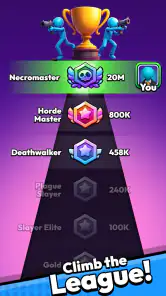
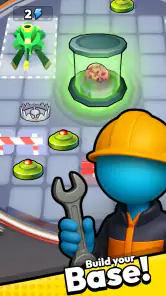
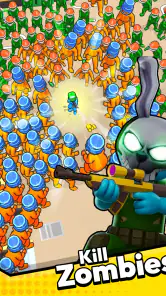
Analysis by Reviewed
Walkers Attack is the kind of action game I can open for a quick burst when I want immediate pressure rather than a long tutorial or a complicated control scheme. Its central appeal is easy to understand: I move through a world overrun by dead walkers, survive the danger in front of me, and keep exploring for the next short-term objective. That simplicity is useful, but it also means the game lives or dies by how well its goals, unlocks, and difficulty keep me interested after the first few sessions.
After spending time with it, my impression is that this is best approached as a compact mobile challenge rather than a deep role-playing experience. It is free to download, made by VOODOO, and belongs firmly in the action category. The game has already passed over a million installs, while its average sits at 4.1 from around 40 thousand ratings. Those figures suggest a broad audience, but they do not change the important question: will its survival-and-exploration loop suit the way you like to play?
How the first goals shape the opening hours
The early appeal comes from having a clear reason to keep moving. I am not asked to learn a large collection of menus before anything happens. The threat is visible, the route ahead matters, and the immediate goal is usually more motivating than a distant promise of mastery. That makes Walkers Attack approachable for someone who wants action first and explanation second.
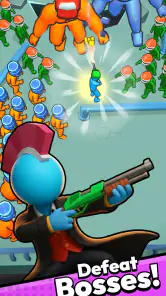
In the opening stages, I pay attention to three things: where the walkers are gathering, how much room I have to maneuver, and whether pushing forward is safer than hesitating. This creates a useful rhythm. I make a quick decision, deal with the immediate danger, and then reassess the next stretch. The game’s early goals work because they turn movement into a series of small choices instead of making exploration feel like empty travel.
That design is particularly suitable for short sessions. If I have a few minutes while waiting for an appointment, I can start playing without needing to remember a complicated plot or rebuild a long-term strategy from scratch. The action is readable quickly, and the world’s dead-walker theme gives every new area a basic sense of risk.
At the same time, players expecting a large narrative campaign should adjust their expectations. The survival premise provides atmosphere and direction, but I would not choose this game mainly for character drama or elaborate storytelling. Its strongest early goal is practical: stay alive, keep advancing, and learn how the game wants me to respond under pressure.
What I watch for before committing to a run
One useful habit is to avoid treating every forward step as automatically correct. When enemies close in, rushing can create a worse position than taking a moment to read the space. I found that the game becomes more manageable when I think in terms of escape routes rather than only attacking whatever is closest. This is a small change in mindset, but it makes the opening feel less random.
I also recommend using the first attempts as observation runs. Instead of spending every move trying to reach the furthest possible point, I look for patterns in how danger approaches and where the game gives me room to react. That approach helps separate a genuine difficulty spike from a mistake caused by moving without a plan.
This is one of the less obvious strengths of the design. The game can look like a straightforward walker-clearing exercise, yet the useful skill is often positioning. If I focus only on the visible enemies, I can miss the larger problem: being pushed into a narrow or unsafe area with no comfortable way to recover.
Progress signals and the feeling of getting better
For a game built around repeated survival attempts, progress needs to be noticeable even when a run ends badly. Walkers Attack benefits when I can identify a reason for improvement in my next attempt. Sometimes that reason is better movement, sometimes it is knowing when not to take a risky route, and sometimes it is simply understanding the pace of an encounter before it becomes overwhelming.
The most satisfying progress is not always a dramatic unlock. Reaching a little farther, handling a familiar threat with less panic, or preserving more control during a crowded moment can make the next session feel worthwhile. I like that kind of progress because it belongs to the player, not just to a number on a screen. It rewards attention and repetition rather than requiring immediate spending.
Still, this is also where expectations matter. Players who need a constant stream of visible rewards may find the loop less persuasive once the basic controls and threats become familiar. A survival action game can make improvement feel subtle, and subtle progress is easier to overlook than a new item or a large upgrade screen.
My advice is to set personal milestones. I might aim to complete a section without making a panic move, survive a difficult encounter while keeping an escape path open, or reach a familiar point with fewer errors. These goals give each attempt a purpose, especially when the game’s broader progression does not feel as immediate as a traditional level-based adventure.
Why unlocks matter more than simple completion
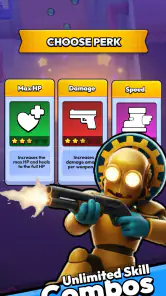
Unlocks are most effective when they change how I approach the next challenge, not merely when they give me another reason to tap through a menu. In Walkers Attack, I judge progression by whether it creates fresh decisions: can I take a more aggressive route, survive a tighter situation, or explore with greater confidence? If an unlock only makes the same sequence feel slightly longer, its value is limited.
That is an important trade-off for this type of mobile action game. A clear progression path can keep me returning, but too much dependence on advancement can make early attempts feel like preparation rather than play. I prefer when the game lets basic skill matter from the start, with progress supporting good decisions instead of replacing them.
For new players, I would avoid assuming that the quickest visible reward is always the best long-term choice. The more useful question is whether a progression step helps with the situation that actually ends my runs. If I usually lose because I get surrounded, I should value anything that improves control of space or gives me a safer response, rather than chasing a benefit that looks impressive but does not address that weakness.
Difficulty, pacing, and the point where patience is tested
The difficulty curve is central to whether Walkers Attack remains enjoyable. Early pressure needs to teach me the game’s language without making every mistake feel final. Later pressure should test what I have learned rather than simply flooding the screen with danger. The best moments arrive when I can look back at a failed attempt and understand the decision that caused it.
In my experience, the pacing works best when I stay active but deliberate. Moving too slowly can allow danger to accumulate, while moving too quickly can remove the room I need to react. That tension gives the action a useful pulse. I am not just waiting for an opening, and I am not mindlessly charging ahead; I am trying to maintain enough space to make the next decision.
There is a clear limitation here for players who dislike repetition. Survival games naturally ask me to replay situations, and Walkers Attack can feel demanding if I want every attempt to produce a completely new experience. Repetition is acceptable when it teaches something, but it becomes friction when a failed run feels like a reset without a meaningful lesson.
I found the difficulty easier to appreciate when I stopped measuring success only by distance. A run can be valuable if it teaches me how a particular encounter develops or exposes a bad habit in my movement. That does not remove frustration, but it turns failure into information. If I am unwilling to repeat a section and adjust my approach, the game’s challenge will probably feel more irritating than rewarding.
A realistic everyday session
Imagine opening the game during a short train ride. I have enough time for a few attempts, but not enough for a long story chapter or a multiplayer match that demands a fixed commitment. Walkers Attack fits that moment because I can focus on immediate survival, make progress through repeated tries, and stop when I reach a natural break.
The same session can expose its weakness. If I lose near a promising point, I may feel tempted to restart immediately, only to repeat the same mistake because I am playing impatiently. My practical solution is to pause mentally after a failure and name the problem before trying again: poor positioning, rushing, or failing to preserve an escape route. That small reset makes short sessions more productive.
This is also why I would not recommend it as background entertainment. The action asks for attention, and the difference between a controlled move and a panic move can decide the result. It is a good companion for a focused break, not for playing while watching another show or constantly switching between tasks.
Retention pressure and the role of optional spending
Walkers Attack is free, which lowers the barrier to trying it. The game also includes in-app purchases ranging from $0.99 to $144.99 per item, so anyone who enjoys the loop should decide early how they want to handle optional spending. I personally prefer treating purchases as a convenience rather than as part of the basic skill curve.
The wide price range is worth keeping in mind because free action games can create pressure through repeated attempts, progression delays, or the desire to recover quickly after a setback. Even when I can continue without paying, the temptation to spend may become stronger if I am focused on reaching the next milestone. My recommendation is simple: play long enough to decide whether the core movement and survival loop are enjoyable before considering any purchase.
There is a meaningful difference between retention and enjoyment. A game can make me return because I dislike leaving a goal unfinished, but that does not necessarily mean the moment-to-moment play is satisfying. Walkers Attack works best when I come back because I want to improve a decision or explore further, not because I feel trapped by a progress bar.
Parents and younger players should also note that the content rating is Teen. That makes it more suitable for older players than for children, and the presence of in-app purchases is another reason to use appropriate device controls if someone else can access the account. The game’s free entry is convenient, but free does not mean cost-free if spending is left unmanaged.
Who should play it and who should skip it
I would recommend Walkers Attack to players who enjoy compact action loops, repeated survival attempts, and the satisfaction of learning a dangerous route. It is a good fit if you like games where positioning and timing matter more than reading a large amount of dialogue. It also suits people who want something easy to start but capable of creating tension within a short session.
I would skip it if my priority were a deep zombie story, a large strategic management layer, or a calm exploration game with little pressure. I would also look elsewhere if I dislike replaying failed sections or if I need every session to offer a major new unlock. The game’s appeal depends on accepting repetition as part of the learning process.
Compared with slower survival alternatives, this feels more immediate and less concerned with long-term resource planning. Compared with large action adventures, it is lighter and easier to pick up, but it does not offer the same sense of a broad journey. That makes the choice straightforward: choose Walkers Attack for focused walker survival, not as a substitute for a full-scale campaign or a detailed survival simulator.
My progression verdict
Walkers Attack sustains play most effectively when its goals give me a reason to move, its challenges teach me to manage space, and its progression supports improvement without doing all the work for me. The early hours are accessible, and the action is direct enough for casual sessions, yet there is more judgment involved than the simple premise might suggest.
Its main weakness is that the retention loop can lose force if I do not enjoy repetition for its own sake. The game needs me to bring some of the motivation: setting a better personal target, studying why a run failed, and resisting the urge to rush through a familiar danger. Players looking for constant novelty may find that demanding.
The current version is 1.22.0 and supports devices running Android 8.0 or later. Those practical details make it easy to place among modern mobile options, but the real decision remains personal. I would install it if I wanted a free action game with a dead-walker setting, quick starts, and a challenge built around surviving one decision at a time.
My final view is positive but measured. Walkers Attack is strongest as a focused pick-up-and-play survival game, especially when I treat each attempt as practice rather than a simple win-or-lose test. It is not the right choice for everyone, but if you enjoy tense movement, gradual mastery, and short sessions that can become surprisingly demanding, I think it is worth trying before deciding whether its progression has enough staying power for you.
One final tip is to judge the game after several thoughtful attempts rather than after the first impression. The opening tells me whether the controls and theme appeal to me; the later sessions reveal whether I genuinely enjoy learning the pacing. If that learning process feels rewarding, the free entry gives Walkers Attack a fair chance to earn a place in my regular rotation.
Pros
- Simple controls make it easy to start playing immediately.
- Short missions fit well into quick gaming sessions.
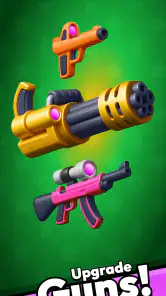
- Weapon upgrades add variety to combat strategies.
- The post-apocalyptic setting creates a recognizable atmosphere.
- Progression rewards regular play with new survival options.
Cons
- Repetitive enemy encounters can make later missions feel predictable.
- Energy or waiting systems may slow progress between sessions.
- Some upgrades may require significant grinding to unlock.
- The small-screen controls can feel crowded during intense fights.
- Performance may vary on older Android and iOS devices.
- Category
- Action
- Version
- 1.22.0