The Office: Somehow We Manage
- 5.87K
- 3.4
- Installs
- 1.00M
- Price
- Free

Screenshots



Analysis by Reviewed
The Office: Somehow We Manage is the kind of mobile game I open when I want a familiar cast, a little workplace comedy, and progress that keeps moving while I am doing something else. Developed by East Side Games Studio, this free simulation game puts Michael Scott and the Dunder Mifflin Scranton team at the center of an idle business routine. It uses the world of The Office as its main attraction, but the real question is whether the idle structure remains enjoyable after the novelty of seeing those characters wears off.
My short answer is that it works best as a relaxed, low-attention game rather than as a deep management simulator. I enjoyed the steady loop of checking the office, collecting cash, improving activity, and returning later to see what had changed. At the same time, the game can feel repetitive, and its in-app purchase range means patient players and spenders may experience the same progression very differently. That makes it worth understanding the rhythm before deciding whether it belongs on your phone.
How the Scranton office turns into an idle game
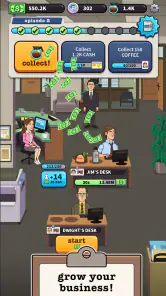
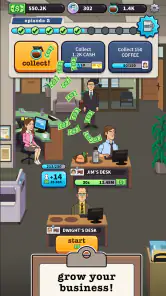
The basic appeal is easy to understand. Instead of controlling every moment of a business simulation, I let the office generate progress and then step in to collect the results, improve the operation, and prepare it for the next stretch. This is a much lighter commitment than a traditional strategy game. I do not need a long uninterrupted session, and I can usually make meaningful progress during short visits.
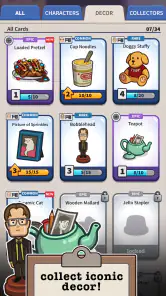
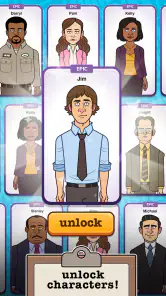
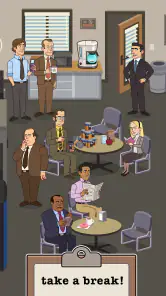
The familiar setting gives those visits more personality than a generic cash-making simulator. Michael Scott and the Dunder Mifflin team make the office feel like a playful version of a workplace I already recognize from television. The humor and character connection are important because the underlying activity is intentionally repetitive. Without that licensed setting, the same cycle would probably feel much more anonymous.
I would describe the game as a casual simulation with idle mechanics, not as a full office-management sandbox. The emphasis is on keeping the operation moving and making sensible improvements over time. Players looking for detailed staffing schedules, complicated logistics, or a large set of strategic systems may find the experience too streamlined. Players who like watching numbers rise and checking in on a familiar fictional workplace will understand the appeal quickly.
It is free to download, which makes trying it straightforward. The content rating is Teen, so it is not presented as a children’s game. On Android, the listed minimum requirement is version 7.0, making it accessible to many older devices. The current version is 1.46.1, and the game has passed one million installs, while its average store rating sits at 3.4 from roughly twenty-six thousand ratings. Those figures suggest a sizeable audience but also a noticeably mixed reception, which matches my view: the concept is inviting, but the long-term loop will not suit everyone.
What a normal play session feels like
A realistic use case is a short break during the day. I might open the game while waiting for an appointment, collect the cash that accumulated, apply a couple of improvements, and close it again. Later, I can return to see whether the office has reached another useful milestone. This makes it a better companion for scattered spare moments than for a single long evening of focused play.
The important habit is to avoid treating every visit as a demand for constant optimization. Idle games can become tiring when I feel obliged to check them repeatedly. Here, I get more enjoyment when I decide in advance that I will make a few purposeful changes and then leave the office alone. That approach keeps the game from turning into another notification-driven chore.
One useful way to play is to separate progress decisions from collection. Rather than immediately spending every resource as soon as I receive it, I first look at which improvement will make the next few visits smoother. This is a small change in routine, but it helps me feel that I am managing the office instead of simply tapping the most obvious button. It also makes the limited strategic layer more satisfying.
Progression is comfortable at first, then asks for patience
The opening stretch is the strongest part for me because each action seems to matter. The office starts to feel busier, progress arrives regularly, and the recognizable characters give ordinary upgrades a reason to exist. That early momentum is useful for learning the game without needing a separate tutorial manual or a complicated explanation of its systems.
Over time, the same structure becomes more demanding of patience. Idle games depend on waiting, and this one is no exception. When progress slows, I have to choose between leaving the game running in the background of my routine, returning more often, or considering an optional purchase. None of those choices is automatically bad, but the pressure becomes more noticeable once the initial excitement fades.
This is where expectations matter. If I want a game that constantly introduces new tactical problems, this is not the right fit. If I enjoy a gradual sense of accumulation, the slower sections can be relaxing. The game gives me a reason to return, but it does not always give me a fresh reason to think deeply. That difference separates it from more involved management games.
A practical tip is to use the game as a background activity rather than making it the main event. I get more value from checking it between other tasks than from trying to force a long session. The idle format is designed around that kind of rhythm, and pushing against it only highlights the repetition.
Spending, fairness, and the limits of comparison
The game is free, but it includes optional in-app purchases ranging from $0.99 to $99.99 per item. That is the central spending fact I would want to know before installing it. The range leaves room for very small purchases as well as much more expensive ones, so I would approach the store carefully and decide on a personal limit before playing for a long time.
I do not see the purchase structure as an automatic reason to reject the game. A free idle title needs some way to support development, and a player who treats purchases as optional may be perfectly comfortable. The concern is the relationship between waiting and spending. Whenever progress slows, the presence of paid options can make patience feel less rewarding, especially for someone who has already become invested in the characters and routine.
For me, fairness depends on the player’s goal. If the goal is to enjoy the office theme and make gradual progress, spending is easier to avoid. If the goal is to move quickly or remove every point of friction, the free route may feel less satisfying. I would not recommend buying anything during the first session. It is better to learn how quickly the normal loop feels, then decide whether the game remains enjoyable without acceleration.
Parents and players sharing a device should also remember that the title carries a Teen content rating and offers purchases. That does not tell me how any individual will experience the game, but it is enough reason to review device-level purchase controls before handing it to someone else. A simple spending boundary is especially useful because the highest listed item is far removed from the price of a typical one-off mobile game.
Why it is not a competitive fairness test
I would not judge this title by the standards of a competitive multiplayer game. Its main appeal is personal progression through a licensed setting, not proving that one player is more skilled than another in a shared contest. That reduces some fairness concerns because there is no need for me to compare my office directly with a rival player’s office to enjoy the basic loop.
Still, spending can affect the feeling of achievement even in a mostly personal game. A player who pays to move faster will naturally experience milestones sooner than someone who waits. That does not make either approach invalid, but it changes what progress means. I get the most satisfaction when I treat my own office as the comparison point: am I making sensible improvements, and am I enjoying the routine?
This also explains why a traditional strategy game may be a better alternative for some readers. A deeper management title usually rewards planning, timing, and reacting to changing conditions. This game is more forgiving and more passive, which is convenient but less intellectually demanding. Conversely, a generic idle game may offer a stronger progression system but lack the character connection that makes this one pleasant to revisit.
Who should play it, and who should skip it
I would recommend it to fans of The Office who want a gentle mobile activity rather than a serious business simulator. It is also a reasonable choice for players who enjoy idle progression, short sessions, and collecting the feeling of an expanding operation without needing to master complex controls. The familiar Scranton setting gives the routine a warmer personality than an ordinary production-themed game.
I would be more cautious if you dislike waiting, repeated collection, or optional purchase prompts. The game is also a poor match for anyone seeking a detailed simulation in which every employee, schedule, and business decision has a meaningful consequence. Its simplified approach is intentional, but that simplicity can feel thin once the first hours of discovery are over.
It may also disappoint players who expect the television license alone to provide constant comedy. The setting helps, but it cannot replace engaging progression forever. I found that the game worked when I accepted it as a small daily diversion, not when I expected a new episode’s worth of entertainment every time I opened it.
Small decisions that improve the experience
My first recommendation is to establish a no-spend trial period. Play long enough to understand the normal pace before deciding whether any purchase would genuinely improve your enjoyment. Because the available items range from under a dollar to nearly one hundred dollars, impulse decisions can create a very different experience from the one you intended to have.
My second recommendation is to make upgrades with a time horizon in mind. Ask which choice will help during the next few check-ins rather than choosing only the most visible improvement. This makes the limited management layer feel more deliberate and reduces the sense that I am simply clearing buttons whenever they appear.
Third, I would avoid opening the game solely because I feel obligated to collect something. The idle format is most comfortable when it fits around my day. If I turn it into a strict schedule, the relaxed office theme starts to work against itself. The game is better as a low-pressure habit than as a task list.
Finally, I would judge the title by the quality of its middle stretch, not just its opening. The first encounters with the office and its progression are naturally appealing to a fan. The more useful test is whether I still enjoy returning when the improvements take longer and the actions become familiar. That is the point at which the game either becomes a comfortable routine or starts to feel like background noise.
What remains important before downloading
The developer is East Side Games Studio, and the game was released on January 26, 2022. Its continued presence in the store and its audience of more than one million installs show that the concept has found a substantial group of players. The mixed average, however, is a useful reminder not to confuse recognition of the television brand with universal approval of the idle format.
Android users should check that their device meets the listed minimum operating-system requirement of 7.0. The game is free to start, but the purchase range deserves attention from anyone managing a family device or a strict entertainment budget. Those are the practical questions I would settle before spending time building a long-term routine around it.
I would also decide what kind of satisfaction I want. If I want quick, visible progress in short visits, the game has a clear advantage over a demanding strategy title. If I want rich decision-making, a more traditional simulation is likely a better use of my time. If I want a purely passive idle game, the licensed characters may be enjoyable but may not justify staying after the novelty has passed.
My verdict on the Scranton routine
The Office: Somehow We Manage succeeds when its familiar workplace setting and easy idle rhythm work together. I like it as a casual check-in game: collect progress, make a thoughtful improvement, enjoy the character-driven atmosphere, and leave before the repetition becomes too obvious. It is accessible, free to begin, and well suited to small gaps in the day.
Its weaknesses are equally clear. Progress can test patience, the management choices are not deep enough for serious simulation fans, and the optional purchases create a spending decision that should not be ignored. The Teen rating and purchase range also make it sensible to use device controls when other people can access the game.
My trust verdict is therefore measured rather than enthusiastic. I would recommend trying it to fans who understand that this is a light idle game wearing a beloved office comedy’s clothes. I would skip it if I needed competitive balance, complex business planning, or a consistently fresh challenge. The best way to approach it is with a spending boundary and modest expectations: enjoy the Scranton theme, let progress happen at its own pace, and treat it as a small diversion rather than a second job.
Pros
- Faithfully captures the show’s humor
- characters
- and memorable office moments.
- Short play sessions make it easy to progress during quick breaks.
- Character upgrades and assignments add satisfying management depth.
- Regular events and challenges provide extra goals beyond the main campaign.
- Bright cartoon visuals and familiar voice clips create a charming atmosphere.
Cons
- Progress can slow noticeably when upgrade costs become expensive.
- Premium currency is limited
- which may encourage occasional in-app purchases.
- Repeated tasks and dialogue can make later sessions feel somewhat repetitive.
- The game requires an internet connection for most features and progress.
- Fans unfamiliar with the series may miss much of the humor and references.

- Category
- Simulation
- Version
- 1.46.1