The 1% Club TV Show Quiz Game
- 120.00
- 3.2
- Installs
- 100.00K
- Price
- Free

Screenshots

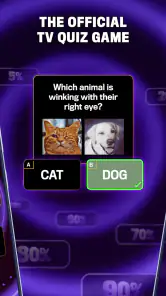
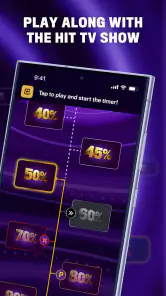
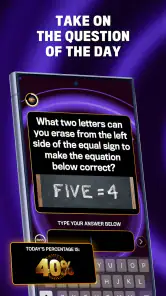
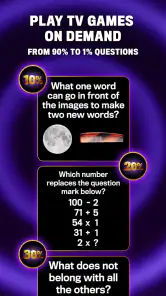
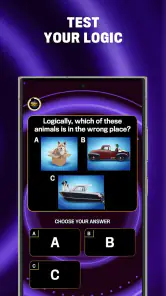
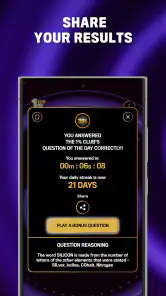
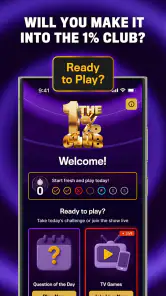
Analysis by Reviewed
I approached The 1% Club as a quick-thinking trivia game rather than a traditional television companion app. Its central appeal is simple: it asks whether I can work through questions inspired by the sort of puzzles associated with a TV quiz show, then judge my answer against the challenge. That makes it a potentially enjoyable choice for people who like testing logic, general knowledge, and calm decision-making under pressure.
The important question is not whether it can replace every trivia game on a phone. It cannot. The better question is whether its particular quiz-show identity suits the way you like to play. If you enjoy discussing answers with friends, taking a short mental break, or seeing how far your reasoning can carry you, it has a clear purpose. If you want a large social competition, deep progression, or a broad collection of unrelated quiz subjects, another type of game may be a better match.
What I looked for before recommending it
When I judge a quiz game, I first consider the quality of the questions. A trivia title can have a familiar name and still become dull if every round depends on narrow facts or predictable guesses. Here, the TV-show format sets a different expectation: the fun should come from interpreting a question carefully, spotting a trap, and deciding whether an answer that feels obvious is actually correct.
I also pay attention to how well a game works in ordinary moments. A good mobile quiz should be easy to pick up when I have a few spare minutes, but it should also give me a reason to continue when I am in the mood for a longer session. That balance matters more to me than a long list of decorative features. For this game, the strongest use case is a relaxed challenge that can become a conversation.
The 1% Club is a free game in the trivia category from Telescope Inc. It is suitable for Everyone, and it runs on devices using Android 6.0 or later. Those details make it accessible to a wide range of players, including families who want something less intense than an action game and older phones that cannot run demanding modern titles.
The game was released on May 15, 2024, and its current version is 2.0.0. It has passed the threshold of one hundred thousand installs, with an average rating of 3.2 from roughly two hundred sixty ratings and about one hundred twenty written reviews. I would read that reception as mixed rather than disastrous: enough people have found a reason to try it, but the score suggests that expectations and actual experience do not always line up perfectly.
The right mindset for the questions
The most useful way to play is to treat each question as a reasoning exercise, not as a speed test based purely on memory. I found that reading every word twice is more valuable than rushing toward the first answer that sounds familiar. Questions built around wording, patterns, or everyday logic often reward patience, while players who rely only on general knowledge may miss the intended twist.
That creates a nice distinction from ordinary fact quizzes. In a standard geography or history game, I either know an answer or I do not. In this format, I can sometimes reach the solution by breaking the wording into smaller parts. That makes a wrong answer feel more instructive, because I can usually identify the assumption that led me away from the solution.
A practical tip is to say your reasoning out loud when playing with someone else. It exposes whether you are answering the actual question or quietly changing it into an easier one in your head. This turns the game into a small group activity without requiring a formal multiplayer system. One person can read the question, everyone can commit to an answer, and the discussion afterward becomes part of the entertainment.
Why the TV-show format gives it personality
The connection to a television quiz-show concept gives the game a clearer identity than a generic collection of trivia prompts. I do not open it expecting a complete encyclopedia or a competitive online platform. I open it expecting a focused challenge built around the feeling of trying to qualify as an unusually sharp contestant.
That framing changes how I react to difficulty. A question that seems strange in a conventional quiz can make sense here if it is designed to test common assumptions. The game works best when I accept that the intended challenge may be noticing a detail rather than recalling an obscure fact. Players who enjoy lateral thinking should appreciate that difference.
It is also a good fit for a shared screen or a casual gathering. A family can debate an answer without needing everyone to be equally knowledgeable. A person who knows very little about sports, celebrities, or historical dates can still contribute if the puzzle rewards observation and logic. That wider accessibility is one of the strongest reasons I would choose it over a narrowly themed trivia app.
Where it stands out, and where another quiz may be better
Its strongest use is a short social challenge
I think the game wins when the goal is to create a little suspense around a question. It is easy to imagine using it during a break, while waiting for food, or at home with friends who want something more interactive than simply watching another episode of television. The questions provide a natural pause for discussion, and the answer reveal gives the group a shared moment even when nobody gets it right.
One realistic scenario is a family evening in which one person holds the phone and reads the challenge aloud. Instead of passing the device around constantly, the group can agree on an answer first and then check the result. That small change improves the experience: people focus on the reasoning rather than tapping quickly, and quieter players have room to explain their ideas.
It can also work for solo players who like mental warm-ups. I would use it before studying, during a commute when I am not driving, or as a way to replace mindless scrolling with something that asks me to pay attention. The questions are more satisfying when I give myself permission to pause, so I would not recommend treating every session as a race.
The key strength is the conversation created by the question, not just the act of collecting correct answers. That is a meaningful advantage over quiz apps that are designed mainly around rapid tapping and score accumulation.
Three ways to get more from each session
First, keep a mental note of why an answer looked convincing. This is more useful than simply remembering whether it was right. If I repeatedly fall for words such as “always,” “only,” or “exactly,” I can adjust my reading style in later rounds. The game becomes a small exercise in checking assumptions rather than a sequence of isolated guesses.
Second, use a two-stage answer routine. I choose an initial answer quickly, then spend a few seconds trying to disprove it before committing. This is especially helpful for questions that appear obvious. The routine does not require any special feature in the app; it is a player habit that makes the format more interesting and reduces careless mistakes.
Third, when playing with friends, ask everyone to explain their answer before revealing the result. This prevents the strongest player from dominating through fast reactions and gives the game a more balanced group rhythm. It also shows whether the challenge is testing knowledge, interpretation, or a misleading assumption.
These habits reveal a trade-off. The game rewards attention, but it may feel less exciting to someone who wants instant rounds and constant action. A player who prefers rapid-fire questions with visible streaks may find the deliberate reasoning slower than expected. In my view, that is not a flaw in itself; it is a sign that this game belongs to a different corner of the trivia category.
Where conventional trivia alternatives may fit better
A general knowledge quiz is the better option if you want to practise facts by subject. Those games usually make it easier to focus on areas such as science, geography, language, or history. The 1% Club is more appealing when the wording and logic of the challenge matter as much as the topic, so it may not satisfy someone who wants structured learning in one field.
A multiplayer quiz platform may also be preferable for players who want live competition, rankings, or a large community. I would choose that type of alternative for a party where the main goal is rivalry between several people. This game is better suited to face-to-face discussion or individual play than to a tournament atmosphere.
There is another important difference from puzzle games. A dedicated logic-puzzle app may offer more control over difficulty, repeatable problem types, or longer problem-solving sessions. The 1% Club has a stronger quiz-show flavour, but someone looking for a carefully graduated brain-training routine may prefer a specialist puzzle product.
Finally, a TV streaming service is the better choice if what you really want is to watch the show rather than answer questions. This game is interactive and asks you to take the contestant’s role; it does not replace the passive entertainment of an episode. Knowing which experience you want will prevent disappointment.
Small frictions that affect the decision
The average rating of 3.2 tells me to keep expectations realistic. A mixed score can reflect differences in question taste, pacing, presentation, or how closely the experience matches what players imagined from the show concept. I would not install it expecting a polished replacement for every established quiz format.
The free price removes the biggest barrier to trying it, which is useful for uncertain players. At the same time, “free” does not automatically mean it will be the ideal long-term game for everyone. If the question style does not suit you, no price advantage can fix that. I would give it a short, honest trial and judge whether the reasoning feels enjoyable rather than forcing myself to continue because it cost nothing.
The age rating of Everyone makes it a sensible candidate for mixed-age play, but adults should still guide younger players when a question depends on subtle wording. A child may know the relevant fact and still miss the intended interpretation, while an older player may do the opposite. That difference can actually make family sessions more interesting, provided nobody treats the score too seriously.
Because the game supports Android 6.0 and above, compatibility should be less of a concern for many Android users. I would still check the device experience before planning a large group activity, especially if the phone is old or the screen is small. A quiz based on careful reading is simply less comfortable when text is difficult to view.
The cost of changing from another quiz game
Switching to this game is inexpensive in money because it is free, but there is still a cost in expectations. If you are used to earning points through quick factual recall, you may need to change your approach. The first few sessions are better treated as learning the question style: read literally, challenge your first assumption, and accept that an apparently simple prompt may have a second layer.
There is also a social adjustment. A fast competitive quiz can keep everyone busy with constant turns, whereas this format benefits from leaving space for discussion. If your group dislikes pauses or arguments over interpretation, another game may create a smoother evening. If your friends enjoy defending unusual answers, the slower rhythm becomes an advantage.
For families, the switch may be worthwhile because the game does not require everyone to share the same specialist knowledge. For serious quiz enthusiasts, the decision is more conditional. I would keep a subject-focused trivia app available if I wanted deliberate practice in a particular topic, and use this one when I wanted a broader reasoning challenge with a television-style identity.
For solo use, the main cost is attention. This is not the kind of app I would open while multitasking heavily. The experience improves when I read carefully and give each question a fair attempt. If you want something that can run in the background while you do something else, a passive game or audio activity will probably suit you better.
Who should install it
I recommend giving it a chance if you enjoy quiz shows, lateral-thinking questions, or friendly debates about what a sentence really means. It is especially suitable for people who want a free, accessible trivia game that can work alone or become a small group activity. Its Everyone rating and modest Android requirements make it practical for shared family use as well.
I would also suggest it to players who become bored with quizzes that ask only “Do you know this fact?” The more interesting moments here come from asking “What exactly is this question saying?” That distinction gives the game its own place among mobile trivia options.
I would skip it if your priority is a huge subject library, formal online competition, detailed long-term progression, or a tightly structured educational course. I would also look elsewhere if you dislike questions that depend on wording or if you prefer games where every answer is a straightforward fact. In those cases, a conventional knowledge quiz or a dedicated puzzle app will probably feel more satisfying.
My recommendation after weighing the trade-offs
The 1% Club is worth trying as a focused, free trivia game with a reasoning-first personality. Telescope Inc. has a concept that is easy to understand but not interchangeable with a standard fact quiz: the enjoyment depends on slowing down, questioning the obvious answer, and sharing the result with other people.
I would not call it the universal choice for mobile quiz fans, especially with its mixed average rating. Its appeal is narrower and more specific. When I want a quick challenge that can start a conversation, it makes sense. When I want deep subject practice, live competition, or a long progression system, I would choose a different category of app.
My final advice is to try it with another person before judging it solely as a solo score game. Read the questions aloud, make everyone explain their reasoning, and treat mistakes as clues about how the wording works. Used that way, this TV-show trivia game has a better chance of showing its real strength: turning a few minutes of phone time into a small test of observation, logic, and confidence.
Pros
- Questions cover a broad range of interesting general-knowledge topics.
- Short rounds make it easy to play during quick breaks.
- The format encourages learning from mistakes and reviewing answers.
- A familiar TV-show theme gives quizzes a more entertaining feel.
- Suitable for solo play without requiring a large time commitment.
Cons
- Some questions may feel too difficult without prior general knowledge.
- Gameplay can become repetitive after several quiz sessions.
- Online features may depend on a stable internet connection.
- Progress or rewards may feel limited for frequent players.
- Availability and features can vary by country or device.

- Category
- Trivia
- Version
- 2.0.0