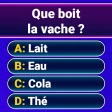
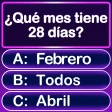
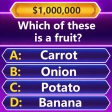
Test: Angel or Devil
- 912.00
- 4.0
- Installs
- 1.00M
- Price
- Free

Screenshots

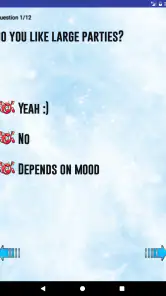

Analysis by Reviewed
I went into Test: Angel or Devil expecting a quick personality quiz, and that is exactly where this free trivia game makes the best impression. It does not ask me to learn a complicated system or build a long-term strategy. Instead, it presents a playful moral theme, lets me answer, and turns those choices into a simple reflection on whether I lean more toward an angel or a devil. The appeal is immediate: one question gives me a reason to tap, and the result gives me a reason to try again.
That simplicity also defines the limits of the experience. This is not a deep trivia library, a competitive knowledge platform, or a serious psychological assessment. It is a light, casual game from Sopelus Studio that works best when I want a short distraction, a conversation starter, or something amusing to pass around with friends. After spending time with it, I see the main loop as a compact sequence: make a choice, receive feedback, enjoy the result, reset, and decide whether another round might produce a different side of my personality.
How the angel-or-devil loop feels in practice
The first action is easy, but the framing matters
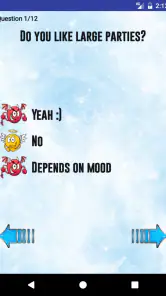
The most important design decision is that the game gives me a clear question to answer right away. I do not need to prepare, understand a fictional world, or remember complicated rules. The angel-versus-devil idea supplies enough personality to make ordinary quiz choices feel more entertaining than a plain list of questions.
My first instinct is to answer quickly, based on what I would honestly do rather than what sounds nicest. That makes the activity feel more personal. A question in this format is not only asking whether I know something; it is inviting me to reveal a preference, habit, or reaction. The result is therefore more playful than authoritative, and I think the game works better when I treat it as a mirror for the moment rather than a permanent label.
There is a useful social quality here. I can hand the phone to someone else and let them answer without needing to explain a rulebook. That makes it suitable for a short wait, a relaxed gathering, or a conversation that needs an easy icebreaker. The first action is deliberately low-pressure, which helps the game avoid the intimidation that sometimes comes with traditional trivia apps.
At the same time, players looking for factual questions with clearly correct answers should adjust their expectations. The moral theme is the point, so the enjoyment comes from interpreting the choices and seeing the final direction, not from proving that I know more facts than another player. Someone who wants a serious quiz challenge may find the opening too soft.
Feedback keeps each answer moving
After I make a choice, the game’s feedback is what gives the tap meaning. I am not simply moving through a questionnaire with no visible consequence. Each response contributes to the broader angel-or-devil reading, so I stay aware that my current pattern is being shaped by what I select.
I found that this creates a pleasant rhythm. I read a prompt, make a decision, see the quiz continue, and immediately wonder how the next choice might affect the overall impression. The feedback does not need to be elaborate to work. The theme supplies enough context for a small response to feel like part of a developing result.
One practical tip is to avoid overthinking every answer. If I try to reverse-engineer the “best” path, the game becomes less interesting and the result says more about my strategy than my instinct. A better approach is to answer once honestly, then use a later session to experiment. That turns the same basic activity into two different experiences: self-reflection first, playful testing second.
Another useful habit is to notice where my answers change when I am playing alone versus with friends watching. The game can expose that difference without requiring a formal comparison mode. In a group, people often debate what an answer means, and that conversation becomes part of the feedback. The app is at its most engaging when the result is treated as a prompt for discussion rather than a verdict.
The limitation is that this kind of feedback is naturally lightweight. It should not be confused with a validated personality evaluation or a detailed explanation of behavior. I would not use the result to make an important judgment about myself or someone else. Its value is entertainment, and it is strongest when I keep that boundary clear.
The reward is a result worth sharing
The main reward arrives when the game tells me how strongly my answers lean toward the angel or devil side. That conclusion gives the session a destination. Without it, the questions would feel like disconnected taps; with it, the choices form a small story about the player.
I like that the reward is understandable immediately. There is no need to study a complicated score or learn a specialized vocabulary. I can see the broad outcome and decide whether it feels accurate, surprising, or amusing. That instant recognition is important for a casual game because it makes the payoff fit the time spent playing.
The result also supports a natural social challenge: ask a friend to take the same test and compare the outcomes. This is not the same as a head-to-head trivia match, since the goal is not necessarily to beat someone. Instead, the fun comes from discovering that a quiet friend receives an unexpected result or that two people interpret the same situation differently.
Still, the reward has a short lifespan. Once I know the general conclusion, the surprise is reduced. The game depends on curiosity and replay rather than a large collection of unlocks or a long progression. That is not a flaw for a quick quiz, but it does mean the experience is better in small doses than in an extended sitting.
For that reason, I would recommend taking a screenshot or simply remembering the result if I am playing with friends, then moving on to another activity. Trying to force a long session can make the questions feel repetitive. The reward works because it arrives quickly; stretching the same loop too far weakens its impact.
Resetting gives another session a purpose
The reset is where the game earns its replay value. Once I have seen my result, I can start again with a different mindset. I might answer more instinctively, choose the option I would make in an ideal situation, or let another person use the phone. The restart is not about grinding for resources; it is about testing how a new set of choices changes the playful outcome.
This makes the game especially suitable for short, separate sessions. I can play once during a break, return later with a friend, and still understand what I am doing immediately. There is no demanding setup to remember. The same clarity that makes the first round accessible also makes the reset painless.
My advice is to give each replay a specific reason. For example, I might complete one round honestly, then repeat it while answering as quickly as possible. I could also ask someone else to answer the prompts and compare the final impression. These small changes keep the reset from becoming a meaningless repetition and create the kind of variation the game’s simple format can support.
Players should also know when to stop. If I restart only to chase a preferred label, the result becomes less satisfying because I am no longer discovering anything. The app is not designed to replace a broader trivia collection with endless content. It is better understood as a compact social toy that can be revisited when the mood is right.
What the game is like for different players
For a casual player, the strongest advantage is the low commitment. The game is free, aimed at Everyone, and belongs to the trivia category, but it does not demand the preparation associated with a serious quiz. I can pick it up without knowing anything about the developer, the format, or a particular subject area. The angel-and-devil framing does most of the work in making the activity approachable.
For families, the age rating makes the concept broadly accessible, although I would still treat the moral labels as playful rather than something to use seriously with younger children. The game can work as a conversation prompt: after a result, players can explain why they chose an answer. That discussion is more valuable than the label itself because it encourages people to describe their thinking.
For friends, it is best as a pass-the-phone experience. Each person can answer privately or aloud, and the reveal creates a small moment of anticipation. The lack of a demanding competitive structure is actually useful here. Nobody needs to be an expert, and a surprising outcome can be funny without making the activity feel like a test of intelligence.
For a dedicated trivia fan, the recommendation is more qualified. If your ideal game involves factual accuracy, escalating difficulty, specialist subjects, or a detailed record of performance, this will probably feel too narrow. A conventional quiz app would be a better choice for building knowledge or measuring recall. This title is aimed more at personality-flavored entertainment than at serious study.
Where it differs from ordinary trivia alternatives
Most trivia games reward correct answers. They ask me to retrieve information, recognize a fact, or beat a timer. This game uses the language of trivia but shifts the reward toward interpretation. I am not primarily trying to demonstrate knowledge; I am watching a pattern form from my choices.
That difference changes how I judge it. A standard quiz can remain engaging because there are always facts to learn and mistakes to correct. Here, the appeal comes from the relationship between the question and my identity in that session. The game is closer to a light personality test presented as a playable quiz than to a conventional knowledge challenge.
This makes it a better alternative when I want something social and immediate, especially if the people around me do not share the same interests or knowledge level. It is a weaker alternative when I want reliable educational value. I would choose a factual trivia app for learning geography, history, science, or language; I would choose this one for a quick “what kind of person am I today?” moment.
The absence of a heavy progression system also affects the comparison. There is less pressure to return every day, but there is also less structure encouraging long-term mastery. That trade-off suits players who dislike streaks and constant competition. It will disappoint players who want achievements, rankings, or a clear path of increasingly difficult challenges.
Small strategies that make the experience better
The first strategy is to separate honesty from experimentation. On the first round, I answer according to my immediate reaction. On the second, I deliberately imagine a different perspective or invite someone else to play. This gives the reset a purpose and makes the result more interesting than simply repeating the same answers.
The second is to use the game as a conversation starter rather than a judgment tool. If two players receive different outcomes, I ask what influenced a particular answer instead of declaring one side better. That keeps the angel-and-devil theme fun and avoids turning a casual label into a personal criticism.
The third is to play in short bursts. The core loop is strongest when the result still feels like a payoff. If I continue restarting without a new social context or a new way of answering, the novelty fades. A quick session before a meeting, during a journey, or while waiting for food is a better fit than treating the game as a long evening activity.
The fourth is to remember that a result reflects the choices made in that run. Mood, audience, and interpretation can all influence the answers. That variability is not necessarily a problem; it is part of the entertainment. It does mean I should not expect the app to produce a fixed, scientific description of my character.
Practical details before installing
The game is free to use, which makes it easy to try without committing money. It was released on March 6, 2017, and the current version is 3.12. It requires Android 8.0 or later, so anyone using an older Android device should check compatibility before planning to play.
Its audience size suggests that the concept has reached well beyond a tiny niche: it has passed one million installs, with an average rating of 4.0 from roughly seventeen thousand ratings. I read that as a sign of dependable casual appeal rather than proof that every player will enjoy it. A personality-style quiz naturally divides people; some will like the playful labels, while others will want more depth or factual challenge.
The developer is Sopelus Studio, and the game remains focused on its central idea instead of presenting itself as a broad all-purpose trivia platform. That focus is helpful when I want a very specific kind of diversion, but it also makes the choice easier: if the angel-or-devil premise does not interest me, there is not much reason to install it simply because it is labeled trivia.
My verdict on the complete loop
The action-feedback-reward-reset cycle is simple, clear, and best enjoyed as a social experiment rather than a serious test. I tap through a choice, watch it contribute to the developing impression, receive a memorable label, and restart when curiosity or a friend gives me a reason. That loop is tangible enough to carry a short session, and the result arrives quickly enough to feel worthwhile.
I recommend it to anyone who enjoys personality quizzes, playful moral dilemmas, or easy pass-the-phone games. It is also a good option for people who find traditional trivia intimidating because there is no need to memorize facts before playing. The free price and Everyone rating make the first try uncomplicated, while the modest system requirements keep it accessible on compatible Android devices.
I would skip it if my priority is learning, competitive scoring, deep replayability, or a scientifically meaningful personality profile. A conventional trivia game will offer more educational substance, and a dedicated personality assessment will offer more careful interpretation. This title sits comfortably between those categories, using trivia-style interaction to create a quick moment of self-reflection.
After my time with Test: Angel or Devil, I would keep it installed for the occasions when a group needs an easy game or I want a brief distraction with a little personality attached. Its best quality is not complexity; it is how quickly it turns a simple answer into a reason to talk, laugh, compare, and try one more round. Just remember that the fun is in the choice and the conversation, not in treating the final label as the last word about who you are.
Pros
- Simple controls make it easy to start playing immediately.
- Short levels are convenient for quick gaming sessions.
- The angel-versus-devil theme gives the game a distinctive identity.
- Progression encourages players to replay levels and improve their results.
- Runs smoothly on many devices with modest hardware requirements.
Cons
- Gameplay can become repetitive after extended play sessions.
- Difficulty may feel uneven in later stages.
- Limited customization reduces long-term personalization.
- Ads may interrupt the experience
- especially for frequent players.
- Some objectives are not explained clearly to new players.

- Category
- Trivia
- Version
- 3.12