Supreme Onet - Tile Match Puz
- 951.00
- 4.4
- Installs
- 1.00M
- Price
- Free

Screenshots
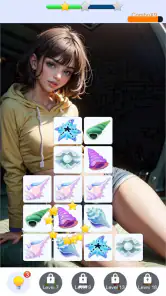

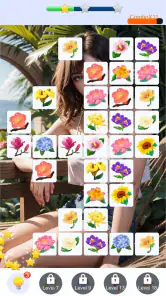


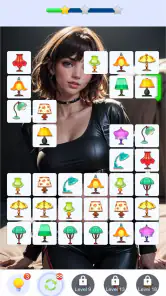


Analysis by Reviewed
If matching games appeal to you but you have not tried an Onet-style puzzle, Supreme Onet - Tile Match Puz gives you a simple way in: find two tiles with the same image and clear them by connecting them. I like that a first session does not demand much preparation. You can understand the basic aim quickly, then spend your attention on spotting a valid path rather than learning a stack of controls.
What the first session feels like
The first board is a chance to learn the game’s visual language at your own pace. Rather than tapping the first two matching pictures you notice, take a moment to see where they sit and whether the route between them is open. A successful match is a small but useful lesson: you are not just pairing images, you are checking whether the board lets you join them.
That distinction is what gives a familiar matching idea a little more thought. A pair can look obvious and still be unavailable because the connection would need too many turns or pass through blocked space. I find it reassuring that the puzzle’s main challenge is visible on the board; you can pause, scan, and try another possibility without needing to memorize trivia or follow a story.
For a first-time player, I would treat the opening moves as practice rather than a race. Look across one row or a small cluster, identify repeated pictures, and check the path before committing. That routine makes the first clear feel earned, and it gives you a simple way to approach the next board when the arrangements become less obvious.
Getting Started with Supreme Onet
Right off the bat, Supreme Onet - Tile Match Puz greets you with a clean and straightforward interface. There's no unnecessary fluff here, just pure puzzle fun. The objective? Simple. All you have to do is match pairs of tiles with the same picture until the board is clear. Sounds easy, right? Well, it starts that way, but as you progress, the levels become increasingly tricky.
From the first match to a clear board
For your first attempt, I’d focus on scanning the whole board before tapping. Find a picture that appears more than once, then check whether a clear route joins its two tiles. That small pause helps avoid picking a pair that looks obvious but cannot be connected under the game’s path rule. When the route works, clearing the pair gives you a useful first success and makes the next search easier.
The game mechanics are easy to grasp, making it suitable for players of all ages. You tap tiles to connect them, but there's a catch – the path can't make more than two turns. It's this little twist that adds a strategic element to the game. You’ll find yourself pondering over your next move, plotting the best strategy to clear the board efficiently.
More From Our News Desk

Weather by Xiaomi Review: Clear at a Glance, Less Clear Up Close

X Under Pressure: Can It Recover When Posting Goes Wrong?

Clash of Clans Is Won Between the Battles

Android Auto Makes the Case for Quieter Car Software

MobiOffice: Transforming Mobile Productivity with Seamless Integration

EA SPORTS FC™ Mobile Soccer: Redefining Mobile Sports Gaming
That rule also explains why a matching pair is not always a playable pair. If you get stuck, look for tiles near the edges or around open spaces; a route may become possible after other tiles are removed. I treat each move as a small space-making decision rather than choosing the first identical pictures I notice. It is a practical habit that makes the board feel less random, especially once the layouts become harder.
Learning to read the board instead of guessing
A useful habit after each match is to scan again from the start. Removing a pair changes the available space, so a route that was blocked can open up, while a promising match elsewhere may become more valuable. This is why I would avoid planning too many moves ahead on a new layout: keep a general sense of which areas you want to open, but let the changed board guide the next decision.
When several pairs are available, try to notice whether one choice clears a narrow corridor or gives access to tiles tucked behind a cluster. That is a more reliable way to choose than simply matching the closest pair. It also helps when you feel stuck: check the edges, then look for a move that changes the shape of the remaining board instead of repeatedly testing the same blocked connection.
The game’s rule is simple enough to explain, but it rewards patience more than speed. If a move does not work, I would take that as a cue to inspect the route and surrounding tiles, not as a sign that the whole board is unsolvable. This slower approach makes it easier to see the puzzle as a sequence of small openings rather than a hunt for a single perfect move.
A casual game with a particular rhythm
What's particularly nice is that the game offers a variety of tile designs. Whether you prefer fruits, animals, or classic symbols, there's something to keep the visuals fresh and interesting. Plus, the soothing background music is a lovely touch, adding to the overall relaxing vibe of the game.
As a trivia-category game, its appeal is different from question-and-answer quizzes: it tests visual attention and planning rather than recall. Compared with word puzzles, there is less reading, and compared with a traditional jigsaw, each successful match immediately removes pieces from the board. That makes it a good fit for a short break when I want something active but not mentally heavy. If you specifically want factual questions, vocabulary practice, or a story-driven puzzle, another kind of game will suit you better.
A realistic way to play is to open it while waiting for a drink or sitting through a short commute, complete a board if time allows, and stop when the interruption ends. I would not count on an unfinished session being a convenient stopping point, so I prefer to begin when I have enough attention to scan the layout. The visual matching is calm, but rushing can make a solvable board feel confusing.
Finding a comfortable way to fit it into the day
This is most appealing when you have a few uninterrupted minutes and want an activity that gives your eyes and attention something to do. I can see it working during a quiet coffee break, while waiting for an appointment, or as a low-pressure pause between more demanding tasks. The useful point is not that every session has to be long; it is that the board gives you a clear, self-contained goal to work toward.
For a commute, I would choose a moment when I can look at the screen steadily rather than try to play while walking or juggling other tasks. The puzzle depends on comparing pictures and tracing a route, so divided attention can turn a gentle challenge into needless frustration. If you only have a brief pause, it may be better to wait until you can give a board a little focus instead of starting and stopping in the middle of a search.
It also suits people who want a quiet alternative to scrolling through short clips. There is a small decision to make with each pair, but no need to keep up with a fast stream of information. On the other hand, if your ideal break means resting your eyes or listening without watching, this is not a good fit: the central task is entirely visual.
Who it suits, and what to keep in mind
One of the standout features of Supreme Onet is its accessibility. Whether you have five minutes or an hour to kill, this game fits perfectly into your schedule. You can pick it up whenever you have a spare moment and dive right back in without missing a beat.
For someone new to Onet-style puzzles, the first useful adjustment is to scan in rows or clusters instead of jumping between distant pictures. Clearing a pair can open a route for another match, so it is worth reconsidering the board after each move rather than sticking to an early plan. This is especially helpful when several identical-looking choices are available: the best pair may be the one that opens access to other tiles, not simply the nearest one.
Another thing I love is the sense of progression. As you advance through the levels, the increasing difficulty ensures that you remain challenged and engaged. It's satisfying to see your skills improve over time, and there's nothing quite like the feeling of clearing a particularly tough board.
There are trade-offs. The core activity remains matching pictures and tracing valid paths, so players who need a new mechanic in every session may find the repetition wearing thin. It also asks for visual concentration; if you are tired, have trouble distinguishing the current tile designs, or want a game that can be played without looking at the screen, this is not the right choice. The background music contributes to the relaxed mood, but the central appeal is the puzzle itself.
Where this puzzle fits among alternatives
Compared with a standard pair-matching game, the path restriction gives each choice an extra spatial question: not only “are these the same?” but also “can I connect them now?” That makes it more deliberate than simply turning over cards or clearing any visible pair. If you enjoy noticing how one move changes the options for another, this added constraint is likely to be the main reason to choose this style.
It is also a different kind of break from a quiz. A quiz is better when you want facts, recall, or a score based on what you know; this game asks you to read a layout and plan around open space. A jigsaw may be more satisfying if you want to build one larger image, while a word game is a better choice for language practice. I would pick this when I want visual problem-solving without a lot of reading.
The trade-off is that the basic action stays consistent. The variety comes from the tile arrangements and the changing difficulty, not from a completely different activity appearing each time. If you quickly tire of repeating a familiar loop, a puzzle with rotating objectives may hold your attention longer. If you like improving at one clear rule, the steady focus here is a strength rather than a flaw.
Details for deciding whether to install
Jing teams developed this free puzzle game, and its average rating is 4.4 from around 127,000 ratings, with over one million installs. It is rated Teen, runs on Android 7.0 or later, and version 1.1.6 is the current release. The game includes in-app purchases, with items ranging from $0.99 to $99.99, so I would treat it as free to start rather than assume every option is included without extra cost.
If you are wondering whether it is suitable for a first-time player, I’d say yes: the matching objective is immediately understandable, while the two-turn path limit gives you something to learn through play. If you are deciding between this and a quiz app, choose this for picture-matching and spatial planning, not for testing general knowledge. And if you are concerned about spending, the listed purchase range is a reason to check any in-game offer carefully before confirming it.
The game was released on August 5, 2024, and the Teen age rating is worth considering if you are choosing a game for a younger player. I would not treat an easy-to-understand matching rule as a substitute for checking whether that rating suits the person who will play. For an adult deciding whether to install, the practical questions are simpler: do you enjoy visual matching, can you give the board your attention, and are you comfortable reviewing purchase prompts rather than tapping through them automatically?
It is free to install, but that does not mean every optional in-game purchase is free. The broad price range makes a little care worthwhile, especially if a child may use the device. I would review the purchase confirmation before accepting anything and keep spending controls in mind if that matters for your household. The game is most straightforward as a no-cost tryout when you focus on the matching puzzle and treat any offer as optional.
Final Thoughts
In conclusion, if you're looking for a puzzle game that’s both relaxing and stimulating, Supreme Onet - Tile Match Puz is a fantastic choice. It's perfect for unwinding after a long day or keeping your mind sharp during a break. So go ahead, give it a try – I bet you’ll find yourself coming back to it again and again!
My recommendation is more specific than that: give it a try if the idea of scanning a board, spotting a pair, and planning a clear route sounds satisfying. It is especially approachable for someone who wants a puzzle with one easy-to-grasp rule and room to become more careful over time. If you are after trivia questions, hands-free play, or constant changes to the core activity, I would choose something else. For the right mood, though, the first successful connection is close at hand, and the next board gives you a reason to keep looking.
Supreme Onet - Tile Match Puz Frequently Asked Questions
How much storage should I have available before installing Supreme Onet?
It is sensible to leave some free space on your phone or tablet before installing Supreme Onet - Tile Match Puzzle, so the download and installation can complete smoothly. The game is currently version 1.1.6, and updates may also need room later. Check the available storage on your device before downloading, particularly if it already has many apps, photos, or other files.
Who makes Supreme Onet, and how recently was it released?
Supreme Onet - Tile Match Puzzle is a game from Jing teams. It was released on August 5, 2024, and its current version is 1.1.6. If you are deciding whether to try it, those details give you a quick sense of its release history and current version. The game is categorized as Trivia, with tile matching at its center.
What devices and operating systems can run Supreme Onet - Tile Match Puzzle?
Supreme Onet - Tile Match Puzzle is available for Android and iOS devices, so players can enjoy its tile-matching puzzles on a phone or tablet. On Android, the game requires version 7.0 or later. Before downloading, check that your device meets this requirement and has enough available storage for the installation and any updates.
Is Supreme Onet - Tile Match Puzzle suitable for younger players?
The game has a Teen content rating, which is useful for families to consider before installing it. Its central activity is matching tiles in a puzzle format, but the rating should still guide a parent or guardian’s decision about whether it is appropriate for a particular player. Reviewing the applicable age guidance in your app store is a sensible step.
What is Supreme Onet - Tile Match Puzzle, and how does it work?
Supreme Onet - Tile Match Puzzle is a captivating tile-matching game available on Android and iOS platforms. The game challenges players to connect pairs of matching tiles using a line with no more than three segments. It features various levels with increasing difficulty to test your skills. The primary objective is to clear the board within a set time limit, making it both engaging and challenging for puzzle enthusiasts.
Pros
- Engaging tile-matching gameplay.
- Colorful and vibrant graphics.
- Easy to learn controls.
- Offline play available.
- Regular updates with new levels.
Cons
- Contains ads between levels.
- Limited free hints available.
- Occasional in-app purchase prompts.
- Some levels can be repetitive.
- No multiplayer mode.
- Category
- Trivia
- Version
- 1.1.6