Snowboard Party World Tour Pro
- 113.00
- 4.4
- Installs
- 50.00K
- Price
- $4.99

Screenshots
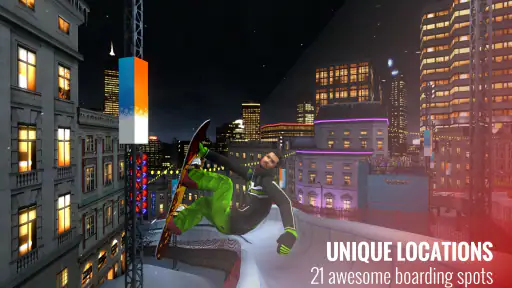
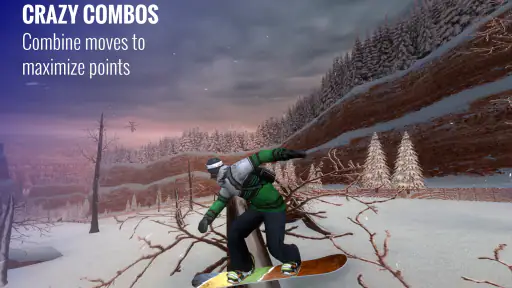

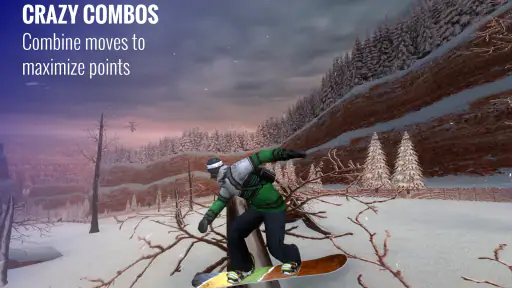
Analysis by Reviewed
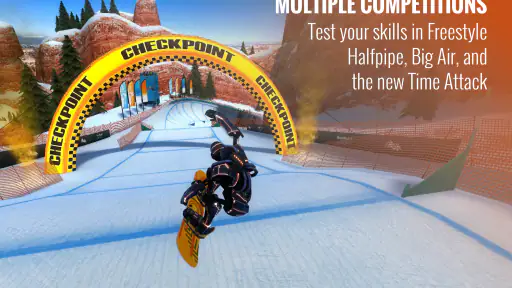
I approached Snowboard Party World Tour Pro expecting a quick arcade snowboarding game, and that is still the easiest way to understand it. It is a paid sports game from Maple Media, built around freestyle riding, halfpipe runs, and big-air challenges rather than a realistic mountain simulator. The appeal is immediate: choose a course, get moving, link tricks, and try to turn a clean run into a better score.
What surprised me was how much the experience depends on repeatable habits. The first run is mostly about learning the controls and avoiding obvious mistakes. After that, progress comes from choosing a comfortable line, using jumps deliberately, and making small adjustments instead of trying to perform every trick at once. That gives the game more staying power than its simple first impression suggests.
How I settled into the basic riding workflow
The most useful way to play is to treat each attempt as a short practice session. I first focus on staying upright and learning how the board responds, then I add tricks only when I can approach a ramp or halfpipe section with control. This order matters because a flashy move is not worth much if it sends the rider into a poor landing or ends the run before the course opens up.
My usual routine is simple. I begin with a few runs where I concentrate on movement, jumps, and landing direction. Once the course feels familiar, I start repeating the same route while adding one new trick at a time. That makes it easier to tell whether a failed attempt came from a bad approach, an overambitious trick, or a mistimed landing. It also prevents the common mistake of changing everything after every run.
The game works best in short sessions. I can play for several minutes while waiting for something, but a focused stretch is more rewarding because I begin to remember where to prepare for a jump and where to stop chasing extra points. It is not a game I would choose for a deep simulation of snowboarding technique. It is better suited to quick, score-focused play with a clear arcade rhythm.
One everyday use case is a commute or a short break when I want something interactive but do not want to manage a long story or complicated team. A run starts quickly, and restarting after a mistake feels natural. On the other hand, a player looking for online competition, a detailed career structure, or a realistic training tool should look elsewhere. This is about performing on prepared courses, not recreating every part of the sport.
The age rating is Everyone, which matches the straightforward presentation and accessible premise. That does not mean every player will find the controls effortless. Younger or casual players may need time to understand how movement and tricks work together, while experienced arcade players will probably recognize the pattern quickly: learn the course, protect the landing, then chase a cleaner score.
Why the first few runs can feel less impressive
My early attempts were more about correction than style. I tended to hold a direction too long and then tried to compensate near the landing. That approach made the rider feel unpredictable, even though the real problem was my timing. Once I began making smaller inputs and preparing earlier, the game felt much more consistent.
A useful habit is to separate navigation from trick selection. I try to decide where I want the rider to go before thinking about which move will produce the most points. When those decisions happen at the same time, I am more likely to miss the landing. When the line is already stable, the trick becomes a controlled addition rather than a gamble.
This is also where the game differs from a typical endless runner. The goal is not simply to react to whatever appears next. I am building a repeatable route through a course, and the best run usually comes from remembering the rhythm of that route. That makes practice meaningful, although it can feel repetitive if I am not interested in improving a score.
Settings and control checks worth making
Before judging the handling, I recommend checking the available control options and display preferences rather than accepting the first arrangement. The exact choice depends on how I hold the phone. A thumb-friendly layout can be more comfortable for short sessions, while a different arrangement may give better separation between movement and trick inputs. The important point is to settle on one setup and keep it long enough to build muscle memory.
I also pay attention to sensitivity and visual comfort where the game provides those choices. A setting that feels lively during a single jump may become tiring over a longer session. I prefer predictable movement over maximum speed because a controlled approach helps far more than a dramatic first impression. If the rider keeps drifting past the line I intended, I adjust the controls before blaming the course.
Screen size changes the experience. On a smaller phone, I need to keep my thumbs clear of the action and avoid covering the landing area. On a larger display, the controls may feel easier to separate, but reaching across the screen can become less comfortable. I found that the best setup is not necessarily the one that looks most advanced; it is the one that lets me repeat the same input without shifting my grip.
Another practical check is performance. The current version is 1.5.2.RC and the game requires Android 6.0 or newer. On a compatible device, I still prefer to close distractions before a serious score attempt. A smooth run matters because a tiny delay at the end of a jump can turn a planned landing into a miss. I would not make a purchase decision based only on the minimum operating-system requirement, but older hardware deserves a little testing before committing to long sessions.
The game costs $4.99, while its in-app purchase items range from $0.99 to $69.99 each. That is worth considering before installing. I like the clarity of starting with a paid game rather than treating it as a completely free download, but the additional purchase range means I would review the in-game progression carefully and avoid buying anything impulsively. For me, the sensible approach is to play the core experience first and decide whether extra spending adds enough value.
Small habits that make runs more reliable
The biggest improvement came from treating landings as the end of a sequence, not an afterthought. I stop trying to add a trick when the approach becomes unstable. That sounds conservative, but it creates more complete runs and gives me better information about the course. A failed trick teaches me less when it also hides whether my route was correct.
I also use a two-pass method. In the first pass, I ride without chasing a high score and note where I usually lose control. In the second, I target only one of those trouble spots. This is more effective than attempting a perfect run immediately because it turns a vague feeling of difficulty into a specific problem: a jump entered too fast, a turn taken too late, or a trick started without enough space to finish.
When I am trying to improve, I repeat the same section instead of constantly selecting different challenges. Familiarity reveals the difference between a genuine control issue and a random mistake. It also helps me decide whether a harder route is actually worthwhile. A difficult section that produces a large score increase may suit a patient player, while someone playing casually may get more enjoyment from a safer, repeatable line.
Experienced players will probably get the most from consistency. Instead of treating every jump as a chance to show everything the game can do, I reserve bigger combinations for places where the landing area feels generous. This creates a useful trade-off: a modest trick completed cleanly is often more valuable to my overall attempt than a risky sequence that ends the run.
Faster patterns without turning every run into a gamble
Once the basic controls feel natural, I start looking for patterns rather than isolated moves. A good pattern has three parts: approach, action, and recovery. I enter the feature with enough space, perform a move I can recognize, and leave myself time to stabilize. If one part is missing, the next section becomes harder no matter how impressive the trick looked.
My faster runs do not come from holding every input longer. They come from reducing hesitation. I choose the direction before the jump, decide whether the attempt is for safety or score, and commit to that decision. The result is not always perfect, but it is easier to repeat. Repetition is important here because a fast route that succeeds only once is not really a useful route.
For halfpipe-style sections, I concentrate on rhythm. I try not to make a separate frantic decision on every wall. Instead, I watch the sequence as a cycle and prepare for the next transition while the current move is finishing. This keeps my hands calmer and makes it easier to recognize when I should stop adding tricks.
Big-air challenges reward a similar discipline. I use the launch as a preparation point, not as a moment to improvise everything. If the approach is poor, I would rather protect the landing than force a complicated combination. That choice can feel slower, but it gives me a reliable baseline from which to test more ambitious variations.
A useful scoring workflow is to establish a safe personal benchmark, then experiment above it. I first aim for a run I can reproduce several times. After that, I add one risk and compare the result. If the extra move improves the score but causes most attempts to fail, I return to the safer version until the new move becomes familiar. This turns experimentation into a controlled process rather than a string of random resets.
Where the game starts to show its limits
The same focused design that makes the game easy to start can limit its long-term appeal. Players who need a rich social layer, deep customization, or a large simulation-style career may find the experience narrow. The main satisfaction comes from improving execution on the available challenges, so enjoyment depends heavily on whether repeating a route feels rewarding to you.
The paid entry price also changes how I evaluate the game. At $4.99, I expect the initial experience to stand on its own, and I would be cautious about treating optional purchases as necessary for enjoyment. The listed purchase range reaches $69.99 per item, so anyone sensitive to extra spending should decide on a budget before exploring those options. I prefer to regard them as optional rather than part of the basic reason to play.
There is also a learning curve hidden beneath the accessible presentation. The game is easy to understand but not automatically easy to master. Players who want immediate success may become frustrated when the same jump keeps failing. My advice is to resist changing controls repeatedly. A stable setup and deliberate practice usually reveal more than constant experimentation with the interface.
Compared with a typical casual sports game, this one asks for more timing and repetition. Compared with a serious snowboarding simulator, it is lighter, faster, and less concerned with realism. Compared with an endless runner, it gives me more control over a planned line but less variety from moment to moment. Those distinctions matter: the best alternative depends on whether I want score refinement, realistic technique, or effortless variety.
I would also skip it if my main goal is to play with friends in a competitive online setting. The appeal I found is personal improvement: learning a course, refining an input sequence, and trying to make one clean run better than the previous one. That is satisfying for a focused player, but it is not a substitute for a multiplayer sports community.
Who will get the most from the experience
This game suits someone who enjoys arcade sports and does not mind repeating a challenge. It is especially good for players who like the small satisfaction of turning an unreliable sequence into a dependable one. The controls are approachable enough for casual experimentation, while the emphasis on landings and route choice gives experienced players something to refine.
It is less suitable for someone who wants a long narrative, realistic snow physics, or a constantly changing world. It is also not my first recommendation for a player who dislikes paid games with optional purchases. Even if I never need to buy anything beyond the initial price, the existence of those items is part of the ownership decision and should be considered honestly.
The game has an average rating of 4.4 from around 1.4 thousand ratings, with over 50 thousand installs. Those figures suggest a modest but interested audience rather than a massive mainstream hit. I read that as a good match for its personality: this is a specialized arcade snowboarding game for people who actively enjoy its particular loop, not a universal sports recommendation.
My verdict after building a repeatable routine
Snowboard Party World Tour Pro works because it gives me a clear reason to replay a run. I am not returning to discover a new story beat; I am returning because the line I nearly completed can become cleaner, faster, and more controlled. The combination of freestyle, halfpipe, and big-air challenges provides enough variation to support that practice, provided I enjoy score chasing.
My strongest recommendation is to approach it patiently. Check the controls, choose a comfortable grip, learn one course at a time, and protect landings before chasing spectacular combinations. The game becomes noticeably more enjoyable when I stop treating every jump as a highlight moment and start treating each run as a small experiment.
Maple Media has made a focused sports game rather than an all-purpose snowboarding package. That focus is both its strength and its boundary. I would recommend it to a friend who wants quick arcade sessions and likes mastering timing through repetition. I would point that friend toward a different option if they wanted multiplayer rivalry, simulation depth, or a broader progression system.
In the end, I found the experience most rewarding when I used settings and habits to make my play consistent: one control layout, one safe route, one measured risk at a time. The real payoff is not the first impressive trick; it is the repeatable run that finally feels under my control. For the right player, that makes this a worthwhile paid sports game. For everyone else, its narrow focus may become clear before the novelty wears off.
Pros
- Responsive controls make carving and jumping feel natural.
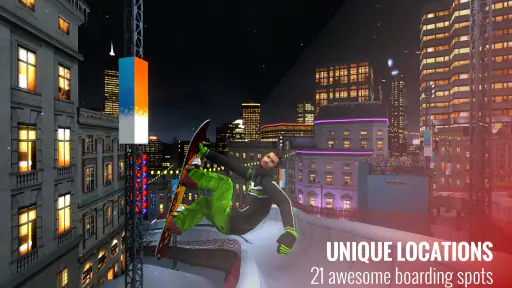
- Multiple locations provide varied slopes and visual environments.
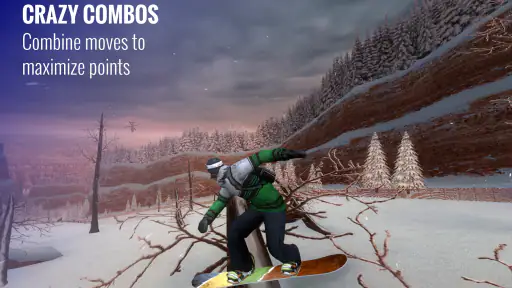
- Trick combinations add depth beyond simply racing downhill.
- Character and board customization gives progression a personal feel.
- Offline play makes it suitable for travel or limited connections.
Cons
- Advanced tricks take time to master with the touch controls.
- Some content may require substantial in-game progression to unlock.
- Fast runs can feel difficult to follow on smaller phone screens.
- Performance may vary on older devices during busy downhill sections.
- The game can consume noticeable battery during longer sessions.

- Category
- Sports
- Version
- 1.5.2.RC