سين جيم Seen Jeem
- 4.00
- 3.5
- Installs
- 100.00K
- Price
- Free

Screenshots

Analysis by Reviewed
I spent time with سين جيم Seen Jeem as a casual Arabic trivia game, and its appeal became clear quickly: it is built for shared moments rather than long solo sessions. The idea is simple enough to explain in seconds, but the six-category format and three help options give a group more to discuss than a basic question-and-answer app. I found it most enjoyable when everyone treated each question as a small conversation, not just a race to tap the answer.
This is a free game from Enzo Zid General Trading WLL, aimed at Everyone and available for devices running Android 7.0 or later. Its current version is 1.0.1, and the game sits in the trivia category. Those details matter because the experience is easy to bring into a family setting or a relaxed gathering without asking people to learn a complicated interface first.
How a normal round feels in practice
The best way to approach Seen Jeem is to decide who is playing before opening it. I would use it with two or more people nearby, keep the phone where everyone can see it, and let the group agree on whether the goal is winning or simply keeping the conversation moving. That small decision changes the mood. Competitive players can focus on quick answers, while families can pause to explain unfamiliar topics.
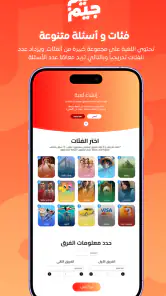
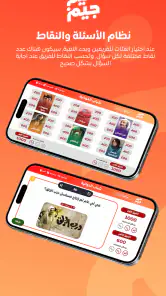
The six categories give the session some structure. Instead of asking the same kind of question repeatedly, the game can move the group between different areas of knowledge. That variety is useful in a mixed group, because one person may be strong in a subject where another person is less confident. I liked that this creates natural chances for players to contribute without requiring everyone to be equally knowledgeable.
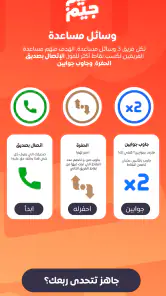
The three help options are also more useful when the group agrees on how to use them. If someone spends every aid immediately, the later questions may feel unnecessarily difficult. I found it more satisfying to treat them as limited tools: save one for a question that divides the room, use another when a player is close but needs a nudge, and keep the last one for the point where the session might otherwise stall.
That habit turns the aids into part of the game instead of simple emergency buttons. It also gives quieter players a reason to participate. Someone who does not know the answer may still suggest when an aid should be used, or argue that the group should trust its first choice. In a living-room setting, this social layer is more important than raw speed.
A practical setup for family and friends
For a family evening, I would place the device on a table rather than passing it constantly between players. One person can read the question aloud, another can keep track of the group’s answer, and everyone can discuss before the final choice. This avoids the common problem where the person holding the phone controls the entire experience.
For a small gathering, rotating the reader works better. Each player gets a chance to present the question and listen to the arguments. It also prevents one confident player from becoming the permanent leader. Seen Jeem works particularly well in this format because the categories provide enough variation to keep the conversation from becoming a single-topic quiz.
A realistic use case is a short break during a visit when people want something more engaging than scrolling. I would start with a few rounds, stop while the group is still enjoying itself, and return to it later rather than trying to force a long session. Trivia games often lose their charm when every question becomes a test, so shorter bursts suit this title better.
What to check before handing over the phone
The age rating is Everyone, which makes the game an easy candidate for a broad family audience. Even so, I would still explain the rules before starting, especially when younger players are involved. The rating tells you the intended audience, but it does not replace a quick agreement about turn-taking, acceptable teasing, or whether adults will help children with difficult questions.
I would also check that the device is comfortable for group viewing. A small screen can make a shared session less convenient, while a tablet may be easier for a table full of players. That is not a flaw in the game itself, but it affects the practical experience more than many people expect. The same questions feel more social when everyone can read them without leaning over the phone.
Because the game is free, it is easy to try without making a purchase decision first. That is helpful for casual users who only want a quick activity. It also means I would judge it by how well it supports spontaneous play, not by expecting the depth of a large, constantly expanding quiz platform.
Settings, pacing, and habits that improve the session
There is no reason to rush into a question before deciding how the group will play. I recommend choosing one person to settle disputes and agreeing that an answer is final only after everyone has had a chance to speak. This is especially useful when the game moves quickly or when several people are sharing one device.
The most valuable “setting” in practice is the group’s own pacing rule. A fast group may want immediate answers, while a family group may prefer a short discussion for every question. The six categories support both approaches, but they do not remove the need for people to manage the room. Seen Jeem is a tool for a social quiz, not a substitute for a host.
Another useful habit is to watch the category balance during a session. If one category is clearly tiring the group, move on rather than allowing a single difficult stretch to define the whole experience. On the other hand, if a category creates lively debate, it can be worth giving it more attention. The game becomes more enjoyable when players respond to the mood instead of following a rigid routine.
I also suggest keeping the help options visible in everyone’s mind. A player may forget that an aid is available and abandon a question too early, while another may use one automatically. Agreeing that the group must discuss an aid before selecting it makes those tools feel meaningful. This is a small change, but it adds decision-making without requiring any invented house rules or extra equipment.
Using the game with different skill levels
Mixed-ability groups can make trivia awkward if the strongest player answers everything instantly. I would introduce a short pause before anyone speaks, giving others time to form an opinion. Another approach is to ask each person for a guess before the group chooses. These methods do not change the app; they simply make better use of its categories and help mechanics.
For children, adults can turn difficult questions into learning moments rather than correcting them immediately. Ask why a child chose an answer, then use the discussion to explain the reasoning. For adults who are not comfortable with trivia, the help options provide a way to stay involved without pretending to know everything. That balance is one of the game’s strongest practical qualities.
For a group of knowledgeable players, the challenge is different. The session can become too dependent on speed, and slower readers may be disadvantaged. In that situation, I would make the game about accuracy and discussion rather than the fastest response. The title is more welcoming when players control the pressure instead of treating every question like a formal competition.
Faster patterns for repeat play
Experienced users can make the opening routine almost automatic: place the device centrally, choose the reader, explain the answer rule, and agree on when to spend help. That removes the small delays that often make casual games feel disorganized. Once the group has a rhythm, the attention stays on the questions instead of the mechanics around them.
I found it helpful to reserve one aid for uncertainty and another for disagreement. If two answers seem plausible, the group knows it has a planned response rather than arguing endlessly. A third aid can remain untouched until the final stretch. This approach creates a gentle sense of resource management and prevents the game from becoming a sequence of random button presses.
Another repeatable pattern is to change the host each session. The host can introduce the question, invite guesses, and confirm the group’s final choice. Rotating that responsibility gives the game a fresh feel even when the same people play together regularly. It also reveals which categories different players enjoy, helping the group choose a better pace next time.
For a quick break, I would not try to complete an ambitious marathon. Set a simple stopping point, play until the group reaches it, and leave the rest for another occasion. This works well for a coffee break, a waiting period, or the quiet part of a family visit. The game’s free access makes these short sessions easy to justify, because opening it does not require a major commitment.
For a longer gathering, alternate active rounds with conversation. After a surprising question, let people talk about it instead of immediately tapping onward. That is where a trivia game can become more memorable than a standard list of questions. Seen Jeem is at its best when the answer is the beginning of a discussion, not the end of one.
Where the experience reaches its limits
The modest average rating of 3.5, based on around 180 ratings, suggests that the experience will not satisfy everyone equally. I can understand why. A simple trivia game depends heavily on question quality, category balance, and how enjoyable the group finds the presentation. If you want deep explanations, extensive customization, or the feel of a large competitive platform, this is probably not the right choice.
The game also depends strongly on company. Someone looking for a substantial solo trivia routine may find the social design less rewarding. It can still be opened alone, but the features that stand out most—the categories, the shared guesses, and the help decisions—make more sense when other people are present.
There is a trade-off between accessibility and depth here. A game that is easy for a family to understand may feel too light for a dedicated quiz enthusiast. Compared with a general trivia alternative that offers long solo progression, detailed explanations, or a large selection of modes, Seen Jeem is better understood as a compact group activity. I would choose the alternative for personal training and this game for a relaxed room.
The number of reviews shown is only four, so I would avoid treating the public response as a complete picture of the game. The install figure is over 100 thousand, which indicates that it has reached a meaningful audience, but popularity alone does not guarantee that every group will enjoy its style. I would use the free download as the practical test: try it with the people you actually expect to play with.
Its release date is November 17, 2025, so the current version, 1.0.1, represents an early stage for the product. That makes it sensible to keep expectations measured. Early versions can feel focused rather than feature-heavy, and that may be positive for casual players. It also means serious quiz fans should decide whether the present set of options is enough for their habits instead of assuming a broader system.
Who should choose it, and who should skip it?
I would recommend Seen Jeem to families, friends, and Arabic-speaking groups that want a simple trivia activity without a complicated onboarding process. It is especially suitable when people have different knowledge levels and need a format that allows guessing, discussion, and occasional assistance. The Everyone rating and free price make it easy to introduce in a mixed-age setting.
I would be more cautious about recommending it to someone who mainly plays alone, expects detailed statistics, or wants a highly competitive online environment. A dedicated quiz app may be a better fit for those needs. Likewise, if your group dislikes debating answers or sharing one screen, the social strengths of this game will not have much room to appear.
My most useful advice is to treat the three aids as a pacing system, not as disposable advantages. Save them for moments that would otherwise stop the conversation, and make the group explain why one should be used. That single habit gives the game more texture and helps weaker players remain part of the decision.
I would also keep sessions intentionally flexible. Let the six categories guide the evening, but do not allow one difficult run to turn a casual activity into an exam. Change the reader, pause after interesting questions, and let the group’s energy decide when to stop. These habits make a bigger difference than trying to optimize every answer.
After reviewing it, I see سين جيم Seen Jeem as a focused, friendly trivia game rather than a complete replacement for every quiz app. Its strongest use is a shared Arabic-language session where the group wants variety, simple rules, and a few chances to recover from uncertainty. It is not the deepest option, and its early version may feel limited to demanding players, but that simplicity is also why I would keep it ready for family visits and informal gatherings.
My final verdict is positive with the right expectations. If you want a lightweight game that gets people talking, it is worth trying because the download is free and the format is easy to explain. If you want serious solo progression or extensive control, choose a more specialized alternative. For everyone in between, I would start with a short group session, agree on how to use the aids, and judge the game by the conversations it creates rather than by how quickly the answers appear.
Pros
- Simple interface makes browsing questions quick and convenient.
- Wide range of topics keeps quizzes varied and engaging.
- Suitable for short play sessions whenever you have spare time.
- Helpful for testing general knowledge and learning new facts.
- Lightweight design should run smoothly on many mobile devices.
Cons
- Some questions may feel too easy for experienced trivia players.
- Arabic-focused content may limit appeal for non-Arabic speakers.
- Question difficulty and quality can vary between categories.
- Repeated questions may reduce replay value over time.
- An internet connection may be needed for all features or updates.

- Category
- Trivia
- Version
- 1.0.1