Rush Royale: Tower Defense TD
- 21.65K
- 4.2
- Installs
- 50.00M
- Price
- Free

Screenshots
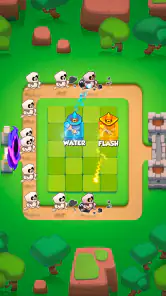

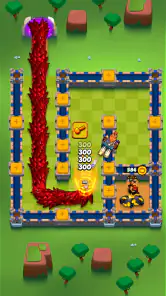

Analysis by Reviewed
I like strategy games that give me a meaningful choice before the action gets hectic, and Rush Royale has a clear hook: I build around a deck of units, then decide how to use them while enemies advance. That makes it more involved than simply placing defenses and waiting. Rush Royale: Tower Defense TD is a free strategy game from MY.GAMES B.V., available on Android and iOS, and its mix of tower defense and collectible-card ideas gives each match a quick puzzle to solve.
Early choices give each match a purpose
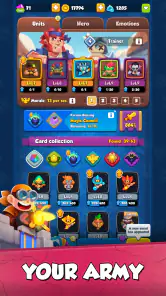
At first, the appeal is learning what the units in my deck do and how they work together. I’m not just looking for the strongest individual card; I’m trying to make a lineup that can handle a changing wave of enemies. That gives the early matches a useful goal: understand my options, test combinations, and notice where my setup struggles.
For a new player, I’d treat the tutorial as a chance to learn the rhythm rather than something to rush through. Knowing what a unit contributes makes later decisions easier, especially when the board gets busy. The game is approachable, but the strategic choices become more interesting once I stop using cards as isolated pieces and start thinking about the deck as a whole.
A practical way to learn the deck
I find it useful to pay attention to what happens on the board, not just to whether a match ends in a win. If enemies get through while my defense still looks under control, I ask whether I have enough coverage across the deck or whether I’m relying too heavily on one kind of unit. That turns a loss into a specific question instead of a reason to swap everything at once.
This is also a good game to approach in small, focused sessions. Before a match, I can take a moment to remember what I’m testing; afterward, I can decide whether the result supports that idea. It is a modest habit, but it makes the early learning curve feel less like guessing. Players who enjoy spotting patterns will get more from the first stretch than players who simply want to collect cards without considering how they fit together.
How the strategy develops over time
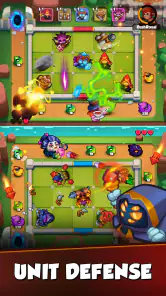
Imagine having to defend your realm from waves of enemies, but instead of just placing towers, you’re deploying units that level up and evolve as the game progresses. That's the essence of Rush Royale: Tower Defense TD. The game puts a fresh spin on the classic tower defense genre by incorporating elements from collectible card games. You have a deck of units, and each unit has its own unique abilities and characteristics. This means you’re not just mindlessly placing towers; you’re strategically deploying your units to counter the ever-increasing waves of enemies.
Progress feels tied to experimentation
The gameplay in Rush Royale is both intuitive and challenging. You start with a basic deck of units, and as you progress, you collect new cards to upgrade and enhance your deck. The real fun begins when you start experimenting with different combinations of units to find the most effective strategies. Trust me, once you start tinkering with your deck, it’s hard to put the game down.
You May Like

Clash of Clans Is Won Between the Battles

Android Auto Makes the Case for Quieter Car Software

MobiOffice: Transforming Mobile Productivity with Seamless Integration

EA SPORTS FC™ Mobile Soccer: Redefining Mobile Sports Gaming

How Microsoft OneDrive Became a Mobile Productivity Giant

How Google Translate Breaks Language Barriers Effortlessly
That experimentation is the part I’d focus on if a winning streak stalls. Instead of making random changes after a loss, I’d change one part of my approach at a time and see whether the deck handles the problem better. It’s a small habit, but it helps make defeats useful: I can tell whether I need a different combination or simply need to make better decisions during a match.
Progress signals worth noticing
New cards and improvements give me visible signs that my collection is changing, but the more meaningful progress is learning to use what I have. A card that looks appealing on its own may not solve the weakness I noticed in a previous match. I try to think in terms of a role for each choice: what problem am I trying to address, and does this addition help the rest of the deck do its job?
That distinction matters because collection growth can feel exciting even when it does not immediately make every battle easier. I wouldn’t measure a session only by how many new things I acquire. Becoming more consistent with a familiar lineup is progress too, especially when I can explain why a decision worked. If I’m not sure what changed, it is harder to learn from either a win or a loss.
Challenge, pacing, and playing with others
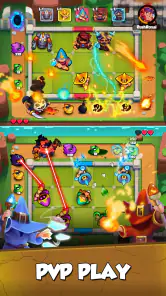
Each battle is a nail-biting experience as you face off against real players in PvP mode or team up with friends in co-op mode. The game’s matchmaking system ensures that you’re paired with opponents of similar skill levels, making every game feel fair and balanced. Plus, the thrill of climbing the ranks and earning rewards keeps you coming back for more.
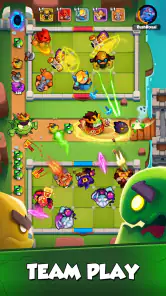
These modes suit different moods. I’d choose PvP when I want a direct test of my own decisions, and co-op when I’d rather share the pressure with a friend. Neither turns the game into a passive experience: the waves keep the pace moving, so I need to pay attention instead of treating a match as background entertainment. If I only have a short break, I’d start a match when I can give it my focus rather than assume I can safely ignore it halfway through.
The difficulty curve and its sharper edges
The game is intuitive to start, but a straightforward tutorial doesn’t remove every challenge. Collecting and improving cards gives me reasons to keep experimenting, while stronger opposition can make progress feel less smooth. When a deck stops working, repeating the same choices is unlikely to be as useful as learning what each unit brings and adjusting with a clear purpose.
That balance is a matter of taste. Players who enjoy tuning a strategy through trial and error may find a satisfying reason to return; anyone who wants every match to be predictable may find the shifting pressure frustrating. I also wouldn’t expect a quick session to answer every question about the best deck. Part of the appeal is discovering what works for me, not being handed one setup that solves every situation.
There is a trade-off between breadth and certainty as the collection grows. More options can give me new ways to respond, but they also give me more combinations to understand. When progress slows, I would resist assuming that the answer is simply to chase every new card or change the entire lineup. Testing one adjustment at a time is a more useful way to separate a deck-building issue from a decision I made during a match.
Who will enjoy the pressure, and who may not
I’d recommend this most readily to someone who likes compact strategy challenges, enjoys comparing unit roles, and is comfortable with a match changing as it unfolds. The combination of planning a deck and responding in real time gives a strategy fan two different things to think about. It can also suit friends who want a shared activity, since co-op gives them a reason to coordinate rather than merely play side by side.
I’d be less likely to suggest it to someone who wants a calm, pause-anytime tower defense campaign or a game where the main pleasure is laying out a fixed solution before the action begins. Its competitive and collection-based sides are central to the appeal, not optional decoration. If you dislike learning through uneven results, or want a game that can be left running while you do something else, a slower puzzle or more traditional defense game may fit better.
A realistic use case is a short evening break when I have enough time and attention for a match but don’t want to commit to a long campaign. I might choose PvP when I’m in the mood to test my deck, then save co-op for a time when a friend is available and both of us can stay engaged. The key is treating the match as active play, not as something to squeeze into every spare minute regardless of interruptions.
How it compares with familiar strategy games
Compared with a traditional tower defense game, Rush Royale puts more emphasis on managing a deck and responding during a match, rather than planning a fixed line of towers before enemies arrive. Compared with a collectible-card game focused mainly on assembling a collection, its appeal is more immediate: the units have to serve a purpose while a live defense is under pressure. That makes it a good fit if I want short, active strategic decisions, but a less natural choice if I’m looking for a slower campaign or a quiet puzzle I can pause and ponder.
One practical way to approach a busy day is to save PvP for a moment when I can concentrate and use co-op when I have a friend ready to play. If I’m checking in between errands, I can still make progress in understanding my deck, but I shouldn’t mistake that for a no-attention idle game. The choice of mode matters as much as the time available: a social match is more enjoyable when both players can stay engaged.
The comparison also helps set expectations about where the strategy lives. In a classic defense game, I might spend most of my time deciding where to position structures; here, I’m weighing what my deck can do and how to adapt as the board develops. That makes each match feel more reactive. Players who enjoy making decisions under a moving deadline will probably appreciate that difference, while people who want to optimize a static layout may prefer the familiar tower-defense approach.
Spending, value, and sensible boundaries
The game is free to download, with in-app purchases ranging from $0.99 to $169.99 per item. I’d begin by learning the units and testing the cards I already have before deciding whether I want to spend; buying something is not a substitute for understanding how a deck works. The range also means it’s sensible to check each purchase carefully, particularly if you share a device or let a younger player use it.
For me, the best way to judge whether to spend is to first decide what I enjoy about the game. If I like learning matchups and experimenting, I can get a clearer sense of whether a purchase would add something I actually want or merely promise faster progress. I would set a personal limit before browsing optional purchases, rather than make that decision while frustrated by a tough run. The Teen rating is another reason to be thoughtful when a younger player shares the device, especially around purchase choices.
It carries a Teen content rating, and it has a 4.2 average from around 732,000 ratings, with over 50 million installs. Those figures suggest a large audience, but they don’t tell me whether its particular blend of competition and collection will suit you. I’d recommend it to players who enjoy adapting a strategy under pressure, and suggest skipping it if you dislike competitive matches, card-based progression, or the possibility that improvement takes patience.
Presentation and practical details
The graphics in Rush Royale are vibrant and colorful, which adds to the overall charm of the game. The animations are smooth, and the user interface is clean and straightforward, making it easy for newcomers to jump right in. The game runs seamlessly on both Android and iOS devices, ensuring a smooth gaming experience.
It was released on October 26, 2020, and the current version is 30.0.108476, with Android 7.0 or later required. That gives Android users a simple compatibility check before downloading. I’d also keep the game updated through the relevant app store, since the version shown there can change over time.
If you’re deciding whether it belongs on your phone, the practical question is less about how long you can play and more about when you can give it your attention. Its quick, active matches are convenient when I have a clear break, but less convenient if I expect to be interrupted repeatedly. I would also check that the device meets the Android requirement before installing; iOS players can check compatibility in their own store. These are small checks, but they help avoid starting with the wrong expectations.
Final thoughts on its progression
In conclusion, Rush Royale: Tower Defense TD is a must-play for anyone who enjoys strategy games. Its unique blend of tower defense and collectible card gameplay provides a fresh and engaging experience. Whether you’re a seasoned strategist or a newcomer to the genre, there’s something here for everyone.
So, if you're looking for a game that offers both strategic depth and fun, look no further. Download Rush Royale today and see for yourself why it’s quickly becoming a favorite among gamers. Happy gaming!
My more measured recommendation is to try it if the idea of improving through small experiments sounds enjoyable. Early goals are easy to understand, and collecting new cards gives progress a visible shape, but the lasting reward comes from recognizing why a setup succeeds or fails. That makes the game satisfying for a curious player, not automatically for everyone who likes strategy.
Ultimately, I see its progression as a loop of learning, testing, and adjusting, with co-op offering a welcome change from competing alone. It can hold my attention without demanding a long campaign, yet it still asks me to focus while a match is underway. If that balance sounds appealing, it is worth giving a fair try; if you want a quiet, predictable defense puzzle, I’d choose a different style of game.
Rush Royale: Tower Defense TD Frequently Asked Questions
How much space should I set aside before installing Rush Royale?
It is sensible to check the available storage on your device before downloading Rush Royale, as with any strategy game. The game is free to install, but its files and future updates still need room on your phone or tablet. Keeping some storage free can also make it easier to install updates without first removing other apps or personal files.
Can I play Rush Royale with friends, or is it only for solo play?
Rush Royale is not limited to solo play: it includes both player-versus-player battles and a cooperative mode. The competitive matches put you up against another player, while co-op gives you a way to work alongside someone else. These multiplayer options are a major part of the game, so Rush Royale is a good fit if you enjoy playing with or against other people.
Does Rush Royale have ads?
Rush Royale includes optional in-app purchases, but purchases and advertisements are not the same thing. If you are deciding whether the game fits your preferences, it is useful to know that spending money is not necessary to enjoy its core gameplay. You can play without buying items, while keeping an eye on purchase settings if children or other people share your device.
Is Rush Royale suitable for players who are new to tower defense games?
Rush Royale is a strategy game built around defending your base with units, so newcomers can get a feel for the genre while learning how its battles work. Its mix of unit collection and tactical choices adds extra layers beyond simply placing defenses. There is still a learning curve as you discover unit combinations and decide how to respond during a match.
What is Rush Royale and how does it differ from other tower defense games?
Rush Royale is a unique tower defense game that blends strategy with elements of card collecting. Unlike traditional games in this genre, Rush Royale incorporates a player versus player (PvP) feature where you compete against others in real-time. The game also includes a cooperative mode and a variety of heroes, each with distinct abilities, making it stand out in the tower defense category.
Pros
- Engaging and strategic gameplay.
- Frequent updates with new content.
- Variety of characters and abilities.
- Smooth and vibrant graphics.
- Free-to-play with optional purchases.
Cons
- Requires stable internet connection.
- Can be pay-to-win oriented.
- Some levels can feel repetitive.
- Contains ads that may interrupt play.
- Limited offline play options.
- Category
- Strategy
- Version
- 30.0.108476