Rock Paper Kingdoms
- 171.00
- 4.7
- Installs
- 10.00K
- Price
- Free
Screenshots
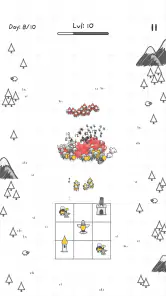

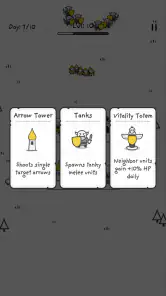
Analysis by Reviewed
Rock Paper Kingdoms is a strategy game built around a simple question: can I assemble the right army before the next siege overwhelms my defenses? Developed by TapHub Games, it presents itself as a free experience for players who enjoy summoning units, improving them, and reacting to repeated enemy attacks. After spending time with it, I found the appeal easy to understand: the rules are approachable, but each defense still asks me to make a choice rather than simply watch numbers rise.
The game is suitable for Everyone, which makes its presentation accessible to younger players and to adults looking for something lighter than a complex kingdom simulator. Its store summary focuses on summoning, upgrading, and stopping endless sieges, and that is a useful description of the basic rhythm. I would not approach it expecting a large diplomatic sandbox or a long-form city-building campaign. Its strength is the compact decision loop of preparing an army, seeing how it performs under pressure, and adjusting the next attempt.
Starting with the right expectations
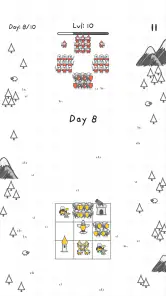
The most important thing for a first-time player is to understand what kind of strategy game this is. Rock Paper Kingdoms is not the sort of title where I need to learn a huge technology tree before I can enjoy the opening. The early experience is more focused: summon available forces, improve the units that matter most, and protect the kingdom when enemies begin pressing forward.
That simplicity is helpful, but it also creates a limitation. Players who want detailed map exploration, elaborate resource chains, or a story-heavy campaign may find the structure too narrow. The game is better suited to short sessions in which I want a clear tactical problem. It works especially well when I have a few minutes to think about my next formation instead of committing to a long, uninterrupted play session.
The game currently carries a 4.7 average from around 440 ratings, with over 170 written reviews. It has passed 10K installs, so it has already attracted a modest group of players while still feeling like a relatively early-stage release. The listed release date is January 21, 2026, and the current version is 0.2.1. Those details matter because I approached it as a developing strategy game rather than as a huge, fully mature alternative to the biggest names in the genre.
It is free to start, with optional in-app items ranging from $0.99 to $49.99 each. I recommend deciding before playing whether I am comfortable treating purchases as optional conveniences. The most satisfying way to approach the opening is to first learn which upgrades actually change the result of a siege, rather than spending immediately because a stronger-looking option appears on screen.
The first minutes after installation
Rock Paper Kingdoms supports devices running Android 7.0 or later. Once I opened it, my first useful task was not to chase the largest possible army. I treated the opening as a tutorial in cause and effect. I looked at what could be summoned, noted which improvements were available, and paid attention to how the defensive situation changed after each decision.
That approach is more reliable than tapping every available button. Strategy games often make early upgrades feel equally important, but they rarely are. My advice is to make one change at a time whenever possible. If I summon several different units and upgrade everything immediately, I lose the chance to understand which choice helped. If I make a single adjustment and then observe the next siege, the game becomes much easier to read.
A first-time player should also resist the urge to judge a unit only by its appearance or cost. A unit that looks powerful may not solve the specific pressure coming from the current enemy group. The practical question is not “Which option is strongest?” but “What problem is stopping my defense right now?” That small change in thinking is the first meaningful lesson the game offers.
I found it useful to keep a mental record of three things: where the defense begins to fail, which enemy reaches the kingdom first, and whether the problem is insufficient damage or poor timing. These observations turn a failed attempt into information. They also prevent the common mistake of repeating the same setup while hoping the result will somehow change.
Reaching the first meaningful success
The first real victory feels more satisfying when I earn it through a deliberate adjustment. A practical opening routine is to summon a modest force, watch the first pressure point, and then spend the next improvement on that weakness. If the defense collapses because enemies survive too long, I prioritize the option that addresses damage. If the army seems capable of dealing with threats but cannot hold the line at the right moment, I reconsider the arrangement and timing instead of blindly adding more power.
This is where the title’s rock-paper-scissors idea becomes useful as a way of thinking, even before I understand every detail of the available forces. I should look for relationships between threats and responses rather than assuming that a larger number automatically wins. The best early move may be a less impressive unit that answers the enemy’s current advantage.
One concrete scenario is playing during a short break. I might have enough time for a single attempt, so I first review the previous failure instead of starting with random choices. I identify the earliest point where the defense weakened, make one targeted upgrade, and then check whether the siege lasts longer. Even if I do not win immediately, that process gives the session a clear purpose and keeps the game from becoming a sequence of unexamined taps.
When the first defense succeeds, I recommend not immediately replacing the entire army. Keep the successful core for the next attempt and alter only one part of it. This creates a simple personal test: was the victory caused by the new summon, the upgrade, or the way the force was arranged? That habit is one of the most useful ways to get more strategy from a relatively approachable game.
The fastest route to progress is usually better observation, not the fastest spending. That is particularly important in a free game with optional purchases. Learning the defensive pattern first helps me decide whether an item is genuinely useful or merely attractive because it promises a shortcut.
Where new players can become confused
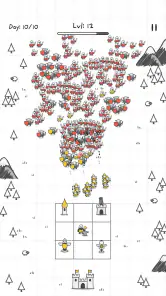
The biggest source of confusion is the difference between having more units and having a better answer. A crowded army can still perform poorly if its composition does not address the incoming threat. When a siege goes badly, I do not assume that the solution is simply another summon. I ask whether I am missing the right counter, improving the wrong unit, or changing the setup too late.
Another likely stumbling point is interpreting a failed defense as a verdict on the whole army. In practice, one weak moment can determine the result. A player may have enough overall strength but still lose because the first dangerous enemy reaches the kingdom before the useful response is ready. Watching the opening exchange closely is therefore more valuable than focusing only on the final defeat screen.
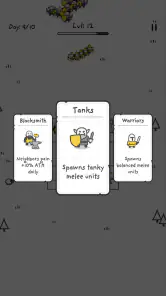
Upgrade choices can also create friction. A permanent improvement is tempting, but an upgrade that helps one situation may not be the best use of resources in the next. I prefer to ask whether it improves the part of the defense that fails repeatedly. If the answer is no, I save the decision until I have seen another attack. This is slower than upgrading reflexively, but it produces a clearer understanding of the game.
The free-to-play structure deserves the same careful attention. The presence of optional items does not automatically ruin the experience, but it can change how I evaluate progress. If I am comfortable experimenting and accepting occasional setbacks, the free entry point is attractive. If I dislike any pressure to accelerate progress or prefer a single upfront purchase, I may feel more comfortable with a premium strategy game instead.
I would also avoid treating the 4.7 average as proof that every player will enjoy it. Ratings suggest that the central loop is connecting with its audience, but they cannot replace personal preference. Someone who loves compact siege decisions may find the game immediately appealing. Someone seeking extensive construction, exploration, or multiplayer competition should compare it with broader strategy alternatives before committing time.
How it compares with familiar strategy games
Compared with a traditional kingdom builder, Rock Paper Kingdoms is easier to approach because it concentrates attention on the army and the incoming attack. I do not need to begin by learning a large economy or managing many unrelated buildings. That makes it a good choice for a first strategy game or for a player who wants decisions without a heavy administrative layer.
Compared with a collectible army game, its appeal is less about chasing an enormous roster and more about understanding how the available forces work together. That can make the early learning process feel cleaner. The trade-off is that players who enjoy constant collection, extensive customization, or a deep competitive meta may find the experience less ambitious than their usual choice.
Compared with a tower defense game, the focus feels more connected to building and improving an army than to placing fixed defensive structures. I like that distinction because it makes each attempt feel like a question about preparation and response. However, people who prefer precise lane placement and highly detailed battlefield control may prefer a dedicated tower defense title.
In my view, the game occupies a useful middle ground. It is more thoughtful than a purely idle progression loop, but less demanding than a full-scale strategy simulator. That balance is its clearest identity. It gives me enough room to test decisions without asking me to memorize a complicated system before the first enjoyable result.
Practical habits that make the game clearer
My first recommendation is to change only one important variable after a defeat. If I summon a new unit, replace an existing one, and spend several upgrades at once, I cannot tell which decision mattered. A controlled experiment may sound overly serious for a casual game, but it prevents wasted resources and makes the strategy easier to learn.
Second, I pay attention to the earliest successful exchange, not just the final outcome. If a particular response consistently handles the first threat, I keep it as an anchor while testing other parts of the army. This creates stability and gives me a reference point for later choices.
Third, I separate progression from impatience. When I feel tempted to purchase an item, I first ask whether I understand the reason for my latest failure. If I do not, spending will probably hide the lesson rather than solve the problem. Purchases make more sense when I already know the exact bottleneck I want to remove.
Fourth, I use short sessions intentionally. A quick attempt followed by a brief review is more productive than playing repeatedly while distracted. The game’s siege-centered format suits this rhythm because each result can lead directly to a small adjustment. It is a good fit for a commute, a waiting room, or a short evening break, provided I am willing to think about the choices rather than play entirely on autopilot.
Finally, I keep expectations realistic about its current scale. Version 0.2.1 suggests an experience that is still developing, and I would not choose it specifically for the breadth of a long-established strategy franchise. I choose it for the immediate loop: prepare, respond, learn, and try again. That focus is enjoyable when I want clarity, but it may feel limited if I need a large amount of content from the start.
Who should try it, and who should skip it
I would recommend Rock Paper Kingdoms to a first-time strategy player who wants a friendly introduction to army decisions and defensive planning. It is also a sensible pick for someone who likes games that can be understood quickly but still reward attention. The Everyone rating and free starting price make it easy to test without a large commitment, while the optional purchases leave room for players who want to support or accelerate their progress.
I would be more cautious recommending it to players who dislike repeated attacks, gradual upgrading, or learning through failed attempts. The core satisfaction comes from adjusting a defense after seeing what went wrong. If I want a purely relaxing game with no pressure to respond, a puzzle or idle title may be a better match.
It is also not my first choice for someone seeking a deep long-term strategy campaign. A larger kingdom simulator will offer more systems to manage, while a dedicated competitive game may provide stronger player-versus-player tension. Rock Paper Kingdoms is at its best when I want a focused tactical loop rather than a complete virtual empire.
My overall take after learning the loop
Rock Paper Kingdoms succeeds because it gives a new player a clear path from confusion to competence. I can begin by summoning a basic force, observe the first siege, identify the weak point, and make a targeted improvement. That sequence feels reassuring because every loss can become a useful clue instead of a dead end.
Its limitations are just as clear. The focused structure will not satisfy everyone, and the optional purchase range means I need to be comfortable with a free-to-play model. The developing version also makes it better to judge the game by the quality of its current core loop than by expectations of a huge strategy universe.
After trying the game, I would tell a friend to install it if they want a compact, approachable strategy experience and are happy to learn through small experiments. I would advise starting slowly, keeping the first successful army mostly intact, and spending only after understanding the problem. For that kind of player, TapHub Games has made a promising entry point: simple enough to begin without anxiety, yet structured enough that thoughtful choices still matter.
Pros
- Simple rock-paper-scissors gameplay is easy for anyone to learn.
- Kingdom progression adds purpose beyond individual matches.
- Quick rounds suit short gaming sessions on mobile.
- Light strategy elements make repeated battles more engaging.
- The fantasy theme gives the classic game a fresh presentation.
Cons
- Gameplay may feel repetitive once the basic mechanics become familiar.
- Random outcomes can make some matches feel less skill-based.
- Progression may become slower as kingdom challenges increase.
- The fantasy setting may not appeal to players seeking deep strategy.
- Some features may require patience before they become available.
- Category
- Strategy
- Version
- 0.2.1