Roadside Empire
- 314.00
- 4.6
- Installs
- 1.00M
- Price
- Free
Screenshots



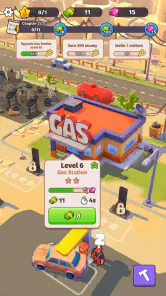
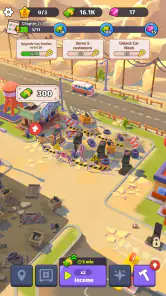
Analysis by Reviewed
I judge a roadside-management game by how enjoyable its small decisions are, not by how grand its business theme sounds. Do I like shaping a compact destination, balancing expansion with upkeep, and dipping in for short sessions? Those are the questions I’d ask before choosing Roadside Empire. It is a free simulation game from Highcore Labs LLC, and its appeal is strongest when you want a light mix of building, management, and story rather than a demanding business simulator.
Who will enjoy the roadside setting
This is a natural fit if you like watching a modest venture grow into a busier stop and enjoy having characters and story beats alongside the management. I’d recommend it to someone who wants a relaxed game to check between errands or unwind with after dinner, especially if the pleasure of seeing a place develop matters more than intricate economic planning.
For example, I can imagine opening it during a short break, making one or two decisions about the next expansion, then leaving the game until later. That kind of stop-and-start routine suits the theme: you are building a destination over time, rather than racing through a single level. The useful question is whether its pace feels satisfying to you. If you want rapid action, competition, or deep spreadsheets of costs and production, a more tactical management game may be a better match.
What to consider before settling in
The simple starting point makes the game approachable, but straightforward play can also feel limited if you are looking for constant challenge. Expansion and unlocking provide a reason to continue, while the story and characters add variety; still, players who prefer open-ended construction or hands-on control of every business detail may find this style too guided. I’d treat it as a casual progression game, not a substitute for a complex tycoon simulator.
One practical way to enjoy it is to pause before each purchase or expansion and ask what it adds to your next session. That helps keep the management choices meaningful instead of turning progress into automatic tapping. If you are trying to avoid spending, remember that the game is free to download but offers in-app purchases priced from $1.99 to $49.99 per item. I’d play at the free pace first and only consider a purchase if it clearly improves your own experience; there is no need to spend just to find out whether the core loop suits you.
Build and Expand Your Empire
From the moment you fire up Roadside Empire, you are thrown into the thick of it. The app gives you the chance to build and expand your very own roadside business empire. Whether it's setting up diners, motels, or quirky souvenir shops, the possibilities are endless. The game encourages you to get creative with your business strategies to attract more customers and earn more money.
That broad sense of possibility is part of the fantasy, but I’d approach the choices as a player rather than assume every business option needs immediate attention. A useful habit is to make a small note—mentally or elsewhere—of what you are hoping a new addition will change: variety, a new objective, or simply a visual change to the stop. If an expansion does not make the next visit more interesting, slow down and enjoy the parts already in place instead of treating growth as the only measure of progress.
More From Our News Desk

Weather by Xiaomi Review: Clear at a Glance, Less Clear Up Close

X Under Pressure: Can It Recover When Posting Goes Wrong?

Clash of Clans Is Won Between the Battles

Android Auto Makes the Case for Quieter Car Software

MobiOffice: Transforming Mobile Productivity with Seamless Integration

EA SPORTS FC™ Mobile Soccer: Redefining Mobile Sports Gaming
How the play loop feels
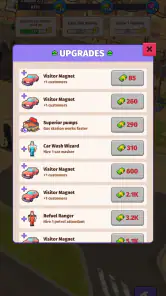
The progression is easiest to enjoy when you treat each unlock as a choice about what kind of roadside stop you want to build, rather than trying to expand everything at once. A useful trade-off is variety versus focus: adding different businesses can make the place feel lively, while a measured approach gives you time to notice how each new part changes the experience. I’d avoid rushing through every available decision in one sitting if you want the story and setting to have room to land.
For a first session, I’d take time to learn the rhythm before spending money: see how the basic management feels, notice what the game asks you to do next, and decide whether its gentle progression is enough to bring you back. The game is rated Everyone, has a 4.6 average from around 17,000 ratings, and has passed over one million installs. Those figures suggest broad interest, but your own preference for casual business-building matters more than popularity.
Gameplay That Keeps You Hooked
The gameplay is quite straightforward, which is part of its charm. You start with a small piece of land and a few resources. As you progress, you unlock new buildings, each with its unique benefits and challenges. The game smartly combines elements of strategy and management, making it both exciting and challenging. And let me tell you, there's nothing more satisfying than watching your little empire flourish!
But wait, it’s not all about business. The game does an excellent job at integrating delightful storylines and quirky characters that add a layer of depth to the overall experience. These interactions often lead to unexpected twists, keeping the gameplay fresh and exciting.
A good fit for short sessions, with a caveat
For a realistic everyday routine, I’d use it as a small check-in rather than a game that demands a long, uninterrupted evening. On a lunch break, I could look over the roadside stop, choose a manageable next step, and leave the more deliberate decisions for when I have time to pay attention. That approach makes the gradual growth feel intentional. If I were tired and tapping through without noticing what changed, I’d stop for the day; the point is the pleasure of shaping the place, not merely moving through prompts.
It is also a reasonable choice for someone who enjoys a little narrative context in a management game but does not want story to become the only activity. The characters and story beats give the business theme a human touch, while the central appeal remains watching the destination develop. If you mainly want a narrative adventure with little planning, a story-first game is likely a better fit. If you want management decisions to be the whole experience, a more systems-heavy simulator may suit you better.
Choosing it over other simulation games
Compared with the usual alternatives, this leans more toward a themed roadside business and character-led progression than toward a pure city builder, farming routine, or detailed tycoon model. That focus is a strength when you want a clear setting and a little narrative texture. It is less compelling if your main goal is designing a sprawling town, optimizing every resource chain, or competing against other players; in those cases, choose a simulation built around that specific activity instead.
The comparison is useful because “simulation” can mean very different things. A city builder tends to reward arranging a broad landscape, while a farming game usually centers on repeating a work-and-growth cycle. A detailed tycoon game appeals when you want to inspect connected systems and fine-tune performance. Roadside Empire sits closer to a guided, themed progression experience. I would choose it for the distinct roadside premise and story, not as a replacement for those other styles.
If you are unsure whether its guided pace will feel too limiting, try setting yourself a simple personal goal for a few visits: make one considered expansion, then see whether you want to return to see how the stop develops. That gives you a better test than judging the game by how quickly it opens up. Someone who enjoys planning their own broad construction project may reach the limits of this approach sooner; someone who likes clear next steps may appreciate not having to invent a whole project from scratch.
There is also a small cost to switching games: you may leave behind a setting and story you have started to enjoy, but you do not have to commit before you know whether the loop works for you. The current version is 1.7 and requires Android 6.0 or later. If you are deciding whether it belongs on your phone, the simplest test is to play at your own pace and see whether the balance of expansion, characters, and casual management holds your attention.
Spending, pacing, and the decision to continue
The clearest way to keep the experience comfortable is to separate curiosity from urgency. If an in-game purchase catches your eye, I’d first ask whether I understand what it changes and whether I’m enjoying the game without it. The available price range is broad enough that I would not treat a purchase as a casual way to test the game. Start with the free experience, decide whether the basic rhythm is enjoyable, and only then consider whether paying makes sense for you.
That same patience helps with progression. When a session ends, it can be useful to stop at a point where you know what you want to do next, rather than trying to squeeze every possible action into one sitting. On the next visit, you can judge whether that goal still interests you. If the loop begins to feel like chores, take that as a sign to step away instead of spending to push through a mood the game is not fixing.
Visuals That Are a Feast for the Eyes
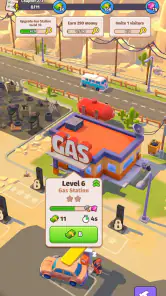
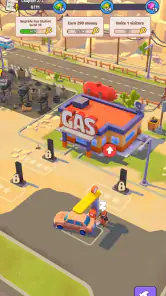
One of the first things that struck me about Roadside Empire was its captivating visuals. The developers have done a fantastic job of creating a vibrant world that feels alive. The attention to detail in the buildings and the animations is commendable, making every interaction within the game a visual treat.
The roadside theme benefits from having a recognizable place to watch change. I find that visual development works best when I take a moment to look at the whole stop after an expansion, rather than immediately jumping into the next task. It helps connect individual decisions to the overall setting and makes the gradual build-out more satisfying. This is a small but useful way to get more from a game whose appeal includes seeing a modest location become busier.
The sound effects and background music further enhance the experience, immersing you in the bustling roadside atmosphere. It's like a mini-vacation every time you play!
Who should keep looking
I would skip this one if your ideal simulation gives you complete freedom to design every corner, expects you to optimize a dense economy, or puts you against other players. The appeal here is more contained: a roadside business setting, accessible management, and story-led touches. Those are not flaws for the right player, but they do define what the game is and is not trying to offer.
I would also look elsewhere if you dislike gradual progression or want every session to deliver a dramatic change. A casual game can be pleasant precisely because it asks for modest attention, but that can feel underwhelming when you are in the mood for a demanding challenge. In that situation, a more tactical or open-ended alternative is a better use of your time than trying to make this one serve a different purpose.
Final Thoughts
In conclusion, Roadside Empire is a delightful blend of strategy, management, and storytelling. It's an app that offers endless entertainment and opportunities to flex your creative muscles. Whether you're a casual gamer or a seasoned player, this app has something for everyone. So, why not give it a try and start building your own roadside empire today?
My recommendation is more specific: give it a try if a relaxed, character-touched roadside business game sounds appealing, and judge it by whether its small choices make you want to return. It is free to start, rated for Everyone, and developed by Highcore Labs LLC; the game has a 4.6 average across around 17,000 ratings, with over one million installs. Those are reassuring signs of interest, not a guarantee that its guided pace will suit every player. For me, its best use is as a low-pressure building game between other parts of the day, while fans of intricate economic systems or unrestricted city design should choose a simulation aimed squarely at those interests.
Roadside Empire Frequently Asked Questions
How much storage space does Roadside Empire need?
Before downloading a new game, it is sensible to consider how much room it may take on your device. Roadside Empire is a simulation game centered on a roadside business, so you can decide whether its management-focused theme is worth making space for. Check the available storage shown by your device’s app store during installation, and leave enough room for the download to complete.
Who developed Roadside Empire, and what kind of game is it?
Roadside Empire is a simulation game developed by Highcore Labs LLC. Its roadside-business theme is reflected in the store summary, “Roadside cafe stories,” and the game’s central appeal is building and managing a roadside enterprise. If you enjoy simulation games focused on growing a business and making management decisions, this theme may be a good fit for you.
Is Roadside Empire suitable for children, and what is its age rating?
Roadside Empire has an Everyone content rating, so it is classified as suitable for a broad audience. Parents and players can use that rating as a helpful starting point when deciding whether the game is appropriate. The game’s simulation focus centers on a roadside business, making it a different kind of experience from action-heavy or mature-themed games.
Can my device run Roadside Empire, and how much does it cost to download?
Roadside Empire is free to download, and the Android version requires Android 6.0 or later. That minimum requirement is worth checking before installing so you can avoid compatibility surprises. The game also offers optional in-app purchases, so downloading it does not require an upfront payment, though some additional purchases may be available while playing.
What is Roadside Empire about?
Roadside Empire is a strategic simulation game where players take on the role of a roadside tycoon. The game involves building and managing facilities like gas stations, restaurants, and motels to attract travelers. Players must strategize to expand their empire, manage resources efficiently, and compete with other roadside establishments to dominate the market.
Pros
- Engaging gameplay with strategic elements.
- High-quality graphics and animations.
- Diverse vehicle customization options.
- Regular updates with new content.
- Great community and customer support.
Cons
- In-app purchases can be expensive.
- Occasional bugs and crashes.
- Requires a constant internet connection.
- May drain battery quickly on older devices.
- Some features locked behind paywalls.
- Category
- Simulation
- Version
- 1.7








