Mob Army
- 44.00
- 4.4
- Installs
- 10.00K
- Price
- Free

Screenshots

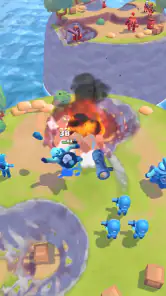
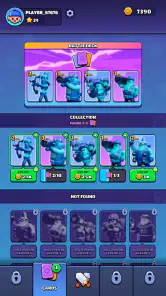


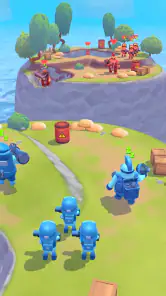
Analysis by Reviewed
I went into Mob Army expecting a quick action game built around direct competition, and that is exactly where it makes the most sense. Developed by Highcore Labs LLC, this free Android game focuses on one-versus-one PvP battles rather than a long story campaign or a large collection of side activities. After spending time with it, my impression is that its appeal comes from the short decision cycle: you enter a match, read what the other player is doing, react, and try to make better choices before the duel slips away.
That narrow focus is useful. It means I do not need to learn a huge world, manage several unrelated modes, or commit to a long session before I can enjoy a few battles. At the same time, it also sets a clear expectation: this is not the right pick if you want a deep single-player adventure, a relaxed puzzle game, or a large strategy sandbox. It is best approached as a compact competitive game that rewards attention and repeatable habits.
How I settled into the basic battle routine
The most comfortable way to play is to treat each match as a small learning exercise instead of rushing through it. I first watch the opening exchange and identify what the opponent is trying to establish. That first moment matters because reacting blindly can leave me spending resources or making moves without a clear purpose. Even when a battle is brief, a calm opening gives me more information than immediately tapping through every available option.
My baseline routine is simple. I begin by checking the battlefield, look for the opponent’s first commitment, and then respond with the smallest action that addresses the immediate threat. If I win an exchange, I avoid assuming the match is already decided. If I lose one, I try to determine whether the problem was timing, positioning, or an overly ambitious response. This habit makes the game feel less random and turns each defeat into something I can actually use.
The one-versus-one format helps with that process because responsibility is easy to understand. There is no teammate whose mistake can obscure what happened, and there is no large group battle hiding the reason for a loss. I can usually point to one or two decisions that changed the direction of the match. For players who enjoy improving through repetition, that clarity is one of the strongest parts of the experience.
A realistic everyday use case is a short break between tasks. I can play a battle, put the phone down, and return later without needing to remember a complicated campaign objective. That makes Mob Army more convenient than many action games that demand a longer session or bury the interesting part under menus and preparation. However, the same compact structure can feel repetitive if I am not in the mood to study opponents and repeat similar competitive situations.
What I do before pressing into a match
I recommend taking a moment to become familiar with the touch layout before trying to play quickly. The first few matches are better used to learn where the important controls sit than to chase perfect results. A misplaced tap is especially frustrating in a competitive duel because there may be no time to correct it. Building a consistent hand position helps more than frantic speed.
More From Our News Desk

Weather by Xiaomi Review: Clear at a Glance, Less Clear Up Close

X Under Pressure: Can It Recover When Posting Goes Wrong?

Clash of Clans Is Won Between the Battles

Android Auto Makes the Case for Quieter Car Software

MobiOffice: Transforming Mobile Productivity with Seamless Integration

EA SPORTS FC™ Mobile Soccer: Redefining Mobile Sports Gaming
I also avoid changing my approach after every single loss. One bad result may come from a poor read, a rushed decision, or an opponent who simply handled the exchange better. I prefer to play several matches with one basic plan, then adjust one part of it. That creates a clearer connection between the change I made and the result I receive. It is a more reliable way to improve than copying every move that appears successful in the moment.
Another useful habit is to separate “I lost the match” from “everything I did was wrong.” In a competitive game, a generally sound plan can still fail because of one late reaction. Looking at the turning point keeps the review process practical. I ask myself which decision gave the opponent control and whether I could have delayed, defended, or chosen a less costly answer.
Settings and phone habits worth checking
Because this is a touch-focused action game, I pay attention to the conditions around the match as much as the match itself. I play with notifications silenced, keep the screen clean, and make sure my fingers are not covering the area where I need to react. These are ordinary adjustments, but they reduce distractions that can look like gameplay problems.
I also check the available in-game settings before settling into regular play. The most important thing is not to search for a magic option that will make me better; it is to make the controls and presentation comfortable enough that my decisions are not interrupted by avoidable friction. If a visual effect, sound cue, or control arrangement makes it harder to notice what is happening, I would rather adjust it than blame my timing.
Players using an older phone should be realistic about comfort. The game supports Android 7.1 and later, which gives it a broad device range, but age alone does not guarantee that every handset will feel equally responsive. A player who notices delayed touches, heat, or inconsistent performance should close background apps and test a few matches before investing serious time. In a one-versus-one game, small interruptions matter more than they would in a casual offline title.
The current version is 0.5.2, so I approach it as a game that is still developing rather than as an enormous finished platform. That does not make it unsuitable, but it affects my expectations. I focus on whether the present battle loop is enjoyable instead of assuming that future additions will solve weaknesses I already notice. This is an important distinction for anyone deciding whether to install it today.
Repeatable patterns that make matches cleaner
The fastest improvement I found came from replacing frantic reactions with repeatable patterns. I use a simple sequence: observe, identify the immediate danger, respond, and pause long enough to see the result. That pause is easy to skip when the action becomes tense, but it prevents me from stacking one rushed decision on top of another.
I also try not to reveal my entire approach at the start of every duel. If I always respond in the same way, an attentive opponent can prepare for it. Varying the timing of an otherwise familiar response makes my play less predictable without requiring complicated tactics. The trade-off is that variation only helps when it remains deliberate; random changes create confusion for me as well as for the other player.
A second practical pattern is to preserve a fallback option. I do not spend every available choice simply because it is available. Keeping one response in reserve gives me room to handle an unexpected push. This is particularly useful when I am still learning the game, because I may not yet recognize every situation early enough to act perfectly. A reserve turns a mistake into a recoverable position instead of an immediate collapse.
After a match, I make a quick mental note rather than trying to remember every tap. I record the opening that worked, the moment I lost control, and whether I was too passive or too aggressive. This three-part review takes less than a minute and gives the next match a specific purpose. It is one of the less obvious ways to get more value from a small PvP game: improvement becomes a routine instead of an emotional reaction.
Where the free model changes the decision
Mob Army is free to download and play, but it includes optional in-app purchases ranging from $0.99 to $99.99 per item. That wide range is worth considering before getting invested. I would begin without spending anything and first decide whether the core one-versus-one loop holds my attention. A competitive game should feel worthwhile at its basic level before optional purchases enter the conversation.
My advice is to treat purchases as a personal boundary rather than as part of the standard starting routine. If I am enjoying the game, I can decide later whether an optional item adds enough value for my own play style. I would not buy simply because a difficult match made me frustrated. Waiting until after a session, rather than purchasing in the heat of a loss, makes the decision much easier to judge.
This is also where Mob Army differs from a conventional paid action game. A paid title may offer a more predictable package at the beginning, while this free model lowers the barrier to trying it but asks the player to pay attention to optional spending. Compared with a single-player action game, the competitive format adds another trade-off: progress and enjoyment depend more on how much I like repeated human opposition than on unlocking a fixed sequence of content.
Limits experienced players should understand
The strongest limitation is the same feature that gives the game its identity: the focus on direct PvP. Players who need a substantial solo mode may run out of reasons to return. There is no point pretending that a compact competitive loop can replace a story-driven action game, a deep role-playing system, or a broad strategy title for everyone. If my ideal session involves exploration and discovery, I would choose something else.
Competition can also expose the difference between learning and simply repeating. The game rewards attention, but it cannot make every match feel fresh if I use one routine without adapting. When I catch myself tapping automatically, I take a break. Continuing in that state usually produces frustration rather than improvement. This is a game that benefits from short, focused sessions more than from unfocused grinding.
Another trade-off is the emotional pressure of a one-versus-one format. A loss feels personal because there is no team structure to distribute responsibility. I like that honesty, but some players will find it tiring. Anyone who prefers cooperative play, forgiving matchmaking, or progress that continues regardless of performance should think carefully before choosing this as a main game.
The age rating is Everyone, which makes the game broadly approachable from a content perspective. That does not mean every player will enjoy its competitive pressure. Younger players may still need guidance around optional purchases, while adults should remember that a broad content rating says little about whether the pace and repeated duels fit their preferences.
Who should install it, and who should skip it
I would recommend Mob Army to someone who wants a free action game with a clear competitive purpose and enough room to improve through repeated one-versus-one encounters. It is especially suitable for players who enjoy reading an opponent, testing small adjustments, and learning from losses. The modest install footprint suggested by its current audience, with over ten thousand installs, also makes it feel like an easy game to try without treating it as a major long-term commitment.
I would be more cautious about recommending it to someone looking for a polished, content-heavy experience with many modes. The average rating is 4.4 from around two hundred ratings, with dozens of written reviews, which indicates a generally positive early response but not the same breadth of feedback I would expect from a huge established game. That makes personal testing more important. The free entry point helps because I can judge the controls and battle rhythm directly rather than relying only on other players’ impressions.
I would also skip it if I dislike real-time pressure or if I want a game that can be played almost entirely on autopilot. Mob Army asks me to watch, react, and accept that another player may exploit a predictable habit. For me, that is the fun. For someone seeking a calm background game, it may quickly become work.
My final view after building a routine
Mob Army works best when I treat it as a focused competitive tool rather than as an all-purpose mobile game. Its free entry, Everyone rating, and direct action format make it easy to try, while the one-versus-one structure gives experienced players a clear path toward improvement. The developer, Highcore Labs LLC, has a promising foundation here, particularly for players who like compact matches where decisions are visible and mistakes are easy to analyze.
My strongest recommendation is to establish a repeatable routine before judging the game: learn the controls, check the settings that affect comfort, play with a clear opening plan, preserve a fallback response, and review the turning point after each loss. Those habits do more for the experience than chasing speed or spending immediately. They also reveal whether the core loop genuinely suits you.
The game is worth trying if you want short, attentive PvP battles; it is not the right choice if you need a deep solo adventure. I would install it for focused sessions, keep optional purchases firmly under control, and judge it by the quality of its present duels rather than by hopes about what may come later. For the right player, that focused approach is enough to make Mob Army an enjoyable competitive break.
Mob Army Frequently Asked Questions
What is Mob Army’s age rating, and is it appropriate for children?
Mob Army has an Everyone content rating, which makes it broadly accessible, but parents may still want to consider the game’s competitive battles and purchase options before a child plays. You can also use device-level purchase controls to manage spending. As with any game, check that the content and play experience suit the individual child.
What devices can run Mob Army?
Mob Army requires Android 7.1 or later. Check your device’s operating system before downloading, especially if you use an older phone or tablet. Meeting the minimum OS requirement is a useful first check, though performance can vary between devices. Keeping some storage available and installing the latest system updates can also help with a smoother experience.
What is Mob Army, and how does the game work?
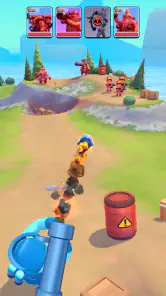
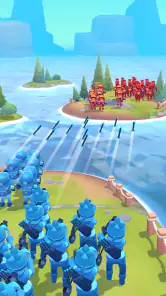
Mob Army is a casual strategy and action game focused on building and controlling a growing group of units. You typically recruit or collect characters, guide them through levels, defeat opposing forces, and improve your army between battles. The gameplay is designed to be easy to learn, with simple controls, short sessions, and progression based on upgrades, better formations, and completing increasingly challenging stages.
Is Mob Army free to download and play?
Mob Army is free to download, but it includes optional in-app purchases priced from $0.99 to $99.99 per item. You do not necessarily need to spend money to enjoy the main gameplay, although free players may encounter advertisements, waiting periods, or slower progress compared with users who choose to buy optional content. Review purchase settings before playing if you want to manage spending.
Does Mob Army require an internet connection?
Whether Mob Army works fully offline can depend on the version installed and the feature you are using. Basic gameplay may be available without a constant connection, but advertisements, cloud saving, updates, events, leaderboards, and purchases usually require internet access. For the most reliable experience, especially after installing an update or changing devices, it is best to launch the game while connected to Wi-Fi or mobile data.
Pros
- Simple controls make Mob Army easy to pick up and play.
- Short battles fit well into quick gaming sessions.
- Growing your army creates a satisfying sense of progress.
- The colorful presentation keeps the action clear and accessible.
- Playable without constant internet access in many situations.
Cons
- Gameplay can become repetitive after extended play sessions.
- Some upgrades may require considerable grinding to unlock.
- Difficulty spikes can make later stages feel unbalanced.
- Ads may interrupt the experience
- especially for free players.
- Limited strategic depth may disappoint experienced strategy fans.
- Category
- Action
- Version
- 0.5.2