Riddles Test - 500 Brain Games
- 4.01K
- 4.3
- Installs
- 1.00M
- Price
- Free
Screenshots
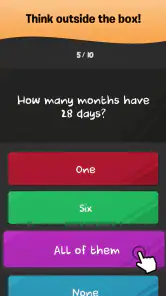
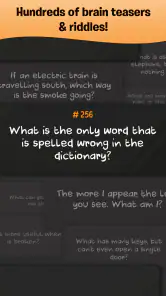
Analysis by Reviewed
I usually approach short riddle games with modest expectations. They are easy to start, pleasant for a few spare minutes, and often less satisfying once the first burst of novelty disappears. Riddles Test - 500 Brain Games made a better first impression than many similar trivia puzzles because it focuses on the simple pleasure of reading a question, forming a theory, and checking whether the wording hid a second meaning. It is a free trivia game from Idle Boots, aimed at Everyone, and its offline format makes it especially convenient when I want something that does not depend on a connection.
The important question, though, is not whether the game can fill an idle moment. Most riddle apps can do that. The more useful question is whether it deserves a regular place on a phone after the initial curiosity fades. My answer is qualified: it works well as a lightweight mental break and as a source of conversation, but its lasting value depends heavily on how much you enjoy wordplay and whether you can tolerate repeated patterns. I found the strongest experience came from treating it as a small daily habit rather than trying to rush through the entire collection.
From an enjoyable first week to a realistic long-term habit
Why the first sessions are easy to enjoy
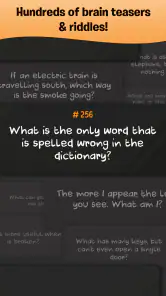
The opening appeal is immediate. A riddle gives me a compact problem with very little setup, so I can play while waiting for an appointment, taking a short break, or relaxing before sleep. Unlike a long quiz session, there is no need to remember a complicated rule set. The challenge is concentrated in the wording, which means the game feels active even when a round lasts only a short time.
That simplicity is also what makes the game approachable for people who do not normally play games. Someone looking for a demanding strategy title may find it too light, but a family member who enjoys jokes, lateral thinking, or casual trivia can understand the appeal almost immediately. The Everyone age rating fits that broad audience. I would still describe the experience as best for readers who enjoy interpreting language, because the fun comes less from specialist knowledge and more from noticing assumptions.
During my first week with it, I liked the way a seemingly obvious answer could become questionable after a second reading. The best riddles encouraged me to slow down and challenge my first reaction. That is a small but useful mental exercise: instead of searching for the most complicated explanation, I learned to inspect the exact phrasing and ask what the question was really asking.
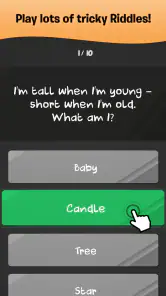
The most useful early habit is to read every riddle twice before guessing. On the first pass, I look for the natural answer. On the second, I examine unusual wording, hidden constraints, and whether the question is using an everyday expression in an unexpected way. This does not guarantee a correct solution, but it makes the game feel more like reasoning than random guessing.
How to use it without turning it into a grind
I would not recommend opening the game with the goal of clearing as much content as possible. Riddle games lose some of their charm when every puzzle becomes a test of speed. A better approach is to set aside a small block of time, solve a few questions, and stop while the experience still feels fresh. That makes it easier to return later instead of associating the app with an exhausting sequence of similar prompts.
It also works well as a shared activity. I can read a puzzle aloud to another person and let them argue for an answer before revealing the solution. That turns a solitary trivia game into a quick conversation starter. It is particularly suitable for a commute or a relaxed gathering where people want something more engaging than scrolling but do not want a full board game.
One practical trick is to keep a note of riddles that caused a genuine surprise, rather than recording every answer. The memorable ones can be reused as conversation pieces, while the less interesting puzzles can simply be left behind. This selective approach matters because not every riddle will match every player’s sense of humor or preferred level of difficulty.
What changes after the novelty wears off
After the first enthusiastic sessions, the experience becomes more dependent on personal taste. The initial discovery—learning that a question may be hiding a trick—does not remain equally exciting forever. Once I recognized common riddle structures, some answers became easier to predict. That is normal for this kind of game, but it affects whether it becomes a lasting habit.
The game’s offline nature is a genuine advantage here. I can use it in places where a web-based quiz would be inconvenient, and I do not have to make it part of a larger online routine. Offline access also makes it suitable for keeping on a secondary device or using during travel. The trade-off is that the experience feels self-contained: it is a fixed puzzle collection rather than an endlessly changing stream of questions.
That distinction is central to its long-term value. A live trivia service may offer fresh subjects, rankings, or social competition, while this game offers a quieter and more predictable form of play. I prefer the latter when I want a break from notifications and competitive pressure. I would choose the former when my main motivation is current events, broad knowledge testing, or regular interaction with other players.
Month-to-month value: a small collection rather than an endless service
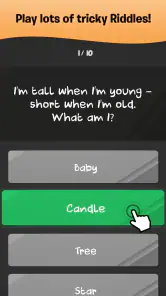
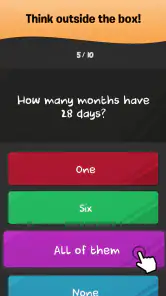
The game is built around a collection of brain teasers, tricky puzzles, and IQ-style challenges. I see that as a strength for casual use because the purpose is clear: open it, solve a few riddles, and leave. There is no need to build a profile or maintain a complicated routine just to enjoy a short session. For someone who wants a compact mental warm-up, that focused design can be more appealing than a large trivia platform filled with unrelated modes.
At the same time, a finite-feeling collection naturally raises a question: will it still feel fresh after regular use? My view is that it depends on pacing. If I play only occasionally, the riddles remain a useful source of small challenges for a long time. If I treat it as a daily marathon, I am more likely to notice recurring logic patterns and feel that the experience has become predictable.
This is where the game earns recurring value in a modest way. It is not something I would rely on as my only source of mental stimulation, but it can support a simple rotation: a few riddles on one day, another kind of puzzle on the next, and a return when I want word-based challenges. That rotation protects it from being overused and makes the offline collection feel more durable.
For parents or families, the appeal is similarly practical. The Everyone rating makes it easier to consider for mixed-age use, and the short format means an adult can join in without committing to a long session. I would still preview puzzles before using them with younger children, not because the rating suggests a serious concern, but because difficulty and humor can vary from one riddle to another.
Who will keep coming back
I think the strongest long-term audience is made up of people who enjoy language puzzles more than numerical testing. If you like lateral-thinking questions, wordplay, and the moment when an answer suddenly makes sense, the game has a good chance of becoming a dependable time filler. It can also suit students or office workers who want a short reset between demanding tasks without starting a game that is difficult to put down.
It is less suitable for someone seeking structured learning. Although solving riddles can sharpen attention to wording, this is not a replacement for a study app, a serious logic trainer, or a general knowledge course. The puzzles may make me think, but they do not create a systematic curriculum. That difference is important if the goal is measurable progress in mathematics, vocabulary, memory, or a particular academic subject.
I would also hesitate to recommend it as the main choice for players who need constant variety. A broad quiz platform is likely to be better for someone who wants geography, science, history, sports, and current affairs in one place. This game’s identity is narrower and, in my opinion, more pleasant for that reason—but the same focus can feel limiting when I am in the mood for factual quizzes rather than trick questions.
Maintenance burden: refreshingly low, with one important limitation
One of the easiest things about keeping this game around is that it does not demand much attention. Because it is an offline game, I can pick it up without planning around connectivity. I do not need to maintain a social streak or check in for a competitive event. That low maintenance suits the editorial question of whether an app earns space after novelty fades: it remains useful precisely because it asks so little from me.
The current version is 27, and the game supports Android devices running at least version 5.1. Those details make it accessible to people using older compatible phones, although actual comfort will still depend on the device and the player’s preferences. I appreciate that the technical entry point is not presented as a reason to buy a newer phone; this is the sort of simple title that makes sense on a practical everyday device.
Its free price also lowers the cost of keeping it installed. I can try it without making a financial commitment, which is helpful for a game whose value depends so much on personal tolerance for riddles. The real cost is attention rather than money: if I do not enjoy its style of trick question, no amount of convenience will make it a good fit.
The main maintenance limitation is content freshness. An offline collection is convenient because it is self-contained, but that also means I should not expect the same sense of renewal associated with a service that constantly adds new material. For me, the solution is simple: use it as one small option in a puzzle rotation, not as an app that must provide a completely new experience every day.
Sources of fatigue and how to avoid them
The biggest source of fatigue is repetition in the underlying reasoning. Even when the wording changes, many riddle games return to familiar devices: literal interpretations, misleading assumptions, unusual definitions, and answers that depend on a small language trick. Once I identify the pattern, the challenge can shift from solving the puzzle to guessing which trick the writer used.
That does not make every later session disappointing, but it changes the kind of enjoyment. Early on, I am surprised by the answer. Later, I may enjoy testing whether my prediction is right. Players who need every question to feel completely original may lose interest sooner than players who enjoy recognizing puzzle construction.
Another possible frustration is the gap between clever and arbitrary. A good riddle makes me think, then makes the answer feel fair in hindsight. A weaker one can feel as though the wording permits too many answers. When that happens, I try not to treat the result as a serious measure of intelligence. The game is entertainment built around interpretation, and disagreement with an answer does not necessarily mean I missed an important fact.
My practical rule is to stop after a frustrating run instead of forcing progress. If I am reading each question impatiently, I am no longer getting the benefit of the format. Returning later with a clearer head usually works better than searching for a solution immediately or assuming that every puzzle must be solved in one sitting.
How it compares with common alternatives
Compared with a conventional trivia app, this game feels less dependent on stored knowledge. A general quiz may reward someone who remembers capitals, dates, scientific terms, or sports records. Here, I get more value from careful reading and flexible thinking. That makes it friendlier when I want a challenge that does not expose gaps in my education, but it also means it may feel less educational to someone who wants to learn facts.
Compared with a crossword or word-search game, the experience is more conversational and less visual. I am not building a grid or scanning a board; I am interpreting a question and defending an answer in my head. That makes it easier to share aloud, but it may be less satisfying for players who enjoy seeing a puzzle structure develop on screen.
Compared with online quiz services, the offline format is calmer and more reliable for short breaks, while the online alternatives usually offer more novelty and social energy. I would choose this game for a quiet waiting room or a journey with limited connectivity. I would choose an online service when I want fresh categories, live competition, or a larger sense of progression.
My long-term verdict
After the first-week appeal has passed, Riddles Test - 500 Brain Games remains worthwhile as a low-pressure puzzle companion, not as an all-purpose brain-training system. Idle Boots has kept the concept direct: the game is free, suitable for Everyone, and easy to fit into small gaps in the day. Its strongest qualities are the offline convenience, the approachable format, and the way a good riddle can make an ordinary pause feel more mentally active.
Its limitations are equally clear. The fixed style can become predictable, some puzzles may feel more satisfying than others, and players who want factual variety or competitive updates will probably outgrow it. I would not install it expecting a deep progression system or a substitute for serious learning. I would install it because I want a compact collection of word-based challenges that I can open without preparation.
The game has built a substantial audience, with an average rating of 4.3 from around 40 thousand ratings and more than a million installs. Those figures suggest that its straightforward approach connects with many casual players, but they do not remove the central personal test: do you enjoy riddles enough to revisit them? In my experience, the answer is yes when I use it sparingly and share the better puzzles with other people.
My recommendation is therefore specific. Keep it if you want an offline mental break, enjoy tricky wording, and prefer a relaxed game that does not compete for your attention. Skip it if you need constant new content, formal skill development, or broad subject-based trivia. For the right player, it earns lasting space not through endless novelty, but through being easy to return to whenever a few quiet minutes call for a small challenge.
Pros
- 500 puzzles provide plenty of content for repeated play.
- Covers logic
- word
- math
- and visual challenges for varied gameplay.
- Short riddles are suitable for quick sessions during breaks.
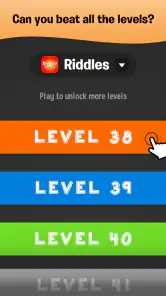
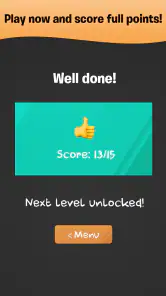
- Progression can help players track completed challenges.
- Works well as a casual brain-training activity for different ages.
Cons
- Some puzzles may feel too easy for experienced riddle fans.
- Difficulty can vary noticeably between consecutive questions.
- Hints or extra attempts may be limited or require in-app resources.
- Repeated puzzle styles can become predictable over time.
- The app may feel less engaging for players seeking a story or action.
- Category
- Trivia
- Version
- 27