Real Pool 3D
- 4.16K
- 4.4
- Installs
- 5.00M
- Price
- Free

Screenshots
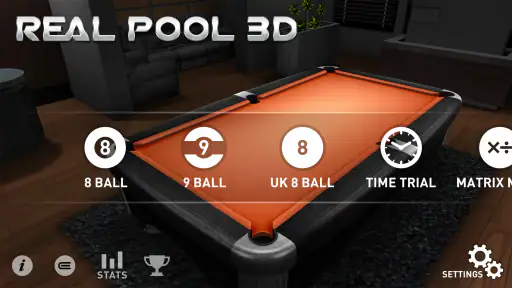
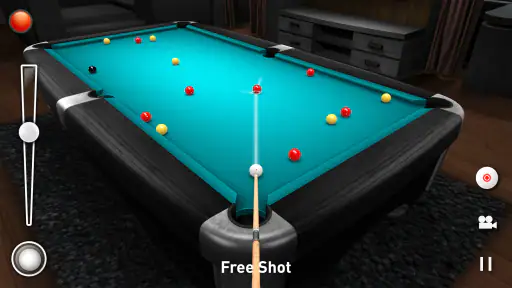
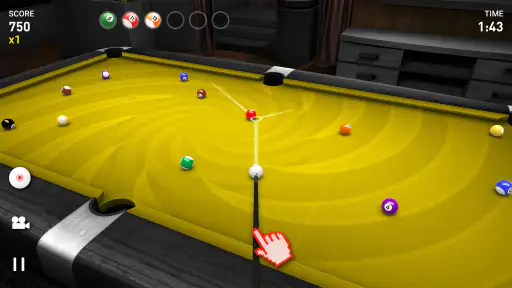
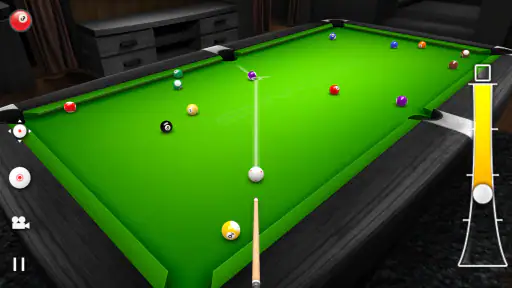
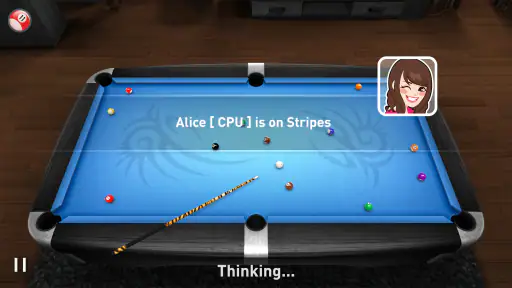
Analysis by Reviewed
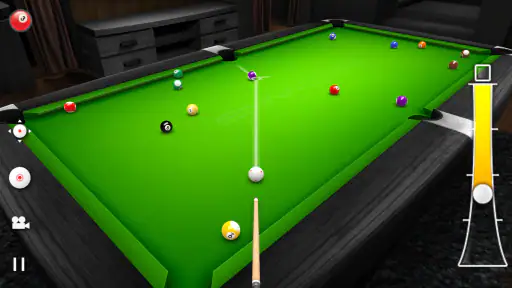
I spent time with Real Pool 3D as a casual sports game, and my first impression was straightforward: it is built around the pleasure of lining up a shot, judging the angle, and watching the balls react on the table. That focus makes it easy to understand, but it also means the quality of each session depends heavily on whether you enjoy careful aiming more than constant action.
Developed by EivaaGames, this free game puts billiards at the center rather than surrounding it with a large collection of unrelated activities. You can play against friends or AI opponents, so it fits both a quick solo break and a more social match. I would recommend it most readily to someone who wants a pool table in their pocket without needing to learn a complicated sports simulation first.
The game belongs to the sports category and is suitable for everyone. It has been available since September 21, 2016, and its current version is 3.29. That long presence matters to me because it suggests a more established product than a brand-new experiment, while the version number also gives users a clear reference point when checking compatibility. Android users need at least version 5.1 of the operating system.
How the pool experience feels in everyday play
The basic appeal is the shot itself. I like games where a small adjustment changes the result, and pool naturally creates that kind of interaction. You are not simply tapping a button to decide whether you win. You have to think about direction, contact, and the next position you want to create. Even a simple turn can become a short puzzle.
That makes the game useful in a realistic everyday situation. If I have a few minutes while waiting for an appointment, I can start a match without committing to a long action sequence. If I am sitting with a friend, the same format works as a quiet head-to-head activity. It does not demand the physical space, equipment, or uninterrupted time of real billiards, although it also cannot reproduce the feel of a real cue and table.
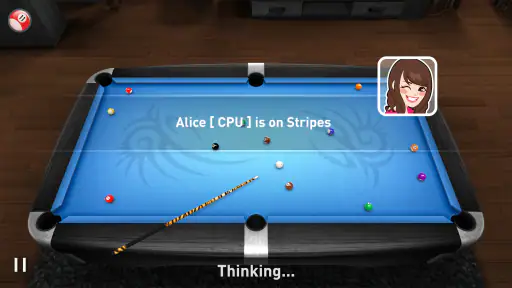
The AI option is particularly important for solo players. Without it, a pool game would be much less useful when nobody else is available. Playing against computer-controlled opponents gives the aiming mechanics a purpose and lets me practice without putting another person on hold. The trade-off is that an AI match does not provide the same unpredictability or friendly tension as a human opponent.
Playing with friends changes the mood. A familiar opponent can make a simple table feel competitive, especially when one missed shot gives the other player an opening. I would choose this mode when the goal is to share a quick game rather than study a deep ranking system. It feels more immediate than many larger sports titles that bury the actual contest beneath menus, teams, and long progression paths.
At the same time, I would not mistake the compact design for a complete replacement for a dedicated billiards simulator. People who want detailed tournament structure, extensive player customization, or a highly technical recreation of every real-world pool rule may find this approach too focused. Its strength is accessibility: the central activity is clear from the beginning.
Why the free-to-play context deserves attention
The game is free to download, which lowers the risk of trying it. That is useful for families, occasional players, and anyone who only wants a pool game for short sessions. The store information also lists in-app purchases at $2.99 per item. I see that as an important part of the decision, even though the purchase information alone does not tell me exactly which parts of play those items affect.
Because the available purchase detail identifies a price per item but does not describe the contents of each item, I would approach spending carefully. I would first play enough to decide whether the aiming and match flow are enjoyable without buying anything. That is a better test than assuming a purchase is necessary simply because it appears in the listing.
This also affects how I would recommend it to a younger player. The age rating is Everyone, but a parent may still want to discuss optional spending before handing over a device. The rating describes suitability, not a personal budget. For my own use, the sensible rule would be to treat every purchase as optional until the game itself makes its value clear.
There is a difference between a game being free to start and being completely free of spending pressure. I cannot fairly claim that purchases are harmless or essential without knowing what each item provides. What I can say is that the listed price is visible, so a user has a concrete amount to consider rather than an unspecified cost. That transparency is helpful, but it is not a substitute for understanding the role of the items.
Progress, pressure, and the psychology of a missed shot
Pool creates its own kind of progression even when the game does not need a large campaign to keep me interested. At first, I concentrate on making contact with the intended ball. Later, I start thinking about where the cue ball should finish, because a successful shot can still leave a poor setup for the next turn. That shift from immediate success to planning is where the game becomes more rewarding.
The pressure is subtle rather than frantic. A missed shot is usually frustrating because I can see how a small aiming error caused it. I do not need a timer or a complicated objective to feel invested; the table provides enough consequence. This is a good fit for players who enjoy improving through repetition, but it may feel slow to anyone who prefers rapid scoring and constant movement.
One practical habit helped me get more from each match: I stopped treating every open shot as a chance to score immediately. Instead, I considered whether the next position would be comfortable. That mindset makes the game less about lucky contact and more about managing the table. It is also the kind of lesson that transfers well from one match to another, giving short sessions a sense of purpose.
Another useful approach is to use solo matches as a controlled practice space rather than as a test of pride. When I focus only on beating the AI, a mistake feels like wasted progress. When I use the turn to examine angle and position, the same mistake becomes information. This is a small change, but it makes the game more relaxing and reduces the urge to chase a purchase or restart immediately.
The main limitation is that casual pool can become repetitive once the novelty fades. If the player does not enjoy refining shots, there may not be enough variety in the central activity to maintain interest. I would skip it if I wanted a sports game with constant unlocks, dramatic presentation, or a broad career story. I would choose it when the act of aiming is itself the entertainment.
Is competition fair between friends and AI?
Fairness in a pool game starts with the shot interface. If the aiming process is understandable and consistent, a win feels connected to the player’s decisions. That is why I pay more attention to whether I can learn from a miss than to whether every match is easy. A game can be challenging without feeling unfair when the result follows a visible mistake.
Human matches have a natural fairness advantage because both players face the same table and take turns under the same basic conditions. They can still be uneven if one person has much more experience, but that is a difference in skill rather than an invisible system. For a casual gathering, I would use the game as a friendly contest and avoid turning a single match into a serious judgment of ability.
AI competition is different. Computer opponents can be useful for practice, but their behavior determines whether the challenge feels satisfying. I would expect the best experience when the AI gives me room to improve without making every turn feel predetermined. Since the available product information does not explain the AI’s difficulty structure or behavior, I would judge that personally during the first few matches rather than assume a particular balance.
Spending introduces another fairness question. The listed purchase price is $2.99 per item, but there is no reliable basis here for saying that purchases improve aiming, provide competitive advantages, or merely change presentation. I would therefore avoid declaring the game pay-to-win or completely neutral. The responsible conclusion is narrower: purchases exist, their listed unit price is clear, and their competitive impact should be checked before anyone spends money for multiplayer reasons.
That uncertainty matters most when friends play together. If one person is considering an item to gain an advantage, I would first find out what it actually changes. If it only affects convenience or appearance, the competitive concern is small. If it affects access to useful play elements, the match may feel less even. The purchase price alone cannot answer that question.
For a fair personal test, I would play several AI matches and at least one friend match without buying anything. I would pay attention to three things: whether aiming remains readable, whether mistakes have understandable causes, and whether the opponent’s strength feels consistent. That short trial tells me more about trust than a high rating by itself.
What the audience numbers suggest, and what they do not
The game has an average rating of 4.4 from roughly 56 thousand ratings, with about 4.2 thousand written reviews and more than 5 million installs. Those figures show that it has reached a substantial audience and that many players have chosen to rate it positively. I take that as a reason to consider it established, not as proof that every player will enjoy its particular pace.
A large audience can also make a game easier to recommend casually: it is less likely to feel like an obscure experiment that nobody around you recognizes. Still, popularity does not resolve the questions that matter most to an individual player, such as how much repetition they tolerate, whether the AI feels satisfying, or whether purchases affect their preferred style of play.
I also would not use the rating as a guarantee of technical perfection. Ratings compress many different experiences into one number. One person may value the simple pool format, while another may want more depth and score the game lower for that reason. The useful takeaway is that the core concept has broad appeal, while the final decision should come from matching that concept to your expectations.
Who should install it, and who should look elsewhere?
I think it is a good choice for someone who wants a recognizable sports activity in a compact, approachable form. It works especially well for short breaks, relaxed solo play, and informal matches with friends. The Everyone rating also makes it easier to consider for a shared family device, provided optional spending is handled responsibly.
I would recommend it to a beginner who wants to learn the logic of pool without first studying a thick rulebook. The game’s appeal comes from making a shot and seeing its consequences, so a new player can understand the basic pleasure quickly. More experienced players may enjoy it as a convenient practice option, although they may eventually want a more specialized billiards title.
I would skip it if my priority were a large sports ecosystem. Someone looking for licensed competitions, extensive career management, deep customization, or a constantly changing online scene should compare it with broader alternatives before settling here. This game’s identity is narrower, and that is both its advantage and its boundary.
I would also be cautious if I dislike games with optional purchases. The listed cost is $2.99 per item, and the game is free to start, but the available information does not explain the exact purpose of those items. A player who wants a strictly no-spend experience should try it first and decide whether the free portion feels complete enough for their habits.
My trust verdict after weighing the trade-offs
My overall view is positive, but it is deliberately practical. The game offers a clear sports experience, supports play against friends and AI opponents, and does not require a large time commitment to understand. I enjoy it most when I treat each table as a small problem: choose a line, consider the next position, and accept that precision matters more than speed.
Its limitations are equally clear. The focused design may become repetitive for players who need constant novelty, and the purchase listing does not explain enough for me to judge the effect of every item on progression or competition. I would not make claims about spending fairness beyond those facts. Instead, I would test the free experience, inspect each purchase carefully, and avoid paying simply because a match became difficult.
The long availability, current version 3.29, broad audience, and 4.4 average rating give me confidence that this is a legitimate, established option in mobile sports gaming. They do not change the basic recommendation: install it if you like the quiet concentration of billiards and want quick matches, not if you are searching for a full sports-management package.
For a friend, my advice would be simple: start free, play against the AI to learn your aiming rhythm, then invite someone else when the basic shots feel comfortable. Treat purchases as a separate decision rather than part of the entry requirement. The best reason to keep playing is the quality of the shot itself, not pressure to spend. On that basis, Real Pool 3D is an easy game to try and a worthwhile fit for patient, casual pool fans.
Pros
- Realistic 3D physics make shots feel satisfying and responsive.
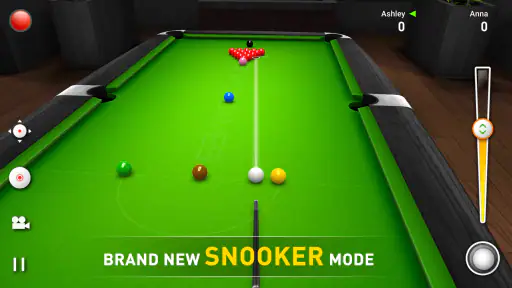
- Multiple pool modes provide variety for casual and competitive players.
- Offline play lets you enjoy matches without a constant internet connection.
- Simple touch controls are easy to learn for newcomers.
- Short matches suit quick gaming sessions on mobile devices.
Cons
- Ads may interrupt gameplay or appear frequently between matches.
- Advanced shots can be difficult to perform accurately on a small screen.
- The visual style feels dated compared with newer pool games.
- Limited customization may disappoint players seeking more table options.
- Online competition can depend heavily on connection quality and matchmaking.

- Category
- Sports
- Version
- 3.29