Putt Golf
- 26.00
- 4.0
- Installs
- 10.00K
- Price
- Free

Screenshots
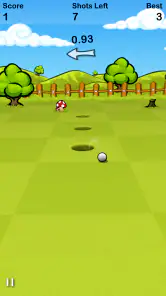
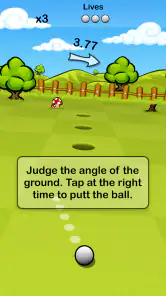
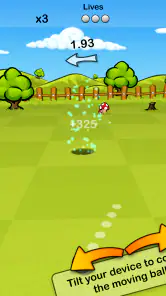
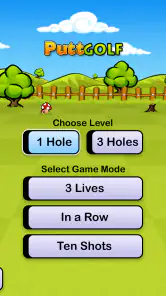
Analysis by Reviewed
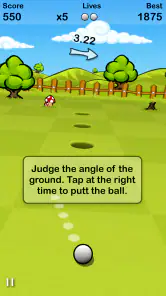
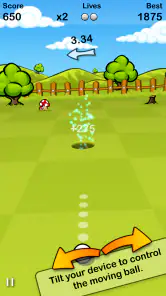
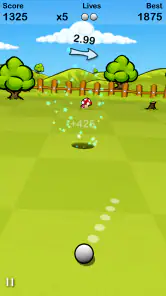
I found Putt Golf most interesting as a small, focused sports game rather than a full golf simulation. Its entire appeal comes from reading the slope of the ground, judging the right moment, and tapping to send the ball toward the hole. That narrow idea makes it easy to understand within seconds, but it also means the experience depends heavily on whether you enjoy careful timing more than a long list of golf features.
After spending time with it, I would describe it as a lightweight putting game for short sessions. It does not ask me to learn a complicated control system, manage a complete golf bag, or study a large collection of rules. Instead, each attempt is built around a simple visual decision: look at the surface, estimate how the ball will travel, and tap with enough confidence to commit. That simplicity is its biggest strength and its clearest limitation.
How the game presents its central challenge
The game comes from EivaaGames and sits in the sports category. It is free to download, with optional in-app purchases priced at $2.99 per item. The age rating is Everyone, which matches the straightforward nature of the play: there is no complicated story to follow and no mature subject matter to distract from the putting challenge.
The basic interaction is approachable for someone who rarely plays mobile games. I do not need to remember a collection of buttons or swipe combinations. The important work happens before the tap. I study the ground angle, think about the likely path, and then choose the moment that feels right. That creates a useful pause between observation and action, so the game is not simply about tapping as quickly as possible.
That design also affects readability. A player who can comfortably distinguish the playing surface, the ball, and the hole has the information needed to make a decision. The visual layout is most effective when I give myself a moment to look rather than treating every attempt like an arcade reflex test. For me, the clearest way to play is to keep the phone still, avoid rushing, and mentally trace the ball's route before touching the screen.
Navigation is similarly uncomplicated in spirit. There are not layers of golf management to sort through before I can play. This is useful for people who become frustrated by menus, equipment screens, or multiple currencies in sports games. The trade-off is that anyone looking for a broad progression system may find the presentation too restrained. The game puts its attention on the shot itself, not on building a detailed golfing career.
The current version is 1.85, and the game has been available since September 5, 2014. Those details help explain its character: this is an established, compact mobile title rather than a new simulation designed around modern console-style presentation. I would approach it with the expectation of a direct putting exercise, not a visually elaborate clubhouse experience.
Why the simple control can still demand concentration
Although the control is only a tap, the decision behind that tap is not always effortless. A player has to combine visual judgment with timing. The surface angle can make a seemingly obvious line less reliable, and a small hesitation can change the result. I found that the game rewards a calm routine more than frantic experimentation.
One practical habit helped me: I stopped trying to correct every mistake immediately. When a putt went wide, I first asked whether I had misunderstood the slope or simply tapped at the wrong moment. Separating those two problems made the next attempt more useful. If the line was wrong, I changed my reading of the ground; if the timing was wrong, I kept the same idea but waited for a better instant.
This makes the game suitable for short breaks when I want a little concentration without committing to a long match. A realistic use case would be playing while waiting for an appointment or taking a few quiet minutes after work. The session can begin quickly, and the mental demand is enough to feel engaging without requiring the planning involved in a larger sports title.
At the same time, the narrow format will not suit everyone. If I want a golf game with club selection, wind management, character development, multiplayer competition, or a broad course tour, this is not the right choice. A full golf simulation offers more decisions and a stronger sense of progression. A conventional arcade sports game may also be better for someone who prefers immediate action over carefully reading a surface.
Readability, timing, and different ways of playing
The visual challenge deserves more attention than the short description suggests. The player is not merely aiming at a stationary target. The ground angle is part of the information that must be interpreted, so the experience depends on how easily each person can see the relevant contrast and judge the relationship between ball, surface, and hole.
For players with reduced vision, the game may be more comfortable when the screen is clean, the device brightness is adjusted to the surroundings, and reflections are minimized. Those are ordinary practical steps rather than special game functions, but they can make the central visual task less tiring. I would also avoid playing in direct sunlight, where subtle changes in the ground can be harder to read.
Players with motor differences may appreciate that the game does not require repeated swipes, rapid button combinations, or several simultaneous controls. A single deliberate tap is less demanding than a control scheme that expects constant precision from both hands. However, the same simplicity creates a specific barrier: the tap still has to happen at the correct time, and there is no alternative control method described in the game information.
That distinction matters. A game can be easy to understand while still being difficult to operate consistently. Someone with tremors, limited finger movement, or difficulty with timing may understand exactly what the game wants and still struggle to produce the required tap. I would not treat the low number of controls as proof that every player will find it physically accessible.
Sensory comfort is another individual issue. The game is built around visual attention and timing, so players who are sensitive to busy movement, strong contrast, or repeated failure may prefer short sessions with breaks. I found that the focused format made it easier to stop after a few attempts than a game with constant rewards and notifications, but the experience can still become repetitive if the putting challenge does not hold your interest.
For someone who prefers audio guidance, the game may be less suitable than a title that communicates important information through sound or spoken cues. The core decision is visual: reading the angle and choosing the tap. I would recommend trying it in a quiet, well-lit setting first rather than assuming that its simple controls make it equally comfortable for every sensory preference.
Playing in shared, quiet, and interrupted settings
The compact design works well in places where I cannot give a game my full attention for a long period. I can play a little, put the phone away, and return when I have another moment. That makes it a reasonable companion for commuting breaks, waiting rooms, or a short wind-down before sleep, provided the surroundings allow me to see the screen clearly and concentrate on the timing.
It is less convenient in situations that demand frequent interruptions during an individual attempt. Because the decision depends on observing the ground and tapping at the right instant, being called away at the wrong moment can spoil the shot. This is different from a turn-based puzzle where I can leave the screen halfway through planning. My advice is to begin a putt only when I have enough uninterrupted attention to finish it.
The game can also work as a low-pressure introduction to mobile sports games. A friend who does not enjoy complicated controls can understand the premise quickly, and the Everyone rating makes it appropriate for a broad audience. Still, the game is not automatically ideal for group play. Its appeal is personal judgment and repeated attempts, not the social energy of a large multiplayer match or a party game.
Its free entry point is helpful for testing that fit. I can try the central putting experience before deciding whether it deserves a permanent place on my device. The optional purchases at $2.99 per item are worth considering before spending: I would first make sure the basic loop remains enjoyable over several short sessions, because no purchase can fix a mismatch between my preferences and the game's deliberately limited scope.
Storage and device age can also influence the decision. The minimum operating system is 5.1, so people using an older device should check compatibility before planning around it. For most readers, the more important question is not whether the game is demanding in the way a large 3D sports title might be, but whether the screen and touch response make careful visual timing comfortable.
Where the focused design still leaves barriers
The largest barrier is the dependence on one kind of interaction. The game asks me to see the surface, interpret its angle, and deliver a timely tap. That is elegant when those abilities line up, but restrictive when they do not. There is no reason to assume that a player who cannot rely on precise visual timing will find an equally satisfying route through the same challenge.
Another limitation is the lack of depth for players who need variety to stay engaged. A complete golf game can offer multiple clubs, changing conditions, character choices, and strategic decisions. Here, the central pleasure comes from refining the same basic relationship between slope, timing, and result. That makes the game easy to pick up, but it can also make the experience feel narrow after the novelty fades.
I also think the game asks the player to create some of their own structure. Instead of expecting a detailed training program, I approached each attempt as a small experiment. I would focus on one question at a time: was my reading of the angle accurate, was my timing early, or did I simply overestimate the force? This self-directed method adds depth, but players who want explicit coaching may find it less satisfying.
A useful workaround for different ability levels is to change the goal rather than forcing perfect results. A beginner can concentrate on understanding the surface and accept missed putts as information. A more experienced player can aim for consistency and try to reproduce a successful timing pattern. This does not remove the motor or visual demands, but it makes the game less punishing for someone who wants practice rather than a flawless score.
Another practical tip is to use a stable grip and play with the device positioned where the tapping finger can move naturally. That sounds minor, but the game gives the tap a central role, so awkward hand placement can create mistakes that have nothing to do with reading the ground. I found that reducing unnecessary movement made it easier to tell whether a poor result came from judgment or control.
Players who need large text, spoken instructions, switch access, or highly configurable controls should be cautious. I would choose a different sports game if those functions are essential to comfortable play. Putt Golf's approachable concept should not be confused with a comprehensive accessibility system; its simplicity reduces some friction while leaving the main visual-timing requirement firmly in place.
Who should download it and who should look elsewhere
The audience for this game is quite specific. I would recommend it to someone who enjoys golf's quietest moment: lining up a putt, noticing a subtle change in the ground, and accepting that a small timing error can decide the result. It is also a good fit for people who want a free sports game that can be understood without a long tutorial or a large commitment.
I would be more hesitant to recommend it to players who need constant novelty, realistic tournament management, or immediate high-speed action. The game is not trying to replace a full golf simulator, and comparing it with one on graphics or strategic breadth would miss its purpose. Its better comparison is with other tiny skill games that ask for observation followed by a precise touch.
The rating sits at a 4.0 average from 135 ratings, with 26 written reviews, while the game has passed 10K+ installs. I read those figures as a sign of a modest, established audience rather than evidence that it will suit everybody. They provide useful context, but my own recommendation still depends more on whether you enjoy the particular rhythm of visual judgment and timed tapping.
For families, the Everyone age rating is reassuring in terms of the intended audience, but I would still explain the in-app purchase option before handing the device to a child. The free download makes experimentation easy, while the optional $2.99 items mean that purchase decisions should remain deliberate. That is especially relevant when a player is trying the game briefly and has not yet decided whether its focused design has lasting appeal.
One of the game's quiet strengths is that it can be played without turning every moment into a race. I can look, think, and tap. For a player who enjoys concentration and small improvements, that restraint is more appealing than a crowded sports game full of menus and distractions. For somebody who wants a quick burst of spectacle, the same restraint may feel like a lack of content.
My inclusive verdict after using the game
I came away viewing Putt Golf as a simple but thoughtfully focused putting game. Its clearest success is the way it turns one ordinary golf action into a compact test of perception and timing. The controls are approachable, the free starting point lowers the risk of trying it, and the format fits short breaks well.
Its inclusive qualities are real but limited. Fewer controls can help players who find complex touch interfaces tiring, and the absence of a large management system makes navigation less intimidating. Yet the essential action still relies on seeing the ground clearly and tapping at a precise moment. Players with visual, motor, or sensory needs should judge that central demand against their own comfort rather than relying only on the game's simple presentation.
My best advice is to test it in the setting where you expect to use it: hold the phone comfortably, reduce glare, allow yourself uninterrupted time for a few attempts, and notice whether the visual judgment feels satisfying or tiring. If the basic loop clicks, this is an enjoyable little sports game for practicing patience and timing. If you want rich golf strategy, extensive customization, or alternative ways to control the action, another title will probably serve you better.
Overall, I would recommend it as a focused, low-commitment choice for putting fans and casual players who like skill games built around one clear idea. I would not recommend it as a universal accessibility pick or as a substitute for a full golf experience. Its value comes from being direct: read the surface, choose your moment, and see whether your decision was good enough.
Pros
- Simple controls make it easy for beginners to start playing.
- Short holes are convenient for quick games during spare moments.
- Bright visuals and playful presentation make rounds enjoyable.
- Different courses provide some variety beyond the initial levels.
- Offline play is useful when you have no internet connection.
Cons
- Later levels can feel repetitive once the basic mechanics are mastered.
- Precision may be frustrating when shots behave differently than expected.
- The game may include ads that interrupt the playing experience.
- Progression can feel slow without optional purchases or extra rewards.
- Limited multiplayer features reduce its appeal for competitive players.

- Category
- Sports
- Version
- 1.85