QuizApp: Quiz & Trivia Network
- 6.00
- 4.2
- Installs
- 100.00K
- Price
- Free

Screenshots



Analysis by Reviewed
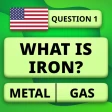
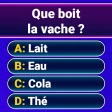
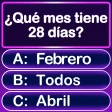
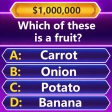
I approached QuizApp: Quiz & Trivia Network as a quick trivia game rather than a long-form study tool, and that distinction matters. Its appeal is the simple promise of testing what you know through quiz duels and question-based play, with enough structure to make a spare moment feel more engaging than casually scrolling. I found it easiest to appreciate when I treated each session as a short mental challenge instead of expecting a deep lesson or a large collection of learning tools.
Created by Cranberry Apps, this free trivia game is aimed at a broad audience. Its Everyone age rating makes it suitable for family-friendly general use, while the average score of 4.2 from around 1.4 thousand ratings suggests that many players find the basic idea worthwhile. It has passed the 100 thousand install mark, so this is not an obscure experiment with no visible audience. Still, popularity alone does not make it the right fit for every quiz fan, and my experience is best summed up as useful for casual competition, less convincing for people who want detailed explanations or a carefully organized learning course.
How QuizApp feels during ordinary play
Quick sessions are the natural use case
The strongest way to use this game is in small gaps during the day. I can imagine opening it while waiting for a friend, taking a short break between tasks, or passing a few minutes on public transport. Trivia works well in those situations because the commitment is lower than starting a story-driven game, and the question format gives me an immediate reason to pay attention.
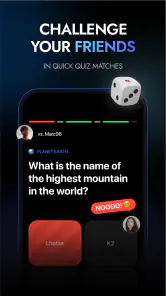
The duel-oriented approach also gives questions a little more urgency than a completely solitary quiz. Even when I am only playing for amusement, a competitive framing encourages me to answer decisively instead of overthinking every option. That makes the experience lively, although it also means the game is less appealing when I want a calm, methodical review of a subject.
I would not install this expecting a replacement for a language course, flashcard system, or exam-preparation app. The value is in recall and entertainment. It can expose gaps in general knowledge, but it does not automatically turn a wrong answer into a useful lesson. For me, that makes it a good warm-up for the brain and a modest learning aid, not a structured educational program.
What the free model means in practice
The game is free to install, which lowers the barrier to trying it. There are in-app purchases priced at $3.49 per item, so I would begin with the free experience and decide only later whether any optional purchase improves the way I play. A free entry point is especially helpful for families or occasional players who do not want to commit before understanding the question style and session rhythm.
That pricing detail also creates a practical boundary: players who dislike any purchase prompts or who want every part of a game unlocked immediately should pay attention to how the app feels before spending. I would not treat an optional purchase as necessary simply because it exists. The sensible approach is to see whether the free version already provides enough variety and replay value for your habits.
Compared with familiar trivia alternatives
Compared with a traditional quiz book, this game is more convenient and easier to pick up without preparation. A book may offer fuller explanations and a clearer progression through subjects, while this app is better at turning a spare minute into an interactive challenge. Compared with a flashcard app, it is more playful and competitive but usually less precise for memorizing a defined set of facts.
It also occupies a different space from a broad multiplayer party quiz. A party game is usually at its best when several people are gathered around one screen, whereas this experience makes more sense for an individual who wants questions and duel-style tension without organizing a group. If your main goal is social laughter in the same room, a dedicated party title may be the better choice. If you want a compact general-knowledge diversion, this one is easier to justify.
Three ways I would get more from it
My first practical tip is to use it as a “decision-speed” exercise. Rather than replaying until I get a perfect result, I would answer with the information I genuinely remember, then note which topics repeatedly slow me down. That turns casual play into a simple self-check without pretending the game is a full revision system.
Second, I would avoid judging the game from one unusually good or bad session. Trivia performance depends heavily on subject familiarity, so a run dominated by topics I know can make the game feel easier than it is, while an unfamiliar set can feel unfair even when the questions are reasonable. Looking at several short sessions gives a more honest impression of whether the question mix suits me.
Third, I would use it socially without needing to hand over the phone. Two people can make a small contest out of predicting answers before the player responds, then compare confidence with accuracy. That is a more interesting use than simply tapping through questions, and it works particularly well when one person enjoys trivia but the other does not want to install another game.
Speed, stability, and device expectations
Perceived speed during short sessions
For a trivia game, perceived speed is mostly about how quickly I can move from one question to the next and whether the interface gets out of the way. QuizApp has a focused purpose, so I would expect it to feel more immediate than a large action game with heavy visual scenes. The question format does not demand the same kind of constant rendering as a graphics-intensive title, which is one reason it fits short breaks well.
That does not mean every delay would be harmless. In a duel, a pause before a question or after an answer can interrupt the sense of competition more noticeably than it would in a solo quiz. When the central pleasure is making a quick choice, responsiveness becomes part of the game design rather than a minor convenience. I would therefore judge it by how smoothly it preserves the question-answer rhythm, not by whether it offers elaborate visual effects.
Players should also separate app speed from connection-dependent moments. A trivia screen can feel responsive while any online interaction takes longer, and a slow network can make a competitive exchange seem less immediate even when the phone itself is capable. I would test it in the places where I actually plan to play instead of assuming that a good experience on home Wi-Fi will feel identical everywhere.
Heavy-use moments and resource awareness
The most demanding moments are likely to be the ones involving repeated question loading or duel activity rather than complex graphics. I would be comfortable using it for several brief rounds, but I would not assume that keeping any game open for hours is the best choice on an older phone. Closing it between sessions is a simple habit if battery, heat, or background activity becomes noticeable.
There is also a human resource cost that is easy to overlook: attention. Fast trivia can become tiring when I play too many rounds without a break, especially if I start guessing instead of thinking. My preferred pattern would be a few focused sessions followed by a pause. That keeps the game entertaining and makes the results more meaningful than a long streak of hurried taps.
On a newer device, the game’s modest trivia-first identity should make it a relatively approachable download. On a less capable phone, the main question is not whether it can display a question but whether the overall interaction remains comfortable. A small screen, aging battery, or limited free storage can affect enjoyment even when the core game itself is not visually demanding.
Reliability and recovering from interruptions
Trivia sessions are often interrupted in real life. A call arrives, the screen locks, the user changes networks, or another app takes focus. That is why I would pay close attention to recovery: can I return without losing track of the current exchange, and does the game make it clear what happened? In a duel, interruption matters more than in a solo question because timing and turn context can affect the feeling of fairness.
I would also avoid starting an important competitive session when the phone is already struggling with many open apps or an unstable connection. That is not a criticism unique to this title; it is simply the sensible way to protect a short, time-sensitive game. Restarting the app and trying again is a reasonable first response if an interrupted round does not resume cleanly, but I would not rely on it for serious study or an important personal competition.
Reliability has another side: consistency of the question experience. A game can open quickly yet still feel unreliable if the transition between questions is confusing or if I am unsure whether an answer registered. Clear feedback is especially important for casual players, children, and anyone playing on a small screen. I would recommend a brief trial before deciding whether it is dependable enough for regular use.
Operating-system and hardware limits
The minimum requirement is Android 8.0, which gives the game a fairly broad starting point among Android users while still excluding very old devices. Before installing, I would check the phone’s Android version rather than assuming that every older handset can run it. On a supported device, available storage and general system condition will still influence how pleasant the experience feels.
The Everyone rating makes it an easy candidate for shared household use, but age suitability does not automatically mean that every child will enjoy the same question difficulty. I would play a few rounds first if I were choosing it for a younger player, then decide whether the content and pace match that child’s reading ability and attention span.
For iPhone and iPad users, I would verify the current platform availability and device compatibility before planning a download, since the stated minimum operating-system detail applies to Android. That small check prevents a common disappointment: assuming that a game’s presence in an app catalog guarantees identical support across every device family.
Who should choose it, and who should skip it?
I think it suits people who enjoy general trivia, like quick competitive prompts, and want something lighter than a full game session. It is also a sensible option for someone who wants to test recall without carrying a quiz book or preparing a custom deck of cards. Families may find it useful as a casual conversation starter, provided everyone is comfortable with the pace and the question mix.
I would skip it if my priority were detailed explanations, a fixed curriculum, advanced subject specialization, or dependable exam preparation. I would also look elsewhere if I wanted rich graphics, a story, deep character progression, or a large social party experience. The game’s strength is focus; that same focus means it cannot satisfy every reason people download a trivia title.
My performance verdict after weighing the trade-offs
QuizApp: Quiz & Trivia Network works best when I keep expectations aligned with its role. It is a free trivia game from Cranberry Apps, currently at version 1.3.1, and its appeal comes from making questions feel like a compact competitive activity rather than a formal lesson. The 4.2 average and audience of over 100 thousand installs make it reasonable to consider, but they should be treated as context, not a guarantee that every player will enjoy the same experience.
My recommendation is to try it for short sessions on a supported device, preferably in the environment where I expect to play. I would watch for three things: whether the question flow feels quick enough, whether interruptions recover gracefully, and whether the available free play offers enough variety for my routine. Those checks tell me more than a single enthusiastic round.
The best reason to choose it is its low-commitment route into competitive trivia. It can fill a waiting period, create a small challenge between friends, or reveal which areas of general knowledge need work. Its main limitation is equally clear: it is not a substitute for a serious learning tool or a feature-heavy multiplayer game. If that trade-off matches what I want, the free download is easy to justify; if not, a book, flashcard app, or party-focused alternative will serve me better.
Pros
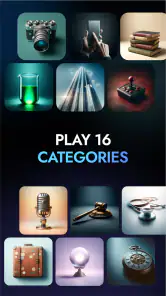
- Wide range of trivia topics keeps sessions varied.
- Quick rounds make it easy to play during short breaks.
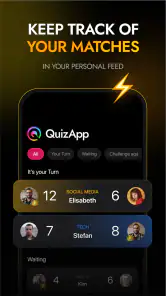
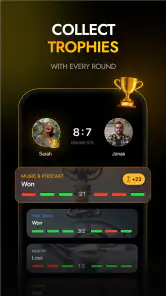
- Competitive features add motivation for regular players.
- Simple interface is easy for new users to understand.
- Useful for testing general knowledge while having fun.
Cons
- Question difficulty may vary noticeably between categories.
- Some content may feel repetitive for frequent players.
- Online features may require a stable internet connection.
- Competitive elements can make the experience less relaxing.
- Availability of players may affect the pace of network matches.

- Category
- Trivia
- Version
- 1.3.1