Push The Luck
- 414.00
- 3.8
- Installs
- 100.00K
- Price
- Free

Screenshots
Analysis by Reviewed
I approached Push The Luck expecting a very small trivia game, and that is exactly where its appeal lies. Developed by Cadev Games, it reduces the usual question-and-answer format to a quick decision: press the correct box, trust your choice, and see whether your luck holds. My overall view is that it works best as a lightweight, low-commitment distraction rather than as a deep knowledge challenge. It is free to start, rated for Everyone, and simple enough to understand almost immediately.
That simplicity is both the game’s strongest quality and its clearest limitation. I never had to learn a complicated menu system or spend time preparing for a round. On the other hand, anyone looking for detailed explanations, a large learning system, or the social energy of a full quiz platform may find the experience too narrow. This is a trivia game built around quick choices, not a complete study tool.
How the quick-choice trivia format feels in practice
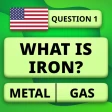
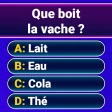
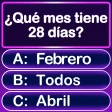
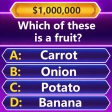
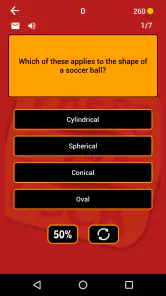
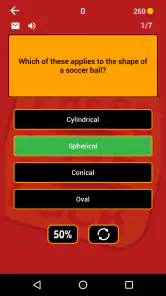
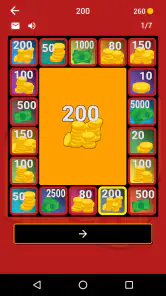
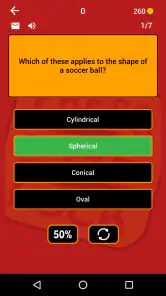
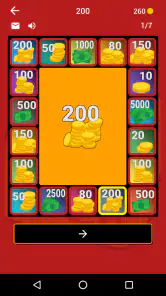
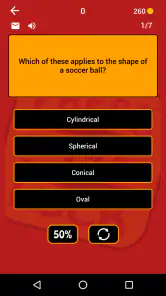
The central idea is easy to grasp. The game presents a choice involving boxes, and I need to press the correct one while relying on my knowledge and a little instinct. That creates a different rhythm from conventional trivia apps that usually emphasize long question lists, category menus, timed leaderboards, or extensive answer explanations.
Because the interaction is so direct, Push The Luck fits naturally into short gaps during the day. I can imagine opening it while waiting for a friend, taking a few turns during a commute, or using it as a brief mental reset between tasks. It does not demand the kind of uninterrupted attention that a longer quiz session requires, which makes the compact format practical.
The “luck” element also changes how I react to mistakes. In a standard trivia game, a wrong answer can feel like a straightforward knowledge failure. Here, the box-based presentation makes each decision feel more like a small gamble. I still want to know the correct answer, but I also pay attention to the act of choosing. That gives the game a playful tension even when the underlying interaction remains simple.
I found that the best way to play is not to rush every choice. The game encourages a quick response, but taking a moment to identify what the boxes represent can prevent careless taps. A useful personal routine is to read the prompt first, decide what information matters, and only then choose. That keeps the luck theme entertaining without letting it turn every round into a random guess.
Why the minimal design works
Push The Luck does not need a long tutorial to communicate its purpose. Its short store description, “Push The Luck,” is an accurate indication of the intended mood: make a choice and accept the result. I appreciate that the premise is not buried under layers of setup. For casual players, that immediacy is more valuable than a large collection of systems that would make a quick session feel like work.
The format is also approachable for mixed-age play. Since the content rating is Everyone, it is positioned as a game that can be considered by a broad audience. I would still judge the actual suitability of any trivia content for a particular child, but the age classification makes the game easier to recommend for family-friendly casual use than a title aimed at older players.
Another strength is that the game can serve as a small conversation starter. If I play it with someone nearby, the choices can lead to quick discussions about why one box seemed right or how confident either of us felt. It is not a full multiplayer party game based on the information available, so I would not buy it expecting a dedicated group mode. Still, its decision-focused design makes it easy to pass the phone around informally.
What makes it different from ordinary trivia alternatives
Many trivia games compete by offering a broad subject range, elaborate progression, online opponents, or detailed performance tracking. Push The Luck takes a more stripped-down route. Its identity comes from the physical-feeling act of selecting a box rather than from a large educational framework.
That difference matters when choosing an alternative. If I wanted to learn facts systematically, I would prefer a quiz app that explains every answer, organizes questions by subject, and lets me revisit weak areas. If I wanted competition, I would look for a game centered on live matches, rankings, or a visible community. Push The Luck is a better fit when I want the small suspense of a decision without committing to those larger structures.
The trade-off is clear: the game’s focused format makes it accessible, but it may not provide enough variety for players who need constant new modes. I would treat it as a companion to a broader trivia collection, not necessarily as the only trivia game on a device. That is not a failure; it simply defines the kind of value it offers.
Where the experience is useful and where it falls short
The most convincing use case is the short session. Imagine having five minutes before an appointment. A long-form quiz may be awkward because it can leave you midway through a round, while Push The Luck is suited to a quick burst of choices. I like that kind of design because it respects the way people often use mobile games: not always in long, planned sessions, but in scattered moments throughout the day.
It can also work as a low-pressure warm-up for the brain. I would use it before a study session or during a break when I want something more active than scrolling. The important distinction is that I would not confuse this with studying. Choosing the right box can exercise recall and attention, but the game should be viewed as entertainment with a trivia flavor, not as a replacement for a structured learning app.
A less obvious tip is to use the game as a confidence check rather than chasing speed. Before pressing, I can estimate how certain I am and notice whether my confidence matches the result. That turns a very simple interaction into a small exercise in judgment. It does not add a formal feature to the game; it is simply a better way to get more out of the format than tapping randomly.
Another practical approach is to play in short sets instead of continuing indefinitely. Because the core action is repetitive by nature, stopping after a small number of decisions can preserve the sense of fun. I found that this is especially useful for casual players who enjoy the tension of each choice but do not want a game to dominate their attention.
The main weakness: simplicity can become repetition
My biggest reservation is the same quality that makes the game easy to start. Once the basic box-selection idea is understood, the experience depends heavily on how much variety the questions and situations provide. The interaction itself is intentionally narrow, so players who need changing mechanics may begin to feel that they are repeating the same gesture without enough new texture.
This is where Push The Luck compares less favorably with larger trivia alternatives. A more feature-rich quiz game may offer categories, explanations, daily challenges, or competitive formats that create reasons to return. Push The Luck has a more immediate personality, but it does not appear designed to satisfy every long-term trivia habit. I would be cautious about recommending it to someone who wants a deep progression system or a serious way to measure knowledge over time.
The luck framing can also be a mixed blessing. It makes wrong choices feel less dry, but it may frustrate players who want outcomes to reflect knowledge as clearly as possible. If the appeal of trivia for you is proving mastery, a game that emphasizes the thrill of the choice may feel less rewarding than one that carefully teaches after every mistake.
There is also a financial point worth considering. The game is free, but optional in-app purchases range from around one dollar and fifty cents to about twenty dollars per item. I would start without spending anything and decide only after understanding how much I actually use it. For a simple casual game, that is the sensible approach: enjoy the free entry point first, then consider whether any optional purchase genuinely improves your experience.
Performance expectations and practical fit
The current version is 3.6, and the game supports devices running Android 7.0 or later. That makes checking device compatibility important before installing, particularly if you use an older phone or tablet. I would not assume that a lightweight design automatically means every device is supported; the operating-system requirement still matters.
Its audience size suggests that the concept has reached a meaningful group of casual players. The game has more than one hundred thousand installs, with an average rating of 3.8 from around one thousand four hundred ratings and roughly four hundred reviews. I read that as a sign of moderate appeal rather than universal enthusiasm. People clearly find the idea accessible, but the rating also supports my view that the experience will depend strongly on whether you enjoy its deliberately limited format.
The release date of February 1, 2018, places it among established mobile games rather than a brand-new experiment. That can be reassuring for someone who prefers a known, straightforward title, although it also means I would not expect the novelty of a recent trivia trend to carry the whole experience. The current version shows that the app has a maintained version number, but I would still choose it for the core gameplay rather than for expectations of constant reinvention.
Who should install it
I would recommend Push The Luck to someone who wants a free trivia game that can be understood quickly and played in brief bursts. It is particularly suitable for casual players who enjoy making fast choices, people who like a little uncertainty mixed into trivia, and families looking for an Everyone-rated title with a simple premise.
It is also a reasonable choice for someone who becomes overwhelmed by complex mobile games. There is no need to learn a large collection of systems before the basic appeal becomes clear. Install it, try a few decisions, and you will know fairly quickly whether the box-based format matches your taste.
I would skip it if your priority is serious education, detailed feedback, or sustained competitive play. Students who need reliable revision tools should choose a dedicated learning app. Trivia fans who want leaderboards, live opponents, or a wide range of modes will likely be happier with a larger quiz platform. Likewise, players who dislike repeated tap-based interactions may find the central idea too modest to hold their attention.
One useful way to decide is to ask what you want your next trivia session to accomplish. If the answer is “give me a quick, playful challenge,” this game makes sense. If the answer is “help me master a subject” or “let me compete against a community,” I would look elsewhere. The game is strongest when expectations stay aligned with its compact design.
My final judgement
After looking at the complete experience, I see Push The Luck as a focused casual trivia game with a clear personality. It does not try to be a digital classroom or an expansive quiz network. Instead, it turns each round into a small moment of judgment: identify the right choice, press the box, and accept the outcome.
That approach is enjoyable when I want something immediate and undemanding. The game’s free entry, Everyone rating, and low learning curve make it easy to try, while the luck-based presentation gives a familiar trivia idea a slightly different feel. I also appreciate that it can fit naturally into short breaks instead of requiring a planned gaming session.
My recommendation comes with one important condition: do not expect depth that the concept is not designed to provide. The limited interaction can become repetitive, the luck element will not satisfy every knowledge-focused player, and optional purchases deserve a cautious approach. For those reasons, I would rate it as a worthwhile casual download rather than an essential trivia app.
My verdict is simple: choose Push The Luck for quick, playful decision-making, but choose a fuller quiz or learning app when variety, explanation, and long-term progression matter more. For the right player, that focused purpose is enough to make it a pleasant little game to keep available for spare moments.
Pros
- Simple controls make it easy to start playing immediately.
- Short rounds are convenient for quick gaming sessions.
- Bright visuals give the game a cheerful
- casual feel.
- Random outcomes make each attempt feel unpredictable.
- Lightweight gameplay suits players seeking a low-pressure experience.
Cons
- Luck-based results may feel frustrating when skill has little impact.
- Replay value can drop once the core mechanics become familiar.
- May feel too simplistic for players wanting deeper strategy.
- Frequent interruptions or ads may affect the playing experience.
- Requires patience
- as progress can depend heavily on favorable outcomes.

- Category
- Trivia
- Version
- 3.6