Pocket Ants: Colony Simulator
- 12.94K
- 4.3
- Installs
- 10.00M
- Price
- Free

Screenshots
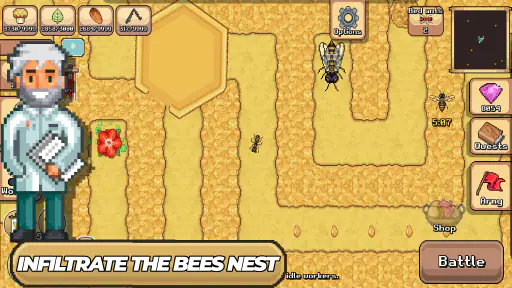

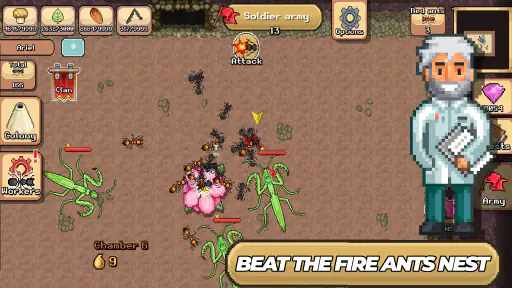
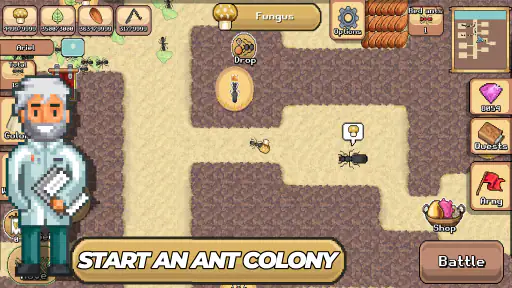
Analysis by Reviewed
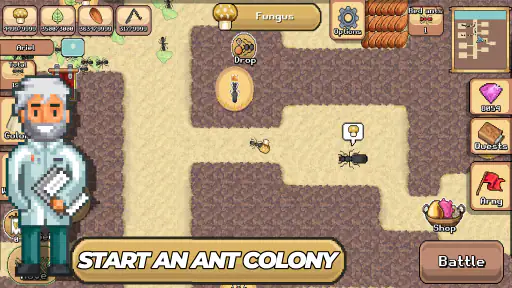
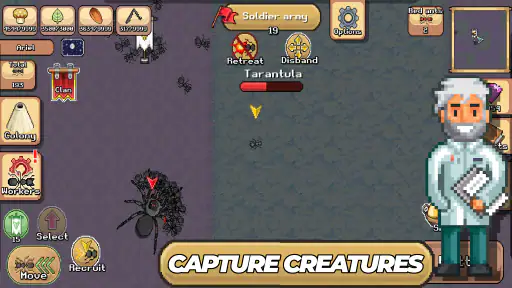
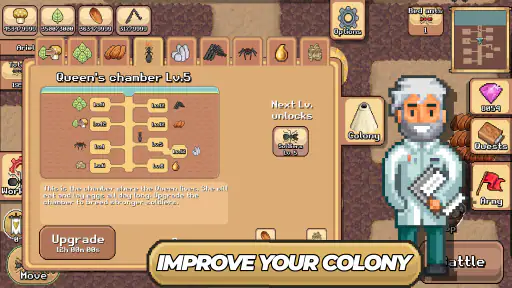
I spent time with Pocket Ants: Colony Simulator as a strategy game built around the steady growth of an ant colony. Its appeal is easy to understand: you collect useful materials, improve the nest, build an army, and then send your ants against rival colonies. That sounds simple, but the interesting part is how those jobs compete for your attention. Every improvement makes the nest more capable, yet it also creates a reason to gather more, plan better, and take greater risks.
My first impression was that this is best approached as a gradual management game rather than a quick battle title. You are not simply choosing an opponent and watching a fight unfold. Progress comes from preparing the colony, deciding what deserves investment, and accepting that a raid can be worthwhile even when it does not go perfectly. That rhythm makes it a good fit for players who enjoy strategy in small sessions, especially when they like seeing a base become more effective over time.
A 4.3 average from around 335 thousand ratings and more than 10 million installs suggests that the concept has reached a large audience. The game is free to start, with optional purchases ranging from $0.99 to $99.99 per item. It is marked for Everyone, which makes it approachable for a broad age range, although the strategic decisions still give it more depth than the simple presentation might initially suggest.
How the colony feels during ordinary play
The opening hours are mainly about learning the colony’s routine. Resources are not just a currency sitting in a menu; they are the reason to leave the nest, take action, and return with a stronger position. I found the loop more satisfying when I treated each trip as part of a plan instead of collecting anything available. A short outing can prepare a specific upgrade, while a longer session can combine gathering, nest improvements, and an attack on another colony.
That structure affects the perceived speed of the game. Pocket Ants does not feel like a strategy title that demands constant rapid decisions. Its pace is closer to a series of manageable tasks, with moments of activity separated by planning. If you prefer games that immediately fill the screen with battles, this may seem slow. If you enjoy checking a base, choosing the next objective, and returning later with a clearer purpose, the tempo is more comfortable.
I recommend setting a small goal before each session. For example, I might decide to focus on strengthening the nest, gathering what is needed for an army, or preparing for a raid. This prevents the resource loop from becoming aimless. It also makes progress easier to notice because the session has a visible result, even when the colony is not transformed dramatically.
The nest is where the game’s long-term character becomes clearer. Improvements are not exciting only because they unlock a bigger number; they change what feels possible on the next outing. A colony that was vulnerable earlier can gradually become better prepared, and that sense of recovery is important after an unsuccessful attack. I liked that the game encourages me to think beyond one encounter and consider whether a decision helps the next several sessions.
There is also a useful trade-off between spending resources immediately and holding them for a more meaningful improvement. New players may be tempted to improve whatever is available, but I found it more effective to keep a target in mind. That approach reduces wasted trips and makes the colony feel less dependent on random activity. It is one of the first practical habits I would recommend to anyone starting the game.
Where the strategy becomes more demanding
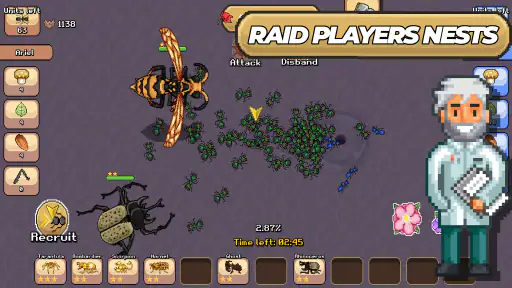
Raiding another player’s colony is the point where preparation matters most. A raid is not simply a reward screen after gathering; it tests whether your earlier choices were sensible. If your army is not ready, the attack can feel like an expensive lesson. If you prepare too cautiously, you may spend too long building strength and lose the sense of urgency that makes the strategy interesting.
My preferred approach was to separate preparation from commitment. I would first improve the nest and collect enough resources to make the attempt meaningful, then choose a raid rather than attacking as soon as the option became available. This creates a better balance between caution and momentum. It also means that a setback does not erase the entire point of the previous session.
One non-obvious strength is that the game rewards thinking in cycles. A good session is not necessarily one with the biggest haul. It can be a session that leaves the colony in a better position for the next one: a useful improvement completed, an army prepared, or enough resources secured to recover after a poor raid. Players who judge every session only by immediate gains may find the game frustrating, while players who value gradual advantage will probably get more from it.
The downside is that the same cycle can become repetitive if you do not enjoy gathering as a central activity. The game’s identity depends on returning to the colony’s needs again and again. It is not the right choice for someone looking for a compact campaign with a clear ending or a strategy game where every minute introduces a completely new rule.
What happens during heavier sessions
The busiest moments come when several goals overlap: collecting resources, improving the nest, assembling an army, and deciding whether to raid. Those sessions are more mentally demanding than the quiet gathering periods, even though the interface and presentation remain approachable. I found that performance expectations should be separated from strategic workload. A session can feel “heavy” because there are more decisions to track, not necessarily because the game is visually overwhelming.
When I wanted a relaxed experience, I focused on one resource objective and stopped after completing it. When I had more time, I used the longer session to prepare for a raid and then reviewed what the result meant for the colony. This makes the game flexible for everyday use. It works during a short break, but it also has enough connected tasks to occupy a longer sitting when I want something more involved.
A practical tip is to avoid beginning a raid immediately before putting the game away. The attack is more useful when I have a moment to consider the outcome and decide what recovery should look like. Ending on a clear next step—such as gathering for a particular improvement—makes it easier to resume later without wasting time remembering what I was doing.
Resource demands are difficult to judge from the game’s concept alone, and I would not treat it as a guaranteed lightweight experience on every phone. The visual style is not what makes the game demanding; the important question is how your particular device handles longer sessions and busy colony activity. On an older handset, I would start with shorter play periods and observe whether heat, battery drain, or slower responses become noticeable in your own use.
The free-to-play structure is another consideration during heavy use. Since optional purchases can reach $99.99 per item, I would approach the shop carefully and decide in advance whether I want to spend anything. The game remains attractive as a free download, but players who are sensitive to purchase prompts should keep their budget firmly in mind. A deliberate spending limit is more useful here than buying simply to speed up a moment of impatience.
Reliability, recovery, and the cost of a mistake
For me, reliability in this kind of game is not only about whether it opens. It is also about whether the colony loop feels dependable enough to support long-term planning. Pocket Ants works best when I can return with a clear objective, carry out the gathering or raid, and understand how the result affects the next decision. That clarity helps the game feel stable as a strategy experience, even when an individual attempt goes badly.
Recovery is especially important because raids introduce risk. A failed or disappointing attack should not make the entire colony feel pointless. I found the game more enjoyable when I treated setbacks as information: perhaps I needed more preparation, a better army, or a different order of priorities. This mindset turns a loss into part of the management loop, although players who dislike rebuilding after mistakes may still find the process tiring.
My strongest advice is to keep a reserve instead of spending every resource immediately. This is not flashy, but it gives the colony room to recover. A reserve can make the difference between continuing normally after a poor decision and feeling forced into a long period of repetitive gathering. It also makes experimentation safer, because you are not risking everything on one upgrade or one raid.
Another useful habit is to change only one major priority at a time. If you simultaneously chase several improvements, build an army, and attempt raids, it becomes harder to tell which decision helped. Focusing on one objective creates a clearer feedback loop. I could see whether the colony was becoming stronger because of better preparation or merely because I had spent more time playing.
The game’s broad audience rating is a positive for families and younger players who want strategy without an intimidating presentation. Still, the presence of rival-colony raids and optional purchases means I would explain the basic loop and spending expectations before handing it to a child. The Everyone label describes its accessibility, but it does not remove the need for sensible supervision around in-app buying.
Device limits and who should install it
The game supports devices running Android 7.1 or later, so its compatibility range includes many older Android phones and tablets. That does not automatically mean every supported device will deliver the same experience. Storage condition, background activity, battery health, and the age of the hardware can all affect how comfortable longer sessions feel. I would install it on an older device if I wanted a modest strategy game, but I would test it before making it a main daily game.
Because the game is built around repeated sessions, battery behavior matters more than it would for a title played once a week. If your phone already struggles with games, I would avoid assuming that the simple visual style guarantees effortless performance. Start with a short gathering session, then try a busier period involving colony management and a raid. That gives you a more realistic impression than judging it from the opening screen.
The current version is 0.1152, and the developer is Ariel-Games. Those details are useful when checking that you are looking at the intended release before installing, particularly if several similarly named ant games appear in search results. The game is free, so the main barrier is not the download price; it is whether you enjoy its repeated resource-and-recovery structure enough to keep returning.
I would recommend it to players who like gradual base development, light army management, and raids that are prepared rather than purely reflex-based. It is also a good option for someone who wants a strategy game that can be divided into short objectives. The best audience is patient and enjoys improving a system over time, even when progress comes in small steps.
I would skip it if you want a highly cinematic strategy game, a deep competitive ruleset, or a story-driven adventure with carefully staged missions. I would also be cautious if repetitive gathering quickly loses your attention or if you dislike games that include optional purchases. In those cases, a premium strategy game with a fixed price and a more defined campaign may suit you better.
How it compares with familiar strategy alternatives
Compared with traditional base-building games, Pocket Ants feels more focused on the colony’s immediate routine. The ant theme is not merely decoration: gathering, nest improvement, army preparation, and raids all reinforce the idea of maintaining a living group. That gives it a more distinctive identity than a generic fortress builder, even though the underlying satisfaction of upgrading a home base will feel familiar.
Compared with fast real-time strategy games, it asks for less constant precision and more patience. You are not playing it for a nonstop stream of unit commands. The strongest decisions happen before the raid, when you decide whether the colony is ready and whether the potential reward justifies the risk. Players who prefer planning over rapid control may find this refreshing; players who want immediate tactical pressure may prefer something else.
It also differs from idle games because the player’s attention still matters. Leaving the colony alone is not the whole point. You need to choose what to gather, what to improve, and when to commit to a raid. At the same time, it is not as demanding as a complex simulation with many interacting menus. That middle ground is probably its most useful position: approachable enough for casual players, but structured enough to reward deliberate habits.
One trade-off is that the game’s simplicity makes it easy to understand but can limit the sense of discovery for experienced strategy fans. I appreciated not having to learn a huge rulebook, yet I could also see why a veteran player might eventually want more varied systems or more demanding competition. Its strength is the clarity of the colony loop, not an attempt to overwhelm you with layers of management.
My performance verdict after settling into the loop
After giving the game time, I see it as a calm but purposeful strategy experience rather than a speed-focused action game. Its perceived performance is tied closely to how long you play and how busy your colony becomes, so I would judge it on your own device instead of assuming the same result for everyone. The game’s modest presentation may help it feel approachable, but older hardware should still be tested during a real session.
The most convincing part is the way preparation, risk, and recovery connect. Gathering has meaning because it supports the nest; the nest matters because it supports the army; the army matters because it makes raids more sensible. That chain gives ordinary actions a reason to exist. My favorite sessions were not necessarily the most profitable ones, but the sessions that left me with a clear plan and a colony capable of acting on it.
There is friction, especially for anyone who wants constant novelty or dislikes repeating resource tasks. Optional purchases also deserve a deliberate approach, particularly because the listed range extends from $0.99 to $99.99 per item. I would not let the shop determine the pace of my colony. Playing with a personal limit and using planning to replace impatience makes the free experience easier to enjoy.
Overall, I think Pocket Ants is worth trying if you want a free strategy game with a distinctive setting, manageable sessions, and a satisfying sense of gradual improvement. It is not the best fit for every strategy fan, but it knows what it wants to be: a colony routine where small decisions accumulate into a stronger nest and better raids. If that cycle sounds enjoyable rather than repetitive, this is a game I would comfortably recommend to a friend.
Pros
- Simple controls make the colony easy to manage on mobile.
- Frequent tasks provide clear short-term goals for new players.
- Ant units have distinct roles that add variety to colony planning.
- The game works well for brief play sessions throughout the day.
- Collecting resources and expanding territory feels rewarding over time.
Cons
- Progress can feel slow without regular play or resource grinding.
- Some upgrades require patience before their benefits become noticeable.
- Limited space may make colony organization increasingly challenging.
- Enemy encounters can become repetitive after extended play.
- Optional purchases may appeal to players seeking faster progression.

- Category
- Strategy
- Version
- 0.1152