Papa's Pastaria To Go!
- 68.00
- 4.6
- Installs
- 100.00K
- Price
- $1.99

Screenshots
Analysis by Reviewed
I approached Papa's Pastaria To Go! as a first-time player looking for a quick, approachable strategy game, and its appeal is easy to understand: the focus is on running a pasta restaurant, with each order asking you to balance several small tasks. It’s a better fit for a few attentive rounds than for completely hands-off play. If you enjoy learning a routine and gradually handling busier service, it gives you a clear path from the opening tutorial to the satisfaction of getting an order right.
What to expect from a pasta shift
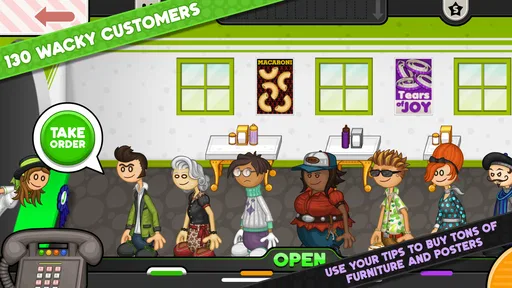
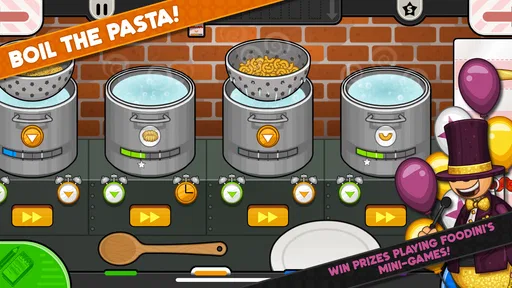
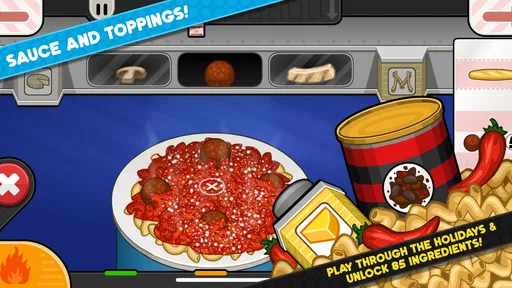
This is a strategy game from Flipline Studios, built around restaurant work rather than combat or long-range planning. The main challenge is coordinating the stages of an order: taking requests, cooking pasta, choosing sauces and toppings, and plating the result. The appeal lies in the rhythm. Once the steps begin to feel familiar, I find myself thinking ahead instead of simply reacting to each customer.
The game is rated for Everyone, which makes its light tone accessible, but the busier orders still ask for concentration. It costs $1.99, with optional in-app purchases listed from $0.99 to $4.99 per item. I’d treat the purchase as a paid game with extras, not assume that buying it means every optional item is included. Its 4.5 average from around 835 ratings and 50K+ installs suggest that it has found an audience, though those figures can’t tell you whether its particular pace will suit you.
Getting Started with Your Pasta Adventure
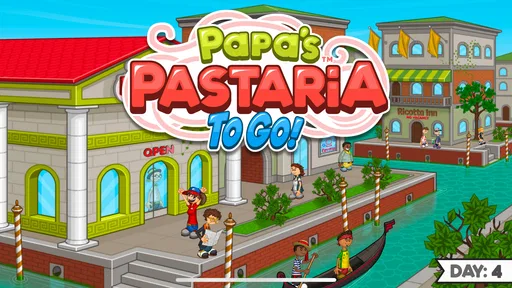
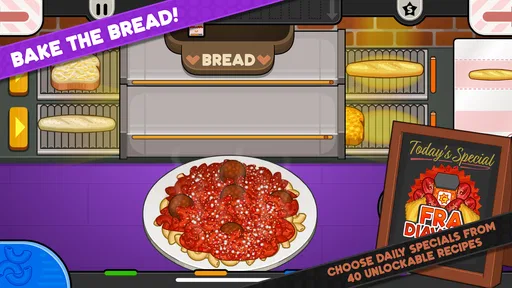
From the moment you fire up Papa's Pastaria To Go!, you’re greeted with vibrant graphics and a catchy soundtrack that gets you pumped for some culinary action. The game starts with a simple premise: you’re in charge of a quaint pasta restaurant, and it’s your job to keep the customers happy and their bellies full. The tutorial is super helpful, guiding you through the basics of taking orders, cooking pasta to perfection, and adding the right toppings.
The Gameplay: A Perfect Blend of Fun and Challenge
Let me tell you, this game is the perfect blend of fun and challenge. Each level introduces new ingredients and more complex orders, pushing your multitasking skills to the limit. You’ve got to keep an eye on the boiling pasta, mix up the sauces, and make sure everything is plated just right. It’s like a culinary juggling act, and I love it!
My best advice for a first successful shift is to resist rushing every station at once. Read each order carefully, then use the gaps in one task to prepare for the next. That small habit makes the early learning curve less stressful and helps reveal where a mistake happened: cooking, sauce choice, or final presentation. If a dish comes out poorly, I’d focus on correcting one part of the sequence on the next order rather than trying to speed up everything at once.
Getting comfortable with the order flow
A useful way to learn the rhythm is to treat each order as a short sequence, not as a single test of speed. I’d first make sure I understand what the customer asked for, then give the cooking stage enough attention before moving to the finishing details. When several tasks overlap, pausing mentally to check the order is often more valuable than tapping faster. The game rewards careful coordination, so an unhurried first shift can teach more than a frantic attempt to serve everyone instantly.
More From Our News Desk

 Gmail
Gmail in a Busy Inbox: Who Benefits Most?
From first account to crowded workday, Gmail earns its place through dependable search and flexible sorting—but its best fit depends on how much inbox maintenance you can tolerate.

 Prime Video
Switching to Prime Video: What Changes in Your Viewing Routine
Prime Video can make a compelling second home for streaming, but switching means learning a different catalog, rental layer, and route from browsing to playback.

 Universal TV Remote Control
 Works Best as a Reliable Backup
A phone remote earns its place through quick setup and reliable habits. Here is how to get more from Universal TV Remote Control—and where its limits show.

 Weather - By Xiaomi
Weather by Xiaomi Review: Clear at a Glance, Less Clear Up Close
Xiaomi’s weather app makes everyday forecasts quick to scan, but its calm surface can leave useful details and recovery paths harder to find than they should be.

 X
X Under Pressure: Can It Recover When Posting Goes Wrong?
A resilience-focused review of X, examining setup, mistaken posts, interruptions, weak connections, and the gaps that matter when recovery needs to be dependable.

 Clash of Clans
 Is Won Between the Battles
Its raids are quick; its community is a long-term project of coordination, teaching, rivalry, and shared responsibility—with all the friction that entails.
Latest News



It also helps to notice which part of the process is causing trouble. If the pasta is the weak point, concentrate on that timing on the next turn; if the final plate is off, slow down at the finishing stage instead. This is a practical way to improve without turning every round into a vague effort to “do better.” I like that the routine gives you a clear place to focus, although players who dislike repeating a process to build consistency may find this kind of learning less satisfying.
Making progress without turning every round into a chore
One of the coolest features is the customization options. You can upgrade your restaurant with new kitchen equipment, spiffy new outfits for your character, and even decorate the dining area to give it your personal touch. This adds a nice layer of depth to the game, making it more than just a simple cooking simulator.
That progression gives a round a useful second purpose: you’re not only trying to serve well, but also working toward changes that make the restaurant feel like yours. I’d prioritize kitchen improvements if I wanted service to feel more manageable, and leave outfits or dining-room decoration for when I wanted a more personal touch. The trade-off is that customization may be less compelling if you only care about the cooking challenge; players who want a purely tactical game may prefer a strategy title without cosmetic progression.
Who will enjoy the routine—and who may not
The game works especially well when I have a short break and want something more engaging than a passive puzzle, but I can still put down after a round. It also suits players who enjoy repeating a familiar process while learning to handle a little more complexity. For a realistic evening example, I’d play a shift while waiting for dinner to finish: the order-by-order structure makes it easy to focus on one service, then stop rather than committing to a long campaign session.
On the other hand, I wouldn’t recommend it to someone who dislikes timed multitasking, prefers open-ended restaurant management, or wants strategic choices to matter more than accurate execution. Compared with many strategy games built around maps, resource systems, or turn-by-turn plans, this one keeps the decisions close to the kitchen counter. That focused approach is its strength, but it also means that the variety comes from handling orders and progression, not from a broad simulation of running a business.
How it differs from other cooking games
When I compare it with the usual mobile cooking options, the defining difference is how much attention goes into assembling each individual order. It is less about laying out a restaurant or managing a large operation and more about keeping the order stages straight under pressure. That makes it a good pick if you want hands-on tasks with a clear beginning and end. A broad management game is a better choice if your fun comes from staffing, expansion, or long-term business decisions; a simple time-killer is a better match if you want to tap without closely following a sequence.
The pasta focus gives the routine a particular shape, too. Instead of treating every dish as interchangeable, you have to pay attention to the combination of cooking, sauce, toppings, and presentation. My practical tip is to read for the details that distinguish one customer’s order from the next before beginning the finishing work. That reduces the chance of completing a neat-looking plate that still doesn’t match the request. The trade-off is that precision can feel like pressure when you’re tired or only half paying attention.
Why You’ll Love It
So, why should you download it? Well, if you’re a fan of cooking games, this one offers a fresh take with its focus on pasta. The game is incredibly satisfying, especially when you see those happy customer faces after serving a perfect dish. Plus, the daily specials and mini-games keep things interesting, ensuring you never get bored.
The controls are intuitive and designed for mobile play, so you won’t find yourself fumbling around awkwardly trying to serve up spaghetti. And let’s not forget the humor sprinkled throughout the game – it’s sure to bring a smile to your face.
Choosing when to play
I’d reach for it when I have enough attention for a short stretch of active play, such as waiting for a meal to cook or sitting through a quiet break. It is not my choice for a moment when I need to split attention between the game and a conversation, because the order details and timing are part of the challenge. The short-session appeal comes from being able to focus on a service and then stop, not from the game being entirely passive or effortless.
For a first-time player, the most reassuring route is to let the tutorial establish the basic sequence and then aim for a clean, steady order rather than a perfect run. If a round feels hectic, I’d use the next one to test a single adjustment: read the request more carefully, watch the cooking stage more closely, or take extra care when adding the final details. That deliberate approach is more useful than assuming the solution is simply to move faster.
I’d also keep an eye on the distinction between optional extras and the main loop when deciding whether it’s worth paying for. The core attraction is the hands-on service routine; customization is a bonus, not a substitute for enjoying that routine. If you’re unsure whether you’ll stick with a restaurant game, the clearest question to ask yourself is whether repeating orders and gradually improving your timing sounds relaxing or tedious. That answer matters more than the cosmetics.
The game’s current version is 1.0.3, and it was released on July 6, 2020. There are 65 reviews alongside its ratings, but I’d use those as context rather than a promise that every player will have the same experience. For someone new to Flipline Studios’ restaurant games, the tutorial makes the first steps approachable; for someone already familiar with the format, the pasta-specific workflow is the main reason to choose this entry over another cooking game.
Who should choose a different kind of game
I would skip it if I wanted a slow, open-ended simulation where I could plan a restaurant layout or make big business decisions without immediate task pressure. It is also not ideal if I find repeated service routines boring, or if I want a strategy game whose main challenge is forecasting several moves ahead. Those preferences point toward management or turn-based alternatives, where progress depends more on planning than on executing a sequence of food orders accurately.
On the other hand, someone who likes the feeling of improving through small, visible adjustments may find the format rewarding. It can suit a newcomer to strategy games because the goals are concrete: follow the request, handle the preparation, and complete the plate. I would not expect that simplicity to mean there is no learning curve; the more demanding part is keeping the pieces organized as orders become more involved.
What the purchase and progression mean in practice
The $1.99 price makes it worth deciding whether the basic restaurant routine is already appealing before thinking about extras. Optional purchases range from $0.99 to $4.99 per item, so I’d avoid treating them as necessary simply because they are available. My own test would be straightforward: if I enjoy the order-by-order challenge and want to personalize the experience, the extra options may be welcome; if I only want the core service loop, I would judge the game on that loop instead.
Progression can also change what I pay attention to. Kitchen upgrades make sense when I want to support smoother service, while visual customization is more about making the restaurant and character feel personal. I’d choose according to what is currently making a session enjoyable, rather than pursuing every option out of habit. That keeps the game from feeling like a checklist and helps preserve the simple pleasure of getting an order right.
Small habits that make early rounds easier
One non-obvious habit I’d recommend is to separate accuracy from speed while learning. First, focus on matching the requested dish; only once that feels comfortable should you try to make the sequence quicker. When an order goes wrong, identify the stage that needs attention rather than changing your approach everywhere at once. This is especially useful on a small screen, where hurried taps can make it harder to tell whether a mistake came from the order, the cooking, or the toppings.
Another helpful approach is to use downtime between tasks as a planning moment. Rather than immediately jumping to whichever station looks active, check what is already in progress and what the next order will need. The point is not to develop a complicated strategy; it is to avoid creating extra confusion by starting several things without a clear order. For me, that small pause makes the game feel more like controlled multitasking and less like a scramble.
In conclusion, Papa's Pastaria To Go! is a delightful addition to the Papa’s franchise. Whether you’re a seasoned fan or a newcomer, this game is sure to win you over with its charming graphics, engaging gameplay, and endless customization options. So, what are you waiting for? Grab your apron, fire up the stove, and start cooking up a storm!
Papa's Pastaria To Go! Frequently Asked Questions
Is Papa's Pastaria To Go! suitable for children?
Papa's Pastaria To Go! is rated Everyone, so its content is intended for a broad audience, including children. The game focuses on preparing pasta orders and managing a restaurant, making its central activity easy to understand. Younger players may still need a little practice with the timing and multitasking involved, while adults can enjoy aiming for better service and a more efficient kitchen.
How much does Papa's Pastaria To Go! cost, and does it offer optional purchases?
Papa's Pastaria To Go! costs $1.99 to download, and it also offers in-app purchases priced from $0.99 to $4.99 per item. Keep that distinction in mind when deciding whether it suits your budget: the initial purchase gets you the game, while optional purchases may be available in addition. It is a strategy game from Flipline Studios, built around running a pasta restaurant.
What is Papa's Pastaria To Go! and how does it work?
Papa's Pastaria To Go! is a fun and engaging time-management game where players run a pasta restaurant. The main objective is to take orders, cook pasta, add sauces and toppings, and serve the dishes to customers. Players must manage their time efficiently to keep customers happy and earn tips, which can be used to upgrade the restaurant. The game is designed to be easy to pick up but challenging to master, offering hours of culinary entertainment.
Is Papa's Pastaria To Go! available on both Android and iOS platforms?
Yes, Papa's Pastaria To Go! is available for download on both Android and iOS devices. Players can enjoy the game on their smartphones or tablets by purchasing it from the Google Play Store or the Apple App Store. Ensure your device meets the compatibility requirements before downloading to have the best gaming experience.
Are there any in-app purchases or ads in Papa's Pastaria To Go!?
Papa's Pastaria To Go! is a premium game, meaning it requires a one-time purchase to download and play. Unlike many free-to-play games, it does not contain in-app purchases or advertisements, allowing players to enjoy uninterrupted gameplay. This model ensures that you have full access to all features and content without additional costs.
Pros
- Engaging gameplay with varied pasta recipes
- User-friendly interface and controls
- Colorful and attractive graphics
- Offline play available
- Frequent updates with new features
Cons
- Limited levels may lead to repetitive play
- In-app purchases can be pricey
- Occasional glitches during gameplay
- No multiplayer mode
- Requires significant storage space