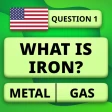
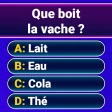
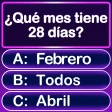
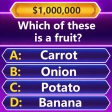
Mobile Adventures
- 46.00
- 3.2
- Installs
- 100.00K
- Price
- Free

Screenshots


Analysis by Reviewed
I approached Mobile Adventures as a group trivia game rather than as something to play alone for a few spare minutes. That distinction matters. Its central promise is a shared team experience on a phone, and the value comes from turning questions into a reason for people to talk, compare answers, and make decisions together. The game is free, suitable for Everyone, and developed by Mobile Adventures, so it is easy to consider for a mixed-age gathering where installing a paid title would create unnecessary friction.
After spending time with it, my impression is fairly specific: this is most interesting when the phone is treated as a meeting point, not as a private screen. If you want a deep solo quiz with extensive personal progression, it may feel limited. If you want a lightweight trivia activity that can fill an awkward pause at a family gathering, a casual evening with friends, or a small team event, its basic idea makes much more sense.
Why the team format is the real feature
The strongest capability here is the way the game frames trivia as a collective activity. Many quiz apps focus on individual speed, personal scores, or a long stream of questions designed to keep one player engaged. Mobile Adventures points in another direction: the question is only half of the experience. The other half is the conversation that happens before an answer is chosen.
That changes the mood considerably. A difficult question is not simply a test of what I know. It becomes an opportunity for someone else in the group to remember a fact, challenge an assumption, or explain why an answer seems plausible. Even when nobody is completely certain, the act of reaching a decision together gives the round some energy.
This also makes the game more forgiving for people who do not usually enjoy trivia. A specialist quiz can make less confident players feel as if they are being examined. A team-oriented format gives them a role even when they do not know the answer immediately. They can spot a misleading option, contribute a partial memory, or help the group avoid an obvious mistake.
The important trade-off is that the social group becomes part of the game design. With the right people, that is the main attraction. With a distracted group, the same design can feel slow because the fun depends on discussion rather than on a rapid solo rhythm.
The game has been available since February 19, 2014, and its current version is 4.6.0. That long presence gives it a familiar, established feel, but it also means I would not approach it expecting the constant novelty of a brand-new competitive quiz platform. Its appeal is the simple shared activity, not the promise of an elaborate modern live-service ecosystem.
How a round feels in practice
In use, I found it best to establish the group before starting rather than opening the game and hoping people will naturally join in. Put the phone where everyone can see it, agree that discussion is part of the experience, and ask one person to keep the pace moving. That small bit of preparation prevents the common problem where one player quietly controls the screen while everyone else watches.
A useful approach is to give each person a clear moment to speak before the final choice is made. The person who knows the answer can explain it, while another player can take the role of the skeptic and look for a trap. This turns a basic question into a short decision-making exercise and keeps quieter participants involved without forcing them to compete for the phone.
I also recommend treating uncertain questions as conversation starters instead of rushing through them. If two answers seem reasonable, let the group explain its reasoning briefly and then commit. The commitment gives the question a satisfying conclusion. Without that pause, the game can become a sequence of taps with very little social payoff.
For a larger gathering, splitting people into small teams works better than expecting one big circle to debate every answer. Smaller groups allow more people to contribute, while a final comparison keeps the whole room involved. This is one of the less obvious strengths of the team concept: the game can support different levels of participation if the host organizes the room around it.
There is also a practical question about attention. Because the experience is built around a shared screen, it is better suited to a table or a seated group than to a noisy party where people are constantly moving around. If participants cannot hear one another, the team feature loses much of its purpose. In that situation, a fast individual quiz or a verbal party game may work better.
The everyday situation where it fits best
The clearest use case for me is a family evening when people want an activity but do not want to commit to a full board game. Imagine a few relatives finishing dinner, with different ages and very different interests. One person may enjoy facts, another may prefer guessing, and a younger player may not have the same knowledge base as the adults. A cooperative trivia session gives everyone a low-pressure way to participate.
The same applies to a small break at work, provided the group is comfortable with a casual game. Instead of asking each person to stare at a separate screen, one phone can become the focus of a short shared challenge. The team format is especially useful when colleagues do not know one another well, because questions provide easy conversation without requiring anyone to reveal personal information.
I would not use it as the only activity for a long event. Trivia can lose its freshness when every participant is tired, when the questions become repetitive for the group, or when one knowledgeable player starts answering everything. A better plan is to use it as a compact middle section: play for a while, let the discussion create some laughs, then move on before the format becomes work.
For parents, the Everyone content rating makes the game easier to consider for a mixed-age setting. That does not automatically mean every question will be equally interesting to every age group, though. Adults and children may have different strengths, so the host should avoid turning the score into a judgment about who is clever. The team structure works best when the goal is shared entertainment rather than proving who knows the most.
One practical tip is to rotate the person holding the device. This prevents the host from becoming a gatekeeper and gives each participant a chance to control the pace. Another is to agree in advance whether outside help is allowed. If the group can search for every answer, the discussion becomes less meaningful; if the rules are clear, disagreements remain playful instead of becoming arguments.
Where it compares well with ordinary trivia alternatives
Compared with a traditional question-and-answer app designed for solo play, Mobile Adventures has a stronger reason to put the phone in the middle of the room. A solo alternative is usually better when I want to practice privately, improve my own recall, or fill a commute without involving anyone else. This game makes more sense when the people around me are part of the intended experience.
Compared with a boxed trivia game, it removes the need to prepare cards, boards, tokens, or a table large enough for all the components. That convenience is meaningful for an unplanned gathering. On the other hand, a physical game often provides richer presentation, clearer turn-taking, and a more tangible sense of progress. If my group enjoys strategy, collecting pieces, or a carefully balanced long session, the board-game option is likely more satisfying.
Compared with a live competitive quiz platform, the team approach feels less dependent on individual reaction speed. That can be a benefit for families and mixed groups, especially when fast tapping would let the most experienced player dominate. The downside is that people seeking intense head-to-head competition may find the shared pace too relaxed.
The choice therefore depends on what I want the activity to accomplish. For personal improvement, I would choose a dedicated solo quiz. For a polished event with elaborate presentation, I would look at a more specialized party title. For a quick, free group activity where discussion matters more than spectacle, this game has a clear place.
Limitations that affect the experience
The average rating is 3.2 from around 568 ratings, with 46 written reviews, and I think that mixed reception is worth taking seriously. It suggests that the concept will not work equally well for everyone. A team game can be excellent in a lively group and underwhelming when played alone, so part of the variation may come from how people use it rather than from the questions themselves.
The first limitation is dependence on participation. If one person answers instantly, others may stop thinking. If nobody wants to speak, the game becomes a quiet sequence of selections. I would not blame the app for every flat session, but the design does ask the host to create a social rhythm. That is an extra responsibility compared with a conventional solo quiz.
The second limitation is that the shared-screen format is not ideal for every group size. With too few players, there may not be enough discussion to justify the team framing. With too many, people at the edge of the group can lose sight of the screen or stop hearing the debate. Small teams or a compact circle are the safest arrangement.
The third is longevity. A free trivia game can be useful without becoming a permanent daily habit. If I wanted a large personal challenge system, detailed long-term goals, or a highly competitive ranking environment, I would look elsewhere. Mobile Adventures earns its place through accessibility and group interaction, not through an especially demanding commitment.
Device compatibility is another practical consideration. The minimum operating system is Android 7.0, so anyone using an older Android phone should check compatibility before planning an event around it. For supported devices, the free price removes the financial risk, but I would still install and open it before guests arrive. That simple check avoids wasting the first few minutes of a gathering on setup.
Because the game is from Mobile Adventures and has reached over 100 thousand installs, it is not an obscure experiment that nobody has tried. Still, popularity alone does not guarantee that its tone will suit a particular group. I would judge it by the people I plan to play with, especially their willingness to discuss answers rather than merely wait for the next screen.
Small techniques that make the team feature better
My first recommendation is to assign rotating roles. One player can read the question, another can summarize the competing answers, and a third can make the final selection for the round. These roles are simple, but they stop the most confident participant from controlling everything and give the game a more deliberate structure.
My second recommendation is to separate knowledge from confidence. After each question, ask not only who knew the answer but also which clue persuaded the group. This creates useful discussion and helps players notice how they reason. It is particularly effective with children, because the session becomes a gentle lesson in evaluating possibilities rather than a contest they can only win through memorization.
My third recommendation is to use the game as a social reset, not as background noise. Put phones away before starting, set a modest session length, and agree that disagreements are part of the fun. If people continue chatting over every question, pause the game rather than letting it become a neglected screen on the table.
A fourth technique is to balance expertise deliberately. If one participant is known for dominating general knowledge, place that person on a team with less confident players instead of allowing an individual showdown. The team format becomes much more valuable when strong memory is used to support discussion rather than eliminate it.
These approaches do not add hidden game systems; they improve the way the verified team concept works in a real room. That is the key insight I took away. The application supplies the prompt, but the quality of the session depends heavily on how the group shares control and attention.
Who should install it
I would recommend Mobile Adventures to someone looking for a free team trivia game for family gatherings, casual friend groups, or short group breaks. It is a particularly sensible choice when people have different ages and confidence levels, because cooperation can soften the competitive edge. The Everyone rating also makes it easier to include a broad audience, while the low commitment makes an experimental session harmless.
It is also a good fit for a host who prefers spontaneous activities. There is no need to buy a boxed set or teach a complicated ruleset before beginning. The phone can serve as the shared starting point, and the host can shape the session with team assignments and discussion rules.
I would skip it if my main goal were solo study, rapid-fire competition, or a deep progression system. I would also choose another option for a very large party, a group that dislikes speaking up, or an event where people need to participate from separate locations. The team capability is not a universal replacement for every trivia format; it is a specific advantage in a physically present, conversational group.
For someone wondering whether the free price means there is little to lose, my answer is yes, the financial barrier is low, but time and group attention still matter. Install it before the gathering, test the opening flow, and decide how you will rotate control of the phone. That preparation is more important here than it would be for a private quiz because the experience can stall if nobody takes responsibility for the pace.
My final take after using it with the right expectations
Mobile Adventures is at its best when I stop judging it as a conventional quiz app and use it as a prompt for group conversation. Its defining strength is not simply presenting trivia; it is giving a group a reason to reach an answer together. That makes ordinary questions more social and can include people who would not normally volunteer for a knowledge contest.
Its weaknesses follow directly from the same design. A quiet or oversized group can drain the energy, solo players may find the experience less compelling, and anyone seeking advanced competition should consider a more specialized alternative. The mixed 3.2 average reflects a product whose success depends strongly on context.
Still, for a free game from Mobile Adventures that has been installed by over 100 thousand people, it offers a straightforward way to turn a spare stretch of time into a shared activity. I would keep it available for family nights, informal gatherings, and short team breaks. I would not present it as an all-purpose trivia replacement, but in the situation it targets, the team experience is practical, accessible, and genuinely more enjoyable than answering alone.
Pros
- Simple controls make it easy to start playing quickly.
- Short adventures fit well into brief gaming sessions.
- Exploration rewards curious players with optional discoveries.
- The colorful presentation gives the game a friendly atmosphere.
- Progression encourages players to return and complete more challenges.
Cons
- Some levels may feel repetitive after extended play.
- Certain objectives are not always explained clearly.
- Difficulty can vary noticeably between different adventures.
- The interface may feel cramped on smaller phone screens.
- Some content may require patience to unlock or complete.

- Category
- Trivia
- Version
- 4.6.0