Merge Robot Master: Car Games
- 28.00
- 4.3
- Installs
- 5.00M
- Price
- Free

Screenshots
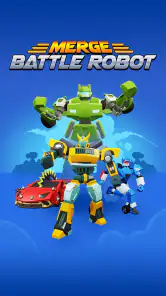
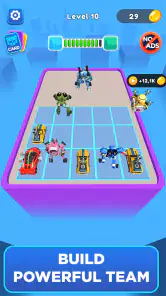
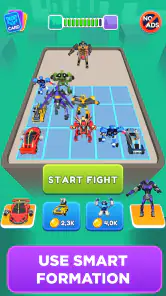

Analysis by Reviewed
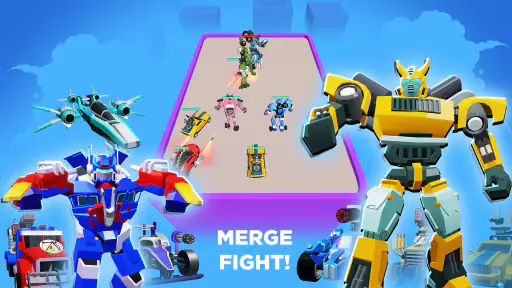
Merge Robot Master: Car Games is the kind of mobile strategy game I can open for a short break and understand immediately. The basic appeal is clear: combine matching pieces, build a stronger transforming robot or car, and use that growing power in the arena. It is easy to start, but the decisions become more interesting when I stop merging automatically and begin thinking about space, timing, and which upgrade will help my next move rather than only the current one.
After spending time with it, I see this as a casual strategy game built around repeated, compact decisions rather than a deep tactical campaign. That distinction matters. If you want a long story, detailed unit management, or a large competitive system, this will probably feel light. If you enjoy merge puzzles with a superhero-robot theme and like improving through small, repeatable choices, it has a pleasant rhythm.
The game is free to download and is listed for Everyone, which makes it approachable for families and younger players. It comes from TVC Global., Ltd and sits in the strategy category. Its store summary focuses on becoming a merge master and taking transforming superhero robot and car games into the arena, but my experience is that the real attraction is the loop between arranging pieces, merging them, and deciding when the stronger result is worth creating.
How the basic merge-and-arena loop feels
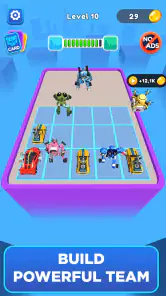
The first useful habit is to avoid treating every available merge as automatically good. A quick merge can clear room and create immediate progress, but it can also remove two pieces that would have been more useful if held for a better sequence. I found myself getting better results when I looked at the whole board before tapping, especially when several possible combinations were available.
That makes the game more strategic than its simple controls suggest. The central question is not merely “Can these pieces combine?” It is “What will this combination leave behind?” A merge that produces a stronger robot but blocks the remaining space may be less helpful than a smaller combination that keeps the board flexible. This is the sort of judgment that gives the game its replay value.
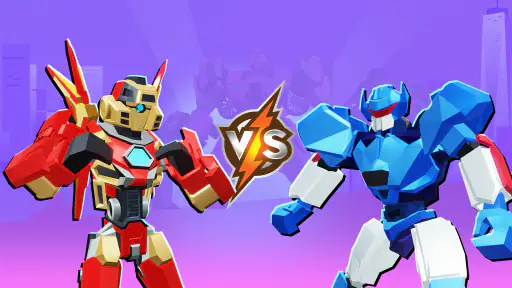
The car and robot presentation helps the loop feel more purposeful. Each improvement has a visible theme rather than feeling like an abstract number rising on a screen. I enjoyed the sense of building toward a more capable transforming fighter, even though the actual decision-making remains fairly straightforward compared with larger strategy games.
For an everyday example, I can imagine playing during a short commute or while waiting for an appointment. I would begin by checking the board, make the safest merge, and stop after a few minutes without needing to remember a complicated campaign. On a longer session, the same simplicity can become repetitive, so the game works best when I treat it as a compact puzzle rather than a full-time strategy destination.
The arena gives the merging a reason to continue. Instead of collecting pieces with no visible purpose, I am working toward a stronger combat result. Still, players should keep their expectations realistic: the appeal is in the progression loop and the small choices around it, not in the kind of detailed battlefield control found in more demanding tactical games.
What I check before making the first move
My preferred opening routine is simple. I scan for all obvious matching pairs, note which spaces are already crowded, and then choose the merge that preserves the most options. This takes only a moment, but it prevents the common mistake of tapping the first available combination and discovering that the board has become awkward.
I also try to identify whether the next move is likely to create another merge. A chain is usually more valuable than an isolated improvement because it can clean space and build momentum at the same time. The important point is not to force a chain when it leaves the board with no room to recover. A planned pause can be better than a rushed sequence.
When the game presents a choice between immediate strength and better board organization, I generally favor organization unless an arena encounter makes the stronger result necessary. This is one of the more useful trade-offs in the game: short-term power feels satisfying, but open space gives me more control over the next several moves.
Players wondering whether the game requires fast reflexes can relax. My results depended much more on recognizing patterns and managing the available area than on tapping quickly. That makes it suitable for relaxed play, although anyone seeking constant action may find the measured pace too quiet.
Settings and small habits worth checking
I recommend checking the available settings before settling into a long session. The most practical reason is comfort: sound and other presentation options can affect whether the game feels pleasant during repeated play. I prefer to adjust the audio to suit the situation rather than leave everything at the default, especially when playing in a public place or late at night.
I also make a habit of checking the current version before troubleshooting. The game is currently listed as version 1.2.5, and keeping an app up to date is a sensible first step when something behaves unexpectedly. I would not assume that an update changes the whole experience, but version awareness can prevent confusion when the interface or behavior differs between installations.
The game supports devices running Android 7.0 or later. That makes it accessible to many older Android phones, although compatibility alone does not guarantee that every device will feel equally smooth. On an older handset, I would close unnecessary apps, avoid playing while the phone is already hot, and keep expectations modest during longer sessions.
One setting-related habit I find more valuable than repeatedly changing options is establishing a consistent play environment. If I want a calm puzzle session, I reduce distractions and play with a clear board in front of me. If I am only passing time, I accept shorter runs and avoid making purchases simply because I am impatient with a slow sequence.
The game is free, but it includes in-app purchases priced from $0.99 to $1.99 per item. I see those as optional convenience spending rather than something that should define the way you play. My advice is to decide your limit before playing, particularly if a child will use the device. The merge loop is easier to enjoy when every tap is a choice instead of a prompt to spend.
Faster patterns that improve ordinary sessions
The fastest improvement I noticed came from sorting my attention into three stages: clear safe matches, preserve useful space, and only then chase a larger upgrade. This is more reliable than trying to build the biggest possible robot immediately. Larger results are satisfying, but they are not helpful if they leave the next move dependent on luck.
I also avoid filling the board from one side without a reason. Keeping a workable area gives new pieces somewhere to go and makes later combinations easier to see. When the board becomes crowded, I stop thinking about the next impressive transformation and focus on restoring room. That change in priority often prevents a session from becoming frustrating.
Another useful pattern is to delay a merge when the two pieces are not causing a problem. Holding them can preserve a future chain or allow a new piece to complete a better combination. This requires patience because the immediate merge button can be tempting, but it is one of the few ways to make the game feel genuinely strategic rather than automatic.
For short sessions, I use a “one clean sequence” goal. Instead of playing until the board becomes difficult, I try to complete a sensible group of merges and stop while the position still feels organized. This is especially effective on a phone because it turns the game into a predictable break rather than an open-ended commitment.
For longer sessions, I change the goal. I look for patterns in the way pieces accumulate and pay attention to which decisions repeatedly create blocked positions. That self-review is more useful than simply replaying the same moves. If a certain opening keeps leaving me with awkward leftovers, I change the order of my first merges rather than blaming the random flow.
Experienced players may also benefit from separating arena pressure from board pressure. A combat need can justify an immediate upgrade, but not every arena moment requires abandoning good board management. I ask whether the stronger result solves a real problem now. If it does not, I usually keep the board flexible and prepare the next combination.
Where the strategy becomes limited
There is a ceiling to how much depth this style of game can provide. The decisions are enjoyable, but they remain focused on merging and progression. Players who want a large roster, complex abilities, extensive team composition, or carefully balanced player-versus-player planning may outgrow it. In those cases, a traditional tactics game or a deeper strategy title would be a better fit.
Repetition is another limitation. The same satisfying sequence can become predictable when I play for too long. I would not recommend treating this as the only game on a phone unless you specifically enjoy repeating a familiar merge loop. It works better alongside games with different pacing, especially something more story-driven or mechanically varied.
The free-to-play structure also deserves a measured approach. The individual purchase range is low, but repeated small purchases can still change the feel of the experience. I prefer to play without spending first, learn the normal rhythm, and only consider an optional item if it genuinely improves convenience. Anyone who dislikes purchase prompts in free games should be prepared to manage that boundary actively.
The Everyone rating makes the game broadly approachable, but that does not mean every player will enjoy it equally. Younger players may like the robots, cars, and simple merging. Adults looking for a relaxing puzzle can also find it pleasant. However, people who need a demanding strategic challenge may find that the visual theme promises more complexity than the underlying system delivers.
It is also worth considering the device experience. Android 7.0 compatibility is helpful for older phones, but a larger screen may make board reading more comfortable than a very small display. If you often play one-handed, the simple interaction is convenient; if you have difficulty distinguishing crowded pieces, the later stages may feel less comfortable and require slower checking.
Who should download it, and who should skip it
I would recommend this game to someone who likes merge puzzles but wants a stronger visual goal than simply collecting objects. The transforming robot and car theme gives each improvement a sense of direction, while the arena adds a reason to keep developing the board. It is also a good choice for players who prefer short, low-pressure sessions and do not need a long tutorial to understand the controls.
It suits a casual player who wants a game that can be learned quickly but still rewards better habits. The most satisfying progress comes from arranging the board carefully, recognizing possible chains, and resisting unnecessary taps. That is enough depth for a relaxing mobile game, even if it is not enough for a dedicated strategy enthusiast.
I would skip it if you are looking for a complex campaign with branching decisions or a highly competitive arena. The game’s identity is closer to a themed merge experience with strategic touches than to a full tactical battle simulator. A more substantial alternative would be preferable for anyone who wants detailed planning to remain important throughout a long-term progression system.
I would also be cautious about recommending it to someone who becomes frustrated by repetition or optional purchase pressure. The free entry is attractive, but the best experience depends on being comfortable with a repeated loop and setting personal spending limits. If that sounds tiring rather than relaxing, another puzzle game with a fixed purchase model may suit you better.
My practical verdict after building a routine
Merge Robot Master: Car Games works because it keeps its main idea clear. I merge, create a stronger transforming character, and use that progress to support arena play. The game does not need complicated controls to make those actions satisfying, and I appreciate being able to play for a few minutes without preparing for a large commitment.
Its strongest quality is the way small habits improve the experience. Checking the whole board, protecting open space, delaying weak merges, and separating immediate arena needs from long-term board planning make a noticeable difference. None of these habits requires a hidden system or special trick; they come from paying attention to the choices the game already presents.
Its main weakness is that the same clear loop can eventually feel narrow. The game is not trying to replace a deep strategy title, and I would not judge it by that standard. I judge it as a casual merge game with robot-and-car presentation, and within that lane it provides an enjoyable, accessible routine.
The game has a 4.3 average from around 4.8 thousand ratings, with over 5 million installs, so it has clearly reached a substantial audience. Those figures do not decide whether it belongs on your phone, but they fit my impression that this is an easy-to-approach game with a broad casual appeal rather than a niche specialist experience.
My final recommendation is straightforward: try it if you want a free strategy-flavored merge game for short sessions, especially if the transforming superhero theme appeals to you. Start without spending, learn how the board behaves, and use the space-preserving habits above before judging the progression. The best way to enjoy it is to play deliberately, not quickly.
For me, it earns a place as a light mobile diversion. I would keep it installed for relaxed breaks, but I would pair it with a deeper strategy game if I wanted more variety or long-term tactical challenge. That balance captures what it does well: accessible merging, a friendly robot-and-car identity, and just enough planning to make familiar actions feel rewarding.
Pros
- Simple merge mechanics are easy to learn for players of all ages.
- Robot and car combinations provide satisfying visual progression.
- Short levels suit quick gaming sessions on mobile devices.
- Offline play makes it convenient when an internet connection is unavailable.
- Frequent vehicle upgrades give players clear goals to work toward.
Cons
- Progress can feel repetitive after completing many similar merge rounds.
- Some upgrades may require considerable time or repeated gameplay.
- Small interface elements can be difficult to use on compact screens.
- The game may consume extra battery during longer play sessions.
- Ads can interrupt the experience
- especially between completed stages.

- Category
- Strategy
- Version
- 1.2.5