ملحمة الكلمات : كلمات متقاطعة
- 5.00
- 4.4
- Installs
- 100.00K
- Price
- Free
Screenshots
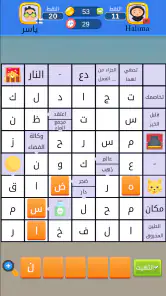
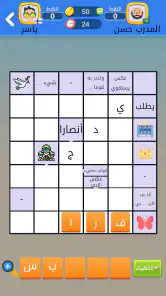
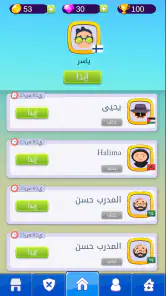
Analysis by Reviewed
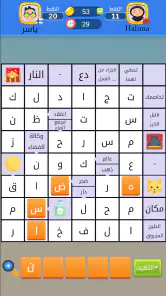
My first impression of ملحمة الكلمات : كلمات متقاطعة is that it aims for the comfortable middle ground between a crossword and a short riddle session. It is a free word game from Alborda Games Oy, rated for Everyone, and the main attraction is simple: read a clue, think through the possible answer, and keep moving when the word finally clicks. I found that familiar loop easy to start without needing a long tutorial or a large block of free time.
The game has a 4.4 average from around 2.8 thousand ratings, with more than 100 thousand installs. Those figures suggest that it has found a real audience, but they do not answer the more important question: will it still deserve a place on your phone after the initial curiosity wears off? My answer is cautiously positive. It works best as a lightweight thinking habit rather than as a deep, endlessly varied word challenge.
From an easy first session to a lasting word-game habit
I look at the first session as a chance to learn what kind of word challenge feels rewarding to me, rather than as a test of how quickly I can solve clues. A useful next step is to notice whether I enjoy pausing over an answer or prefer a steadier flow; that distinction helps set realistic expectations for returning. From there, the question becomes how the game’s pace feels once the novelty wears off.
Why the first week feels approachable
The opening appeal comes from the low commitment. I can pick it up while waiting for a coffee, during a quiet break, or at the end of the day when I want something more active than scrolling but less demanding than a full game. A clue gives me a clear target, and solving one answer creates a small sense of progress without requiring a complicated control scheme.
That simplicity is particularly useful for people who enjoy crossword puzzles but do not always want to sit down with a newspaper-style grid for a long stretch. The riddle angle makes each prompt feel like a compact problem. Some answers arrive immediately; others need a pause, a change of perspective, or a few letters to make the wording clearer. That variation is what kept my first sessions from feeling like simple vocabulary drills.
I also think it is a good entry point for casual players who usually avoid games with too many menus, characters, resources, or daily obligations. The central activity is understandable almost at once. You are there to solve words, not learn a fictional world or manage a collection of upgrades. That focus makes the first week pleasantly frictionless.
There is a useful difference between recognizing a word and reaching it from a clue. The latter asks me to consider synonyms, word associations, spelling, and the likely shape of an answer. Even when a puzzle is easy, that small mental search gives the session more substance than a basic matching game. For a short break, that is enough depth.
More From Our News Desk

Weather by Xiaomi Review: Clear at a Glance, Less Clear Up Close

X Under Pressure: Can It Recover When Posting Goes Wrong?

Clash of Clans Is Won Between the Battles

Android Auto Makes the Case for Quieter Car Software

MobiOffice: Transforming Mobile Productivity with Seamless Integration

EA SPORTS FC™ Mobile Soccer: Redefining Mobile Sports Gaming
How I would use it in an ordinary day
A realistic routine would be to open it during a ten-minute wait, solve a handful of clues, and stop before the activity becomes tiring. I would not treat it as a game that needs a dedicated evening. Its strongest use case is the gap between larger activities: commuting, waiting for an appointment, taking a lunch break, or winding down before sleep.
One practical tip is to avoid staring at a stubborn clue continuously. I get better results by solving the obvious entries first, then returning to the difficult one with a less crowded mind. In a crossword-style experience, an answer that seems impossible in isolation can become much easier once nearby words have narrowed the possibilities. That makes the game a good exercise in switching between persistence and restraint.
Another useful habit is to read the clue literally before assuming it is trying to trick you. Word games often encourage players to overthink a short prompt. I found that checking the ordinary meaning first prevents wasted guesses, while a second reading helps when the wording points toward a broader association. This is a small strategy, but it makes the experience feel more deliberate.
Where the novelty starts to settle
The first week benefits from discovery. I am learning how the clues are phrased, how much thought a typical puzzle asks for, and whether the rhythm suits my attention span. Once that novelty fades, the game has to rely on the quality and variety of its challenges. That is the point at which expectations should become more realistic.
This is not the right choice if I want a large competitive system, a story campaign, or a constantly changing social experience. Its pleasure comes from solving, not from building a complicated long-term identity. Players who need visible progression layers may find the basic loop too restrained. On the other hand, that restraint is exactly why it can remain comfortable for someone who wants a calm mental diversion.
What the free download really means
The game is free to download, which makes trying it straightforward. It also includes in-app purchases ranging from $0.99 to $84.99 per item. I would approach those options carefully and decide in advance whether I am willing to spend anything. A free starting point is valuable, but the presence of purchases means the experience should be judged not only by the first session, but by how comfortable the full routine feels without impulse spending.
For me, the sensible approach is to use the free experience long enough to decide whether the clues genuinely fit my taste. If I am already skipping puzzles after a few days, buying anything would not solve the underlying problem. If the game becomes part of a regular word routine, then a small optional purchase may feel different, but it should be a considered choice rather than a reaction to one difficult moment.
What changes after a month
After a month, the important question is no longer whether the game is pleasant. It is whether it continues to give me a reason to return. The answer depends heavily on what I want from a word game. If I enjoy repeated clue solving as a quiet daily ritual, the format has staying power. If I need constant novelty, escalating difficulty, or a strong sense of completion, the appeal may thin out.
I see its recurring value in the flexibility of the sessions. I can treat it as a five-minute warm-up for my brain or spend longer working through a cluster of clues. That makes it easier to maintain than games that demand a fixed appointment. A habit survives more easily when missing one session does not feel like falling behind.
The trade-off is that a flexible word game can also become easy to postpone. Without a personal routine, it may sit unused after the initial download. I would place it beside another established habit, such as opening it with morning tea or using it during a regular evening break. The game does not need to dominate the day; it needs a reliable place in it.
For language learners, the value is mixed but potentially useful. Solving clues can encourage attention to synonyms and word relationships, yet it should not replace structured study. I would use it as a low-pressure supplement, especially when I want to test whether a word comes to mind naturally. Learners who find unfamiliar wording frustrating may prefer a more explicitly educational app.
Maintenance without turning play into homework
The best maintenance strategy is to keep sessions short enough that I finish wanting another round rather than feeling drained. I would stop after a natural break, even if more puzzles remain. That protects the game from becoming a chore and preserves the small satisfaction that makes returning appealing.
I would also vary how I approach difficult clues. On one day, I might work methodically through the obvious answers. On another, I might focus on the clues that require lateral thinking. Treating the same puzzle loop in different ways prevents the activity from becoming a purely automatic tap-through routine.
A useful personal rule is to separate genuine difficulty from temporary tiredness. If I am making careless guesses, rereading the same clue without absorbing it, or feeling irritated by every pause, the right maintenance decision is to close the game. Word puzzles are more enjoyable when attention is available. Forcing a session can make a previously pleasant habit feel like an obligation.
Because the current version is 1.19.2 and the minimum operating system is Android 7.0, it is accessible to many older Android devices as well as newer ones. That broad compatibility is practical for people who keep a secondary phone or do not upgrade frequently. Still, compatibility alone does not guarantee that every device will feel equally comfortable; screen size and general responsiveness can affect how pleasant a clue-based game is during longer sessions.
Where fatigue can appear
The main source of fatigue is repetition. The basic action—read, think, enter, continue—is intentionally narrow. That is a strength during a short break, but it can become predictable when played for too long. I would not recommend marathon sessions unless you already know that repetitive word solving is exactly what relaxes you.
Another possible friction point is the uneven emotional rhythm of clues. An easy answer gives quick momentum, while a vague or unfamiliar clue can interrupt it. That contrast is normal in puzzle games, but it means the experience will not always feel smooth. Players who dislike being stuck may prefer a game with more direct hints or a gentler progression.
There is also a difference between challenge and ambiguity. A clue is satisfying when the answer becomes clear after thought. It is less satisfying when several answers seem plausible or when the wording does not give enough direction. I pay attention to that distinction because it determines whether I feel I solved something or merely guessed what the puzzle expected.
For that reason, I would not choose this as my only game if I need reliable stress relief. A peaceful word session can turn tense when I am already tired and a clue refuses to yield. A straightforward casual game may be better at those moments. This title is more suitable when I want light mental effort, not when I need my brain to switch off completely.
How it compares with familiar alternatives
Compared with a traditional crossword, this game feels more convenient and less tied to a long sitting. A printed puzzle offers the pleasure of a physical page and a broader sense of completion, while this app is easier to carry and open for a few minutes. I would choose the traditional format when I want a substantial weekend puzzle and this one when I want compact practice.
Compared with a daily word game, it offers a different kind of rhythm. A once-a-day format can create a clean boundary and make each attempt feel special. A broader puzzle app is more suitable when I want to continue beyond one daily challenge. The choice comes down to whether I prefer a controlled ritual or a more open-ended supply of word problems.
Compared with a spelling or vocabulary learning app, it is more playful and less structured. It can make me think about meaning and word connections, but it does not turn that thinking into a formal lesson. I would recommend it to someone who wants language-related stimulation without study pressure, not to someone preparing for an exam or following a carefully measured curriculum.
Compared with a competitive word game, it is calmer. There is less reason to worry about speed, rankings, or another player’s performance. That makes it a better fit for private practice and quiet concentration, but a worse fit for people who need competition to stay engaged. Knowing that distinction before downloading it will prevent disappointment.
Who should keep it installed
I would keep it installed for a player who enjoys clues, wants short sessions, and values a game that can fit around real life. It is especially appealing if you like the feeling of solving a small problem without committing to a large campaign. The Everyone age rating also makes it a broadly approachable choice for households looking for a gentle word activity.
I would be more selective for someone who needs a deep content pipeline, strong social features, or a clear long-term progression system. The game’s appeal rests on the quality of its word challenges and the player’s willingness to return to that loop. If those fundamentals are not enough on their own, extra time or purchases are unlikely to change the fit.
It is also not ideal for people who dislike uncertainty in clues. Some players enjoy wrestling with a word until the answer appears; others want every prompt to have an immediate, unambiguous path. Neither preference is wrong, but this game rewards patience more than instant clarity.
My long-term verdict
After the novelty fades, ملحمة الكلمات : كلمات متقاطعة earns lasting space only when I use it as a modest habit. It is not a game I would open for dramatic moments or a rich narrative. I would open it because a few clues offer a convenient way to wake up my attention, fill an awkward wait, or end the day with a small mental challenge.
Its strongest qualities are its approachable word-focused loop, flexible session length, and low barrier to entry. Its weaknesses are equally clear: repetition can set in, difficult clues may interrupt the flow, and players seeking competition or substantial progression will probably outgrow it. The in-app purchase range also makes it sensible to establish a comfortable free routine before spending.
Alborda Games Oy has made a game that is easiest to recommend with the right expectations. Think of it as a portable crossword-and-riddle companion, not as an endlessly evolving entertainment platform. If that description matches what you want, I can see it becoming a dependable part of a daily break. If you need constant surprise, measurable learning, or a strong reason to return beyond the next clue, a more specialized alternative will serve you better.
My final recommendation is to try it during several different kinds of sessions: a quick break, a longer quiet period, and a moment when you are already tired. That test reveals more than the first exciting download. If the solving process still feels satisfying when the novelty has gone, the game has probably earned its place. Its lasting value comes from making small word challenges easy to revisit, not from pretending to be more than that.
ملحمة الكلمات : كلمات متقاطعة Frequently Asked Questions
What language skills or device settings are helpful before playing ملحمة الكلمات: كلمات متقاطعة?
The game is centered on Arabic words and clues, so some familiarity with reading Arabic can make the puzzles easier to follow. Check that Arabic text displays properly on your device and that you are comfortable entering answers using the game’s controls. Crossword play can also involve spelling and vocabulary, so it may be more enjoyable if you like working through language-based challenges rather than relying only on visual puzzles.
What is ملحمة الكلمات: كلمات متقاطعة and how is the game played?
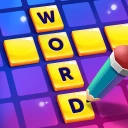
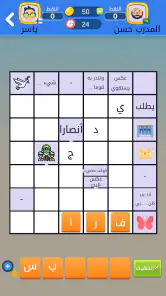
ملحمة الكلمات: كلمات متقاطعة is a crossword-style word puzzle game designed for Arabic-speaking players. You solve clues and fill the correct words into a connected grid, gradually completing each level. The game generally combines vocabulary, spelling, and general-knowledge challenges, making it suitable for short sessions as well as longer play. Its Arabic interface and clue system make it especially accessible to users who prefer solving puzzles in Arabic.
Is ملحمة الكلمات: كلمات متقاطعة suitable for beginners?
Yes, the game can be suitable for beginners, although the difficulty may increase as you progress. Early puzzles usually help players understand the grid, clue format, and word-entry system before introducing more challenging vocabulary. If you become stuck, available hints or assistance features can make difficult stages more manageable. Players with limited crossword experience should still expect occasional unfamiliar words or clues that require general knowledge.
Does the game require an internet connection to play?
The need for an internet connection may depend on the specific version and features available in the application. Basic crossword levels may work offline after installation, while advertisements, updates, cloud synchronization, rankings, or other online services can require connectivity. Before traveling or playing without mobile data, it is best to open several levels in offline mode and confirm which functions remain available on your device.
Is ملحمة الكلمات: كلمات متقاطعة free, and what purchases might be offered?
The game is free to download, with optional in-app purchases ranging from $0.99 to $84.99 per item. As with many free mobile puzzle games, purchases may be connected to hints or other assistance, and advertisements may also appear. The exact offers can vary according to the platform, region, and version installed. Review the purchase options before spending, and consider using device-level purchase controls if children will play.
Pros
- Large Arabic word database keeps puzzles varied and engaging.
- Helpful hints make difficult clues manageable without giving away full answers.
- Simple interface is easy to navigate on both phones and tablets.
- Short levels suit quick play sessions during breaks or travel.
- Progress tracking encourages players to complete more crossword challenges.
Cons
- Some puzzles may rely on regional Arabic vocabulary unfamiliar to all players.
- Hint systems can become limited unless additional rewards or purchases are available.
- Difficulty may vary noticeably between levels and feel inconsistent.
- Small text or clue areas can be less comfortable on compact screens.
- Requires regular updates to maintain fresh puzzles and fix occasional issues.
- Category
- Word
- Version
- 1.19.2