Magical Forest Color by Number
- 78.00
- 4.7
- Installs
- 50.00K
- Version
- 1.0.9

Screenshots
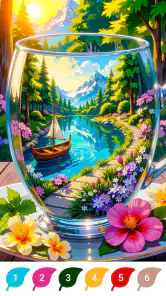
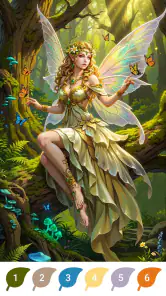
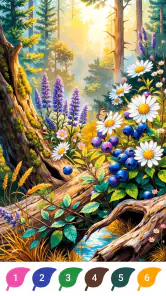

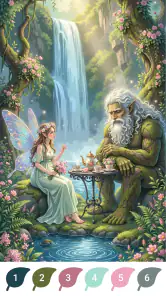
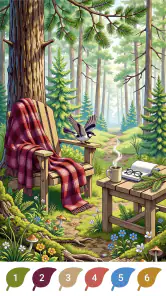
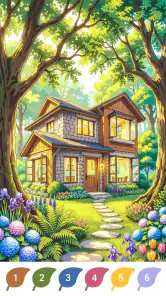
Analysis by Reviewed
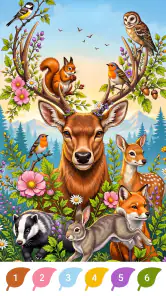
Magical Forest Color by Number is the kind of board game I reach for when I want something quiet rather than competitive. Its theme is built around an enchanted woodland, with cabins and animals providing the visual setting, and the basic appeal is easy to understand: choose a picture, follow the numbered color areas, and gradually turn a pale outline into a finished scene. I found it approachable from the first session, especially when I wanted a short break that did not demand quick reactions or complicated rules.
What makes it worth considering is the combination of a free starting point and a gentle coloring format. This is not a strategy board game with opponents, a puzzle campaign, or a drawing tool where I have to invent the image myself. It sits closer to a digital coloring activity with a board-game classification, aimed at relaxation and simple progress. The developer is Joyarc Coloring Games, and the game is suitable for Everyone, which makes it a reasonable option for shared family use as well as solo downtime.
How the coloring experience feels in everyday use
The numbered approach removes the pressure of choosing a palette. That sounds like a small detail, but it changes the mood of the activity. When I use a normal coloring app, I can spend more time deciding which shade belongs in the sky, trees, roof, or animal. Here, the structure points me toward the next action, so my attention stays on completing the picture instead of planning an artistic composition.
I would describe the pace as deliberately unhurried. A woodland scene can work well during a coffee break, before bed, or while listening to something in the background. The cabin-and-animal setting also gives the pictures a warmer personality than a collection made only from abstract patterns. If you like cozy visual themes, that focus is more appealing than a random assortment of generic shapes.
One useful habit is to treat each picture as a small task rather than trying to finish everything in one sitting. I found that stopping after a natural section keeps the activity relaxing. Trying to clear every remaining area at once can turn a calming game into a repetitive chore, particularly when the unfinished spaces are tiny. The numbered format is most enjoyable when I let it provide a rhythm instead of treating completion as a race.
The game is also easier to share with a child than a competitive board title. There is no need to explain turns, scoring, or winning conditions before starting. An adult can help identify the next color while a younger player taps the matching areas. That said, the Everyone rating should not be confused with a promise that every child will find the controls equally easy. Small sections may require patience, and younger users may need supervision simply because tapping accurately can be frustrating.
What the free access means for its value
The game is free to download, so the initial decision is relatively low risk. I can try the coloring style and decide whether the forest theme suits me before spending anything. That matters in this category because the main question is not whether the concept is understandable; it is whether the available artwork and the pace remain enjoyable after the novelty of the first image fades.
Optional in-app purchases range from $0.99 to $39.99 per item. I would therefore separate “free to try” from “automatically inexpensive overall.” The free entry point gives the app a chance to prove itself, while the purchase range means I would check the exact item and its role before confirming a transaction. The listed facts establish the available price range, but they do not turn every purchase into good value for every player. For me, a paid item would only make sense after I had already used the free experience enough to know that I would return regularly.
This is an important distinction when comparing it with a one-time paid coloring app. A one-time purchase may be easier to understand if I want a predictable total cost. Magical Forest Color by Number is more flexible at the beginning because I can start without paying, but the long-term value depends on how much content I personally want and which optional items appeal to me. I would not buy simply because a picture looks attractive in a preview; I would first see whether the basic activity itself holds my attention.
For a child’s device, I would also make the purchase decision with an adult present. The age rating is Everyone, but an age-appropriate game can still include optional spending that deserves a little household planning. If the goal is a calm activity with no budget commitment, staying with the free portion may be the sensible choice. If the goal is a larger personal collection, the purchase range should be considered part of the decision rather than an afterthought.
Small details that affect the routine
The first non-obvious strength is how well the numbered structure supports interrupted play. If I have only a few minutes, I can open a scene, complete a cluster of matching areas, and stop without needing to remember a complicated state or strategy. That makes it more practical for waiting rooms, short commutes as a passenger, or the final few minutes of a lunch break than a board game that expects a longer uninterrupted session.
A second useful approach is to use color groups as a visual reset. Instead of hunting randomly through the whole image, I can focus on one number and let the picture gradually reveal itself. This reduces the feeling of scanning every corner repeatedly. It is especially helpful in detailed forest scenes, where leaves, cabin elements, and animal features may be close together. The method is simple, but it makes the experience feel more organized and less like searching.
A third trade-off is that the same guidance that makes the game accessible can reduce creative freedom. I am following a planned illustration, not deciding how the forest should look. Someone who enjoys selecting unusual color combinations, shading freely, or drawing from a blank canvas may find the activity too controlled. For me, that limitation is part of the relaxation: there are fewer decisions to make. For an artist looking for expression, it may be the main reason to choose a different app.
I also think the forest theme sets a clear expectation. If you want a broad range of subjects, such as vehicles, cities, food, or portraits, this focused setting may feel narrow. The woodland atmosphere is a benefit when it matches your taste, but it is not a substitute for a general-purpose coloring collection. I would choose it because I specifically like enchanted woods, cabins, and animals, not because I expect it to cover every possible theme.
How it compares with familiar alternatives
Compared with a traditional board game, this is much easier to start alone and requires no table, pieces, or second player. The trade-off is that it does not provide the social negotiation, tactical decisions, or suspense of playing against friends. If I want conversation and competition, a physical board game is the better choice. If I want a quiet solo activity with a clear visual goal, this is more convenient.
Compared with a standard digital coloring book, its numbered workflow is more guided. I do not need to decide which colors work together, so it is friendlier when I feel mentally tired or do not consider myself artistic. The downside is the loss of experimentation. A freehand coloring app is stronger for personal style; this game is stronger for low-effort completion and predictable progress.
It also differs from a conventional puzzle game. There is no reason to expect the same kind of deduction, escalating challenge, or “aha” moment that comes from solving a logic board. The satisfaction here comes from filling the image and watching a scene become complete. That makes it a poor replacement for a brain-training puzzle, but a good companion for someone who wants their hands occupied while their mind winds down.
Another alternative is a physical coloring book. Paper offers a tactile experience and does not depend on a screen, while this game is more portable and avoids the need for pencils, markers, or cleanup. The digital version is convenient when I am traveling light, but it cannot reproduce the feel of paper or the personal variation of coloring outside the lines. The better option depends on whether convenience or hands-on craft matters more to me.
Who is most likely to get real value
I think the strongest audience is someone who enjoys calm, guided activities and likes cozy fantasy scenery. The game can suit adults who want a low-pressure evening routine, children who enjoy completing pictures with help, and families looking for a simple shared screen activity. Its board-game category may attract people browsing for casual entertainment, although its actual rhythm is closer to a relaxing coloring session than a competitive tabletop experience.
It is also a good fit for people who often abandon creative apps because the blank page feels intimidating. The numbers provide an immediate instruction, and the forest setting supplies a consistent visual identity. I would recommend trying it during a specific routine, such as a ten-minute wind-down after work, rather than judging it only as a game to play for long stretches. Its value becomes clearer when it fills a small, repeatable moment in the day.
I would be more cautious about recommending it to players who need constant challenge or measurable mastery. If you prefer leaderboards, multiplayer matches, strategic choices, or rapidly changing objectives, the calm coloring loop may feel passive. I would also point artists toward a free-form coloring or drawing tool when the main goal is experimentation. The numbered system is useful precisely because it limits decisions, and that is not what every player wants.
Parents should consider the child’s patience with detailed tapping. A young player may enjoy the animals and cabins but become annoyed by small numbered sections. Sharing the activity can solve that problem: one person can locate the next area while the other completes it. I would also make sure the adult handling the device understands that optional purchases are available, even though downloading the game itself is free.
Performance expectations and practical setup
The current version is 1.0.9, and it supports devices running Android 7.0 or later. That gives the game a fairly broad starting range for Android users, including people who are not using a recent handset. Still, compatibility is not the same as identical comfort on every device. Coloring depends on tapping accurately, so a larger screen may feel more pleasant than a very small one when scenes contain fine sections.
Before settling into a longer session, I would adjust my surroundings rather than expecting the game to create the entire relaxing atmosphere by itself. Lower screen brightness, use headphones only if background audio is comfortable, and keep the session short if eye strain appears. These are ordinary habits, but they matter more for a game designed around quiet repetition than they would for a quick action title.
The game has an average rating of 4.7 from over 500 ratings, along with more than 70 written reviews. That is a useful sign that the concept is connecting with its audience, but I would still read the written feedback with my own priorities in mind. A player praising the peaceful theme may value something completely different from someone looking for deep gameplay. I see the rating as encouragement to try it, not as proof that it will satisfy every coloring preference.
Its install count is over 50 thousand, which places it among apps that have attracted a meaningful early audience without making popularity the only reason to choose it. I care more about whether the forest theme, guided method, and free starting access match my routine. Those are the factors that determine whether I will open it again after the first session.
My verdict after weighing the trade-offs
I recommend Magical Forest Color by Number to anyone who wants a gentle, guided coloring game with an enchanted woodland identity. The free download makes testing the experience straightforward, and the Everyone rating broadens its appeal for family use. I especially like it as a short solo activity: it gives me something concrete to complete without demanding strategy, speed, or artistic confidence.
My recommendation becomes more qualified if you are deciding whether to spend beyond the free access. Because optional items span from $0.99 to $39.99, I would treat purchases as a personal value decision rather than assuming they are necessary. Try the free experience first, see how often you return, and only then decide whether additional spending fits your habits. Someone who plays occasionally may be perfectly satisfied without paying; a regular user may judge the extra content differently.
The main reason to skip it is not poor quality but a mismatch of expectations. This is not the right pick for competitive board-game depth, open-ended digital art, or a wide-ranging catalog of unrelated subjects. It is also not ideal if detailed tapping quickly becomes tiring. In those cases, a physical coloring book, a freehand art app, or a strategic board game would serve the purpose better.
For my use, the balance is favorable because the game knows what it wants to be: a quiet forest-themed coloring activity that turns spare minutes into visible progress. If you want relaxation with guidance rather than creative freedom or competition, this is a sensible free game to try. I would start without purchasing anything, use it in a short daily routine, and keep it only if the calm completion loop genuinely earns a place in my downtime.
Pros
- Relaxing coloring experience suitable for short or extended sessions.
- Simple tap-to-fill controls make it accessible for beginners.
- Fantasy artwork offers a charming variety of magical forest scenes.
- Offline play is convenient when traveling or away from Wi-Fi.
- Completed pictures can provide a satisfying sense of progress.
Cons
- Some detailed images may require considerable time to finish.
- Small sections can be difficult to select accurately on smaller screens.
- The coloring format may feel repetitive after extended play.
- Certain artwork or tools may be restricted behind optional purchases.
- Frequent promotional prompts can interrupt the relaxing atmosphere.