Lower Layers
- 17.00
- 3.8
- Installs
- 10.00K
- Price
- Free

Screenshots
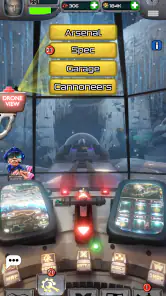
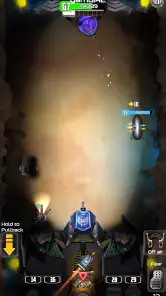
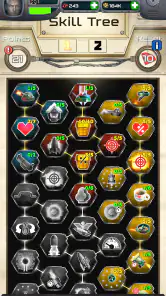
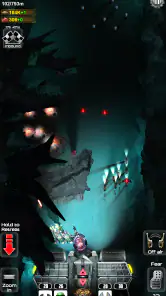
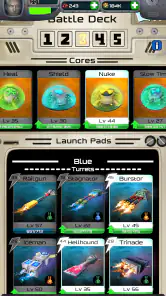
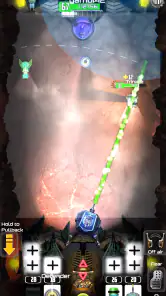
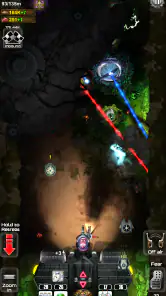

Analysis by Reviewed
Lower Layers is a strategy game built around the tension between player-versus-player combat and progress that continues through an AFK-style structure. I spent time with it expecting a quick mobile battler, but its identity is more specific: it wants you to make meaningful choices before a fight, then accept that the result depends on how well those choices fit the opponent and the situation. That makes it easy to sample in short sessions, although it also means the game will not satisfy everyone who wants constant control.
The presentation aims for a moody, layered setting rather than a bright, casual look. Even the short title suggests a descent into a place where position and pressure matter. I found that atmosphere useful because it gives the matches a sense of direction: progress feels like moving through a hostile space instead of simply clearing disconnected menus. The game is free to start, with optional purchases ranging from $0.99 to $99.99 per item, and its Teen content rating is worth keeping in mind before installing it for a younger player.
Developed by Oobe games llc, the game is available for devices running Android 7.1 or later. The current version is 1.1.5, and its release on Aug 19, 2025 places it among newer entries in the mobile strategy field. It has reached over 10K installs, with a 3.8 average from around 85 ratings and 17 written reviews. Those numbers suggest a small but real audience rather than a huge, established competitive community, so I approached it as a focused game to explore rather than a guaranteed mainstream hit.
First impressions: a compact game with a deliberate mood
My first useful discovery was that Lower Layers does not feel like a traditional hands-on strategy game from beginning to end. The important work happens around the battle: deciding how to prepare, judging whether a setup is strong enough, and learning from the outcome. Once the action is underway, the AFK influence changes the way I pay attention. I am not constantly tapping to rescue every mistake, so the preparation phase carries more weight than it would in a reflex-heavy game.
That structure makes the game approachable when I have only a few minutes. I can check progress, make a decision, and leave without treating every session like a full commitment. A realistic use case is a short break during the day: instead of opening a game that demands an uninterrupted match, I can review what happened, adjust my plan, and return later. The trade-off is clear, though. Anyone who enjoys direct control, rapid reactions, or the feeling of personally steering every attack may find the AFK side less satisfying.
The opening impression also depends on what you expect from the word “PvP.” This is not the same experience as a conventional real-time arena where both players are actively moving units at the same moment. The competitive element is filtered through planning and progression. That can make victories feel earned through good preparation, but losses may feel less immediately understandable if the game does not show enough detail about why one arrangement outperformed another. I recommend treating early defeats as information rather than rushing to spend resources after every loss.
One practical habit helped me more than repeatedly changing everything at once: I altered one part of my approach, then watched whether the next result improved. In an AFK strategy game, changing several variables together makes it difficult to know what actually worked. Keeping a small mental record of the setup, the opponent, and the result turns short sessions into a learning loop. This is one of the game’s less obvious strengths: it rewards observation more than frantic input.
Who will feel at home here
Lower Layers is a better match for players who enjoy gradual improvement, competitive comparison, and the satisfaction of tuning a plan. It is also suitable for people who like mobile games that can be checked in brief visits rather than played continuously. The combination of a darker setting and asynchronous-feeling progress gives it a more focused personality than many disposable strategy titles.
I would be more cautious recommending it to someone who wants a fully transparent competitive system immediately. Players who need detailed explanations for every result, a large social scene, or a fast stream of manual decisions may prefer a more established strategy game. The same applies to anyone uncomfortable with optional purchases in a free game. The purchase range is broad, so I would approach the shop carefully and decide in advance whether I want to play without spending before allowing the progression loop to influence that decision.
The world’s visual language keeps the descent coherent
The setting works best when it stays restrained. Lower Layers communicates its identity through the idea of descending into increasingly difficult spaces, and that concept gives the art direction a practical job: it should make progress feel like entering deeper territory. I found this more effective than a collection of unrelated fantasy screens because the mood and the game’s central name point in the same direction.
What matters here is not visual spectacle alone. In a strategy game, presentation needs to help me read the situation quickly. A dark or layered environment can create tension, but it must not bury the information needed for decisions. The strongest moments are those where the setting adds pressure without making the battlefield feel confusing. When the visual language supports the distinction between preparation, combat, and progression, I can stay focused on the plan instead of treating the interface as decoration.
The art direction also affects pacing. A bright, noisy presentation would suggest constant excitement, while the lower, heavier mood supports a slower cycle of checking, evaluating, and returning. That is a good fit for the AFK structure. The game does not need to pretend that every moment is an emergency; its atmosphere gives permission to pause and think. For me, that made the less active sections feel intentional rather than simply empty.
A useful way to play is to separate the emotional response from the strategic response. A defeat in a gloomy setting can feel more severe than a defeat in a cheerful cartoon game, but the correct next step is still analytical: identify whether the issue was preparation, progression, or an unfavorable matchup. This sounds simple, yet it prevents the atmosphere from pushing me into impulsive decisions. The game’s tone is an asset, provided the player does not confuse dramatic presentation with a reason to spend or rebuild immediately.
Why the setting matters to the mechanics
The world is most successful when it reinforces the idea that every step downward carries risk. That framing gives ordinary progression a sense of consequence. Even when I am only checking a result, the setting encourages me to think about what comes next instead of treating the current screen as the entire game.
There is also a useful contrast between the calm of AFK progress and the pressure of PvP competition. The world feels more controlled during preparation, then the competitive result interrupts that calm. This contrast gives the game a playable mood: it is not relentlessly loud, but it is not passive either. The atmosphere creates a rhythm of anticipation, result, and adjustment.
Still, players who judge strategy games mostly by visual variety may find the concept more appealing than the moment-to-moment presentation. The setting is a framework for the systems, not a replacement for them. If the underlying decisions do not interest you, the dark descent alone will not carry the experience for long.
Sound and rhythm: quiet preparation, sharper competition
Sound has an important role in a game built around pauses and bursts of activity. I found the most convincing approach is to let the audio support the shift between waiting and confrontation. A heavy environment benefits from restrained sound design because constant intensity would flatten the mood. The quieter stretches make the competitive moments feel more noticeable, even when the player is not manually controlling every action.
This rhythm also makes the game easier to fit into daily life. I can approach it in two different ways: with full attention when I want to study a result, or casually when I only want to check progress. That flexibility is valuable, but it creates a responsibility for the game to communicate clearly. If an important change is too easy to miss during a quick check, the player may feel that the AFK layer is working against them rather than helping them.
My advice is to give the first few sessions enough attention to learn the game’s visual and audio cues. Once the rhythm becomes familiar, short visits are more useful. I would not begin by treating it as background entertainment while doing something else, because the early learning value comes from noticing how preparation connects to the result. After that foundation is in place, the lighter-touch format makes more sense.
The pacing is also where Lower Layers separates itself from a standard action game. There is less emphasis on constant reaction and more on anticipation. That can feel refreshing after games that demand uninterrupted focus, but it can also feel slow if you measure excitement by the number of inputs per minute. The game’s coherent mood depends on accepting that slower tempo. If you want the setting, sound, and mechanics to work together, you need to let the pauses exist rather than wishing every section were an active battle.
Where the AFK structure fits the strategy
The central mechanical question is whether the AFK format adds useful planning or merely removes control. In my experience, it works when I treat preparation as the main strategic activity. I am not playing for the sensation of manually executing every decision; I am playing to build a setup that can survive without constant intervention. That changes the meaning of success. A strong result is not only a win, but evidence that the plan remains effective when I step away.
This makes the game a good alternative to more traditional strategy titles that require long, uninterrupted matches. Those games offer deeper moment-to-moment control, while Lower Layers offers convenience and a more measured pace. Neither approach is automatically better. If I want to practice precise timing, the conventional real-time option is stronger. If I want to make a strategic choice during a short break and return later, this game fits better.
The PvP element prevents the AFK loop from becoming completely passive. Competition gives the preparation phase a reason to matter. I am not only improving for a personal score; I am trying to build something that holds up against another player’s progress or approach. That pressure is useful, although it also means the game may become less comfortable for players who dislike losing progress or comparing results.
One of the most important trade-offs is transparency. AFK systems can make a result feel distant from the player’s actions, especially when the game does not present the battle in a way that is easy to interpret. I handled this by reviewing outcomes with a specific question: was the plan fundamentally wrong, or did it simply meet a stronger progression level? That distinction matters. Rebuilding everything after facing a stronger opponent wastes time, while refusing to adapt after a genuine weakness leads to repeated losses.
How I would manage short sessions
I would divide play into three steps. First, I would check the current state without immediately claiming or spending anything. Second, I would identify the single decision most likely to improve the next attempt. Third, I would return later and compare the result. This workflow is more reliable than opening the game repeatedly and making several impulsive changes.
For a player with limited time, the best use case is a predictable routine: check during a commute break, make one considered adjustment, and leave. For a more competitive player, longer sessions should be used for analysis rather than constant tapping. The game’s value comes from turning limited input into better preparation, not from pretending that every pause is a missed opportunity.
Optional purchases deserve the same strategic caution. Because the game is free to start but offers items from $0.99 to $99.99, I would first learn whether the basic loop is enjoyable without paying. Spending can be reasonable when it supports a game I already like, but it should not be used as a substitute for understanding why a setup failed. In a planning-focused game, money may shorten frustration without teaching the underlying decision.
The Teen rating also makes the audience clearer. I would recommend that parents look at the game’s competitive and purchase-oriented structure before handing it to a child, rather than assuming that a strategy label means a low-pressure experience. For adults and older teens who understand the format, the rating is a straightforward sign that this is not aimed at very young players.
The atmosphere verdict: a promising fit for patient strategists
Lower Layers succeeds when its art direction, sound, setting, and pacing all point toward the same experience: a tense descent where preparation matters more than constant movement. The mood is not separate from the mechanics. The layered world makes progress feel like movement into danger, the restrained rhythm supports AFK play, and PvP gives the otherwise quiet cycle a reason to stay engaging.
My recommendation is strongest for players who enjoy making a plan, checking its results, and refining it over time. I would also suggest it to anyone looking for a strategy game that respects short sessions without abandoning competition. The game can be a pleasant alternative to real-time battlers when I want something more thoughtful and less demanding of immediate attention.
I would skip it if my priority were direct control, rapid action, or a deeply established competitive ecosystem. I would also avoid spending early. Let the free experience show whether the pacing and atmosphere work for you first; the game’s core appeal is its decision loop, not the size of the purchase menu.
After playing it, I see Lower Layers as a focused strategy experiment with a clear personality rather than a universal recommendation. Its 3.8 average reflects a game that will likely divide players according to their tolerance for AFK pacing and competitive uncertainty. For me, the strongest reason to keep it installed is the way it turns waiting into part of the mood: I prepare, step away, return to the result, and decide how much deeper I am willing to go. If you enjoy patient PvP strategy wrapped in a darker, deliberate atmosphere, Lower Layers is worth trying for free before deciding whether its slower rhythm belongs in your regular rotation.
Pros
- Offers a clear introduction to networking’s lower layers.
- Useful for learning how physical data transmission works.
- Explains complex technical concepts in an accessible way.
- Helpful reference for networking students and beginners.
- Can support study sessions and basic exam preparation.
Cons
- May feel too basic for experienced networking professionals.
- Some topics require prior knowledge of networking terminology.
- Limited value without practical exercises or lab simulations.
- Technical explanations may not cover newer networking standards.
- The learning experience can become repetitive over time.

- Category
- Strategy
- Version
- 1.1.5