Kalak | كَلَك
- 21.00
- 3.5
- Installs
- 100.00K
- Price
- Free

Screenshots

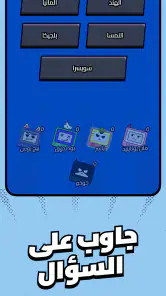


Analysis by Reviewed
My first impression of Kalak | كَلَك was that it is easy to approach but not necessarily easy to keep interesting. This free trivia game from Sadu Labs is built for the kind of short challenge that fits between two everyday tasks: a quick round while waiting for a bus, a few questions before bed, or a casual contest with someone nearby. Its Everyone age rating also makes it approachable for a broad audience, although younger players may still need an adult to review any in-app purchase prompts before playing.
The central appeal is simple: open the game, face a challenge, and see how much you know. That simplicity matters. I did not have to spend a long time learning complicated controls or understanding an elaborate game world before getting started. For a trivia title, that low entry barrier is a real strength because the best moment to play is often an unplanned one.
At the same time, I would not mistake a quick first impression for lasting depth. Trivia games depend heavily on the quality, variety, and rhythm of their questions. Once the novelty of the interface and the initial challenge fades, the important question becomes whether each return visit still feels worthwhile. My experience with Kalak is best understood through that lens: it is inviting in short sessions, but its long-term place on your phone depends on how much you enjoy repeating this style of challenge.
From the first week to regular play
A friendly starting point for casual trivia
During the first week, the game’s strongest quality is its immediacy. I can imagine recommending it to a friend who wants something lighter than a large strategy game and more active than simply scrolling through social media. The format suits quick attention spans, and the Arabic title, كَلَك, gives the app a distinct identity rather than making it feel like another anonymous quiz product.
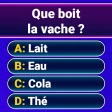
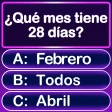
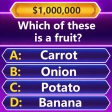
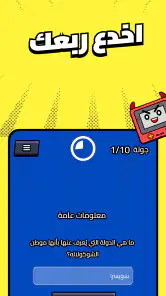
The store summary presents it as a destination for people who love challenges, and that description makes sense without needing to oversell the experience. The game is not asking me to build a character, manage a complicated collection, or commit to a long session. Its value comes from the small mental jolt of recognizing an answer, narrowing down possibilities, or discovering that a supposedly easy question is not as easy as it looked.
That makes it particularly suitable for three kinds of players. The first is someone who enjoys general knowledge but does not want a formal study tool. The second is a family or group looking for a simple conversation starter. The third is a player who likes testing personal memory in small bursts rather than spending an hour inside one game. In each case, the low commitment is more important than visual spectacle or a deep progression system.
I also found that trivia works best when I treat each session as a mental break rather than a serious test of intelligence. A wrong answer is not useful if it makes the experience frustrating, and a correct answer is not satisfying if I rush through it without thinking. The most enjoyable approach is to pause briefly, make a choice, and accept the result. That rhythm helps the game feel like entertainment instead of an exam.
How I would use it in an ordinary day
A realistic use case would be a short evening routine. After dinner, I might play several rounds while waiting for a family member or during a break from a longer game. If other people are nearby, the question itself can become the activity: one person reads it aloud, everyone guesses, and the result starts a small discussion. That social possibility is more valuable than it may first appear because trivia often creates interaction without requiring everyone to learn controls.
Another useful routine is to play only when I have a few unoccupied minutes, rather than opening it automatically every time I reach for my phone. This keeps the game from becoming background noise. I would also avoid treating a losing streak as a reason to keep playing indefinitely. Trivia can encourage the “one more question” habit, but stopping while the session still feels fresh is a better way to protect its appeal.
For someone deciding whether to try it, the practical answer is straightforward: the game is free to start, but it includes in-app purchases ranging from $0.99 to $159.99 per item. I would therefore approach it as a no-cost trial and pay attention to the purchase screens before confirming anything. The presence of optional spending does not automatically make the game poor value, but it does mean that players should decide in advance whether they are comfortable spending money on a trivia experience.
What changes after the initial novelty
After the first few sessions, I began judging the game less by its accessibility and more by its repeat value. A trivia title needs more than a pleasant first launch. It needs enough variation to make returning feel like a choice rather than a habit formed by inertia. That is where personal preference becomes important. If I enjoy the act of answering questions for its own sake, a compact game can remain useful. If I need a strong reward loop, a large competitive community, or a detailed learning record, I may start comparing it with more specialized alternatives.
Traditional quiz apps often focus on timed multiplayer matches, subject-specific study, or huge question libraries. Kalak | كَلَك is easier to recommend when the goal is a relaxed challenge rather than structured exam preparation. A dedicated language-learning app is a better choice for building vocabulary, while a classroom quiz platform is more appropriate when a teacher needs reports and organized participation. A large multiplayer trivia service may offer more social pressure and variety, but it can also demand more attention than someone wants from a casual mobile game.
The important trade-off is convenience versus depth. Kalak’s identity is strongest when I want a direct trivia moment without turning the activity into a project. It becomes less compelling if I expect a carefully measured learning journey or a highly developed competitive ecosystem. Knowing that distinction before downloading it prevents disappointment later.
Keeping the game in rotation month after month
For lasting value, I would use a rotation rather than forcing daily play. Trivia becomes tiring when every session feels like the same obligation, especially if I am playing only to maintain a streak or chase a result. A better pattern is to return when I am in the mood for questions, then leave it alone for a while and come back with a refreshed memory.
One practical method is to create small themes around the experience even if the game itself is broad. I might play alone when I want a quiet challenge, then bring it into a family setting on another day. I could also keep a mental note of categories or question styles that expose gaps in my knowledge, using those moments as prompts to look something up afterward. That turns a short game session into a springboard for curiosity without pretending that the app replaces a proper educational resource.
Another useful habit is to judge the game every few weeks by asking whether I am opening it intentionally. If I am returning because I genuinely want a trivia challenge, it has earned its place. If I am opening it only because it happens to be installed, the space on my phone may be better used by something I actually play. This is not a criticism unique to Kalak; it is the central test for almost every casual game once the first-week excitement disappears.
Maintenance, spending, and everyday friction
The maintenance burden seems low in the ordinary sense: this is not a game that asks me to manage a large virtual world, remember complex upgrade paths, or check in constantly to avoid losing progress. That makes it easier to keep available for occasional play. Still, low mechanical maintenance does not mean zero mental maintenance. I need to manage my own expectations, especially if I want the game to remain enjoyable rather than become a repetitive reflex.
The current version is 1.15.2, and the game supports devices running Android 6.0 or later. That broad compatibility is helpful for people using older Android phones, although day-to-day smoothness can still depend on the individual device. I would make sure the phone has enough free space and that the operating system is functioning normally before blaming the game for any general performance issue.
Purchases deserve a second look because the upper end of the listed range is far beyond what many people would casually spend on a trivia game. I would not hand a child an unsupervised device with payment access enabled, even though the content rating is Everyone. My preferred approach is to play the free portion first, decide whether the game has become a regular part of my routine, and only then consider whether any purchase feels justified. If I am not returning consistently, spending does not solve the underlying problem.
There is also a social maintenance question. Trivia is more enjoyable when the people around me are willing to participate, but not every household or friend group will be interested. I would not download this expecting it to create a social circle by itself. It can support an existing group activity, yet a dedicated multiplayer platform may be better if live competition is the main reason I play.
Where fatigue can appear
The biggest long-term risk is repetition. Even a well-designed question game can lose its spark if I begin recognizing patterns, seeing familiar prompts, or answering without feeling engaged. This is especially noticeable when I play too many rounds in one sitting. The sensible response is not necessarily to delete the game immediately; taking a break can reveal whether I miss it or simply miss having something to tap.
Trivia fatigue can also come from uneven difficulty. Questions that are consistently too easy stop feeling rewarding, while questions that feel disconnected from a player’s knowledge can make success seem arbitrary. Since my own background shapes what feels fair, I would judge the experience over several sessions rather than forming an opinion from one unusually simple or difficult run.
Another source of friction is the gap between entertainment and learning. I may remember a question I got wrong, but that does not automatically mean I have learned the subject. Players looking for explanations, revision plans, or measurable educational progress should choose a study-focused app instead. Kalak works better as a prompt for curiosity than as a substitute for a course or reference book.
The purchase model can add fatigue too. Even when I am enjoying the questions, repeated prompts to spend money can change the mood of a casual session. I would pay attention to how comfortable I feel navigating the free experience. If the commercial side becomes more noticeable than the actual challenge, that is a clear sign that the game is not earning regular attention from me.
Who should install it, and who should skip it
I would suggest trying Kalak to anyone who likes short trivia sessions, wants a lightweight game for spare moments, or enjoys turning questions into small group conversations. It is also a reasonable option for families seeking an Everyone-rated game that does not require advanced gaming skills. The free entry point makes experimentation easy, provided that in-app purchase controls are handled carefully.
I would be more cautious about recommending it to someone who needs a serious learning system, a guaranteed stream of deep subject content, or a strong live multiplayer structure. In those cases, a specialist alternative will probably provide clearer progress and a better match for the goal. I would also skip it if I already know that repeated quiz questions quickly bore me. No amount of convenience can overcome a format I do not enjoy.
The rating sits at an average of 3.5 from around 550 ratings, with roughly 20 written reviews, and the game has passed 100,000 installs. Those figures suggest that it has attracted a meaningful audience, but they do not remove the need to test the experience personally. Trivia is unusually dependent on taste: one player’s relaxing five-minute challenge is another player’s repetitive question loop.
My long-term verdict
Kalak | كَلَك earns a place on my phone when I use it deliberately. Its strongest case is not that it will replace every other trivia game, but that it offers an approachable way to turn a few spare minutes into a small mental challenge. Sadu Labs has a product that is easy to understand, suitable for broad audiences, and free to try.
Its lasting value depends on moderation. I would keep it installed if I enjoyed returning after breaks, sharing questions with family, and discovering occasional gaps in my general knowledge. I would remove it if sessions began feeling automatic, if the available challenge no longer felt fresh, or if purchase prompts outweighed the entertainment. That is a fair standard for a casual game, especially one competing with countless other ways to fill a short break.
My recommendation is to treat it as an occasional trivia companion, not a permanent daily obligation. Try the free experience, set a personal spending boundary, and give the game room to breathe between sessions. If it still feels inviting after the novelty fades, it has earned its space. If not, a more specialized quiz, learning, or multiplayer app will likely serve you better.
Pros
- Simple interface makes everyday use easy for new players.
- Supports Arabic language and reflects local cultural context.
- Quick rounds are suitable for short gaming sessions.
- Encourages vocabulary
- memory
- and general knowledge skills.
- Lightweight design should run smoothly on many Android devices.
Cons
- Some content may feel repetitive after extended play.
- Difficulty balance may vary between categories or question sets.
- Arabic-focused gameplay may limit appeal for non-Arabic speakers.
- Ads may interrupt the experience
- depending on the app version.
- Limited multiplayer or social features can reduce long-term engagement.

- Category
- Trivia
- Version
- 1.15.2