Happie Quiz: Play Earn Rewards
- 17.00
- 4.1
- Installs
- 100.00K
- Price
- Free

Screenshots



Analysis by Reviewed
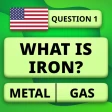
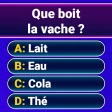
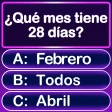
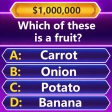
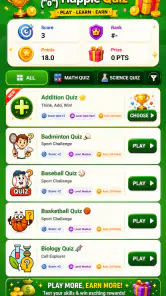
I approached Happie Quiz: Play Earn Rewards as a quick trivia game first and a rewards app second. That distinction matters. The main appeal is the chance to answer general-knowledge questions, keep your mind active, and add a competitive element with friends, while the reward angle gives each round a little more purpose than a casual quiz. In my experience, it is most interesting for people who already enjoy short knowledge challenges and want something more motivating than simply watching a score rise.
It is a free trivia game from Happie Rewards for Android, aimed at mature users aged 17 and over. The app has reached over one hundred thousand installs and holds a 4.1 average from more than eight hundred ratings, which suggests a reasonably positive reception without making it look universally loved. I would treat that balance honestly: there is enough interest to make it worth trying, but not enough evidence to assume it will suit every player.
How I would decide whether Happie Quiz fits
My first question would be what you want from a quiz app. If your priority is learning through carefully organized lessons, a dedicated education app is likely a better match. If you want a social party game with elaborate presentation, a conventional multiplayer trivia title may feel more entertaining. Happie Quiz sits between those categories. It is a lightweight knowledge game where the possibility of rewards and friendly competition can make repeated play feel worthwhile.
The second question is how you feel about reward-based motivation. Some players like having an extra reason to return, while others prefer trivia to remain completely separate from incentives. I found the reward theme useful as a nudge, but I would not install this expecting it to replace a job, generate dependable income, or turn every spare minute into meaningful earnings. The sensible way to view it is as a free quiz experience with a reward-oriented layer, not as a financial tool.
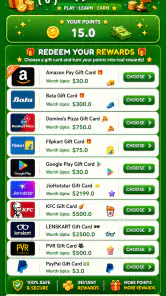
The third decision point is your tolerance for uncertainty around the reward journey. In any app built around points, prizes, or similar incentives, the important details are not just the questions. You also need to understand how progress is tracked, what actions are required, and whether the effort feels worthwhile to you. I recommend reading the in-app instructions carefully before investing time. That habit prevents the common mistake of playing for an assumed outcome rather than the experience the app actually provides.
Finally, consider your preferred session length. Trivia works well when you have a few free minutes, but a short-session design can feel limited if you want a deep campaign, a structured course, or a long evening of varied gameplay. Happie Quiz makes more sense for small breaks than for replacing a full-featured game night.
The basic experience is easy to understand
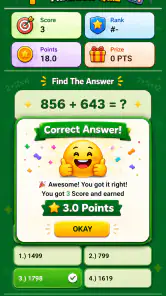
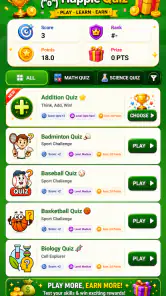
The central loop is straightforward: open the game, answer quiz questions, improve your general knowledge, and use competition or rewards as motivation to continue. That simplicity is one of its strengths. I did not approach it needing to learn a complicated control scheme or understand a large fictional world. The mental effort goes into recalling information and making decisions under pressure, which is exactly what I want from a casual trivia title.
That simplicity also creates a useful routine. I can imagine using it while waiting for an appointment, during a commute when I am not driving, or at the end of the day when I want something more active than scrolling. A few rounds can turn an otherwise empty break into a small mental exercise. It is not a substitute for deliberate study, but it can encourage curiosity and remind me which subjects I know well and which ones need attention.
One practical tip is to treat wrong answers as a personal review list rather than simply lost points. When I miss a question, I mentally group it by subject: history, geography, science, entertainment, or everyday facts. That turns casual play into a loose learning workflow. Later, I can look up the topics that repeatedly catch me out instead of assuming that a single quiz session has taught me everything.
Why the reward angle changes the way I play
Rewards can make a familiar quiz format feel more immediate. In a normal trivia app, I may stop after a poor round because there is no reason to continue. Here, the possibility of earning something can encourage another attempt. That can be helpful when I want a small habit-building push, especially if I enjoy tracking progress and competing with friends.
There is a trade-off, though. The reward focus may shift attention away from the quality of the questions. I have to remind myself not to rush simply because a round feels connected to an incentive. Fast guesses can be less satisfying than thoughtful answers, and chasing a reward can make an ordinary mistake feel more frustrating than it should. My preferred approach is to play in two modes: relaxed rounds for learning and more focused rounds when I want to compete.
I would also avoid making decisions based on assumptions about how quickly rewards arrive or what they are worth. The responsible approach is to inspect the current in-app rules and requirements before committing serious time. That is not a criticism unique to this game; it is simply good practice whenever a trivia product combines entertainment with incentives.
Playing with friends adds a useful reason to return
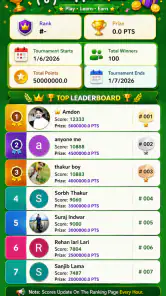
The social side is important because trivia becomes more memorable when there is someone else to challenge. Competing with friends can turn obscure knowledge into conversation, especially when two people disagree about an answer or discover that one person is unexpectedly strong in a particular topic. I like this more than comparing myself with an anonymous leaderboard because a friendly rivalry gives the result context.
There is also a subtle benefit for mixed-ability groups. A knowledgeable player may dominate a serious quiz, but a casual reward-focused game can remain enjoyable if everyone treats it as a light contest. I would suggest agreeing beforehand that the goal is entertainment rather than proving who is smartest. That keeps the social feature from becoming uncomfortable when one player has a bad run.
A useful everyday scenario would be a group of friends waiting for food or traveling together. Instead of passing one phone around for a traditional party quiz, each person can use the game as a quick challenge and compare results afterward. The format is better suited to short bursts than to a carefully hosted quiz night, but it can fill those in-between moments surprisingly well.
Where this game is stronger than familiar alternatives
Compared with a pure educational app, Happie Quiz feels less demanding. I do not need to commit to a course, complete a lesson sequence, or organize a study plan before getting started. That makes it a better fit for people who learn best through repetition and curiosity rather than formal instruction. The reward element can also provide a reason to return when a conventional flashcard app feels too much like homework.
Compared with a standard trivia game that focuses only on points, the incentive layer gives each session a different kind of purpose. A score is satisfying, but a reward-oriented structure can make a small improvement feel more meaningful. This is particularly useful for players who struggle to maintain habits with apps that offer no motivation beyond a badge or personal best.
Compared with a large, content-heavy game, its likely advantage is accessibility. The idea is immediately recognizable, and the mature age classification signals that it is not positioned as a children’s learning toy. For adults who want general-knowledge entertainment without committing to a complex title, that directness is appealing.
My strongest positive takeaway is the combination of low entry friction and several possible motivations: learning, competition, and rewards. Many trivia apps emphasize only one of those. Happie Quiz is more flexible because I can open it for different reasons depending on my mood.
Where another category may serve you better
I would choose a dedicated learning app instead if my goal were exam preparation, language development, or a clearly sequenced curriculum. A general-knowledge quiz can expose gaps, but it does not automatically provide the explanations, repetition schedule, or depth needed for serious study. In that situation, Happie Quiz works better as a warm-up or occasional knowledge check than as the main tool.
I would choose a conventional party trivia game if presentation, audio, themed rounds, and group entertainment were more important than rewards. The reward concept may be motivating, but it does not necessarily create the same atmosphere as a game designed specifically for a living-room gathering. Happie Quiz is more personal and casual; a party title is often better when everyone is watching the same screen.
I would also skip it if I dislike incentive-driven apps or if I tend to become overly focused on earning outcomes. The best experience comes from enjoying the questions themselves. If every wrong answer feels like a financial setback, the game may create more tension than fun. A simple offline puzzle or non-rewarded quiz would be healthier for that kind of player.
Another limitation is that trivia quality matters enormously. Even a good reward structure cannot compensate for questions that feel repetitive, unclear, or poorly matched to the player. Since quiz enjoyment depends on content variety as much as interface design, I would give the app a fair trial across several sessions rather than judging it after one lucky or unlucky round.
What to check before making it part of your routine
Because the game is free, the main cost is not the download price but your attention. Before settling into daily play, I would check how the reward process is explained, how progress is displayed, and whether the amount of effort feels reasonable. I would also notice whether the game respects short sessions or continually pushes me to do more. A free app can still be expensive in time if its loop makes me keep playing without enjoying myself.
Privacy and account comfort are also worth considering in practical terms. I would read the permissions and account prompts presented during setup, then decide whether I am comfortable with them. I would not provide information simply because a reward is mentioned. The mature rating is another reminder that this is not aimed at young children, so parents should not assume it is an appropriate family app without checking the experience themselves.
If you change from another trivia app, the switching cost is small in one sense: the basic skill transfers immediately. You already know how to read a question, weigh possible answers, and learn from mistakes. The real adjustment is motivational. You may need to stop comparing every score with a title built around different rules and instead decide whether Happie Quiz makes your own short sessions more enjoyable.
My recommended test is simple. Use it during the kind of spare moment when you would normally browse aimlessly. After several sessions, ask three things: did I enjoy answering the questions, did I learn anything I wanted to remember, and did the reward structure feel clear enough to justify returning? If the answer is yes to two or three, it has earned a place in your app rotation. If not, another category will probably suit you better.
Version, availability, and who should try it
The current release is version 2.8.1, and the game supports Android 7.0 or later. That makes it accessible to people using older compatible Android devices, although the actual comfort of play will still depend on the phone and its overall performance. The app is free to install, so trying it does not require an upfront purchase.
The developer is Happie Rewards, a name that matches the app’s emphasis on incentives rather than presenting it as a conventional textbook or a premium quiz collection. The title is listed in the trivia category, and its mature rating means I would recommend it primarily to adults and older teens who understand the difference between playing for fun and expecting a dependable return.
I think it is a particularly good fit for casual quiz fans, people who enjoy friendly competition, and anyone who needs a small reason to replace idle scrolling with active recall. It may also suit users who like experimenting with reward-based apps while keeping expectations realistic. I would not recommend it as the main choice for structured education, serious income generation, or a large group party experience.
My recommendation after weighing the trade-offs
My final view is positive but measured. Happie Quiz brings together general-knowledge questions, friendly competition, and rewards in a format that is easy to sample and easy to fit into everyday breaks. Its strongest quality is not any single element; it is the way those elements give different kinds of players a reason to return. I can play to test myself, challenge friends, or make a dull wait feel more engaging.
The best reason to install it is the quiz itself, with rewards treated as an extra rather than a promise. That mindset protects the fun and makes the decision clearer. If you want a light trivia game with a motivational twist, I think it is worth trying. If you want deep lessons, a polished party format, or predictable financial value, I would look at alternatives built specifically for those goals.
With its 4.1 average and more than eight hundred ratings, the reception looks encouraging without removing the need for personal judgment. My advice is to start with short sessions, read the reward instructions closely, and pay attention to whether the questions remain enjoyable after the novelty fades. For the right player, that is enough to make this free mature-rated trivia game a useful little part of a daily routine.
Pros
- Quick quiz rounds make it easy to play during short breaks.
- Covers multiple trivia categories
- keeping the experience varied.
- Simple interface is easy for new players to understand.
- Reward-focused format adds extra motivation to keep answering.
- Lightweight gameplay should run smoothly on many mobile devices.
Cons
- Rewards may require substantial time or points before redemption.
- Some questions can feel repetitive after extended play sessions.
- Availability of prizes or offers may vary by region.
- An internet connection may be needed for quizzes and reward tracking.
- Frequent ads can interrupt gameplay and reduce the overall pace.

- Category
- Trivia
- Version
- 2.8.1