حلها عالماشي - اختبر ثقافتك
- 67.00
- 3.7
- Installs
- 1.00M
- Price
- Free

Screenshots


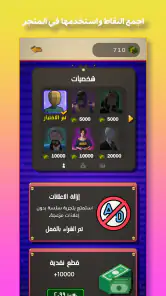
Analysis by Reviewed
I spent time with حلها عالماشي - اختبر ثقافتك as a quick cultural trivia game, and my first impression was that it understands a familiar situation: you have a few spare minutes and want something more engaging than scrolling. Its central idea is simple—answer questions, deal with obstacles, and keep moving toward a goal—but the experience is less about building a long-term collection and more about making repeated short decisions under light pressure.
That makes it worth judging by practical criteria rather than by the size of its feature list. I looked at how easily it fits into a normal day, whether the questions feel suitable for a broad audience, how much motivation remains after the novelty fades, and whether its free model gets in the way. My overall view is positive for casual players who enjoy cultural questions, although people looking for deep learning tools or a highly competitive quiz platform may find better matches elsewhere.
What kind of trivia experience is this?
The game comes from GX studios and sits firmly in the trivia category. It is free to start, rated for Everyone, and works on devices using Android 8.0 or later. The current version is 844, so it is aimed at a wide range of Android users rather than only owners of recent phones. That accessibility matters here because the appeal is strongest when the game is easy to open and understand without preparation.
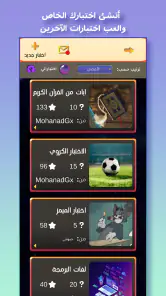
The store presents it as a cultural question game in Arabic, and the short description, “حلها عالماشي,” gives it a distinctly conversational identity. I found that tone more approachable than the formal style used by many educational quiz apps. It feels designed for a player who wants to test general knowledge without turning the session into a study appointment.
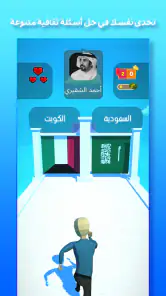
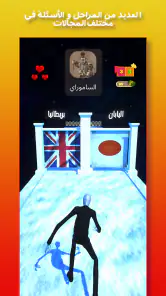
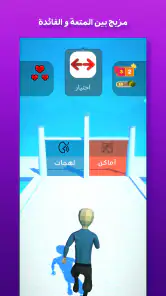
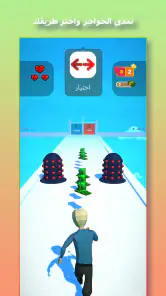
The basic loop is easy to grasp. You answer a question, encounter the next stage of the journey, and try to overcome the barriers standing between you and the intended destination. That framing gives individual questions a little more purpose than a plain list of multiple-choice prompts. Even when the question itself is familiar, the surrounding progress helps maintain momentum.
I would not describe it as a replacement for a textbook, a language course, or a structured general-knowledge curriculum. Its value is in quick recall and casual discovery. You may learn something from a question you miss, but the design is primarily game-first. If your goal is to track subjects systematically, review mistakes in depth, or follow a lesson plan, a dedicated learning app will probably serve you better.
How I would decide whether to install it
My first decision point would be the kind of attention you want to give a trivia game. This title suits short bursts: a quiet moment before an appointment, a commute when you are not driving, or a relaxed break at home. It does not require the commitment of a long strategy game, and its cultural focus gives each round a different flavor from word puzzles or reflex-based arcade titles.
The second criterion is tolerance for repetition. Any question game depends on a steady supply of prompts and on the player’s willingness to answer similar types of challenges repeatedly. If you enjoy recognizing patterns, testing memory, and occasionally being surprised by an unfamiliar fact, the loop can remain pleasant. If you need a strong story, elaborate controls, or constant mechanical variety, the straightforward format may feel limited fairly quickly.
The third criterion is language and audience. Because the presentation is Arabic, it is most comfortable for Arabic-speaking players or people actively practicing their reading comprehension. The Everyone rating makes it approachable for families, but that does not mean every question will be equally interesting to every age group. Younger players may enjoy the goal-based movement, while adults may care more about whether the cultural topics match their interests.
Finally, I would consider how you feel about optional spending. The game is free, but in-app purchases range from $1.49 to $7.99 per item. That does not automatically make the free experience poor, yet it is a reason to decide in advance whether you want to play without spending or are comfortable paying for convenience if the game presents it. For a casual title, setting that boundary early prevents a small break from turning into an unplanned purchase.
Where the game earns its place
The strongest part of the experience is its low entry barrier. I did not need to learn a complicated control scheme or understand a large set of rules before answering the first questions. That is important for a trivia game because the pleasure comes from thinking about the answer, not from deciphering the interface.
The journey structure also gives the questions a useful rhythm. A bare quiz can feel like an endless examination, while the idea of passing barriers creates a reason to continue from one prompt to the next. I found this especially helpful during short sessions: even if I only had a little time, there was a clear sense of trying to get farther rather than simply stopping after one isolated answer.
Another advantage is its social flexibility. Although I mainly treated it as a solo game, the questions are easy to discuss with someone nearby. A family member can suggest an answer, friends can compare what they know, and a parent can use a question as the start of a brief conversation. That makes it more versatile than a private study tool, especially when the aim is shared entertainment rather than formal progress.
Its real strength is the combination of cultural recall and forward movement. Neither part needs to be complicated. The questions provide the mental challenge, while the obstacles provide enough structure to make the next answer feel worthwhile. That balance is why I would choose it over a completely unstructured trivia list when I want something light but still game-like.
There is also a practical advantage in the broad age rating. A household does not need to reserve it for a narrowly defined audience, and the general cultural focus is less specialized than a quiz devoted only to sport, cinema, science, or history. That broad scope can make it a safer recommendation when I do not know exactly which subject a friend prefers.
Useful ways to play beyond the obvious
One effective approach is to treat missed answers as a personal revision list, even if the game does not turn them into a formal lesson. When I encounter something I genuinely did not know, I mentally group it by topic instead of immediately rushing onward. Later, I can use those themes—such as geography, history, or everyday culture—as prompts for further reading elsewhere. This turns a short game into a small discovery tool without pretending it offers a complete course.
A second approach is to use it as a conversation starter rather than a solitary score chase. In a family setting, each person can answer before anyone reveals the choice. The interesting part is often not just who is correct, but why someone selected an answer. This works particularly well with culturally broad questions because different experiences can lead people to remember different details.
A third tip is to play in deliberately short sessions. Trivia games can become less enjoyable when every question starts to feel like an obligation. I prefer opening it for a defined break, playing until that break ends, and stopping while the experience still feels fresh. This also makes the free model easier to evaluate because I can judge whether the core loop is enjoyable without feeling pressure to advance constantly.
I would also avoid treating the game’s progress as a measure of intelligence. A wrong answer may reflect a narrow topic, a wording detail, or a moment of distraction rather than a lack of knowledge. Keeping that perspective makes the obstacles feel playful instead of frustrating. For children, it is a useful way for an adult to turn mistakes into explanations rather than criticism.
Where competing categories may fit better
The closest alternatives are other casual trivia games, but they do not all serve the same purpose. A rapid-fire quiz is usually better for players who want speed, pressure, and a larger emphasis on immediate performance. A subject-specific quiz is a stronger choice if you already know that you want only football, movies, science, or another narrow area. I would choose this game when I want cultural variety and a gentler sense of progression instead of specialization.
Educational flashcard apps are different again. They are preferable when the user needs dependable repetition, organized subjects, and deliberate memorization. This game can encourage curiosity, but I would not rely on it alone to prepare for an exam or build a complete knowledge base. Its questions are entertainment prompts first, so the learning value depends on how actively the player follows up on unfamiliar answers.
Traditional board-style quiz games may be a better fit for a group that wants a clearly shared contest. They often make turn-taking and scoring the central experience. Here, the goal-based journey is more naturally suited to individual play, with conversation added informally. If your priority is a formal multiplayer evening, another category may create a stronger sense of occasion.
Word games can also be preferable for players who enjoy constructing answers rather than recognizing them. The cultural trivia format rewards recall and selection, while wordplay games usually test spelling, vocabulary manipulation, or pattern recognition. Neither approach is universally better; the right choice depends on whether you want to retrieve facts or work out language-based solutions.
This distinction helps explain the game’s average rating of 3.7 from around 4.4 thousand ratings. That figure suggests a reasonably established but not universally loved experience. I would read it as a reminder to keep expectations proportionate: the game can be enjoyable in its intended niche, but it is not necessarily the definitive trivia choice for every player.
Small frictions that affect the decision
The simple design is both an advantage and a limitation. It lets me begin quickly, but it also means players who expect extensive customization or a deep progression system may feel that there is not enough to master. The central activity remains answering cultural questions and moving past barriers. If that loop does not appeal to you on its own, extra progress will not completely change the experience.
The broad subject range can create uneven personal interest. A question that is fascinating to one player may feel irrelevant to another, especially when several prompts in a row touch on areas outside that player’s knowledge. I see this as a normal trade-off of general trivia, but it is worth recognizing before installing. A specialized quiz will feel more consistently relevant if you already have a favorite topic.
There is also the usual tension between free access and optional purchases. The presence of items priced from $1.49 to $7.99 means families should be clear about purchase settings before handing the device to a child. For adults, the practical question is whether the free play remains satisfying without buying anything. I recommend starting with a no-spend mindset and only reconsidering if the game has already proved that it belongs in your regular rotation.
The Everyone rating is reassuring for general accessibility, but parents should still remember that age suitability and educational value are not the same thing. A child may be able to use the game comfortably while still needing help understanding an answer or distinguishing a fact from a guess. Playing together occasionally is more valuable than assuming the rating makes supervision unnecessary.
Its audience size—over one million installs—shows that the concept has reached a substantial Android audience, but popularity alone should not decide the download. I would use that figure as evidence that the format is easy to approach, not as proof that it will match your tastes. The more important question is whether you enjoy cultural quizzes enough to return after the first session.
What switching from another quiz app involves
If you are coming from a fast, score-focused trivia app, the main adjustment is pacing. You may need to accept a more journey-oriented rhythm instead of expecting every question to feel like a timed contest. In return, the game can be less demanding during casual breaks. I see that as a worthwhile switch for players who want trivia without the intensity of a constant leaderboard mindset.
If you are moving from a learning app, the trade-off goes in the opposite direction. You gain a lighter and more playful experience, but you may lose the organized review workflow that helps information stick. I would keep a learning tool for serious study and use this title as a warm-up, a reward after studying, or a way to discover subjects worth exploring further.
The cost of switching is low in terms of controls and habits because the basic idea is immediately understandable. The bigger cost is expectation: someone accustomed to rich stories, detailed avatars, or complex strategy may interpret the simplicity as a lack of content. Before uninstalling another game, I would give this one several short sessions rather than one long test. Its value is easier to judge as a repeatable break than as a single marathon.
On the device side, the Android requirement of 8.0 or later is a useful practical checkpoint. Owners of older phones should check compatibility before planning around it, while most users of supported devices can approach it as a lightweight casual option. I would also keep the current version, 844, in mind when troubleshooting: updating through the normal app store route is the sensible first step if behavior seems inconsistent.
My recommendation for different players
I recommend it to Arabic-speaking players who want a free cultural trivia game that can be enjoyed in small portions. It is particularly suitable for families, casual quiz fans, and people who like a little forward momentum around their questions. I also think it works well for someone who wants to turn idle minutes into a friendly knowledge check without committing to a long campaign.
I would be more cautious about recommending it to competitive quiz experts, exam-focused learners, or players who need detailed explanations after every answer. Those users may prefer a specialized alternative with stronger subject organization, more explicit teaching tools, or a more demanding competitive format. The game is not failing when it does not provide those things; they simply belong to a different category of product.
For a first session, I suggest playing without spending money, noticing which question themes keep your attention, and seeing whether the barrier-and-goal structure makes you want to continue. If you enjoy the questions but dislike the pacing, a faster quiz may suit you better. If you enjoy the pacing but want deeper learning, pair it with a reliable reference or study app rather than expecting this game to do both jobs.
My final verdict is that حلها عالماشي - اختبر ثقافتك is an approachable, free trivia game with a clear identity. GX studios has focused on an easy cultural question loop and wrapped it in enough journey structure to make short sessions feel purposeful. It has limits in depth, specialization, and the possible pressure of optional purchases, but those drawbacks are manageable when the game is used for what it does best: a friendly, accessible knowledge break that is easy to share and easy to put down.
For me, that makes it a sensible download for the right audience rather than an automatic recommendation for everyone. If you want Arabic cultural trivia, broad accessibility, and a simple goal to work toward, I think it deserves a try. If your priority is rigorous study, intense competition, or elaborate gameplay, I would choose a different tool and keep this one only as a relaxed alternative.
Pros
- Quick trivia rounds make it easy to play during short breaks.
- Covers diverse topics
- helping users discover new facts.
- Arabic interface is accessible for native Arabic speakers.
- Simple controls allow smooth play without a steep learning curve.
- Competitive questions can encourage friendly challenges with others.
Cons
- Some questions may feel too easy for experienced trivia players.
- Question difficulty and accuracy may vary across different categories.
- Repeated questions can reduce replay value over time.
- Requires Arabic reading skills
- limiting access for non-Arabic speakers.
- Ads may interrupt gameplay
- especially between quiz rounds.

- Category
- Trivia
- Version
- 844