Golf Guys
- 2.14K
- 4.4
- Installs
- 1.00M
- Price
- Free

Screenshots
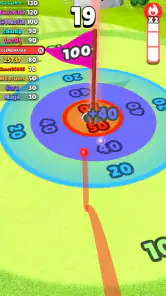
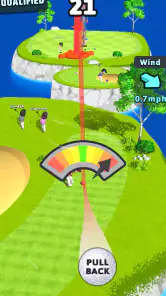
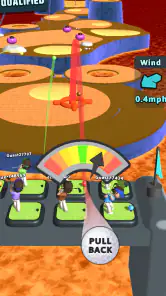
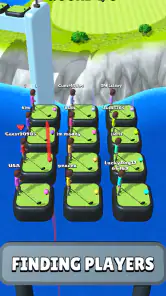
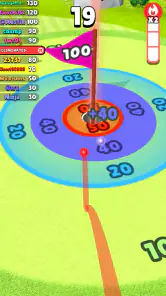
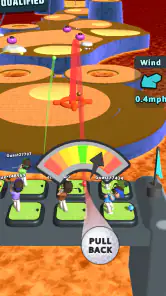
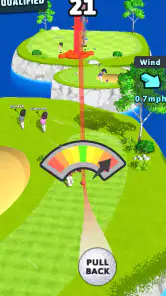
Analysis by Reviewed
I went into Golf Guys expecting a quick sports game and found something closer to a party race built around golf. That distinction matters. This is not aimed at players who want a careful simulation of club selection, wind, lie, or tournament strategy. It is designed around short, competitive rounds where getting to the finish before everyone else is the main goal. I found it easiest to enjoy when I treated each course as a timing and positioning puzzle rather than a traditional hole of golf.
That makes the game a useful choice for a very specific kind of player. If you like simple controls, quick multiplayer tension, and the familiar chaos of party games, it has an appealingly low barrier to entry. If you want a calm solo golf experience or a deep sports simulation, I would look elsewhere. My recommendation depends less on whether you already like golf and more on whether you enjoy racing against other players through golf-themed obstacles.
What you are really choosing
Golf Guys is a free sports game from VOODOO, released on Jul 14, 2022. Its store summary calls it a multiplayer golf battle royale, while the short description reduces the idea to “Golf Guys.” In practice, that combination tells you more than the word golf alone: the focus is on surviving the pressure of a crowded match and reaching the end efficiently, not on reproducing a real-world round.
The game has built a sizeable audience, with over a million installs and a 4.4 average from around fourteen thousand ratings. Those figures suggest that the quick-match concept is easy for many people to understand, but they should not be mistaken for proof that every player will enjoy it. A game can be popular and still be a poor fit if you dislike repeated obstacle courses, competitive interruptions, or the feeling that a small mistake can ruin a run.
I would use three questions before installing it. First, do you want a match that can fit into a short break? Second, are you comfortable learning through trial and error instead of receiving a detailed golf tutorial? Third, do you enjoy competition where movement and timing matter more than realistic sports knowledge? A “yes” to all three points toward Golf Guys. A “no” to the last question points toward a conventional golf game instead.
The first few matches
The opening appeal is immediate because the concept is familiar even if the sport is presented in an unusual way. You guide a small golfer through a course, look for a clean route, and try to avoid losing momentum. The best early habit is to stop thinking about the finish line as the only objective. The route itself is the challenge: corners, narrow approaches, moving hazards, and groups of other players can all change the safest line.
I found that the first matches are less about perfect control and more about noticing the course rhythm. Some sections reward patience, while others punish hesitation. Rushing every obstacle is not always faster, because a failed attempt can cost more time than waiting for a clear opening. That is one of the game’s more useful lessons, and it appears naturally through play rather than through a long explanation.
For a newcomer, I recommend deliberately taking one early round as a scouting run. Watch where players bunch together, notice which obstacles cause repeated falls, and remember the approach that lets you recover quickly. On a later attempt, that knowledge is often more valuable than simply moving faster. This is a concrete advantage over many casual sports games: improvement comes from recognizing patterns in the course, not only from upgrading something or repeating the same action.
Why the multiplayer format works
The multiplayer structure gives ordinary movement a sense of urgency. A route that would feel harmless alone becomes stressful when several competitors are trying to pass through the same space. I liked that pressure because it creates small decisions constantly: take the obvious central path, wait for an opening, or attempt a riskier edge route that might save time.
There is also a social quality to the visual chaos. Even without treating every match as a serious contest, watching other golfers make the same mistakes can be funny, while seeing someone find a clean shortcut makes you want to test it yourself. The game is strongest when I have only a few minutes and want a focused burst of competition rather than a long session requiring concentration from start to finish.
That same design can be frustrating. A crowded section may make a loss feel less like a failure of planning and more like bad timing. Players who prefer complete control over the outcome may find the multiplayer interference irritating. I think the right mindset is to judge success over several rounds rather than becoming angry at one messy finish. The game is built around recovery and repetition, not flawless execution every time.
Small decisions that improve a run
One of the less obvious strengths is how much value comes from changing your approach instead of simply reacting faster. I had better results when I entered obstacles from an angle that left room to correct, rather than aiming directly at the apparent opening. A straight line may look efficient, but it can leave no margin when another player blocks the route or the timing shifts.
Another useful habit is to separate observation from movement. Before committing to a difficult section, I try to identify the next safe landing area, not just the immediate obstacle. This prevents the common mistake of clearing one barrier and arriving unprepared for the next one. It is especially helpful in a race format because a few rushed inputs can turn a promising lead into a long recovery.
I also recommend learning when not to chase a player ahead. Following someone can reveal a route, but it can also make you copy a mistake or enter a crowded passage at the worst moment. If the player in front stalls, moving slightly away from the group may be faster than forcing through it. That trade-off between visible competition and independent routing is where the game feels more thoughtful than its simple presentation suggests.
How it compares with ordinary golf games
Traditional mobile golf games usually ask me to think about a shot: aim, power, terrain, and perhaps the broader score across a round. Golf Guys asks a different question: can I move through this course more efficiently than the other players? Both can be called golf games, but they satisfy different moods.
I would choose a conventional golf title when I want a slower session, a stronger connection to real golf technique, or a sense of building a score over multiple holes. Those games are generally better for players who enjoy planning each shot and seeing steady improvement in accuracy. Golf Guys is better when I want immediate action and do not want to spend several minutes preparing a single swing.
It also differs from non-sports party racers in a useful way. The golf theme gives the obstacles and finish-line structure a recognizable identity, while the competitive format keeps the game from feeling like a quiet puzzle. If you already enjoy obstacle-course party games, the transition should feel natural. If you want the sport itself to provide the depth, this may seem too light.
Who should install it
I see Golf Guys working particularly well for casual players who share a phone or tablet with friends, commuters looking for brief matches, and sports fans who do not need realism to enjoy a golf-inspired game. It is also approachable for younger players because the content rating is Everyone, and the basic idea can be understood quickly without prior knowledge of golf.
It can be a good choice for someone who normally avoids sports games because they seem technical. You do not need to know how to read a real green or choose between clubs to understand the immediate objective. The challenge is spatial awareness, timing, and adapting to the behavior of the course and the competing players.
I would skip it if your ideal golf experience includes a quiet practice mode, detailed shot analysis, or a realistic career structure. I would also be cautious if you dislike repeated attempts after a mistake. The game’s appeal comes from trying again with better route knowledge, so players who require every round to feel calm and predictable may lose patience quickly.
Free to start, but not entirely frictionless
The game is free to download, with in-app purchases ranging from $1.99 to $19.99 per item. That makes trying it straightforward, but I would still approach the purchase system carefully. A free entry point is useful for testing whether the multiplayer race format suits you before spending anything. My own advice is to play enough matches to decide whether the core movement and course repetition are enjoyable on their own.
The real cost is not only financial. It is also the time needed to learn the routes and accept occasional frustrating rounds. If you switch from a slower golf game, you may need to adjust your expectations: progress here is tied to handling the course under pressure, not simply improving a swing statistic. If you switch from another quick multiplayer game, the transition cost is lower because the short-session rhythm is familiar.
Parents and shared-device users should also remember that a game rated Everyone can still encourage repeated play. I find it easier to keep sessions healthy by deciding in advance how many rounds to play rather than continuing automatically after a disappointing result. That is not a flaw unique to this title, but its competitive format makes “one more attempt” particularly tempting.
Device expectations and longevity
The listed minimum operating system is Android 7.0, so the game is available to a broad range of Android devices. That helps if you are installing it on an older phone, although the practical experience can still depend on the device and the surrounding multiplayer conditions. For the smoothest competition, responsive controls matter more than visual detail; a delayed input at a narrow obstacle can be more damaging than a modest-looking course.
The current version is 1.27. I would treat that as a reason to keep the app updated through the normal store process, especially if you play regularly. Updates matter most in a multiplayer game because compatibility and stability affect whether a quick match feels fair. I would not install it expecting a single fixed challenge to master once and abandon; its replay value comes from refining routes and handling familiar situations more consistently.
Longevity will depend on your tolerance for repetition. I enjoyed returning when I had a specific goal, such as finding a safer line through a troublesome section or improving my response to crowded areas. Without that personal goal, the simple loop can begin to feel familiar. This is why I see it as a strong companion game rather than the only sports title on a device.
A realistic everyday use case
Imagine having ten minutes before an appointment. A full traditional golf round may be inconvenient, while a large action game may take too long to load or demand a longer commitment. Golf Guys fits that gap well: start a match, focus on the route, and stop after a small number of attempts. The session still has a clear beginning and end, so it does not require the same investment as a career-based sports game.
It also works during a casual gathering where people want something easy to understand. One person can explain the objective in a sentence, and the rest can learn by playing. The competitive element gives everyone a reason to pay attention, while the simple premise avoids the rules discussion that often slows down more realistic sports games.
On the other hand, I would not choose it for a long flight or an offline-focused trip unless I had already checked that the way I intend to play supports my needs. Its identity is strongly tied to multiplayer competition, so it is not the title I would rely on when the main appeal is solitary play without interruptions.
My recommendation
After spending time with it, I would recommend Golf Guys to anyone who wants golf-flavored obstacle racing rather than golf simulation. The strongest reason to try it is the combination of quick matches, readable objectives, and small strategic choices that become more important as you learn the courses. The best way to play is to observe first, choose routes with room for correction, and avoid treating every crowded section as a contest that must be forced.
My reservations are equally clear. Multiplayer chaos can make outcomes feel unfair, repeated courses may lose their freshness, and the free model includes purchasable items that some players may prefer to avoid. The game is not a replacement for a detailed golf simulator, and it should not be judged by that standard.
For me, the decision is simple: install it if you want a light, competitive sports game that can fill short breaks and reward route knowledge. Skip it if you are looking for realistic golf, deep solo progression, or complete control over every result. With a 4.4 average and around fourteen thousand ratings, it has clearly found an audience, but its real value is more personal than numerical. Golf Guys is at its best when you want a fast rematch, a little friendly chaos, and just enough strategy to make the next run feel smarter than the last.
Pros
- Quick
- casual rounds are ideal for short gaming sessions.
- Simple controls make it easy for beginners to start playing.
- Competitive races add excitement beyond traditional golf gameplay.
- Colorful visuals and playful animations create a lighthearted atmosphere.
- Unlockable content gives players goals to pursue over time.
Cons
- Gameplay can become repetitive after playing the same courses repeatedly.
- Random obstacles may sometimes make results feel more luck-based than skill-based.
- Progression may feel slow without frequent play or optional purchases.
- Small screens can make precise shots difficult during hectic moments.
- Online competition may be affected by connection issues or uneven matchmaking.

- Category
- Sports
- Version
- 1.27