Gold Rush: Frozen Adventures
- 996.00
- 4.3
- Installs
- 5.00M
- Price
- Free

Screenshots
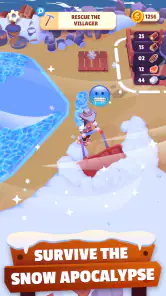
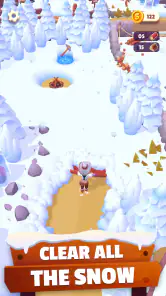
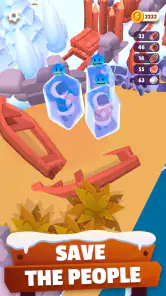
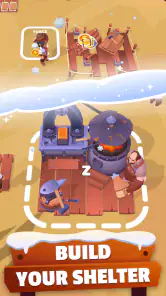
Analysis by Reviewed
My first impression of Gold Rush: Frozen Adventures is that it presents its frozen setting as more than a backdrop: the central appeal is deciding how to make progress when resources, exploration, and helping people all compete for attention. That gives the game a different rhythm from role-playing games built mainly around battles or character builds. I would recommend it most to players who like a steady loop of gathering and planning, rather than anyone expecting a fast, combat-heavy adventure.
Choosing what to do next
The useful question here is not simply how quickly I can collect gold, but what a particular stretch of play should accomplish. Gathering supplies, exploring the area, and helping people endure the cold all pull the player toward different priorities. I find that framing makes even a short session feel purposeful: I can choose one immediate task instead of treating every activity as something to rush through at once.
A practical approach is to set a small goal before starting, such as making progress on an exploration step or gathering what I need for the next useful action. That keeps the resource loop from feeling like aimless tapping. It is also a good fit for brief breaks during the day, when I want a clear objective rather than a long chain of battles that demands uninterrupted attention. The trade-off is that players who prefer a direct story mission or constant action may find this more measured pace too gentle.
Where the risk and reward sit
The cold gives the premise its stakes, while resource gathering and gold provide a reason to keep moving. I like that the theme encourages me to think about progress as a sequence of decisions: what seems worthwhile now, what can wait, and whether exploring is more appealing than concentrating on supplies. A little restraint can make the experience feel more deliberate than simply collecting everything as soon as it appears.
For an everyday example, I might open the game while waiting for a meal, choose one manageable objective, and stop once I have made a clear bit of progress. That is more satisfying than beginning without a plan and leaving halfway through because the session has sprawled. If you want something that rewards reflexes or high-pressure play in a short burst, a conventional action role-playing game is likely a better match; this one asks more of your patience and prioritization.
Making progress without overcommitting
The most useful planning habit is to connect each gathering session to a decision you actually care about. Before spending time collecting, I would ask whether I am trying to help someone, make an exploration step, or move toward a camp improvement. That simple check gives a session a natural stopping point and makes it easier to notice when I am repeating the same loop without a meaningful next goal. It is a small distinction, but it helps keep a relaxed game from becoming an automatic chore.
I would also avoid treating every available objective as equally urgent. The premise puts survival, exploration, and gold in the same setting, but a player does not have to pursue all of them at once. Choosing one priority makes the other activities feel like options rather than obligations. If I have only a few minutes, I would pick a clear, self-contained task; if I have more time, I can let exploration shape what I gather next. That flexible approach suits casual play better than trying to optimize every action.
More From Our News Desk

Clash of Clans Is Won Between the Battles

Android Auto Makes the Case for Quieter Car Software

MobiOffice: Transforming Mobile Productivity with Seamless Integration

EA SPORTS FC™ Mobile Soccer: Redefining Mobile Sports Gaming

How Microsoft OneDrive Became a Mobile Productivity Giant

How Google Translate Breaks Language Barriers Effortlessly
Players wondering whether the game works for short sessions should find its task-focused loop easier to approach than a role-playing game that expects a long stretch of combat or story at a time. I would still avoid opening it when I need to be completely interruption-proof: gathering and progression can encourage me to keep going after the original small goal is done. Setting a stopping point before I start is a better fit for a quick break than relying on willpower once I am already invested.
Discover the Chilly Frontier
When I first installed the game, I was instantly hooked by its stunning visuals. The graphics are nothing short of spectacular, with snow-covered landscapes and glistening ice that make you feel like you're actually in the Yukon. Gold Rush: Frozen Adventures isn't just about pretty graphics, though. The game packs a punch with its engaging storyline that keeps you on the edge of your seat. You're tasked with building your own camp, solving puzzles, and uncovering hidden treasures. It's like having your own personal expedition right at your fingertips!
Puzzles and Treasures
Now, let me tell you, the puzzles in this game are no walk in the park. They really make you think and strategize, which is something I absolutely love. There's a sense of accomplishment when you finally crack a tough one and discover a hidden treasure. The treasures you find aren't just shiny baubles either; they're key to expanding your camp and unlocking new levels. It's a brilliant way to keep players engaged and eager to explore more.
Building Your Dream Camp
One of my favorite parts about Gold Rush: Frozen Adventures is the camp-building aspect. You get to channel your inner architect and design a camp that's truly your own. From choosing the layout to selecting different buildings and decorations, it's all up to you. Plus, as you progress through the game, you unlock more options to customize your camp, making it a personalized haven amidst the icy wilderness.
Planning around camp and exploration
Camp-building gives the gathering loop a concrete destination, but I would think of it as a sequence of choices rather than a decorating project alone. When an improvement is within reach, it can be satisfying to focus on the resources that help move toward it. When it is not, exploration can keep the session feeling purposeful instead of turning every visit into a grind for a single upgrade. The trade-off is that players looking for a deep construction simulator may find the camp more of a progression anchor than a complex design system.
For someone who enjoys puzzles, a useful way to approach the game is to treat a difficult obstacle as a reason to pause and reconsider the goal, not as a cue to spend blindly or rush. I find that patient problem-solving is a better match for the rest of the game’s measured rhythm. The reward is the feeling of making a discovery and seeing it contribute to progress; the limitation is that players who want puzzles to be the whole experience may prefer a dedicated puzzle game with more variety and less resource gathering between challenges.
The Social Element
Another aspect that I found really interesting is the social element. You can connect with friends or meet new players from around the world. Sharing tips, trading resources, and even competing in events adds an extra layer of fun. It's always nice to have a sense of community, especially in a world as vast and cold as this one.
I would treat those social activities as an optional extra rather than the main reason to install it. If your friends are already interested, shared tips can make the expedition feel more welcoming, and comparing progress may add a reason to return. If you prefer solo play, the core appeal still rests on exploring, collecting, and developing the camp. Players seeking a game built chiefly around conversation or competitive multiplayer may be better served by a title where those interactions are the central activity instead of one part of a broader progression loop.
As a role-playing game from SayGames Ltd, it has the accessible, task-focused feel I would choose when I want an adventure without the demands of a complex party build. It is free to start, rated Everyone, and has an average rating of 4.3 from around 58,000 ratings, with over 5 million installs. The current version is 0.19.23, and it runs on Android 8.0 or later. Optional in-app purchases range from $0.99 to $99.99 per item, so I would treat spending as a personal choice rather than a requirement for enjoying the basic premise.
Who will enjoy the slower expedition
I would point casual players, puzzle fans, and anyone drawn to snowy settings toward this game first. It gives camp-building and exploration a shared purpose, which is more satisfying than collecting resources with no clear reason to use them. On the other hand, if you want deep tactical combat, a highly demanding role-playing system, or a purely social game, I would look elsewhere. The advertised social activities may appeal, but they need not be the reason to play: the expedition and its decisions are the stronger draw for me.
One useful habit is to check what an action contributes to before spending time on it. If it supports a near-term camp or exploration goal, it feels like deliberate preparation; if not, it may be worth saving that effort for later. That kind of planning helps make resource gathering less repetitive, though it cannot remove the underlying repetition entirely. Players who dislike returning to a familiar collect-and-progress loop should know that the game’s appeal depends on finding that rhythm pleasant.
How it holds up over time
The progression is most rewarding when new discoveries give a reason to revisit the camp and think about what to develop next. That creates a modest planning horizon: I can focus on the next step without needing to map out a complicated long-term strategy. The balance is approachable, but it also means the game may not satisfy people who want every decision to have deep tactical consequences. I see it as a relaxed expedition with light strategic choices, not a substitute for a sprawling, systems-heavy RPG.
Compared with the usual alternatives in role-playing games, this is a better fit for someone who likes a gentle gather-and-build routine than someone who wants character statistics, party composition, or demanding combat to drive every session. A conventional action RPG is the stronger choice if quick reactions and battle variety are your priorities. A dedicated puzzle game makes more sense if you want challenges without a resource loop, while a construction-focused game is preferable if detailed building is the main attraction. Here, the appeal comes from those activities sharing one expedition, not from any one of them becoming an especially deep standalone system.
For a realistic daily routine, I can imagine checking in during a commute or a quiet break, choosing one camp or exploration goal, and leaving once I have moved it forward. That makes the game easier to fit around a busy day than a story-heavy RPG that loses its thread when interrupted. The catch is that a short session may feel less rewarding if I have no immediate objective in mind, so I would decide what I want to accomplish before opening it. This is a small bit of self-management, but it matters in a game whose satisfaction comes from steady progress.
It was released on December 15, 2024, and the store listing shows 996 reviews, alongside those many player ratings. Those figures are useful context, but I would still judge the game by whether its gathering, puzzles, and camp progression suit my taste. I would also check the purchase prompts carefully if I prefer to keep mobile games entirely free; the game costs nothing to download, but optional items can be costly at the top end.
Who should choose another kind of game
I would skip this if I need every play session to feel dramatically different, if repetition quickly irritates me, or if I want a competitive role-playing game with intricate tactics. The resource loop is part of its identity, not a brief bridge between more elaborate systems, so liking the steady pace matters more than being drawn to the setting alone. It is also not my first recommendation for someone who wants a social game above all else; the social element is a bonus, while the expedition remains the reason to play.
For players who do enjoy that rhythm, the main spending question is whether optional purchases fit their own boundaries. Since the game is free to start but offers items across a wide price range, I would decide in advance whether I am comfortable buying anything and avoid treating a purchase as the default solution to impatience. That is useful advice for any free-to-play game, but it is especially relevant here because the basic appeal is gradual progress. If paying to move faster would undermine the satisfaction of working through the expedition, staying with the free experience is the more coherent choice.
In conclusion, if you're looking for a game that combines stunning visuals, challenging puzzles, and a bit of social interaction, Gold Rush: Frozen Adventures is the perfect pick. It's not just a game; it's an adventure waiting to be explored. So, grab your virtual pickaxe, bundle up, and dive into the frosty fun!
Gold Rush: Frozen Adventures Frequently Asked Questions
What should I expect to do in Gold Rush: Frozen Adventures?
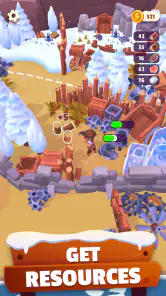
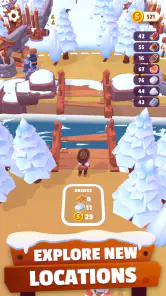
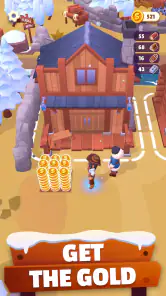
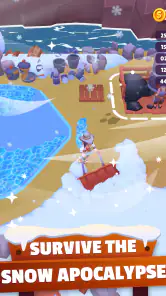
The game’s central activities include gathering resources, exploring a frozen location, helping people stay safe from the cold, and searching for gold. That mix gives it an adventure-focused premise, with survival and exploration themes rather than a single goal. If you enjoy collecting useful items and working through a setting as you uncover more of it, those activities may be a good fit.
Who develops Gold Rush: Frozen Adventures, and is it free to download?
Gold Rush: Frozen Adventures is developed by SayGames Ltd and is free to download. It also offers in-app purchases, with items priced from $0.99 to $99.99. Those purchases are optional, so you can try the game without paying upfront; if you choose to buy anything, it is worth checking the purchase details before confirming, especially if children also use the device.
What kind of game is Gold Rush: Frozen Adventures?
Gold Rush: Frozen Adventures is a role-playing game about gathering resources, helping people stay safe from the cold, exploring the surrounding location, and searching for gold. Its snowy setting gives the adventure a clear survival-and-exploration theme, so it may appeal to players who enjoy progressing through a game by collecting useful items and discovering new areas.
Who develops Gold Rush: Frozen Adventures, and what devices can run it?
Gold Rush: Frozen Adventures is developed by SayGames Ltd and is available for Android and iOS devices. On Android, it requires version 8.0 or later. The game is free to download, and its age rating is Everyone, making it a broadly accessible option for mobile players looking for a winter-themed role-playing adventure.
What is Gold Rush: Frozen Adventures about?
Gold Rush: Frozen Adventures is an engaging puzzle game set in a winter wonderland where players embark on a journey to solve challenging match-3 puzzles. The game combines elements of adventure and strategy as you explore frozen landscapes, uncover hidden treasures, and progress through captivating levels. It's designed for anyone who enjoys immersive puzzle-solving experiences.
Pros
- Engaging storyline keeps players hooked.
- Beautiful graphics and animations.
- Diverse range of puzzles and tasks.
- Regular updates with new content.
- Easy to learn with helpful tutorials.
Cons
- In-app purchases can be expensive.
- Requires constant internet connection.
- Some levels are very challenging.
- Advertisements can be intrusive.
- Battery consumption is quite high.

- Category
- Role Playing
- Version
- 0.19.23