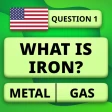
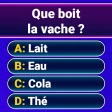
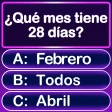
Globo: World Geography Game
- 215.00
- 4.7
- Installs
- 100.00K
- Price
- Free

Screenshots

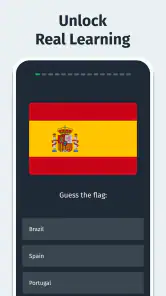
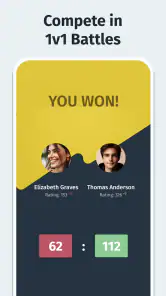
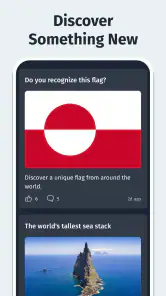
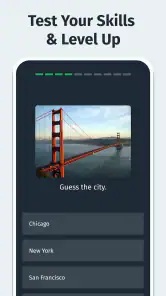
Analysis by Reviewed
I found Globo: World Geography Game most interesting as a quick way to turn geography practice into a small daily challenge. It is a free trivia game from NaKo Games LLC, aimed at everyone rather than a narrow age group, and its central idea is easy to understand: answer geography questions, build confidence with places around the world, and test yourself against other players. I enjoyed that it does not present learning as a formal lesson. Instead, it gives me a reason to recall, guess, and try again.
The game has attracted a 4.7 average from around 3.8 thousand ratings, with more than 100 thousand installs. Those figures suggest that it has found a real audience, but they do not tell me whether it will suit every player. My experience is that Globo works best for people who like short trivia sessions and want a light competitive edge. It is less suitable if you want a structured geography course, detailed explanations after every answer, or a completely relaxed game with no sense of comparison.
How Globo feels to use in everyday play
Readability and navigation are strongest when the session stays simple
The first thing I noticed is that the concept does not require a long explanation. I can open the game, understand that I am dealing with world geography, and begin making decisions almost immediately. That matters for a trivia title because unnecessary menus can drain the energy before the first question. Globo feels designed around getting me into the challenge rather than asking me to study a complicated rulebook.
The short store description is simply “Globo,” while the longer summary explains the learning, trivia, and worldwide competition angle. In practice, that combination creates a useful expectation: this is not just a static reference map, and it is not only a multiplayer contest. I approach each round as both a knowledge check and a small learning opportunity. Even when I miss an answer, the question itself can expose a gap in my memory.
For readability, the important issue is not only whether text is visible. It is also whether I can process a question quickly enough to keep the experience enjoyable. Trivia games often place pressure on reading speed, especially when an answer depends on distinguishing similar country names, capitals, flags, or locations. Globo is therefore more comfortable for me when I play without rushing through the interface. A player who needs larger text, stronger contrast, screen magnification, or extra reading time should test the game on their own device before committing to longer sessions.
I also think the game’s simple premise makes it approachable for mixed-skill groups. A geography enthusiast can treat a round as a serious challenge, while a casual player can use it as a way to discover what they do and do not remember. That flexibility is valuable in a family setting, although the competitive side may feel more demanding for someone who is still learning basic geography.
Motor and sensory considerations change the experience
Trivia usually asks for short, deliberate interactions rather than complex movement, which is one of Globo’s practical strengths. I do not need advanced gaming reflexes or a controller to participate. That makes it easier to recommend to players who prefer tapping through questions instead of managing a character, camera, or fast action scene. The game is also listed for Android devices running version 7.0 or later, so its reach includes many older compatible phones.
Still, “simple controls” should not be confused with universal ease. If answer buttons are close together, a player with limited precision may occasionally tap the wrong choice. A timed question can make that more frustrating because the mistake may feel like a motor error rather than a knowledge error. I would play with the phone held securely, use a stable surface when needed, and avoid trying to answer while walking or carrying something.
Sensory comfort is another personal matter. A competitive trivia game can involve visual changes, sound, or pressure to respond quickly, and those details affect players differently. I would not assume that every person will find the presentation comfortable simply because the gameplay is quiet compared with an action title. Anyone sensitive to rapid visual feedback or audio cues should begin with a short session and adjust the device’s general settings where possible.
One useful habit is to separate learning sessions from score-chasing sessions. When I want to remember information, I slow down and treat each question as a prompt. When I want competition, I accept that speed and pressure may matter more. This distinction helps players with different abilities participate on their own terms, even though it does not remove the game’s built-in demands.
Situational access makes the free format appealing
Because Globo is free to download, it is easy to try during a spare moment without making an immediate purchase decision. The game includes in-app purchases ranging from $3.99 to $39.99 per item, so I would keep that in mind if a child is using the device or if I am trying to control spending. The free entry point is helpful, but the presence of optional purchases means the experience should still be approached with ordinary mobile-game awareness.
I can imagine using it while waiting for an appointment, during a short break, or as a warm-up before studying a particular region. A realistic example would be a student opening Globo for ten minutes before a geography class. Instead of passively scrolling, they could use the questions to identify weak areas, then return to a textbook or map for deeper study. The game is especially useful in that role because it turns vague confidence—“I think I know geography”—into specific moments of recall.
It can also work in a social setting where several people take turns answering. The worldwide competition theme gives a group something to discuss, but I would not treat the game as a substitute for a carefully moderated classroom activity. Players with different reading speeds, language backgrounds, or prior exposure to geography may not be competing on equal terms. A teacher or parent can make the experience fairer by focusing on the reasoning behind an answer rather than only on who responds fastest.
For travel planning, Globo could serve as a light curiosity tool. I might play before visiting a country or region to see what I already recognize. However, I would not rely on a trivia game for practical travel information. It can stimulate interest in places, but it is not the same as checking current maps, transport details, local laws, or cultural guidance.
What it does better than familiar alternatives
The usual alternatives in this category fall into two groups: broad trivia apps that mix geography with many unrelated subjects, and educational resources that explain geography in a more systematic way. Globo’s advantage is its focus. When I open it, I am not waiting for a question about entertainment, sport, or general history before reaching the subject I actually want.
Compared with a textbook or map app, Globo is more inviting when I have only a few minutes. It gives me an active task instead of asking me to read a long explanation. Compared with a general quiz app, its geography identity makes the session feel more coherent. I can stay in one mental area and gradually notice patterns in what I remember.
The trade-off is depth. A quiz can reveal that I do not know something, but it may not teach the full context needed to understand it. If my goal is to learn capitals systematically, study borders, explore physical geography, or prepare for an exam, I would choose a dedicated educational resource alongside Globo. I see this game as a spark and a practice tool, not as my only source of instruction.
Small strategies that make each session more useful
My first practical tip is to keep a mental distinction between certainty and recognition. Sometimes I know an answer; sometimes one option merely looks familiar. Treating those as different helps me notice whether I am learning or guessing. After a session, I can remember the questions that surprised me and use them to guide further reading.
A second strategy is to avoid judging progress only by the score. Competitive results can be motivating, but they also favor players who already have a broad knowledge base or who process text quickly. I get more value when I track recurring themes in my mistakes: place names, regional knowledge, capitals, or visual identification. That turns a short game into a personal study prompt without pretending it is a complete course.
A third trade-off concerns session length. Short play is often more accessible and keeps the game from becoming tiring, especially for players who experience eye strain, concentration fatigue, or difficulty with sustained screen use. Longer sessions may offer more chances to improve, but they can also turn a fun challenge into repetitive pressure. I prefer several brief visits rather than forcing one extended run.
Finally, I would introduce the game gradually to a younger player. The content rating is Everyone, which makes the game broadly suitable in age terms, but suitability in practice also depends on reading ability, confidence, and how the child reacts to competition. Playing together for the first few rounds gives a parent or teacher a chance to explain unfamiliar places and see whether the pace feels comfortable.
Where the remaining barriers matter
The biggest limitation is that trivia naturally rewards quick recognition. A player may understand geography well but still struggle if reading, tapping, vision, hearing, or processing speed makes rapid answers difficult. That is not a flaw unique to Globo, but it is important when deciding whether the game will feel encouraging or stressful.
Another barrier is the distance between answering and understanding. If I miss a question and do not receive enough context to remember the correct idea, the educational value can stop at “wrong answer.” I can solve that partly by looking up unfamiliar places afterward, but that requires extra effort and another resource. Players seeking built-in teaching support may prefer a geography app that explains every response in detail.
Competition can also exclude people who would rather learn privately. The worldwide-player angle adds energy, yet it may make a beginner feel behind. I would recommend focusing on personal improvement rather than comparing every result with others. If that pressure still reduces enjoyment, a noncompetitive map or flashcard tool may be a better choice.
Device context matters too. A small phone screen, glare, weak battery, or noisy surroundings can make a question harder to read and answer. I would use a larger screen when available, play in a quiet place for focused practice, and avoid assuming that performance on one device will match performance on another. These are ordinary practical adjustments, but they can make the difference between a fair test of geography knowledge and an unnecessarily frustrating session.
Version, value, and who should install it
The current version is 2.2, and the game was released on November 30, 2024. I mention that because Globo feels like a relatively focused, modern trivia option rather than an old reference product that has been repurposed for quick quizzes. The free price makes experimentation straightforward, while the optional purchase range means families should review their device’s purchase controls before handing it to a child.
I would recommend Globo to curious learners, geography fans, teachers looking for a quick warm-up, and anyone who enjoys testing memory against a global theme. It is particularly good for filling short gaps in the day with something more active than scrolling. It can also help an experienced player discover blind spots, because confidence is not always the same as accurate recall.
I would skip it if I wanted a full curriculum, detailed map exploration, calm untimed study, or a game designed around accessibility controls that I can verify in advance. I would also be cautious if competitive pressure, small-screen reading, or rapid tapping regularly makes mobile games uncomfortable. In those cases, a slower educational resource or a larger-screen geography activity would likely serve me better.
An inclusive verdict for geography fans
My overall impression is that Globo succeeds by keeping geography at the center and making practice feel like a game rather than homework. Its free starting point, broad age rating, focused subject, and competitive hook make it easy to try. I appreciate that it can fit a short break, a study warm-up, or a shared family session without demanding the commitment of a formal course.
At the same time, inclusive use depends on context. The game’s simplicity helps players who want straightforward interactions, but fast trivia can still create barriers for people who need more time, larger text, precise touch control, reduced sensory stimulation, or a noncompetitive environment. I would not promise that it works equally well for every ability. I would try a brief session, check how the questions appear on the intended device, and decide whether the pressure feels motivating or tiring.
My recommendation is to treat Globo as an engaging geography practice companion, not a complete learning system. If you enjoy short challenges and are willing to investigate unfamiliar answers beyond the game, it offers real value. If you need slower instruction or stronger control over presentation and pace, choose a more specialized alternative and use Globo only when its quiz format fits the moment.
For me, that balance is what makes it worth installing: it can turn spare minutes into useful recall, provided I remember that a good score is only one part of learning geography.
Pros
- Short rounds make it easy to play during spare moments.
- Covers countries
- capitals
- flags
- and geographical locations.
- Helpful for reinforcing knowledge through repeated quizzes.
- Simple interface is suitable for students and casual learners.
- Progress tracking can encourage regular practice and improvement.
Cons
- Some questions may feel repetitive after extended play.
- Advanced players may find the difficulty curve too gentle.
- Requires a stable connection for certain content or features.
- Ads may interrupt the experience in the free version.
- Geography coverage may vary in depth between different regions.

- Category
- Trivia
- Version
- 2.2