Forge of Empires: Build a City
- 44.72K
- 4.2
- Installs
- 10.00M
- Price
- Free

Screenshots
Analysis by Reviewed
My first impression of Forge of Empires is that it makes a good case for a place in a regular gaming routine: there is always another building choice, technology to pursue, or stretch of history to reach. The appeal is easy to grasp in the first few sessions, but the more useful question is whether its city planning and strategy remain enjoyable once the novelty wears off. I think they can, provided you like gradual progress more than constant action.
Why the first few sessions work
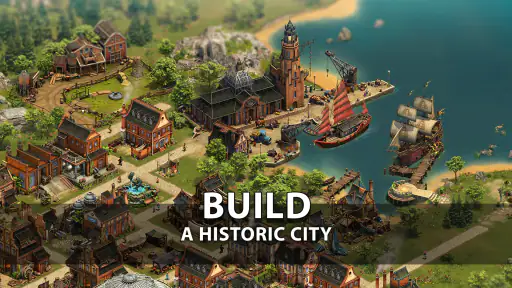
Starting with a modest settlement gives each early decision a visible purpose. You are not only placing buildings; you are trying to make limited space and resources serve several needs at once. That small-scale puzzle is what hooked me more than the historical theme on its own. Seeing the city change as it moves through eras gives progress a clear visual marker, while new technologies offer a reason to reconsider what your settlement needs next.
The game is free to start and is rated Everyone 10+. InnoGames GmbH has built a strategy game that is approachable at first, though its longer-term systems ask for more patience than a quick puzzle or match-based game. It has a 4.2 average from around 1.1 million ratings and over 10 million installs, so it is clearly found a large audience. Those figures are context, not a guarantee that its steady pace will suit you.
The Thrill of Building and Expanding
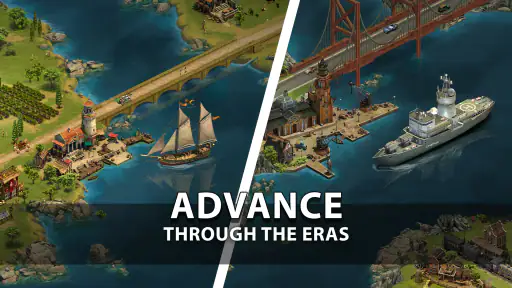
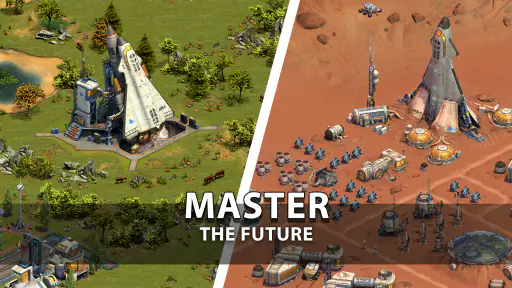
The essence of Forge of Empires lies in its engaging city-building mechanics. Starting from the Stone Age, you have the opportunity to advance your city through different historical periods, such as the Middle Ages and the Industrial Revolution, all the way to the futuristic eras. Each era comes with its unique set of buildings, technologies, and challenges.
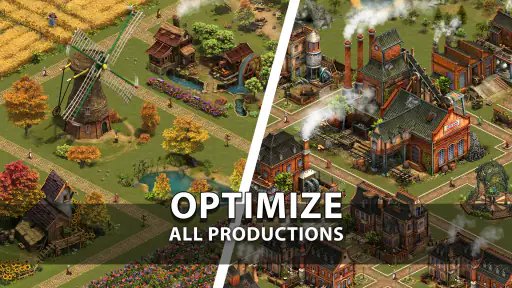
As you progress, you'll need to strategize the layout of your city, balancing residential and industrial buildings to ensure a steady flow of resources. Every decision impacts your city's prosperity, pushing you to think critically about resource management, economic growth, and technological advancement.
Making progress fit an ordinary day
The rhythm works best when you treat it as a game to check between other activities, rather than something that must hold your attention for one long uninterrupted session. A realistic routine might be to review what your city needs in the morning, make a few considered layout or research decisions, then return later to see how the plan is developing. That approach keeps the management satisfying without turning every spare moment into a demand to log in.
One practical habit is to decide what a building change is meant to solve before rearranging the city: are you trying to improve your resource flow, make room for the next step, or simply tidy an awkward layout? Keeping that goal in mind helps avoid replacing buildings on impulse and then discovering that a different need has become harder to meet. I also find it useful to think a little ahead before committing to a new direction, because a city that looks attractive is not automatically an efficient one.
More From Our News Desk

Weather by Xiaomi Review: Clear at a Glance, Less Clear Up Close

X Under Pressure: Can It Recover When Posting Goes Wrong?

Clash of Clans Is Won Between the Battles

Android Auto Makes the Case for Quieter Car Software

MobiOffice: Transforming Mobile Productivity with Seamless Integration

EA SPORTS FC™ Mobile Soccer: Redefining Mobile Sports Gaming
For example, if I have only a few minutes between errands, I can use that check-in to review one priority and make a small decision rather than starting several projects I cannot think through. Later, when I have more time, I can consider whether the city’s layout still supports that plan. This division between quick checks and deliberate planning helps the game feel like a flexible pastime instead of a constant stream of taps.
A useful question for a new player is whether progress requires long sessions. In my experience, the appeal is less about staying in the game continuously and more about making choices that have consequences over time. If you enjoy returning to a plan and adjusting it, that rhythm can work well; if you need every session to end with a clear victory or a complete task, it may feel less rewarding.
Strategic Warfare and Alliances
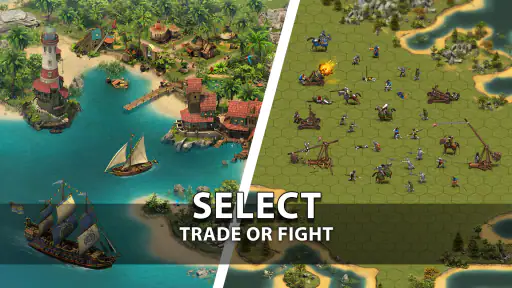
Beyond the cityscape, Forge of Empires shines in its strategic combat system. You'll engage in turn-based battles that require both tactical foresight and quick decision-making. The game allows you to conquer territories, expand your empire, and gain valuable resources. If you're a fan of strategy games, these battles are sure to keep you on the edge of your seat.
Plus, the social aspect of the game cannot be overlooked. Joining guilds and forming alliances with other players adds another layer of depth. Not only do these alliances provide support in battles, but they also open doors for trade and cultural exchanges. It's like running your own medieval society complete with friends who have your back!
These layers give me a reason to vary what I focus on: a city decision can be the main event on one visit, while tactical play or social interaction can provide a different kind of engagement on another. The trade-off is that a player who wants only peaceful decoration may not enjoy the strategic and competitive side as much. I would treat combat and guild participation as options to explore at my own pace, not as obligations that define whether I am playing correctly.
How the strategy compares
Compared with a conventional city builder focused mainly on decorating streets and watching a town grow, this game makes historical advancement and strategic decisions a bigger part of the appeal. Compared with a combat-first strategy game, it gives city management and development more room alongside battles. That blend is a strength if you enjoy switching between planning a settlement and making tactical choices; it is less compelling if you want fast matches, immediate rewards, or combat to dominate every session.
For a newer player, I would avoid treating every available activity as equally urgent. Pick a city goal, then let research, building choices, and battles support it rather than scattering attention. Social play can add a sense of company, but it is not a substitute for enjoying the underlying planning. If guild interaction feels like an obligation rather than a pleasure, the city itself needs to be engaging enough to carry your routine.
That distinction also helps answer which alternative might suit you better. If you primarily want to design a pretty town without much strategic pressure, a decoration-led builder is likely a better match. If you want a focused contest where each session is built around combat, a battle-first strategy game may be more satisfying. I would choose this one when the combination matters: I want to develop a city, make progress through historical eras, and sometimes shift into tactical or social play without leaving the same game.
Month-to-month value and upkeep
Over time, the appeal depends on whether you enjoy gradual development. Each new era gives the city a sense of movement, but advancement also means revisiting priorities rather than simply repeating the same successful layout forever. I like that this gives long-term play a planning question to answer; the trade-off is that progress can feel slow if you expect a fresh, dramatic payoff every time you open the game.
Maintenance is mostly mental: keeping track of what your settlement needs and deciding which project deserves attention next. That makes it a reasonable fit for short check-ins, but less suitable if you dislike games that reward returning regularly. The current version is 1.296.20, and the game is free with in-app purchases ranging from $0.99 to $199.99 per item. I would set a personal spending limit before buying anything; purchases are optional, but the presence of a broad price range is worth considering if you prefer games with no in-app spending.
For long-term value, I would ask whether I still enjoy the decisions after the early novelty of watching a small settlement change. The answer depends less on reaching a particular milestone and more on whether the next planning problem feels interesting. If I can identify a useful goal each time I return, the slower pace gives the game room to last. If I open it only because I feel I should, the habit has stopped serving me.
It is also reasonable to wonder whether spending is necessary to enjoy the game. I would approach purchases as optional rather than as a requirement, and decide in advance what, if anything, I am comfortable spending. The free entry point makes it possible to see whether the core routine suits you before paying, while the wide range of listed purchase prices is a good reason to avoid making impulse decisions.
Where the routine can wear thin
The same long arc that makes the game satisfying can also become its main source of fatigue. City management asks you to keep balancing space, resources, and progress, while events and social features can make the game feel busier if you try to follow everything. I would not recommend approaching it as a checklist. Choose the parts you genuinely enjoy and let the rest go; otherwise, a relaxing strategy game can start to feel like another task competing for your attention.
It is also not my pick for someone who wants a self-contained story with a definite ending, or for a player who only has room for occasional, disconnected sessions. Its strongest rewards come from seeing plans develop over time, so people who prefer a quick round with an immediate finish may be happier with a compact turn-based game. On mobile, the management style is most appealing when you can give decisions a little thought rather than tapping through them in a hurry.
One subtle source of fatigue is the temptation to confuse activity with progress. When several parts of a strategy game are available, it is easy to spend a visit switching between them without making a decision you actually care about. I get more value by choosing one task in advance and stopping once I have handled it. That boundary matters especially on a busy day: it protects the game’s relaxing side and makes it easier to return by choice, not from a sense of unfinished business.
Graphics and User Experience
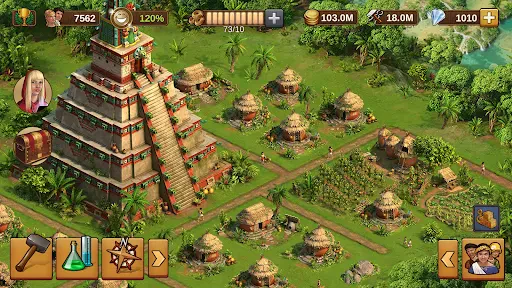
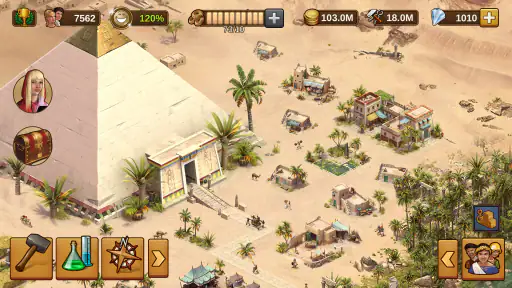
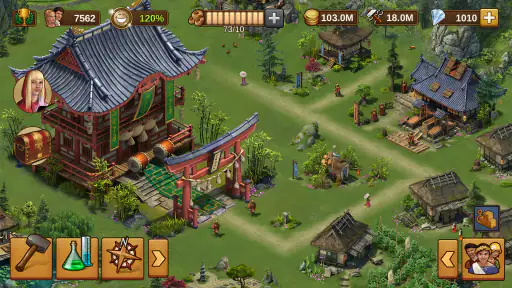
Visually, Forge of Empires is a treat. The graphics are detailed and vibrant, beautifully illustrating each era with precision and flair. From the rustic charm of the Stone Age to the sleek designs of futuristic buildings, every element is crafted to enhance your gaming experience.
The user interface is intuitive, making it easy for both seasoned players and newcomers to navigate the game. With simple controls and clear tutorials, getting started is a breeze, allowing you to dive straight into the action without a hitch.
For someone choosing a mobile strategy game, this visual progression has practical value as well as charm: it makes long-term development easy to read at a glance. Still, I would not choose it solely for its presentation. The central question remains whether you enjoy organizing a settlement and making measured strategic choices; attractive changes to the city help that loop, but cannot replace it if the underlying pace is not for you.
Who will keep coming back?
I would recommend it to someone who enjoys watching a small settlement become a more capable, developed city, and who likes having both economic planning and tactical play in the mix. It is especially well suited to players who can make a modest, sustainable routine: check in when convenient, choose one worthwhile next step, and stop when the decisions are done. You do not need to chase every event or make the game the center of your day to appreciate its core appeal.
If you are deciding whether to install it, the key question is not whether there is enough to do; it is whether you enjoy managing a project that unfolds gradually. The game is available on Android and iOS, and its minimum operating-system requirement is Android 5.0. I would give it a try if the idea of planning an evolving historical city sounds satisfying, but choose a shorter, more session-based strategy game if you want each play to feel complete on its own.
It is a particularly good fit for someone who likes returning to a personal project and noticing how earlier choices shape what comes next. It is a weaker fit for a player who is mostly looking for a story campaign, a quick competitive match, or a game that can be ignored for long stretches without losing its appeal. I would also suggest that anyone who dislikes recurring mobile-game routines decide on a comfortable check-in pattern at the start, rather than letting notifications or a sense of urgency set the pace.
My long-term verdict
In conclusion, Forge of Empires is more than just a game; it's a journey through time filled with strategic challenges and historical wonders. Whether you're a fan of city-building or strategy games, or simply someone who loves history, this app is bound to keep you entertained for hours on end. So, why wait? Embark on your empire-building adventure today!
My more measured recommendation is to try it for the city-planning loop, then judge it by how naturally it fits your week rather than by how much you accomplish at once. The strongest reason to keep it installed is the pleasure of making a settlement work better and seeing it change; the clearest reason to move on is finding that regular upkeep feels like a chore. For me, it earns lasting space when I treat it as a patient strategy game, not a race to keep up with every possibility.
In practical terms, I would give it a fair trial by focusing on a small goal that genuinely interests me, such as improving how the city is organized or deciding which direction to pursue next. If that process feels satisfying even when progress is gradual, the game has a good chance of becoming a comfortable long-term habit. If I keep wishing it would move faster, offer a definite ending, or demand less attention, I would take that as a sign to choose a more self-contained strategy game instead.
Forge of Empires: Build a City Frequently Asked Questions
Does Forge of Empires require a lot of ongoing attention?
Forge of Empires is built around developing a city and making strategic choices over time, so it is better suited to players who enjoy checking back on a growing settlement than to those looking only for brief, self-contained levels. You can decide how much time to spend on planning and expansion, but the online, evolving nature of the game means progress is tied to returning to it.
Can I build and customize my city in Forge of Empires?
Yes. City building is at the heart of Forge of Empires: you establish a settlement, expand it, and place structures as your civilization advances through historical eras. Planning how your city develops is part of the strategy, alongside managing resources and unlocking technologies. If you enjoy shaping a settlement and seeing it change over time, this is one of the game’s main attractions.
Is Forge of Empires free to download, and what should I know about optional purchases?
Forge of Empires is free to download, so you can begin building a city without paying upfront. The game also offers optional in-app purchases, with prices ranging from $0.99 to $199.99 per item. These can support faster progress or access to certain extras, but purchases are not required to play. If children use the device, consider reviewing purchase settings before they start.
What kind of game is Forge of Empires, and who developed it?
Forge of Empires is a strategy city-building game developed by InnoGames GmbH. Its central appeal is planning a settlement, managing its growth, and progressing through changing historical eras rather than simply completing a sequence of short levels. It suits players who enjoy making decisions over time, balancing development with strategic challenges, and returning regularly to see their city advance.
What is the main objective of Forge of Empires: Build a City?
In Forge of Empires: Build a City, the main objective is to establish and expand your own city from the Stone Age through various historical periods. Players aim to unlock new technologies, build impressive structures, and manage resources efficiently. Engaging in battles and forming alliances are also key elements that contribute to the strategic depth of the game.
Pros
- Engaging city-building mechanics
- Rich historical theme and setting
- Regular updates with new content
- Interactive multiplayer elements
- Strategic gameplay depth
Cons
- Requires constant internet connection
- Can be time-consuming
- In-app purchases can be intrusive
- Occasional performance issues
- Complex for new players
- Category
- Strategy
- Version
- 1.296.20