Flop House
- 1.51K
- 4.5
- Installs
- 10.00M
- Price
- Free

Screenshots
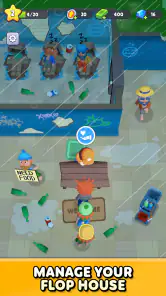
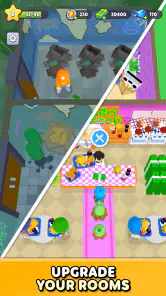
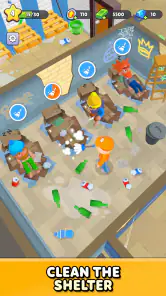
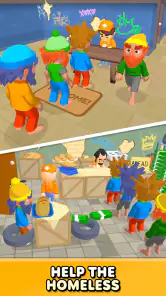
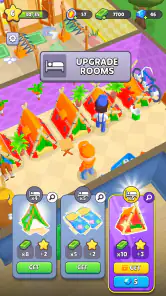

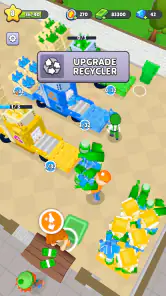
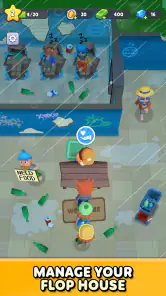
Analysis by Reviewed
Flop House takes a serious subject and turns it into a light management game: you run a shelter, improve the space, and try to make daily life better for the people who arrive. I found the first sessions easy to understand because the central goal is immediately clear. You are not building a city or managing a restaurant; you are looking after a place where small improvements are meant to change lives. That gives the usual idle formula a more human frame.
Created by CrazyLabs LTD, this free simulation game is available for Android devices running version 8.0 or later. It is aimed at Teen players, and its current version is 5.0.0.0. The game has reached over ten million installs and holds a 4.5 average from around 118 thousand ratings, so it has clearly found a large audience beyond the initial curiosity of its premise.
Why the first week feels so appealing
My first impression was that Flop House understands the value of a quick, visible reward. The shelter begins as a modest operation, and progress comes from making it more useful over time. Each improvement feels connected to the main purpose rather than being a completely unrelated decoration. That connection makes the early loop more satisfying than many idle games where numbers rise without any clear meaning.
The game is especially approachable if you like simulation titles but do not want a complicated tutorial. You can open it for a short session, make a few decisions, collect progress, and close it without needing to remember a large set of rules. I also think it works well for players who enjoy watching a neglected place become more organized. The transformation is the main source of motivation during the opening stretch.
What makes the premise stand out is the contrast between the familiar idle structure and the shelter setting. Instead of simply expanding a fantasy kingdom or upgrading a production line, you are encouraged to think about comfort, access, and practical improvement. That does not turn the game into a realistic social-work simulation, but it does give ordinary upgrades more emotional weight.
For a realistic everyday scenario, I can see someone opening it during a commute or while waiting for an appointment. A short check-in is enough to see what has changed and decide what to improve next. It does not demand the uninterrupted attention of a strategy game with live battles, and that makes it a comfortable companion for spare moments. The trade-off is that the experience can feel passive if you want constant action.
The first week also benefits from the clarity of its central fantasy. You know why you are expanding the shelter, and that makes the early decisions easier to follow. I did not need to invent a personal challenge to stay interested at the beginning. The game supplies one naturally: make the shelter better, keep progress moving, and see how far the operation can develop.
Still, the novelty is doing a lot of work here. The unusual setting catches attention quickly, but a good premise alone cannot carry an idle game forever. Once the first improvements stop feeling surprising, the important question becomes whether the daily routine remains rewarding.
The management loop is simple, but not empty
Flop House sits closer to an accessible idle manager than to a demanding management simulator. That distinction matters. I would not install it expecting detailed staffing schedules, complex budgets, or the pressure of balancing several competing emergencies. Its appeal comes from steady progress and a readable sense of cause and effect.
That simplicity is useful for beginners. If you normally avoid simulation games because they bury you under menus, this is a gentler starting point. The game gives you a clear reason to return without requiring a spreadsheet beside your phone. On the other hand, experienced simulation fans may eventually want more control than the streamlined structure provides.
One practical tip is to avoid treating every available improvement as equally important. I found the experience more satisfying when I focused on changes that supported the shelter’s immediate needs instead of scattering attention across everything at once. In an idle game, it is tempting to tap every highlighted option, but choosing a direction gives the progress a stronger rhythm.
Another useful habit is to make each visit purposeful. Rather than opening the game repeatedly just to collect whatever is available, I would check the shelter, identify the next meaningful improvement, and leave once that decision was made. This keeps the game from becoming a background chore too quickly and helps preserve the feeling that I am managing something rather than merely claiming rewards.
What keeps the game useful after the opening excitement
The month-to-month value depends on how much enjoyment you get from incremental improvement. Flop House is not built around a dramatic conclusion that replaces the normal routine. Its lasting appeal comes from returning, making another upgrade, and seeing the shelter continue to develop. That can be calming, but it also means the game needs to fit naturally into your habits.
I think it has the best chance of staying installed for players who enjoy low-pressure progress. If you like checking a project several times a week and watching it slowly become more capable, the format can remain pleasant. The shelter theme gives those checks more personality than a generic income counter, because the setting reminds you what the progress is supposed to represent.
There is also a useful emotional difference between this and many idle alternatives. In a standard business simulator, the goal is often to maximize profit or unlock a bigger operation. Here, the imagined result is more compassionate: a better place for people who need support. That does not make every mechanic deeper, but it changes how the player interprets progress and can make repetition feel less hollow.
However, the same structure limits its long-term audience. Players who need frequent surprises, active challenges, or strong strategic consequences may find the routine too predictable after the initial period. In that situation, a more complex city builder or resource-management game would probably offer better lasting value. Flop House is more suitable when you want a gentle ongoing project than when you want a demanding test of planning skill.
The game is free to download, with optional purchases ranging from $1.99 to $49.99 per item. That makes it easy to try without committing money at the start, but it also means I would recommend deciding on a personal spending limit before the progress loop becomes familiar. A free entry point is useful, especially for a casual title, yet the presence of purchases can affect how relaxed the experience feels for players who dislike any pressure around faster progress.
My advice is to judge the game by the free routine first. If the ordinary cycle of checking the shelter and improving it is already enjoyable, optional spending is easier to view as a choice rather than a requirement. If the basic loop feels slow or repetitive, paying to accelerate it is unlikely to solve the deeper problem: the game may simply not match your preferred pace.
Maintenance is part of the experience
The biggest long-term question is not whether Flop House can entertain you during a first session. It can. The question is whether maintaining the shelter remains satisfying once the excitement of unlocking improvements has faded. For me, the answer depends on how deliberately I approach it. Short, intentional visits work better than turning the game into a constant notification habit.
That is an important distinction for an idle game. The format is designed around progress that continues between visits, so it can quietly claim attention throughout the day. I prefer to let it occupy a small place in my routine rather than checking compulsively. Open it at a convenient time, make the next useful decision, and move on. This keeps the shelter feeling like a project I visit, not an obligation that follows me.
A good maintenance routine also means accepting that not every session needs a major breakthrough. Some visits are about collecting progress or preparing for a later improvement. If you expect a dramatic change every time you open the app, the slower stretches can feel disappointing. If you treat those stretches as part of the idle rhythm, they are easier to accept.
For players with limited storage or an older phone, the minimum operating-system requirement is Android 8.0. That is a relatively accessible baseline, although compatibility still depends on the individual device. The game’s Teen rating is another point parents should consider: the shelter theme involves mature social circumstances, so it is not presented as a children’s title even though the management controls are easy to understand.
I would also suggest keeping the game’s purpose in mind when deciding how to play. The subject can invite more thoughtful engagement than a purely abstract simulator, but it is still a game built around repetition and progression. It simplifies homelessness into a manageable virtual system. That makes the experience approachable, while also meaning it should not be mistaken for an accurate representation of the real-world challenges involved.
Where fatigue begins to appear
The first source of fatigue is the familiar idle-game pattern itself. Once the shelter’s early transformation has been absorbed, repeated visits can start to feel similar. The setting helps, but it cannot remove the basic rhythm of waiting, returning, improving, and waiting again. Players who already feel tired of idle games will probably recognize that sensation here.
The second issue is the limited sense of urgency. A relaxed pace is one of the game’s strengths, but it can also reduce tension. If you prefer decisions with immediate consequences, Flop House may seem too forgiving. The game is better at creating a steady feeling of care than at producing moments of high pressure.
A third trade-off comes from the relationship between progress and optional purchases. Even when spending is not necessary for enjoyment, the existence of items priced as high as $49.99 can make some players more cautious about the economy. I would not recommend approaching the game with the assumption that buying something will automatically improve the experience. The more useful question is whether you enjoy the unhurried loop without assistance.
There is also a risk that the social theme creates expectations the mechanics cannot fully satisfy. The idea of changing lives sounds substantial, while the actual interaction remains within the boundaries of a casual simulation. I appreciated the warmer context, but players looking for deep stories about individual residents or realistic social decisions may want a narrative game instead. Flop House uses the theme to frame its management loop, not to replace that loop with a detailed drama.
One way to reduce fatigue is to set a clear reason for returning. For example, I might open the game only when I have enough time to choose the next improvement, or use it as a brief evening check rather than a constant daytime distraction. That small boundary matters because idle games often become less enjoyable when every spare second turns into another collection cycle.
Who should make room for it
I would recommend Flop House to someone who wants a friendly simulation game with a distinctive setting and a forgiving pace. It suits players who enjoy gradual upgrades, light management, and the satisfaction of improving a place over time. It is also a reasonable choice for anyone curious about idle games but uninterested in the usual themes of factories, farms, or fictional empires.
It is less suitable for players who need deep systems, competitive pressure, or a strong story with complex characters. If your ideal game gives you difficult trade-offs every few minutes, this one may feel too gentle. If you dislike waiting-based progression or do not want to think about optional purchases, a premium game with a fixed price may be a better fit.
Compared with a typical idle business game, the shelter setting gives Flop House more personality and a clearer emotional reason for upgrading. Compared with a full management simulator, it is much easier to pick up and far less demanding, but also less detailed. Compared with a narrative game about homelessness, it offers more repeatable progression and less human depth. Those differences explain both its appeal and its limits.
The game can also work for families sharing a device, provided the Teen rating suits the household. I would explain the premise before handing it to a younger player, because the subject is more mature than the colorful management presentation might initially suggest. For adults, the theme may encourage a more reflective style of play, especially if they pause to consider how simplified the virtual shelter is compared with real support services.
My long-term verdict
After the first-week appeal fades, Flop House earns lasting space only if you genuinely enjoy calm, incremental management. Its strongest quality is the way it gives a familiar idle structure a more meaningful setting. I found the shelter easier to care about than an anonymous business because each improvement feels connected to a human purpose, even within a simplified game world.
Its weakness is equally clear: the underlying routine can become familiar, and the game does not appear designed to satisfy players searching for constant complexity. The free-to-play structure also deserves a thoughtful approach, particularly for anyone sensitive to purchase prompts or accelerated progression. I would play it without spending first, establish a comfortable check-in routine, and only then decide whether it deserves anything more.
CrazyLabs LTD has made a simulation game that is approachable, distinctive, and easy to revisit. Its 4.5 average and more than ten million installs reflect broad interest, but popularity alone does not guarantee that it will become a permanent favorite for everyone. For me, its value rests on the balance between purpose and repetition: the purpose keeps the early game memorable, while the repetition determines whether I return months later.
My final recommendation is to try it if you want a low-pressure shelter-management game, but keep your expectations focused on steady progress rather than deep realism or demanding strategy. The game is at its best when it becomes a small, intentional habit: open the shelter, make one sensible improvement, notice the difference, and leave. If that rhythm sounds comforting rather than tedious, Flop House is worth installing. If you need constant novelty, a richer alternative in the simulation category will probably hold your attention longer.
Pros
- Simple interface makes browsing and playing easy for newcomers.
- Short sessions suit quick breaks and casual mobile gaming.
- Lighthearted presentation gives the game an approachable personality.
- Progression provides a reason to return after completing initial levels.
- Touch controls are generally easy to learn and use.
Cons
- Limited depth may make the experience feel repetitive over time.
- Some challenges can feel dependent on timing rather than strategy.
- The game may offer less appeal to players seeking competitive features.
- Progress can become slower once the early content is completed.
- Device performance may affect responsiveness on older phones.

- Category
- Simulation
- Version
- 5.0.0.0