Flashback Trivia: Quiz Game
- 223.00
- 4.6
- Installs
- 100.00K
- Price
- Free

Screenshots
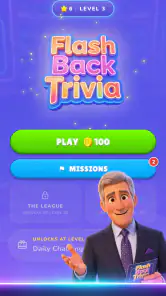
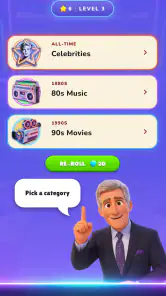
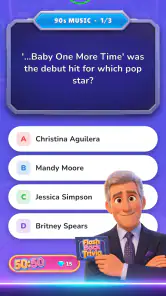
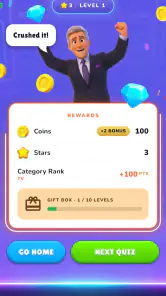
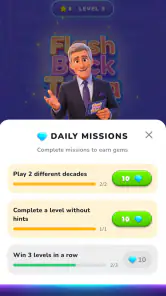

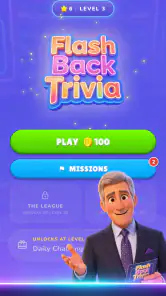
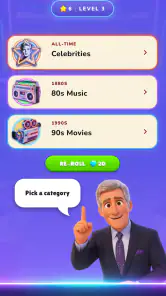
Analysis by Reviewed
Before I install a nostalgia quiz, I ask myself whether I want to revisit pop-culture memories or test what I know across a wide range of subjects. That distinction matters more than the familiar quiz format: a focused theme can make a short session feel personal, but it can also narrow the pool of questions sooner than a general trivia game would. My choice would depend on the company, the moment, and whether the decades covered sound like fun rather than homework.
A quick way to choose the right kind of quiz
For a solo break, I would look for questions I can pick up and put down without preparation. For a group, I would care more about whether the topic gives people something to talk about after an answer is revealed. A pop-culture quiz can do both, though it is a weaker fit when the group wants equal footing across ages or when one person is much more familiar with the era than everyone else.
I would also decide whether I want a game that tests knowledge or one that prompts memories. Those overlap, but they are not quite the same: recognizing a reference can be satisfying even when I could not have recalled it unaided. That distinction helps set expectations before a first round and makes it easier to judge whether a multiple-choice format is right for me.
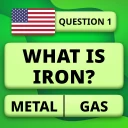
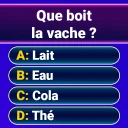
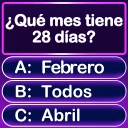
I would choose Flashback Trivia: Quiz Game for a particular kind of quiz night: one where the fun comes from recognizing familiar bits of pop culture, not from mastering a specialist subject or competing through elaborate game systems. It is a free trivia game built around multiple-choice questions spanning the 1980s, 1990s, and 2000s. That focus makes it easy to understand before you start, and its offline play is a practical advantage when you want a quick round without relying on a connection.
For me, the deciding question is whether those decades sound like an inviting subject or a narrow one. If you enjoy testing your memory of the entertainment and cultural touchstones associated with them, the game has a clear reason to open it. If you want broad general knowledge, current events, or a deep dive into one specialist topic, a different trivia game will probably suit you better. The best reason to try it is its specific nostalgic scope, rather than the promise of endless variety.
What makes the quiz appealing
A focused subject is both the hook and the limit
Pop-culture quizzes are at their best when a question triggers a half-remembered song, show, film, or trend and gives you a satisfying moment of recognition. The decade-based premise sets that expectation. Instead of entering a broad quiz and getting an unpredictable mix of subjects, you know the general cultural territory you are stepping into. I find that useful when I want a casual challenge that feels familiar rather than like a test of formal knowledge.
That focus also makes it an easy game to share across generations, with an important caveat: people do not all remember the same cultural moments. Someone who grew up with one decade’s entertainment may breeze through questions that leave another player guessing. That difference can make a group session lively, but it can also make the experience feel uneven if the questions favor a period one player knows much better. I would treat missed answers as conversation starters, not as a verdict on anyone’s knowledge.
More From Our News Desk

Weather by Xiaomi Review: Clear at a Glance, Less Clear Up Close

X Under Pressure: Can It Recover When Posting Goes Wrong?

Clash of Clans Is Won Between the Battles

Android Auto Makes the Case for Quieter Car Software

MobiOffice: Transforming Mobile Productivity with Seamless Integration

EA SPORTS FC™ Mobile Soccer: Redefining Mobile Sports Gaming
Because the format is multiple choice, you are not expected to recall every answer from scratch. Choices can jog your memory, but they can also make uncertainty more noticeable: you may recognize the right answer only after seeing it. That makes the game approachable for an informal session, though it may feel less rewarding to players who prefer open-ended questions that demand precise recall.
Offline play suits small gaps in the day
The ability to play offline gives this trivia game a useful role beyond a planned game night. I can imagine opening it while waiting for an appointment, passing time on a journey, or taking a short break when a steady internet connection is not available. The decade theme is also easy to dip into: you do not need to prepare, choose a specialist subject, or persuade yourself to begin a long session.
A practical way to get more from that setup is to use it as a shared guessing game rather than silently tapping through every question. On a trip or during a quiet evening, one person can read the choices aloud while others make a guess before the answer is selected. That turns a solo quiz format into a bit of group entertainment without requiring everyone to have the same depth of pop-culture knowledge. It works especially well when players are comfortable admitting, “I remember this, but I can’t place it.”
Offline access is most valuable when it changes whether you can play at all, not as a reason to expect a richer feature set. I would see it as dependable convenience for a simple activity. If your ideal trivia session depends on live opponents, social rooms, shared leaderboards, or regularly changing content, those are different priorities and should guide your choice instead.
A realistic use for a mixed-age group
Picture a family waiting for food at a casual meal, with a few minutes to fill and no desire to turn the table into a formal contest. One person can read a question and its options aloud, let everyone make a guess, and then use the answer to invite a quick story about the decade. This is a better use of the format than keeping score aggressively: the age gap may give some players a natural advantage, while the discussion lets others contribute through associations and memories.
For a commute or waiting room, I would use the opposite approach and play a few questions quietly on my own. The same game can fit both situations because the central activity is simple, but I would not count on it to supply a long, structured group event. If a gathering needs teams, rounds, or a clear competitive format, another kind of quiz is a safer choice.
Who is likely to enjoy it
I would recommend trying Flashback Trivia: Quiz Game if you like entertainment-focused questions, enjoy comparing memories of different decades, or want a low-effort game for short breaks. It may also suit someone looking for a light introduction to mobile trivia: multiple-choice play is familiar, and the subject does not require studying before you begin. The age rating is Everyone, so its stated audience is broad, even though the specific appeal will naturally depend on a player’s interests.
It is a less obvious match for anyone who wants a systematic learning tool. Pop-culture recognition can be enjoyable without providing the structure or depth of a dedicated study app. It is also probably not the best choice for a player who gets frustrated when a quiz leans on references they have never encountered. A decade in the theme does not guarantee that every question will feel familiar, and pop culture itself covers a wide range of tastes.
Parents or groups choosing a game for mixed ages can use the theme as a simple conversation point before starting: ask which of the three decades people know best. If everyone names a different one, that mismatch could be part of the fun. If the group expects a perfectly even challenge for every participant, a broader trivia format may be a safer pick.
How it compares with other trivia styles
Compared with general-knowledge quiz games, this one makes a narrower promise. A general quiz is usually the more flexible choice when players want science, history, geography, and entertainment mixed together. The trade-off is that a broad subject mix can feel less personal. Flashback Trivia’s era-based angle has a better chance of creating recognition and reminiscence, but it cannot satisfy someone looking for a balanced test across many fields.
It also occupies a different lane from word puzzles and brain-training games. Those alternatives may focus on vocabulary, logic, or repeated practice, whereas this game’s appeal is cultural recall. If you want to sharpen a specific mental skill, choose an app built around that goal. If you want to say, “I know that reference,” or debate which option sounds right, the pop-culture format is more relevant.
Then there are competitive trivia apps, which may be preferable if live head-to-head play is the main attraction. I would not choose this title on the assumption that it offers a social competition layer; its strongest confirmed appeal is the subject matter and the ability to play offline. For a relaxed solo round or an informal group guessing session, that is enough. For a structured tournament atmosphere, look for a game whose central appeal is explicitly competition.
What to expect from the cost and commitment
The game is free to start, with optional in-app purchases priced from $0.69 to $19.99 per item. That range matters if you prefer to keep a game entirely free: I would check the purchase options before spending and decide whether anything offered is actually worth it to you. A free download does not mean every possible extra is included without cost, so it is sensible to approach optional purchases as a choice rather than part of the basic reason to install.
It is made by Lucky Echo Labs. The current version is 1.0.50, and the listed minimum operating-system requirement is 7.0. Those details are useful when deciding whether it is compatible with a device, but they do not tell you whether the questions match your personal taste. The stronger compatibility test is whether a focused, decade-spanning pop-culture quiz sounds more appealing than a wider or more competitive alternative.
The game has an average rating of 4.6 from around 4,100 ratings, alongside 223 written reviews, and it has passed 100,000 installs. Those figures suggest that it has found an audience, but I would not use popularity as a substitute for fit. A player who loves nostalgia quizzes may have a better time with a smaller title built around that exact interest than with a more widely used general quiz that feels too broad.
Switching is easy; changing expectations matters more
There is little conceptual adjustment if you already play mobile trivia: read a question, compare the available choices, and make your pick. The meaningful change is the narrower subject. If you are coming from a general quiz, expect the experience to be less about demonstrating broad knowledge and more about recognizing cultural references tied to the 1980s, 1990s, and 2000s. If that sounds like a pleasant change of pace, the shift is an advantage. If you rely on varied subjects to keep a quiz fresh, it may become a reason to switch back.
One useful way to judge it without overcommitting is to try a short session in different moods. Play alone when you want a quick distraction, then try a round with someone whose pop-culture memories differ from yours. If the second experience produces discussion even when people miss answers, the theme is doing its job. If it mostly highlights gaps in familiarity and stops the conversation, a broader subject mix is likely a better fit.
Since the game works offline, it can also complement rather than replace another quiz app. Keep a wide-ranging option for varied knowledge and use this one when you specifically want nostalgia-oriented questions or need something that does not depend on being online. That division of purpose is more realistic than expecting one trivia game to satisfy every mood.
How I would judge the optional spending
I would treat the purchase range as a reason to set a boundary before getting absorbed in play, not as evidence that spending is necessary. Start with the free experience and ask whether the questions themselves make you want another session. If they do, decide separately whether an optional item would improve your own use; if not, there is little reason to buy anything just because it is available.
That approach is especially useful for a game intended for brief breaks. A purchase is easier to evaluate when you know whether you expect to play occasionally, share it with family, or return to it often for solo rounds. I would avoid assuming that paid options change the core appeal: the theme is what makes this title a fit, and a purchase cannot make decade-based pop culture interesting to someone who does not enjoy it.
My recommendation
At an average rating of 4.6, the game appears to be well received, but my recommendation is still conditional: choose it for the theme, not simply because it is a trivia title. Its most convincing strengths are a clear pop-culture focus, a familiar multiple-choice format, and offline play that makes it convenient for spare moments. For a casual player who enjoys references from these decades, that is a sensible combination.
I would skip it if you need live competition, a broad mix of academic subjects, or a quiz designed to teach a topic step by step. Those needs call for different alternatives, and there is no reason to force a nostalgic quiz into a role it is not built around. For everyone else, especially people who enjoy testing what they remember and comparing answers with friends, I think it is worth trying as a light, specific addition to a trivia collection.
The clearest way to decide is to ask whether the decades themselves make you curious. If they do, the focused premise gives you a reason to return for another short round; if they do not, the same focus will probably feel restrictive. I would recommend it to a friend who wants easygoing pop-culture recall, while pointing a general-knowledge fan or competitive player toward a format that better matches what they are looking for.
Flashback Trivia: Quiz Game Frequently Asked Questions
What is Flashback Trivia: Quiz Game?
Flashback Trivia: Quiz Game is a quiz app built around questions that test what you remember about past decades, pop culture, and notable events. The format is intended for quick rounds, so you can answer a few questions during a short break or keep playing for longer. The exact topics, modes, and features may vary by version, so check the current app listing for the latest details.
Is Flashback Trivia: Quiz Game free to download and play?
The app may be available to download without an upfront charge, but that does not necessarily mean every part of the experience is free. Some versions of quiz games include advertising, optional purchases, or other paid features. Before installing, review the store listing for pricing and in-app purchase information, and check the app’s settings for any available options to manage ads or purchases.
Does Flashback Trivia: Quiz Game work offline?
Whether you can play without an internet connection depends on the app version and which features you want to use. Some trivia rounds may be available locally, while features such as loading new questions, syncing progress, or accessing online modes may require connectivity. If offline play matters to you, check the app description and test the relevant features while connected before relying on them during travel.
Is Flashback Trivia: Quiz Game suitable for children?
The game’s trivia format may appeal to a range of ages, but suitability depends on the questions, advertising, and any external links or purchase options included in the version you download. Parents should review the age rating and store disclosures, then check the app themselves before giving it to a child. Device-level parental controls can also help restrict purchases and manage screen time.
What should I check before downloading Flashback Trivia: Quiz Game?
Confirm that the app is compatible with your Android or iOS device and that you have enough storage space. Read the current store listing for its age rating, privacy information, advertisements, and in-app purchases, since these details can change with updates. Also consider whether its question topics and play style suit you, and download it only from an official app store or trusted source.
Pros
- Quick rounds make it easy to play during short breaks.
- Questions span varied topics
- keeping each game unpredictable.
- A straightforward quiz format is easy for new players to learn.
- Replayable rounds offer a simple way to test your general knowledge.
- Useful for casual solo play when you want a low-pressure challenge.
Cons
- Some questions may feel too easy for experienced trivia fans.
- Repeated questions can make longer sessions less engaging.
- Trivia answers may rely on specific cultural or historical knowledge.
- Players looking for strategy or action may find the gameplay simple.
- Progress can feel slow if rewards depend on repeated quiz sessions.
- Category
- Trivia
- Version
- 1.0.50