Dark Fairytale Color by Number
- 165.00
- 4.4
- Installs
- 100.00K
- Version
- 1.1.4

Screenshots
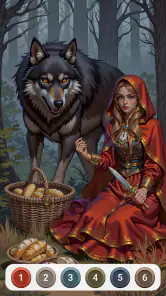
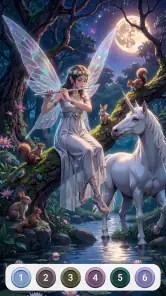
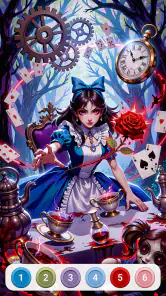
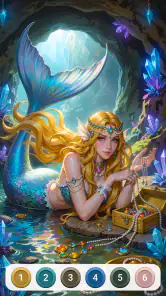
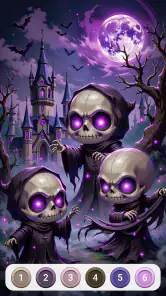
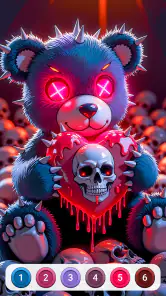
Analysis by Reviewed
Dark Fairytale Color by Number is the kind of board game I open when I want something quiet, visual, and a little unusual. Instead of relying on bright, cheerful coloring-book imagery, it builds its identity around shadowy fantasy scenes, strange characters, and a dreamy gothic mood. My overall impression is positive: the game works best as a relaxing, low-pressure activity, but its appeal depends heavily on whether you enjoy completing pictures more than chasing complex game mechanics.
BrainArt Studio has made a focused experience rather than a broad collection of unrelated mini-games. The central idea is simple enough to understand immediately, yet the artwork gives the activity more personality than a standard digital coloring app. I found myself treating each picture as a small visual project: choose a section, match the number, fill it, and gradually watch the image become complete.
That simplicity is also the main point to understand before downloading it. This is a color-by-number board game, not a story-driven adventure or a competitive puzzle title. It is a good fit for short breaks, evening relaxation, and anyone who likes dark fantasy artwork. It is less suitable if you need strategic depth, fast action, or a strong sense of progression beyond finishing illustrations.
How the dark fairytale style changes the experience
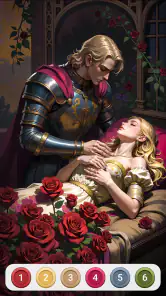
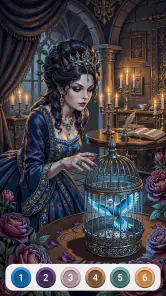
The visual direction is the game’s strongest evidence of character. Many coloring apps use familiar flowers, animals, mandalas, or generic landscapes. Here, the atmosphere leans toward gothic fairytales, with fantasy art that feels more mysterious than comforting. That difference matters because it gives the basic number-matching activity a clear emotional tone.
I liked the way the darker theme makes small details feel important. A face, costume, creature, or background shape can look incomplete while only a few numbered areas remain. The final stage of an image often has a satisfying effect because the contrast between unfinished sections and the completed artwork is easy to notice. The reward is visual rather than mechanical, but it is still effective.
The game’s board-game classification may sound more strategic than the actual experience feels. In practice, the board element is the organized arrangement of numbered areas and the gradual completion of a picture. That makes it approachable for people who prefer clear tasks and predictable rules. There is no need to learn a complicated system before starting, which is one reason I could recommend it to casual players.
At the same time, the straightforward structure means the artwork has to carry the experience. If a particular illustration does not appeal to you, there may not be enough strategic variety to compensate. I would therefore judge this game primarily by its art direction and relaxation value, not by the depth I would expect from a traditional board game.
A practical way to use it during a busy day
A realistic use case is a short break after work or study. I can imagine opening it while waiting for an appointment, sitting on public transport, or winding down before bed. Rather than committing to a long match, I would complete a few areas and stop when I felt ready. The numbered format makes it easy to return to a picture without having to remember a complicated objective.
My preferred approach is to avoid rushing toward completion. I start with larger, easy-to-identify areas, then move to smaller details once the image has enough color to guide my attention. This is more comfortable than jumping randomly between tiny sections, especially on a phone screen. It also lets me see the artwork develop without turning the activity into a test of patience.
Another useful habit is to treat the game as a visual reset rather than a productivity tool. I would not use it when I need stimulation or a demanding mental challenge. Its value comes from repetition, focus, and the small satisfaction of correcting one unfinished part at a time. That makes it particularly appealing after screen activities that require constant decisions.
What the rating and audience suggest
The game holds an average rating of 4.4 from around 1.1 thousand ratings, while its review count sits at roughly 165. Those figures suggest that the core concept is landing well with a meaningful group of players, especially people who enjoy the combination of coloring and fantasy imagery. They do not change my own assessment, but they fit what I experienced: the game is easy to approach and has a recognizable mood.
It is free to install, which lowers the barrier to trying it. There are in-app purchases ranging from $0.99 to $39.99 per item, so I would pay attention to the purchase flow if I were handing the device to a child or sharing it with family. The free entry is useful for testing whether the art style suits you, but players who want to access everything may encounter spending decisions along the way.
The content rating is Everyone, which matches the non-violent coloring format. Even so, the word “dark” is worth taking seriously in an artistic sense. The imagery is built around gothic and dreamlike fantasy rather than bright, playful cartoons. That does not make it inappropriate for general audiences, but younger players or people who prefer cheerful visuals may respond differently to the tone.
It has passed the 100K+ installs mark, giving it a reasonably established audience for a specialized coloring game. The current version is 1.1.4, and it runs on Android 7.0 or later. Those details make it accessible to many Android users, including people who are not using the newest phone, although the actual comfort of coloring will still depend on screen size and touch responsiveness.
Small techniques that make coloring less frustrating
One of the less obvious trade-offs in number coloring is that accuracy matters more than speed. When several narrow parts sit close together, tapping quickly can make the process feel fiddly. I get better results by zooming my attention onto one visual cluster and completing neighboring sections before moving elsewhere. This creates a rhythm and reduces the feeling of hunting across the whole image.
I also recommend using the finished picture as a guide rather than focusing only on the number currently selected. Dark artwork can contain subtle boundaries, and the surrounding shapes often make the intended area easier to recognize. Looking at the composition helps me understand whether I am working on a face, garment, wing, or background detail, which makes the task feel more like assembling an illustration than filling random cells.
A third tip is to stop before the activity becomes repetitive. Because the rules are intentionally simple, playing for too long can expose the limited variety of the interaction. Short sessions preserve the relaxing quality. If I have already completed several pictures and start tapping mechanically, that is usually the right moment to close the game and return later.
These habits also reveal the game’s central strength: it offers a manageable form of concentration. I am not solving a difficult logic puzzle, but I am still directing attention toward small visual decisions. For someone trying to replace endless scrolling with a calmer phone activity, that distinction can be valuable.
Where it succeeds and where it falls short
The strongest part of the experience is consistency. The dark fairytale theme is not just a label placed over a generic coloring tool; it gives the artwork a reason to exist as a collection. I know what kind of mood to expect when I open it, and that makes the game easier to recommend to a specific person. If you enjoy enchanted forests, mysterious figures, and fantasy scenes with a gothic edge, the presentation is likely to do much of the work for you.
The second strength is accessibility. The number system is immediately understandable, and the lack of complicated controls makes the game friendly to casual players. I do not need a tutorial-heavy introduction or a long session to feel that I have made progress. That is especially useful for people who want something they can pick up and put down without losing their place mentally.
The meaningful weakness is depth. Completing artwork can be satisfying, but the underlying activity remains repetitive. Players who usually choose board games for tactical decisions, competition, resource management, or changing outcomes may find this too passive. In that situation, a conventional digital board game would be a better choice because it would offer more meaningful decisions from one turn to the next.
There is also a potential mismatch between the dark aesthetic and the relaxing purpose. I found the mood distinctive, but not necessarily soothing in the same way as pastel coloring apps or nature-focused designs. Some users may find the fantasy art calming; others may prefer a lighter visual environment after a stressful day. The game’s identity is a strength only if that identity matches your taste.
The purchase range is another point worth considering. Free access makes experimentation easy, but optional purchases can change how comfortable the experience feels for different players. I would approach it with a clear personal limit and avoid assuming that every available image or item should be unlocked. For families, checking purchase protections before regular use is a sensible step.
Who should install it, and who should skip it
I would recommend it to adults and older children who enjoy fantasy illustration, coloring, and quiet touch-based activities. It is also a good candidate for someone who wants a screen break that is more focused than social media but less demanding than a puzzle game. The Everyone rating supports broad accessibility, while the gothic style gives it more personality than a standard children’s coloring app.
It may also suit artists or design-minded players who enjoy watching a composition emerge in layers. You are not drawing freely, so it will not replace a sketching app, but the numbered structure can be useful when you want to appreciate color relationships without making every creative decision yourself. I see it as guided visual play rather than a tool for practicing illustration skills.
I would skip it if you need a strong narrative, competitive goals, or substantial replay variety. Someone looking for a board game with bluffing, planning, or changing tactical situations will probably be happier elsewhere. Likewise, if gothic fantasy is not appealing, the central art direction may feel more limiting than distinctive.
Compared with ordinary coloring apps, this game has a clearer atmosphere but a narrower emotional range. Compared with traditional board-game adaptations, it is calmer and easier to understand but far less strategic. That places it in a useful middle ground: more themed than a basic coloring utility, yet much more relaxed than a serious tabletop conversion.
For Android users, the compatibility requirement of Android 7.0 or later keeps the entry point fairly broad. I would still use a larger screen when possible, because small numbered sections are easier to manage when there is more room to see boundaries. On a compact phone, the experience remains workable for me, but it becomes more dependent on careful tapping and patient pacing.
My final recommendation
After spending time with it, I see Dark Fairytale Color by Number as a focused relaxation game with a strong visual hook. Its best quality is not complexity; it is the way the gloomy fairytale theme gives a familiar coloring format a distinct personality. The number-based structure is approachable, the age rating is broad, and the free starting point makes it simple to test without a major commitment.
My recommendation comes with one clear condition: enjoy the artwork and be comfortable with repetition. If you want a quiet activity for short sessions, the game can fit naturally into an evening routine or an idle moment during the day. If you expect a deep board-game system, evolving strategy, or a story that carries you from one scene to the next, it will probably feel too limited.
BrainArt Studio has chosen a narrow concept and executed it around mood rather than mechanical variety. That is a sensible choice, but it means the audience is specific. For me, the result is worth trying because it turns simple color matching into a small dark-fantasy ritual. I would install it for the atmosphere, keep sessions moderate, and treat any purchases as optional rather than necessary. It is best understood as a calm illustrated escape, not a full strategic board game.
Pros
- Relaxing color-by-number gameplay for quick
- stress-free sessions.
- Dark fairytale artwork offers a distinctive alternative to standard coloring books.
- Simple controls make it accessible for beginners and casual players.
- Helpful color guides reduce frustration when completing detailed sections.
- Works well as a creative pastime during short breaks or travel.
Cons
- Some intricate designs can make coloring feel slow on smaller screens.
- Hints or special tools may be limited unless additional rewards are earned.
- The dark fantasy theme may not appeal to users wanting cheerful artwork.
- Repeated tapping can become tiring during lengthy coloring sessions.
- Progress may feel repetitive for players seeking more interactive gameplay.