Case of Fortune
- 5.00
- 4.4
- Installs
- 100.00K
- Price
- Free

Screenshots

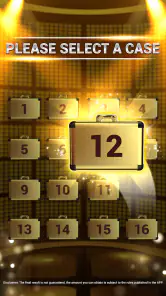




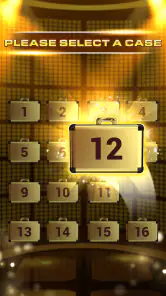

Analysis by Reviewed
I went into Case of Fortune expecting a light trivia game, but its presentation aims for something more theatrical: a television-style challenge where I make selections, face a host-like opponent, and chase surprise outcomes. That framing gives an otherwise familiar question-and-answer format a little more tension. It is not simply about knowing facts; it is also about deciding when to trust my answer, when to take a risk, and how much pressure I enjoy in a short mobile session.
Created by Daffodil Studio, this free trivia game is suitable for Everyone and runs on Android devices using version 8.0 or later. It has built a modest audience, with more than one hundred thousand installs and an average score of 4.4 from roughly eight hundred ratings. Those numbers suggest that the core idea connects with players, although I would not treat them as a guarantee that every question or session will match my own tastes.
How the game-show idea changes ordinary trivia
The most noticeable part of the experience is the way the game wraps trivia in a game-show atmosphere. The mystery-selector concept makes each choice feel more deliberate than tapping through a plain list of questions. I found myself thinking about the possible result before committing, which is useful because it turns even familiar knowledge into a small decision-making exercise.
That structure works best when I want something more active than a standard quiz but less demanding than a long strategy game. A quick session can fit into a coffee break, a commute, or the few minutes before an appointment. I do not need to prepare a topic list or arrange a group of friends. I can simply open the game and see whether my general knowledge is good enough to get past the host.
For example, I could use it during a short evening break after finishing household tasks. Instead of starting a large game that requires remembering a complicated position, I can play a compact round, make a few choices, and stop without feeling that I have abandoned a campaign. That low commitment is one of the strongest reasons I would recommend trying it.
The television-show styling also gives mistakes more emotional weight. In a basic trivia app, a wrong answer can feel like a correction and nothing more. Here, the surrounding challenge makes the same mistake feel like a lost opportunity. I enjoyed that extra pressure in moderation, but players who prefer calm learning tools may find the presentation less comfortable than a straightforward quiz interface.
What the selector mechanic asks from the player
The selector is more than decoration because it changes how I approach each moment. I am not only recalling information; I am also choosing how to proceed when the outcome is uncertain. That creates a useful distinction between confidence and knowledge. Sometimes I know the answer immediately, while at other times I am weighing two possibilities and deciding whether the risk is worth taking.
My practical advice is to avoid treating every choice as a speed test. Taking a brief pause can help separate genuine recall from a tempting but vague association. When I answered too quickly, I was more likely to choose the option that sounded familiar rather than the one I could actually support. The game’s pressure is more enjoyable when I use it to sharpen judgment instead of rushing through the interface.
Another helpful habit is to notice which mistakes come from missing knowledge and which come from poor reading. If I misunderstand a question, studying more facts will not solve the real problem. Slowing down and checking the wording is often more valuable. That makes the game useful as a small exercise in attention, not just a test of stored information.
Progress feels better when I treat it as practice
The appeal of a trivia game can fade if I measure every session only by whether I win. I had a better experience when I treated each round as a chance to identify weak areas and improve my decision-making. The host-versus-player framing naturally creates a win-or-lose feeling, but the more sustainable approach is to regard an unsuccessful attempt as feedback.
This is especially important for casual players who do not already consider themselves trivia experts. A person who knows a little about many subjects may enjoy the variety, while someone who expects complete control over every result may become frustrated. The game is most inviting when I accept that some questions will be outside my knowledge and focus on making careful choices with the information I do have.
I would also avoid playing repeatedly when I am tired or distracted. Trivia depends on attention, and the game-show pressure can make a small lapse feel larger than it really is. Short sessions are a strength here, so there is little reason to force a long run when concentration has dropped. Closing the game after a frustrating round can be the smarter choice than chasing a better result immediately.
Spending, fairness, and what I would check before paying
Case of Fortune is free to download, which makes it easy to test the central experience before deciding whether it belongs on my phone. Optional in-app purchases are listed at prices ranging from $0.99 to $3.99 per item. That is the part of the spending picture I can state clearly. I would still look at the purchase wording in the app before confirming anything, especially if I were handing the device to a child.
The presence of optional purchases does not automatically make a trivia game unfair. The important question is whether paying changes access to knowledge, removes pressure from the challenge, or simply adds convenience. I would judge that from the actual purchase descriptions and from how the free path feels during ordinary play. Since the available purchase facts do not explain the exact function of each item, I would not assume that spending is required, nor would I promise that it has no effect on progression.
That uncertainty matters for competitive fairness. If two players are comparing results, the comparison is most meaningful when both are using the same access conditions. A player who has bought an advantage may not be directly comparable with someone using only the free experience. For friendly play, I would agree in advance that everyone should follow the same spending rule. That simple step prevents arguments about whether a result reflects knowledge or paid assistance.
I also would not interpret the strong average rating as evidence that purchases are harmless or essential. Ratings tell me that many people enjoyed the game overall, but they do not explain how spending affects individual rounds. The sensible approach is to try the free version first, understand the rhythm of play, and only then decide whether any optional item offers enough value for my own habits.
Who gets the fairest experience from it?
This game is a good fit for players who enjoy trivia with a layer of suspense and who are comfortable making choices without knowing every outcome. It can also work for families or friends who want a quick verbal challenge, provided everyone is happy with the same rules and age-appropriate use. The Everyone rating makes it broadly accessible, but that does not mean every player will enjoy the same level of pressure.
I would be more cautious recommending it to someone who wants a serious study tool. The game-show format is designed around entertainment and uncertainty, so it is not the same as a structured learning app with lessons, explanations, or a clear curriculum. It may encourage curiosity, but I would not use it as my only way to prepare for an exam or build systematic knowledge.
Players who dislike chance-like selection mechanics may also prefer a conventional trivia alternative. A standard quiz can feel fairer because it puts the emphasis directly on answering questions rather than choosing among suspenseful possibilities. On the other hand, people who find ordinary quizzes flat may appreciate the added drama here. The better option depends on whether I want pure recall or recall combined with a show-style decision.
Small habits that make sessions more enjoyable
My first tip is to define a stopping point before starting. A single disappointing result can tempt me to continue until I recover, but that often turns a relaxing break into a frustrating loop. Because the game is built for short bursts, I get more from it when I play a few focused rounds and leave while it still feels entertaining.
My second tip is to separate confidence from familiarity. When an answer looks recognizable, I ask myself whether I can explain why it is correct. If I cannot, I slow down and read the alternatives again. This is a simple technique, but the selector format makes it especially useful because the pressure encourages impulsive choices.
My third tip concerns shared play. If I am using the game with another person, we should decide whether the goal is competition, discussion, or simply amusement. Talking through uncertain answers can be more enjoyable than silently comparing scores, while a strict contest benefits from agreeing not to use outside help. The game’s format supports both styles, but the experience changes considerably depending on that choice.
A fourth practical point is to keep purchase decisions separate from emotional momentum. Losing a round can make an optional item appear more attractive than it did at the start. I would wait until I am calm, check what the item actually provides, and decide whether it improves the kind of play I want. A small price can still be poor value if it solves a problem I would rather accept as part of the challenge.
Version, compatibility, and everyday practicality
The current version is 8.9, and the game was released on June 28, 2023. Its minimum Android requirement is 8.0, so anyone using an older device should check compatibility before planning around it. For most people with a reasonably recent Android phone, the more important question will be whether the game-show approach suits their taste rather than whether the premise is difficult to understand.
I like that the concept is easy to explain to someone else. I can describe it as a trivia challenge involving selectors, a host to beat, and surprise outcomes without needing to teach a complicated rulebook. That makes it a practical choice for an informal group session. The trade-off is that a simple premise leaves the quality of the questions and the feel of repeated play doing much of the work. If those elements do not hold my attention, the presentation alone will not carry the experience forever.
The game is also better suited to players who are comfortable with an internet-connected mobile entertainment routine, although I would check the app’s current behavior on my own device rather than assume every situation will be identical. I would install it with enough free space for normal app operation and keep expectations realistic: this is a quick trivia diversion, not a replacement for a broad educational platform or a deep competitive ladder.
What remains important to verify personally
Before spending money, I would inspect the exact wording attached to each purchase and see how the free experience feels without it. The listed item range tells me the possible cost, but not the practical value of every item. That distinction is important because a low-cost purchase can be useful for one player and unnecessary for another.
I would also pay attention to whether the game’s question style matches my interests over several sessions. A first impression can be positive because the selector and host create novelty, yet long-term enjoyment depends on whether I continue to find the challenges satisfying. If I want detailed explanations after every answer, a more educational trivia app may be a better choice. If I want a fast, dramatic test of general knowledge, this one has the stronger personality.
Finally, I would decide whether I am comfortable with uncertainty as part of the fun. The surprise element is central to the identity of the game, but it is not automatically a benefit for everyone. Some players will see it as exciting; others will see it as interference between their knowledge and their result. Neither reaction is wrong, and it is the clearest dividing line between this title and a plain question bank.
My verdict on trust and value
After spending time with Case of Fortune, I see it as a personable trivia game rather than a comprehensive knowledge trainer. Daffodil Studio has chosen a clear angle: make answering feel like taking part in a compact television challenge. That choice gives the game more character than a bare sequence of questions and makes it easy to recommend for short, casual sessions.
Its free entry is a genuine advantage, while the optional purchases deserve a measured approach because their individual roles are not described by the basic price information alone. I would begin without spending, compare the free experience with my expectations, and only consider an item after understanding exactly what it changes. That is the fairest way to judge value and keeps a frustrating loss from driving an impulsive purchase.
I would recommend it to someone who enjoys general trivia, likes a little suspense, and wants a game that can be picked up without a long commitment. I would skip it in favor of a traditional quiz or learning app if my priority were detailed explanations, systematic study, or a result based almost entirely on direct knowledge. The best reason to try it is its mix of trivia and show-style pressure, not the promise of becoming an expert.
Overall, the 4.4 average and broad audience indicate a solid reception, but my recommendation is still conditional: start free, play in short focused sessions, keep spending separate from competition, and decide whether the selector mechanic adds excitement or unwanted uncertainty. If it makes ordinary trivia feel like an event, it earns a place in a casual game rotation. If I only want clean, predictable question practice, another option will serve me better.
Pros
- Quick
- easy-to-learn gameplay suited to short sessions.
- Bright visual style makes the game feel lively and approachable.
- Simple controls work well on both phones and tablets.
- Randomized case outcomes add variety between rounds.
- Lighthearted presentation is suitable for casual players.
Cons
- Luck can strongly influence results
- reducing the sense of control.
- Replay value may drop once the main case patterns become familiar.
- Some players may find the gameplay too repetitive over time.
- Progress can feel slow without frequent play or optional purchases.
- Small-screen devices may make certain interface details harder to read.

- Category
- Trivia
- Version
- 8.9