Bungee Beat
- 15.00
- 4.8
- Installs
- 100.00K
- Price
- Free

Screenshots
Analysis by Reviewed
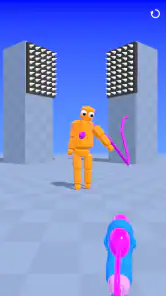
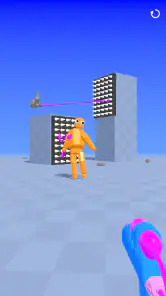
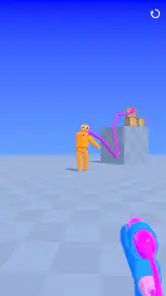
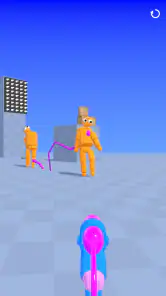
The first thing I like about Bungee Beat is that its central idea is easy to picture but leaves room for playful problem-solving: elastic gum links enemies and objects, turning the space between them into part of the action. Rather than relying on a familiar run-and-attack loop, this action game asks you to think about what a connection might do. That makes it appealing when I want a quick change of pace from more direct combat games, though it also means the fun depends on enjoying experimentation.
What the free download offers
The game is free to download, so there is no upfront purchase to weigh against its appeal. That is a straightforward advantage if you are curious about its unusual physics premise and want to try it without committing money first. I would treat “free” as the confirmed entry cost, not as a promise about every possible in-game expense: I would check the current app page and purchase prompts before spending, rather than assume anything about optional purchases or ads.
FourM Inc. developed the game, which is listed in the action category and has an Everyone age rating. It has a 4.8 average from around 865 ratings, and more than 100,000 installs. Those figures suggest that plenty of players have tried it, but they do not tell me whether its particular style will suit you. The most useful test is whether you enjoy using physical connections as a tool instead of treating every obstacle as something to hit head-on.
The listed release date is August 3, 2026, and the current version is 0.17. It supports devices running Android 8.0 or later. That gives Android users a practical compatibility check before installing; it does not establish anything about performance on a particular phone or tablet. If you are on the edge of the minimum requirement, I would be especially cautious about expecting a perfectly smooth experience without trying it on your device.
Why the elastic-gum idea changes the action
The most interesting part of the premise is that the gum links two things, rather than simply acting as a projectile or a weapon. That changes how I think about a target. An enemy can be one end of a connection, while an object can be the other, so the environment becomes relevant to the action. The appeal is less about memorizing a complicated move set and more about spotting a useful relationship between things on screen.
That simple rule creates a small but meaningful decision point: should I connect enemies to each other, or use an object to influence what happens? The store description establishes that both enemies and objects can be linked, but it does not spell out exact outcomes, so I would approach each encounter as an opportunity to test the physics rather than assume one trick always works. The game’s distinctive value is in turning “what can I connect?” into the central action question.
A practical tip is to look at the whole scene before making a connection. If you immediately focus on the nearest enemy, you may miss an object that makes a more useful pairing. In a physics-based game, a link can be more interesting when it changes the relationship between two moving or positioned things than when it merely attaches to the obvious target. That way of scanning the screen is a better starting habit than repeatedly trying the same connection.
You May Like

Clash of Clans Is Won Between the Battles

Android Auto Makes the Case for Quieter Car Software

MobiOffice: Transforming Mobile Productivity with Seamless Integration

EA SPORTS FC™ Mobile Soccer: Redefining Mobile Sports Gaming

How Microsoft OneDrive Became a Mobile Productivity Giant

How Google Translate Breaks Language Barriers Effortlessly
Another useful approach is to treat failed experiments as information. If a pairing does not produce the result you expected, try changing one end of the link rather than changing everything at once. That makes it easier to learn which parts of a situation matter. It is a small strategy, but it helps keep a physics game from feeling like random trial and error.
A different kind of action-game pacing
Compared with conventional action games built around aiming, combos, or fast movement, Bungee Beat puts more emphasis on interaction between targets and objects. That can make it a refreshing choice for a short break, especially if you are tired of repeating the same attack pattern. It is not automatically a replacement for a deep combat game, though: players looking for precise controls, a long campaign, or a broad collection of abilities may prefer a more traditional action title.
The physics concept also makes the experience harder to judge from a brief description alone. A compact mechanic can be satisfying when each encounter offers a reason to rethink your approach, but it can feel limited if situations begin to resolve in the same way. I would pay attention to whether the game keeps prompting you to try new pairings. If the basic connection stops surprising you, the premise may have less staying power for you than it does for someone who enjoys tinkering.
This is also why I would not recommend it as a reflex-only game. Its action framing may suggest constant speed, but the defining idea rewards at least a moment of observation. If you want a game where the best choice is always to react instantly, a straightforward arcade action game may fit better. If you like pausing to read a situation and then seeing how a physical interaction plays out, this one has a clearer reason to stand apart.
Where the tradeoffs show up
The same open-endedness that makes linking things interesting can create friction. A physics interaction is not always as predictable as a fixed animation, and players who want every action to produce a precise, repeatable result may find that less satisfying. I would go in expecting to explore the mechanic, not to control every consequence with the certainty of a traditional weapon-based game.
There is also a difference between a clever premise and long-term variety. The core idea is easy to understand, but the amount of lasting depth depends on how much the situations encourage new uses for it. I would not judge the game solely by whether the first few moments are amusing; I would ask whether I am still noticing different ways to connect enemies and objects as I continue. That is the best personal test for whether the central mechanic has enough range for you.
Version 0.17 is an early-looking version number, so I would be measured in my expectations about polish and change. That number alone does not prove that the game is unstable or unfinished, and I would not assume problems from it. Still, if you strongly prefer mature, extensively established games, you may want to check the current version and recent player feedback before making it a regular part of your rotation.
For an everyday use case, I can see this working well during a short wait or a quiet break: open it, focus on one encounter, and enjoy trying a less obvious connection instead of committing to a long session. That is a good fit for a free game with a clear central gimmick. It is a weaker fit if you need a substantial story, a guaranteed session length, or a game that can be played without giving any attention to the screen.
Who is most likely to enjoy it
I would recommend giving it a try if you like physics-driven interactions, enjoy testing cause and effect, or want an action game that does not rely only on direct attacks. It may also suit younger players, given its Everyone rating, though that rating is about age suitability rather than a guarantee that every child will enjoy the mechanic. The uncomplicated premise gives families a clear way to understand what the game is about before installing.
It is less likely to satisfy someone who wants a competitive action game, a detailed progression system, or a carefully scripted adventure. Those expectations are not part of the confirmed premise, and the game’s strongest reason to play is its elastic-link idea. If what you want is a large set of modes or a particular multiplayer format, I would choose a game that clearly foregrounds those things instead of hoping this one does.
When deciding whether to keep it, I would use a simple check: after trying a few different pairings, do you find yourself looking for another object or enemy to connect? If yes, the mechanic is doing its job for you. If you mainly wish the game would let you attack directly and move on, then the very feature that makes it distinct may be the reason to uninstall.
My verdict on its value
For a free download, Bungee Beat offers a clear, unusual hook that is easy to understand: connect enemies and objects with elastic gum and see how the physics shapes the action. I like that it gives players a reason to observe the scene instead of simply repeating an attack. The 4.8 average and more than 100,000 installs provide useful context, but my recommendation rests more on whether you enjoy playful experimentation than on popularity figures.
I would try it if the idea sounds fun, especially if you want a small-scale alternative to standard action games and are comfortable learning through experimentation. I would skip it if you want precise, predictable combat or a clearly established long-form experience. Since the download itself is free, trying the game is a low-commitment way to find out whether its physics has the kind of playful depth you enjoy; just make any spending decision separately and check the prompts in the app first.
Making a short session count
One way I would approach a first session is to set a small goal: test a few different kinds of pairings, rather than trying to solve everything as quickly as possible. For example, compare connecting two enemies with connecting an enemy and an object, then notice whether the change comes from the target, the object, or the position of the pair. This keeps experimentation focused and makes it easier to decide whether the physics is genuinely engaging or merely novel at first.
That method also helps when playing in brief bursts. If I open the game while waiting for a friend or sitting through a short pause in the day, I can concentrate on one situation instead of expecting a complete, uninterrupted play session. It is a useful fit for a game whose appeal comes from examining a scene and trying a connection, but not for moments when I cannot give the screen even a little attention.
Questions to settle before installing
If you are wondering whether the game is suitable for a younger player, its Everyone rating is a helpful starting point. I would still think about whether that player enjoys trial-and-error play: the basic idea is easy to explain, but the satisfaction comes from noticing what a connection might do, not simply watching an automatic sequence. For a child who likes experimenting with cause and effect, that distinction may make the game more appealing.
If you are asking whether it replaces a conventional action game, my answer is no—not if what you want is a reliable cycle of aiming, movement, and direct attacks. The gum-link mechanic makes it a different sort of action experience, with observation and physical interactions at the center. I would choose it as a change of pace alongside familiar action games, rather than as a substitute for one with a longer campaign or a more predictable combat system.
And if the version number makes you wonder whether to wait, I would base that decision on your tolerance for trying a game as it currently stands. Version 0.17 is the current version, but that number does not tell you how it will run on your device or whether its content will match your preferred level of depth. If you are curious and comfortable judging a game for yourself, the free download gives you a direct way to test the central idea; if you only want polished, familiar systems, choosing an established alternative is the safer fit.
For me, the best reason to keep playing is not simply that the gum is unusual; it is the small pause before acting, when I scan the scene and wonder which connection might change the situation. If that moment feels satisfying, the premise has room to hold your attention. If it feels like an obstacle between you and straightforward combat, there is no need to force it—the game is at its best for people who enjoy making the interaction itself their strategy.
Bungee Beat Frequently Asked Questions
What is Bungee Beat?
Bungee Beat is a rhythm-based game built around timing your actions to music and navigating a bouncing or swinging character through obstacles. Its appeal is the combination of short, energetic stages and beat-driven gameplay, making it suitable for quick play sessions. The exact game modes, music selection, and features can vary by version, so check the app-store listing to confirm what is currently included.
Is Bungee Beat free to download, and does it include in-app purchases?
The price and monetization details depend on the version and the store where you download Bungee Beat. A game may be free to install while offering optional purchases, advertisements, or paid content, and these details can change over time. Before downloading, review the current Google Play or App Store listing for pricing, in-app purchase information, and any notes about ads.
Can I play Bungee Beat offline?
Whether Bungee Beat works without an internet connection may depend on the version and the features you want to use. Core levels in some rhythm games can be playable offline after installation, while leaderboards, updates, online events, or certain content may require a connection. If offline play matters to you, check the store description and test the game with your device disconnected before relying on it.
What devices are compatible with Bungee Beat?
Compatibility is determined by the app’s current requirements and your device’s operating system, rather than by the game’s title alone. Check the Bungee Beat listing on Google Play for Android requirements or the App Store for iPhone and iPad compatibility before downloading. Also make sure you have enough free storage and an up-to-date operating system, since older devices may not support the latest release.
Is Bungee Beat suitable for children, and what should I check before downloading?
Suitability depends on the game’s content, advertising, data practices, and any available purchase options. Before installing Bungee Beat for a child, review its age rating, privacy information, and store disclosures, and consider enabling parental controls for downloads and purchases. The store listing is the best place to check current details, as ratings and policies can differ by region and may change with updates.
Pros
- Simple tap controls make it easy to pick up.
- Short levels suit quick play sessions.
- Rhythm-based movement gives each run a lively feel.
- Bright visuals make obstacles easy to spot.
- A good fit for players who enjoy timing challenges.
Cons
- Precise timing can take practice.
- Repeated attempts may feel frustrating after a missed beat.
- The gameplay may become repetitive over longer sessions.
- Fast sections can be difficult to follow on small screens.
- Frequent interruptions or ads may affect the flow.

- Category
- Action
- Version
- 0.17