Build a House - Truck Games
- 3.00
- 3.6
- Installs
- 5.00M
- Price
- Free

Screenshots

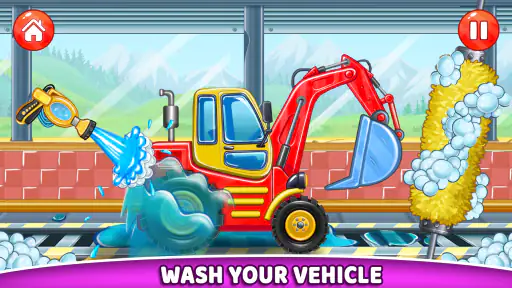

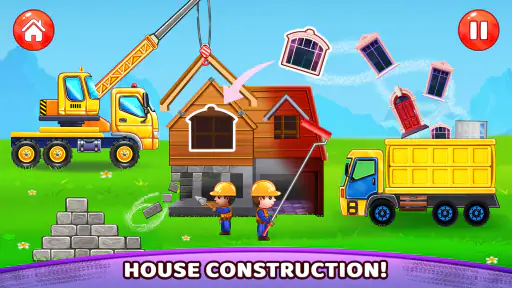
Analysis by Reviewed
I approached Build a House - Truck Games expecting a straightforward construction-themed driving game, and that is exactly where its appeal begins. The central idea is easy to understand: take part in house building while handling the kind of heavy machinery associated with construction work. It is a strategy game from Buggies Bros., but it also borrows the familiar feel of truck-driving games, so the experience sits between planning a worksite and controlling vehicles around it.
That combination makes it accessible from the first session. I did not need a long explanation to understand what I was supposed to be doing, and the house-building theme gives each task a clear purpose. Instead of moving through an abstract series of menus, I felt as though my actions were connected to a visible construction project. For players who enjoy practical goals, machinery, and simple progress, that is a pleasant starting point.
The game is free to download and carries an Everyone age rating, which makes it suitable for a broad audience. It has passed five million installs, so it is not an obscure experiment with no established audience. Its average rating is 3.6, a useful sign that the game has a recognizable appeal but also leaves room for disagreement. My own view is similar: it can be enjoyable when I want a relaxed construction session, although it does not offer the depth or polish I would expect from a more serious strategy title.
How the construction goals shape the first sessions
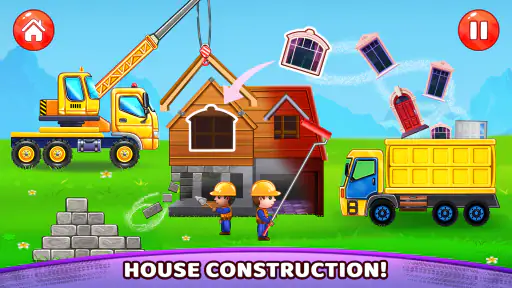
The strongest part of the opening is its clarity. The idea of building a house gives the player an immediate reason to operate construction vehicles and complete worksite tasks. I never felt that the theme was difficult to understand. Even if someone has not played a construction simulator before, the basic loop is approachable because the destination is familiar: contribute to a house rather than manage an invisible score.
That early clarity matters on a phone. Mobile games often lose players by placing too many systems in front of them before the first meaningful action. Here, the construction setting does much of the explaining naturally. A vehicle is not just a vehicle; it is part of the building process. A task is not merely another level; it is another step toward a recognizable result. I found that framing more inviting than the usual strategy games that begin with a large collection of resources, menus, and upgrade currencies.
Still, the simplicity can work both ways. If you want a detailed building simulator with architectural choices, careful budgeting, or a large city-management layer, this is unlikely to satisfy you. The house theme gives the game direction, but it should not be mistaken for a full professional construction-management tool. I would recommend it to someone who likes the idea of construction work in a casual format, not to a player searching for a complex simulation of engineering or urban planning.
One practical way to enjoy the opening is to treat each task as a short worksite routine rather than rushing toward a final house. I found it more satisfying to pay attention to the order of actions and the movement of the machinery. That small change in attitude helps the game feel less like a checklist and more like a compact job. It also makes the early goals easier to follow when the novelty of the construction theme begins to fade.
What progress feels like during ordinary play
The most useful progress signal is the sense that the construction project is moving forward. For me, that is more important than a complicated reward screen. When a game is built around a house, visible completion gives otherwise simple tasks some context. I can connect a completed activity with the broader project, which makes the session feel more coherent than a collection of unrelated driving challenges.
That structure also helps in short everyday sessions. Imagine having a few minutes before leaving home or while waiting for an appointment. This is the kind of game I can open without preparing for a long strategic campaign. I can focus on a construction task, make some progress, and stop without feeling that I have abandoned a complicated plan. The straightforward theme is well suited to that stop-and-start style of mobile play.
However, the progress is most convincing when I am interested in the construction fantasy itself. Players who need a deep sense of ownership may find the signals less rewarding. In a larger strategy game, progress might mean expanding a settlement, balancing several resources, or making decisions that permanently change a map. Here, the satisfaction comes more from completing the current building-related objective and handling the vehicles than from shaping a large, evolving economy.
This is also where expectations about unlocks should remain realistic. The game encourages me through the construction process and the tasks connected to it, but I would not choose it specifically for a highly elaborate progression tree. Its attraction is the immediate worksite activity. If your favorite part of strategy games is comparing many upgrade paths and planning a long-term economy, another title in the category will probably give you more to think about.
A useful personal rule is to judge each session by whether the task itself was enjoyable, rather than by how quickly it produced the next reward. That approach reduces the feeling of grinding. It also reveals whether the game is a good match for you: if operating construction vehicles and advancing a house project feels satisfying on its own, the simple progress structure works; if you need constant new systems, it may feel thin.
Challenge, control, and the shape of the difficulty
The challenge in this kind of game comes from combining movement with a practical objective. Driving a heavy vehicle around a worksite is not quite the same as tapping through a menu, because positioning and timing can affect how smoothly a task is completed. I enjoyed that physical element when I wanted something more active than a traditional city builder. It gives the strategy label a hands-on quality.
At the same time, I would describe the difficulty as approachable rather than demanding. The game is designed around a familiar subject and an Everyone rating, so it is a reasonable choice for players who dislike punishing failure. That accessibility is valuable for younger players and casual users, but experienced simulation fans may find the challenge curve less demanding than they want. The appeal is in learning the worksite rhythm, not in overcoming an aggressive tactical opponent.
My advice is to slow down when a task feels awkward instead of treating every mistake as a sign that the game is unfair. Construction vehicles are more enjoyable when I focus on controlled movement and the next practical step. Rushing can turn a simple objective into unnecessary frustration. This is one of the less obvious ways to get more from the game: approach it like a careful driving exercise, not like an arcade race.
That distinction also explains why the game may suit different people at different times. In the evening, when I want a calm activity, its manageable construction tasks can be a strength. During a commute or a short break, the same tasks may feel slower if I am looking for instant action. The game does not need to be played with the same mood every time, but it rewards patience more than speed.
Compared with a conventional city-building strategy game, this title places more emphasis on direct interaction with vehicles and less on overseeing a broad network of citizens, finances, and services. Compared with a pure truck-driving game, it gives the driving a clearer purpose by tying it to house construction. That middle position is its main identity. It will not replace either type of specialist game, but it can appeal to someone who wants a lighter mixture of both.
Where the pacing works and where it can lose momentum
The pacing is at its best when a task feels like a complete, understandable piece of construction work. I like being able to see what the current objective is meant to accomplish and then carry it out with the appropriate vehicle. That rhythm creates a modest sense of momentum: choose the job, handle the machinery, and move the project ahead.
The risk is repetition. Because the core fantasy is focused on building a house through construction activities, players who need frequent changes in setting or mechanics may eventually feel that the routine is too narrow. I would not describe the game as a sprawling strategy experience. Its pacing depends on whether the basic loop remains pleasant after the first impression has passed.
This is where the free-to-play structure deserves a realistic look. The game does not require an upfront purchase, which makes trying it easy, but in-app purchases are available at prices ranging from $2.99 to $3.99 per item. I would approach those purchases cautiously. The best test is to play long enough to decide whether the construction loop is enjoyable without treating paid items as a shortcut to enjoyment. Spending cannot fix a game that does not match your preferred pace.
That advice is especially relevant for younger players because the Everyone rating does not mean the game should be treated as a completely unmanaged purchase environment. A parent can let a child explore the construction theme while still keeping an eye on optional spending. For an adult player, the same principle applies: try the free experience first and only consider an item if it adds value to the way you already like to play.
Another retention pressure comes from the familiar desire to finish what has been started. A house under construction naturally creates a reason to return, even when the individual activity is simple. I found that more effective than an arbitrary daily reminder would be, because the project itself provides the motivation. Yet that motivation has limits. If the later tasks do not feel meaningfully different to you, the unfinished-building feeling will not be enough to sustain regular play.
Who will enjoy this particular mix
I think the game is a good fit for casual players who enjoy construction equipment, simple objectives, and vehicle-based interaction. It is also suitable for someone who wants a strategy game that does not demand a large amount of planning before the first action. The house-building theme gives children and families an easy subject to understand, while the driving element adds enough activity to keep the experience from feeling like a static builder.
It can also work for fans of truck-driving games who want more context than simply moving from one location to another. The construction setting gives each trip or maneuver a practical role. In my experience, that makes the game more appealing when I am interested in the fantasy of operating machinery rather than competing for the fastest time.
I would skip it if your priority is a deep city economy, realistic professional training, competitive multiplayer, or a highly demanding strategy campaign. I would also be cautious if repetitive task-based play quickly loses your attention. A specialized city builder will be better for large-scale planning, while a dedicated driving simulator may offer more precision and variety behind the wheel. This game is strongest as a casual bridge between those two styles.
The version I reviewed is 7.0.9 and runs on devices using Android 7.1 or later. That broad compatibility makes it accessible to people who are not using the newest phone, although the experience can still depend on the individual device. I would keep enough storage available for installation and close unnecessary background apps if the controls ever feel less responsive. Those are ordinary mobile habits, but they matter more in a game where vehicle handling is part of the enjoyment.
My verdict on the long-term progression
After spending time with the construction-focused loop, I see Build a House - Truck Games as a casual strategy game with a clear identity rather than a complete city-building simulation. Its early goals are easy to grasp, its progress is tied to a familiar house project, and its challenge is gentle enough for a wide audience. The combination of construction work and truck-style driving gives it more personality than a generic tap-based builder.
Its limitations are equally clear. The experience can feel narrow for players who expect many strategic layers, and the pacing may become repetitive if the hands-on construction routine stops being interesting. Optional purchases also mean I would not recommend approaching it with the assumption that every shortcut is necessary. I prefer to judge the free play on its own terms before deciding whether anything paid is worthwhile.
For me, the final question is not whether it offers the deepest progression in the strategy category. It does not. The better question is whether the simple goals, construction atmosphere, and vehicle handling create an enjoyable reason to return. When I want a relaxed worksite-themed game that I can understand quickly and play in short sessions, the answer is yes.
Buggies Bros. has made something approachable and easy to sample, supported by a sizeable audience and a free entry point. I would recommend it to a friend who likes building houses, operating trucks, and completing practical tasks without a steep learning curve. I would point that friend toward a more advanced city builder or simulator if they wanted complex planning or demanding realism. As a light construction game, though, it earns a place on my phone when I want progress I can see and a little machinery to drive.
Pros
- Simple controls make the construction tasks easy for younger players.
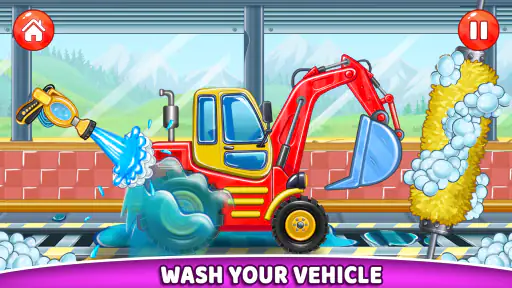
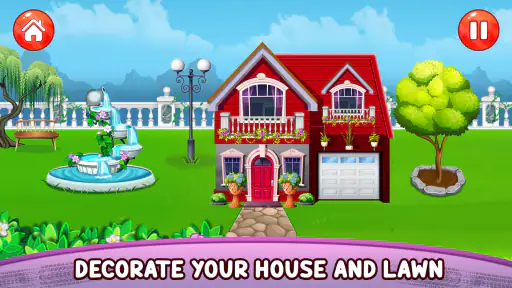
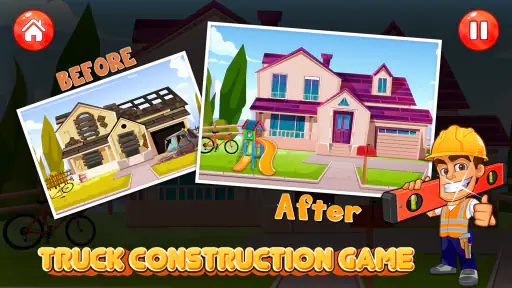
- Colorful 3D visuals create a friendly and approachable building environment.
- Different trucks provide variety beyond basic house-building activities.
- Short levels work well for quick play sessions.
- Offline access makes it suitable for travel or areas without internet.
Cons
- Gameplay can become repetitive after completing several similar projects.
- Some vehicles or building features may require in-app purchases.
- Ads can interrupt play
- especially between activities or levels.
- The game offers limited challenge for older children and adults.
- Performance may vary on older devices with lower memory.

- Category
- Strategy
- Version
- 7.0.9