Bingo Live: Online Bingo Games
- 218.00
- 4.7
- Installs
- 100.00K
- Price
- Free
Screenshots
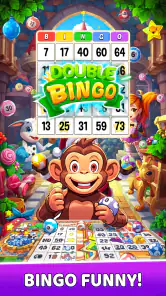
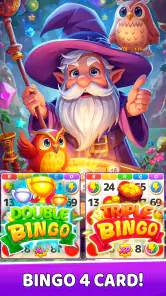
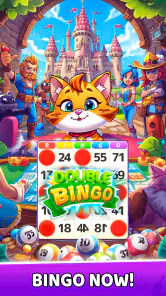
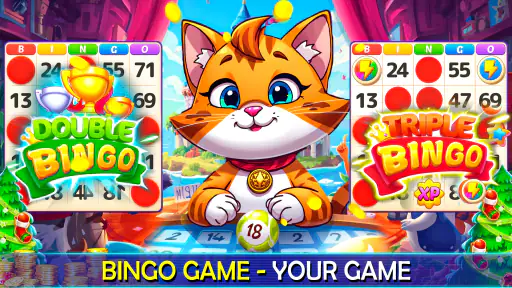
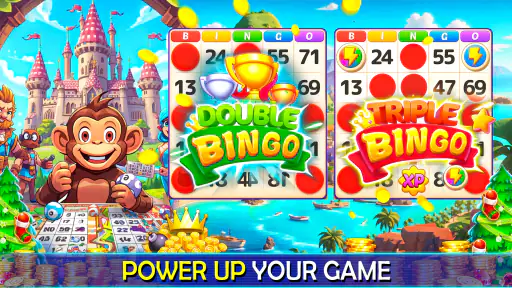

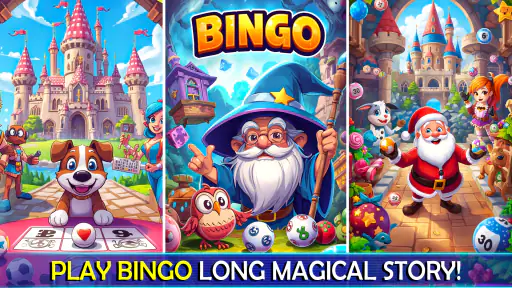

Analysis by Reviewed
I spent time with Bingo Live: Online Bingo Games as a casual trivia-style game, and my first impression was straightforward: it is built for people who want to start a bingo session quickly rather than learn a complicated game system. The appeal is easy to understand. You can play online when you want a more social atmosphere, or use the offline option when you simply need something light to do without depending on a connection.
That simplicity is both its strongest quality and its main limitation. I found it approachable within minutes, but players looking for a deep campaign, elaborate strategy, or a long list of carefully explained objectives may find the experience too basic. GAME TVY has focused on the familiar rhythm of bingo, keeping the barrier to entry low and making the game suitable for an Everyone audience.
How the first sessions feel
The early goal is clear: join a round, follow the numbers, and try to complete the relevant bingo pattern before the opportunity passes. I did not need a lengthy tutorial to understand what I was supposed to do. That matters for a game in this category because the best bingo sessions are usually the ones that get out of the way and let the player concentrate on the card.
For a new player, the first few rounds work as a gentle introduction to the pace. You learn how quickly numbers appear, how much attention is needed, and whether you prefer online play or the quieter offline option. I recommend beginning with short sessions rather than treating the game like a major commitment. The format works especially well in spare moments: while waiting for an appointment, during a commute where offline play is practical, or at home when you want a low-effort distraction.
The game’s trivia classification can make it sound more knowledge-focused than it feels in practice. I would describe the core experience as number recognition and timing rather than a question-and-answer quiz. That distinction is useful when deciding whether it suits you. If you want a traditional bingo activity with a light, game-like presentation, it makes sense. If you are searching for factual quizzes or puzzle solving, this is probably not the right interpretation of “trivia.”
One useful habit is to treat each round as a concentration exercise instead of tapping automatically. I found that looking away for even a short moment can make it harder to keep track of what has appeared. Playing with notifications and other distractions reduced the relaxed feeling, while giving the game a few uninterrupted minutes made the basic loop more enjoyable.
What gives the game a sense of progress
The progress signals here are less elaborate than those in a full role-playing game or a large competitive title. The immediate signal is the changing state of the bingo card: numbers are called, spaces become relevant, and the possibility of completing a line becomes more or less realistic. That gradual movement gives each round a small arc, even when the overall structure remains simple.
I like this kind of progress because it is easy to read. You do not have to study several menus to understand whether a round is going well. The card itself tells you what matters. For casual players, that clarity is more valuable than a large collection of decorative achievements that do not change how the game feels.
At the same time, players who need constant long-term goals should keep their expectations measured. The attraction is the repeatable round, not a story campaign with chapters or a character that grows through a detailed skill tree. The app can encourage another game because a round is easy to begin, but its motivation comes from the immediate chance of completing the card rather than from a substantial narrative payoff.
This makes it a good match for short bursts. I could imagine opening it several times during a day, playing for a few minutes, and closing it without feeling that I had abandoned a complicated mission. That low commitment is a genuine strength for people who dislike games that punish them for stepping away.
Challenge and the shape of the difficulty
Bingo’s challenge is unusual because it is not mainly about mastering a set of increasingly complex controls. The player’s attention and timing matter, but chance remains central to the outcome. That creates a difficulty curve with a different feel from a puzzle game. You can become more comfortable with the interface and improve your focus, yet you cannot simply practice until every round becomes predictable.
In my experience, the challenge comes from staying alert and making sensible choices during the round. A player who taps carelessly or loses track of the card can make the experience feel harder than it needs to be. Conversely, someone who expects skill alone to guarantee success may become frustrated. The right mindset is to enjoy the tension of watching a possible pattern develop while accepting that not every session will end in a satisfying completion.
This is also where the online and offline choices matter. Online play is the natural option when you want the feeling of live activity and interaction around a game. Offline play is more useful when reliability matters more than social energy. I would choose offline sessions for travel or weak connectivity, and online sessions when I wanted the game to feel less solitary. Neither mode changes the basic nature of bingo, but the surrounding mood can make a short session feel different.
One practical tip is to avoid judging the game after a single unlucky round. Because chance has such a visible role, one disappointing result says little about whether the app is enjoyable for you. I would give it several brief sessions and pay attention to whether you like monitoring the card itself. If that central action feels dull, extra rounds are unlikely to solve the problem.
What keeps a player returning
The strongest retention pressure comes from convenience. The game is free to download, starts with a familiar idea, and supports both connected and disconnected play. Those qualities remove several reasons a casual player might normally stop. You do not need to learn a complex ruleset, wait for a long story sequence, or reserve a large block of time.
There is also a natural “one more round” effect. When a card is close to completion, it is tempting to continue because the next session might produce a better result. That feeling is effective in moderation, especially when you are using the app as a small break rather than a main hobby. I found it most pleasant when I decided in advance how long I wanted to play, because the simple loop can make time pass without offering a strong stopping point.
That same structure may feel repetitive to players who need frequent novelty. Traditional bingo has a limited central action, and this app does not turn that action into a broad adventure. If you expect new mechanics, deep strategic layers, or a substantial progression map, the return appeal may fade quickly. I would skip it if repetition is your biggest concern or if you prefer games where every session introduces a new problem to solve.
The free entry point is helpful, but the presence of optional in-app purchases deserves attention. Individual items range from under a dollar to amounts approaching a hundred dollars. I would not treat purchases as necessary for deciding whether the core game suits you, and I would recommend setting a spending limit before playing if you are susceptible to impulse buying. The free format makes trying the game easy, while the broad purchase range means responsible spending habits are important.
For families, the Everyone rating makes the app broadly accessible from an age-classification perspective. Even so, I would still explain to younger players that optional purchases involve real money. That is a practical step for any free game with paid items, particularly when the basic loop encourages repeated sessions.
A realistic everyday use case
Imagine having ten quiet minutes before leaving for work. You do not want to start a long strategy game because you may need to stop suddenly, and you do not have enough time for a full online match in another genre. This is where the app makes sense. You can open it, focus on a bingo card, and leave when the break ends. If the connection is unreliable, the offline option gives the same kind of quick diversion without making the session depend on a stable signal.
Another good situation is a relaxed evening with a friend or family member who does not normally play mobile games. The familiar rules make the entry point less intimidating than a competitive action title. I would still explain that online play is better when you want a livelier atmosphere, while offline play is better for a private, self-contained session.
It is less suitable for a player who wants a strong sense of personal achievement. Someone who enjoys building a character, unlocking a carefully planned sequence of abilities, or improving through demanding skill tests will probably find the reward structure too light. In that case, a dedicated puzzle game or a more substantial strategy game would offer clearer mastery and longer-term goals.
How it compares with usual alternatives
Compared with paper bingo, this game is more convenient and easier to carry. You do not need physical cards, a caller, or a table, and the offline option helps when you want a self-contained activity. Paper play can still feel more social and tactile, particularly in a group, so I would not say the app replaces that experience. It offers a practical mobile version of the basic idea rather than the atmosphere of a community hall.
Compared with online bingo platforms that focus heavily on social rooms or competitive presentation, this title feels more approachable to me. Its appeal is not based on making the player study a large ecosystem before starting. That can be refreshing, although people who specifically want a busy multiplayer community may prefer an alternative designed around conversation and persistent competition.
Compared with trivia apps built around factual questions, the difference is even clearer. This game does not appeal to me when I want to test knowledge. It appeals when I want the anticipation of numbers being called and the satisfaction of watching a card develop. Choosing between the two depends on whether your preferred challenge is recall or attention.
The app also compares favorably with more demanding mobile games when battery, time, and concentration are limited. Its straightforward format is easier to fit into a small break. The trade-off is that it offers less variety, less narrative, and fewer opportunities for deliberate skill growth.
Details worth knowing before installing
GAME TVY released the game on May 12, 2023, and the current version is 15. It supports devices running Android 7.1 or later, which makes it accessible to people using older compatible phones. I appreciate that the technical entry point is not aimed only at recent hardware, especially for a casual game whose main purpose is quick access.
The app has reached over one hundred thousand installs and holds a 4.7 average from around three thousand ratings, with a little over two hundred written reviews. Those figures suggest that the basic concept has connected with a meaningful audience, while the written feedback is still worth reading if you want to understand how other players experience the online and offline sides.
Since it is free, the sensible approach is to test the core loop before considering any optional item. Play in both available modes, notice whether the card-tracking rhythm holds your attention, and decide whether the pacing feels comfortable. If you already know that you dislike chance-based outcomes, no purchase will fix that fundamental mismatch.
I would also recommend checking your own play pattern. If you tend to open casual games repeatedly without noticing the time, use a simple session limit. The game’s short-round design is convenient, but convenience can turn into unnecessary repetition when there is no clear reason to stop.
My verdict on the progression and pacing
The progression works best as a sequence of small moments rather than a large journey. Early goals are immediately understandable, progress is visible directly on the card, and the difficulty comes from attention mixed with chance. The pacing is gentle enough for beginners and flexible enough for short breaks, while the online and offline options let you choose between a more connected mood and a quieter session.
Its retention design is effective for casual use, but not especially deep. The possibility of another successful card can pull me into another round, yet players who need elaborate unlocks or a strong mastery ladder may run out of reasons to continue. That is not a flaw for everyone; it simply defines what the app is trying to be.
For me, this is a worthwhile free bingo game when I want something familiar, accessible, and easy to pause. I would recommend it to casual players, families looking for a simple activity, and anyone who values offline access. I would steer competitive strategists, trivia purists, and players seeking a rich progression system toward a different genre. Try the free experience first, keep purchases optional, and judge it by one question: do you enjoy following the card enough to want another round?
Pros
- Live multiplayer rooms create a lively
- social bingo experience.
- Multiple bingo variants offer more variety than traditional games.
- Quick rounds make it easy to play during short breaks.
- Chat features help players interact while games are in progress.
- Bright visuals and clear number calls are easy to follow.
Cons
- Frequent notifications may feel intrusive without adjusting settings.
- Busy rooms can make the chat distracting during fast rounds.
- Some features or rooms may require in-app purchases.
- A stable internet connection is essential for live gameplay.
- The competitive pace may feel overwhelming for casual players.
- Category
- Trivia
- Version
- 15