BBQSort
- 9.00
- 4.8
- Installs
- 1.00M
- Price
- Free

Screenshots




Analysis by Reviewed
I found BBQSort to be a compact trivia game built around a grill-matching puzzle idea. That combination gives it a more hands-on feel than a standard question-and-answer app: instead of only recalling facts, I also have to notice patterns, make choices in the right order, and keep the board from becoming harder to manage. It is free to play, rated for Everyone, and comes from Liuyan, so it is easy to approach as a casual game for short breaks.
What makes it interesting is the contrast between its friendly barbecue theme and the concentration required by sorting puzzles. The presentation suggests something relaxed, but the best results depend on planning rather than simply tapping quickly. I would recommend it most to players who enjoy small, repeatable challenges and like seeing a clear goal develop from a crowded starting position. It is less suitable for someone looking for a deep trivia database, a story campaign, or a highly competitive multiplayer experience.
How the first goals shape the experience
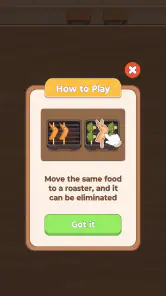
The opening appeal of BBQSort is easy to understand. A grill-themed puzzle gives me an immediate visual objective: arrange matching items and work toward a cleaner, more organized result. That is a stronger starting point than a vague score chase because I can see what I am trying to accomplish while playing. Even without a complicated explanation, the board itself becomes the instruction.
That matters in a casual game. When I open it during a short pause, I do not want to spend several minutes learning menus or understanding a long set of rules. The central sorting idea is approachable enough to make the first attempt feel purposeful. The trivia label also adds a small mental twist, making the game feel connected to recognition and decision-making rather than being only a visual matching exercise.
The early goals work best when I treat each move as part of a sequence. A tempting match may not always be the most useful one if it blocks a later arrangement. My practical advice is to scan the whole grill before committing to the first obvious option. Look for pieces that have fewer possible destinations, then deal with the more flexible items afterward. This simple habit turns the opening from random tapping into a manageable plan.
I also found that the barbecue theme helps the game avoid the cold feeling that some sorting puzzles have. The subject gives the objects a recognizable context, while the puzzle structure supplies the actual challenge. That balance should appeal to families and younger players, especially because the age rating is Everyone. Adults who want a serious trivia test, however, should keep their expectations in check: the main satisfaction comes from solving the arrangement, not from studying difficult facts.
One useful way to play is to set a small personal goal before each session. I might aim to finish one puzzle carefully, improve the number of wasted moves, or solve a board without rushing. These goals make the early stages more meaningful than simply clearing whatever appears next. They also create a gentle learning loop: first I understand the visual language, then I begin to recognize which choices tend to preserve room for future moves.
What counts as progress
BBQSort communicates progress primarily through the act of turning disorder into order. A crowded grill becoming more coherent is a satisfying signal because it gives immediate feedback after every useful decision. I do not need a long explanation to understand whether I am moving forward; the board shows it. For a short-session game, that direct feedback is more valuable than a complicated progression screen.
The current version is 1.1.4, and the game has already attracted more than a million installs. I read that reach as a sign that the basic concept is accessible to a broad audience, not as proof that it will suit every player. Its average rating of 4.8 also suggests that the straightforward puzzle loop is connecting with many users. Still, a high rating cannot replace personal preference: players who dislike sorting mechanics may find the same simplicity repetitive.
The strongest progress signal is not merely completing a board. It is learning to predict consequences. At first, I tend to focus on the most visible match. After a few attempts, I start asking which move will leave the most useful space and which item could become awkward later. That change in thinking is where the game earns its place as a puzzle rather than a simple matching toy.
For better results, I recommend separating observation from action. Take a moment to identify all obvious matches, then choose the one that reduces congestion without consuming a valuable position. If two choices appear equally good, prefer the move that keeps more alternatives available. This is a small but important trade-off: immediate progress feels rewarding, yet preserving flexibility often makes the entire board easier to finish.
The trivia identity may influence how I interpret the objects and combinations, but the practical skill is still visual organization. That distinction helps answer an important question about who should download it. If you want a game that tests factual memory, a dedicated quiz app will probably be a better choice. If you want a light puzzle with a food-themed surface and enough decision-making to keep your attention, BBQSort is more promising.
Where the difficulty begins to matter
The difficulty curve is most convincing when the game stops rewarding the first move that looks correct. A well-designed sorting puzzle becomes harder not because the controls change, but because the consequences of careless choices become more noticeable. I found that the pressure comes from managing limited room and avoiding arrangements that look tidy temporarily but create trouble afterward.
This kind of difficulty is approachable because it grows from the same rule introduced at the beginning. I am not asked to learn an unrelated mechanic every few minutes. Instead, I am encouraged to apply the original idea with more care. That makes the challenge feel fair: when I fail, I can usually identify a decision that caused the problem rather than blaming an unfamiliar control scheme.
The trade-off is that the experience may feel predictable to players who want dramatic variety. A sorting puzzle can become mentally comfortable once its patterns are familiar. For me, the best way to keep it engaging is to change my own focus. One session can be about solving quickly; another can be about reducing mistakes; a third can be about planning several moves ahead. The game’s value depends partly on whether I enjoy refining that process.
I would avoid rushing through a difficult arrangement. Fast tapping can make a board feel more chaotic, especially when several pieces seem interchangeable. Instead, I pause after every meaningful placement and reassess the remaining options. This is not a flashy technique, but it is effective: the game rewards attention more reliably than speed.
Another useful approach is to protect the most constrained pieces. If an item appears to have only one sensible place, I try not to bury or delay it while handling easier matches. Flexible pieces can wait because they offer more opportunities later. This priority system gives the puzzle a clearer structure and helps prevent the common mistake of clearing attractive matches while leaving an impossible-looking corner for last.
That said, I would not describe BBQSort as a demanding strategy game. Its challenge remains suitable for casual play, and that is part of its appeal. The difficulty asks for concentration without requiring a long uninterrupted session. Someone looking for complex resource management, elaborate tactics, or a campaign with major narrative stakes should choose a different genre.
What keeps a short session from feeling empty
The game’s retention strength comes from the desire to try one more arrangement after understanding what went wrong. A failed attempt can feel useful because it reveals a pattern: perhaps I committed a flexible piece too early, ignored a blocked area, or treated every match as equally urgent. That kind of immediate lesson is a good reason to return, especially when I have only a few minutes available.
There is also a natural rhythm to the loop. I inspect the grill, make a sequence of choices, see the board become more organized, and then decide whether I want another challenge. Because the central action is easy to understand, returning does not require much mental preparation. I can pick it up after a break without remembering a story or rebuilding a complicated strategy.
The limitation is that this same convenience can reduce long-term motivation for some players. If my preferred reward is a collection of characters, a narrative mystery, or a large competitive ladder, the sorting loop may not provide enough variety by itself. BBQSort is better viewed as a dependable casual puzzle than as a single game intended to occupy every evening.
I also think the free price changes how I judge the experience. It makes trying the game low-risk, particularly for a family member or friend who wants a simple puzzle without paying first. At the same time, free casual games are easiest to enjoy when I approach them for the play itself rather than expecting the depth of a premium release. The right question is not whether it replaces every other trivia or puzzle game, but whether its particular grill-and-sort loop fits my habits.
In an everyday situation, I could use it while waiting for an appointment or taking a short break between tasks. I would not need to reserve a long block of time or remember a complicated objective. I could play attentively for a few minutes, stop when the session feels complete, and return later. That makes it more practical than a quiz game that demands a sustained run of questions or a strategy title that becomes frustrating when interrupted.
For parents, the Everyone rating makes the game easier to consider for shared casual play. I would still suggest playing alongside a child at first, not because the concept is difficult to explain, but because the useful lesson is planning rather than tapping. A child can learn to look ahead, compare alternatives, and accept that the most obvious move is not always the best one. Those are more valuable habits than simply chasing a quick finish.
How it compares with familiar alternatives
Compared with a traditional trivia app, BBQSort offers less emphasis on answering a broad range of factual questions and more emphasis on arranging visual elements. If I want to test geography, history, science, or general knowledge directly, a conventional quiz is the clearer choice. Those apps usually make progress easy to measure through correct answers, while this game makes progress visible through the state of the grill.
Compared with a standard match-three game, the experience feels more deliberate. Match-three games often encourage rapid combinations and chain reactions, whereas a sorting puzzle asks me to consider what each move leaves behind. BBQSort is therefore a better fit when I want a calmer, more methodical challenge. If I prefer constant motion, special effects, or quick reaction pressure, a traditional match-three title may feel more lively.
It also differs from a large puzzle adventure. Bigger puzzle games may offer stories, characters, exploration, and a stronger sense of a journey. BBQSort appears designed around the immediate satisfaction of individual arrangements. That is a strength for accessibility, but a weakness for players who need a larger reason to keep going beyond the next board.
The best comparison is perhaps with other casual sorting games: the appeal depends on whether the theme and puzzle presentation make repeated organization enjoyable. Here, the grill concept gives the routine a distinctive identity. I would choose it over a visually bland sorter when I want something playful and easy to share with another person. I would choose a more feature-heavy alternative when I want extensive customization, deeper strategic systems, or a clearly structured long-term campaign.
Who will enjoy it, and who should skip it
I think BBQSort is a good match for casual players who like visual order, small goals, and puzzles that reward thinking ahead. It can work well for short breaks, family-friendly play, and anyone who enjoys improving a solution after a first attempt. The free entry point makes experimentation simple, and the age rating keeps its audience broad.
I would be more cautious about recommending it to players who need constant novelty. If you quickly tire of repeating one core action, the grill theme may not be enough to sustain your interest. I would also point trivia fans toward a dedicated quiz game if their main goal is factual recall. The category label may attract them, but the actual pleasure here is solving the arrangement in front of me.
Players who dislike making mistakes may also find the planning element uncomfortable. The board can encourage second-guessing, and a careless choice may make the remaining task feel less manageable. My advice is to treat those moments as part of the puzzle rather than as punishment. Slowing down, identifying the constrained pieces, and preserving flexible options usually produces a better experience than trying to recover through hurried taps.
My verdict on its progression
BBQSort succeeds when its goals remain small but meaningful. The early objective is immediately understandable, progress is visible in the changing arrangement, and the difficulty grows through better planning rather than unnecessary complexity. That gives the game a clean progression loop: I learn the board, make a choice, observe the result, and gradually become more deliberate.
Its retention is strongest for players who enjoy self-improvement. I can return to solve another board, but I can also return with a specific intention: make fewer wasted moves, identify restricted pieces sooner, or avoid choosing a match simply because it is available. Those personal challenges add depth without requiring the game to pretend it is a large adventure.
My main reservation is longevity. The focused design is also the central limitation, because the same sorting rhythm will not satisfy everyone indefinitely. I would not install it expecting a full trivia curriculum or a substantial story-driven progression. I would install it as a friendly, free puzzle for moments when I want something clear, thoughtful, and easy to pause.
Overall, Liuyan has created a pleasant casual game with a recognizable theme and a useful amount of mental friction. The 4.8 average from roughly nine and a half thousand ratings shows that many players respond well to its approach, while its audience of more than a million installs gives it a substantial casual presence. For me, the deciding factor is simple: BBQSort is at its best when I slow down, plan the grill, and enjoy the satisfaction of turning a messy board into an orderly one.
Pros
- Simple sorting gameplay that is easy to learn in minutes.
- Short rounds make it suitable for quick breaks.
- Relaxing barbecue theme gives the game a casual feel.
- Progression provides motivation to keep completing levels.
- Works well for players who prefer low-pressure puzzle games.
Cons
- Gameplay may feel repetitive after extended sessions.
- Some levels can become frustrating without careful planning.
- Ads may interrupt the experience between levels.
- Limited variety may reduce long-term appeal for some players.
- Requires patience when sorting items in crowded layouts.

- Category
- Trivia
- Version
- 1.1.4