Atmosphere Trivia
- 355.00
- 4.7
- Installs
- 100.00K
- Price
- Free

Screenshots
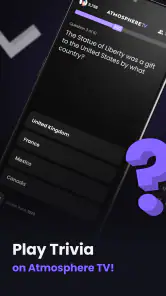




Analysis by Reviewed
I enjoy trivia games most when they make a room feel more involved rather than turning every player into someone silently staring at a screen. Atmosphere Trivia aims at that social sweet spot. It is a free trivia game from Rarefied Atmosphere, Inc., designed around playing with friends and rivals in the same general spirit as a relaxed game night. After spending time with it, I found that its biggest strength is not simply answering questions; it is giving a group an easy reason to compete, tease one another, and keep a conversation moving.
The game has a 4.7 average from around 2.7 thousand ratings, with more than 100 thousand installs. Those figures fit my impression of the experience: it is approachable enough for casual players, but it still has enough competitive energy to encourage repeat sessions. It is rated Everyone, costs nothing to start, and runs on Android 8.0 or later. The current release is version 3.0.1, build 1777, while the game first appeared on October 9, 2023.
How a normal game-night session works
My preferred way to use Atmosphere Trivia is as a short group activity rather than a solitary quiz I play for hours. I open it when everyone is already together, explain the basic idea, and let the questions create the rhythm. That matters because trivia can become awkward when the setup takes longer than the first round. Here, the appeal is immediate: players can get into the competition quickly, and even wrong answers usually give the group something to discuss.
A realistic example is a quiet evening with friends after dinner. Instead of choosing a film that nobody agrees on, we can use the game as a twenty-minute challenge. One person may know an unexpected fact, another may make a confident mistake, and the rest of the table gets involved even when the question is not in their strongest subject. That makes it useful for mixed groups where some people love quizzes and others normally avoid them.
I also like that the game can act as a bridge between conversations. It does not demand the same concentration as a board game with a long rulebook, so people can pause to react, laugh, or debate an answer. The trade-off is that this relaxed structure may feel too light for someone looking for a deep solo trivia platform with detailed learning tools. Its purpose is social momentum, not academic study.
The first habit I recommend is to treat each session as a compact event. Decide in advance whether you want a quick warm-up or a more competitive contest, then stop while the room is still enjoying it. Trivia loses some of its charm when players continue only because nobody wants to be the first to quit. The game works best when it leaves people wanting another round.
Another useful habit is to avoid turning every answer into an argument. A group can easily spend more time disputing a question than playing. I find it better to accept the result, note the surprising fact, and move on unless the wording genuinely creates confusion. This keeps the pace lively and makes the experience friendlier for people who are new to trivia games.
Who gets the most from the format
This is a strong fit for friends who want a low-pressure competition, families looking for an accessible group activity, and hosts who need something that can fill a gap in an evening. The Everyone rating also makes it easier to consider for a broad household audience, although adults should still use their own judgment about whether a particular group will enjoy the questions and competitive tone.
I would be more cautious about recommending it to someone who wants a carefully structured personal study tool. A dedicated educational quiz app may offer explanations, progress tracking, or subject-specific practice in greater depth. Atmosphere Trivia is better when the social exchange matters as much as the score.
Settings and preparation that are actually worth checking
Before inviting a large group, I would spend a few minutes checking the available in-game options and the way a session is presented on the device. Even small choices about sound, notifications, and how players share attention can affect whether the game feels polished or distracting. I do not recommend assuming that the default setup is ideal for every room.
For a living-room session, I prefer a volume level that lets everyone hear the game without overpowering conversation. If the phone is being passed around, keeping it easy to see and handle is more important than placing it in the middle of snacks or drinks. This sounds obvious, but a trivia game becomes frustrating quickly when players are constantly asking for a question to be repeated or worrying about the device.
It is also worth deciding who will manage the device. In a small group, passing it from person to person feels natural. With more players, a single host can keep the flow moving and prevent accidental taps or delays. That host should read the question clearly, give everyone enough time, and avoid reacting too strongly before the others have answered.
The most useful “setting” is often a group agreement about pace. Decide whether discussion is allowed before answers are locked in, whether players can explain their reasoning, and whether the winner is treated seriously or humorously. The app supplies the contest, but the people around it determine whether the mood becomes welcoming or tense.
For younger or mixed-age groups, I would preview the first few questions and watch how the room responds rather than assuming that an Everyone label guarantees universal appeal. Accessibility is not only about age suitability. It is also about reading speed, hearing the prompts, and giving less confident players enough time to participate without being rushed by the most competitive person at the table.
Faster patterns for experienced players
After a few sessions, I noticed that the strongest players are not always the people with the largest store of facts. They are often the ones who manage uncertainty well. Instead of blurting out the first answer that comes to mind, they identify what they actually know, separate that from a vague association, and make a decision before the group’s confidence becomes contagious.
A practical routine is to form an answer privately, then listen to the discussion without abandoning it immediately. Group talk can reveal useful clues, but it can also create false confidence. If one player speaks loudly, others may follow even when the original answer was stronger. Keeping that small mental distance is one of the easiest ways to improve without changing anything in the app.
I also recommend using the game as a rotating host activity. Each session, a different person can control the device, keep the pace, and encourage quieter players to answer first occasionally. This prevents one experienced player from becoming the permanent authority and gives everyone a reason to stay engaged. It is a simple workflow, but it produces a noticeably better social balance.
Another effective pattern is to pair the game with a clear stopping point. For example, play until one person reaches the agreed finish or complete a short evening challenge, then discuss the most surprising questions. This creates a beginning, middle, and end without requiring a complicated tournament structure. It also helps people who enjoy trivia but do not want an endless sequence of rounds.
When playing with friends who have very different knowledge areas, I try not to judge performance too quickly. A player who struggles with one subject may dominate the next. The best sessions allow that shift to happen naturally. If the same person wins every time, changing the group arrangement or giving the host role to someone else can restore suspense without pretending that everyone has equal experience.
Where the experience reaches its limits
The social focus is also the game’s main limitation. If you are alone, the atmosphere is harder to recreate. You may still enjoy answering questions, but the playful tension comes from seeing other people hesitate, celebrate, or defend an answer. Someone seeking a substantial solo progression system may find the experience less satisfying than a quiz app built around personal goals.
The format can also expose differences in confidence. A knowledgeable but quiet player may be overshadowed by someone who answers quickly. That is not necessarily a flaw in the software, but it is a real consideration for hosts. I get better results when the group treats mistakes as part of the entertainment rather than using the score to rank intelligence.
Another limitation is that a casual trivia game cannot please every taste at once. Some players prefer specialist questions, others want broad general knowledge, and some mainly enjoy the social jokes. If your group has a narrow interest or expects detailed explanations after every answer, a more focused alternative may be the better choice. I see this title as a flexible night-in activity, not a replacement for every kind of quiz experience.
Competition can become a problem when players focus on winning at the expense of the room. I would skip it for gatherings where people are already tired, irritated, or uncomfortable with public mistakes. A cooperative activity or a quiet puzzle may be wiser in those situations. The game is at its best when rivalry adds energy rather than pressure.
Device logistics matter too. A single-screen setup is convenient, but it means the host and players need to share attention. In a noisy room, people may miss a prompt or talk over one another. I would choose a calmer space, keep the device visible, and avoid starting a session while everyone is still moving around. These small adjustments make more difference than trying to force the game into a party that is not ready for it.
How it compares with familiar trivia alternatives
Compared with a traditional board-game quiz, Atmosphere Trivia removes the need to prepare cards, track a large rule set, or find someone willing to read every question. That makes it faster to start and easier to carry from one room to another. The board-game alternative can feel richer for a planned evening, especially when players enjoy physical pieces and a longer campaign, but it also asks more from the host.
Compared with a solo quiz app, this game places less emphasis on private progress and more on the people sitting nearby. A solo-focused option may be better for commuting, revision, or filling a few spare minutes without coordinating anyone else. I would choose Atmosphere Trivia when the goal is conversation and friendly rivalry, not when I want a personal record to chase every day.
Compared with a web search followed by improvised questions, it offers a more coherent experience. Searching for trivia can provide endless material, but it also creates pauses, inconsistent difficulty, and arguments about how questions are phrased. The app is preferable when I want the group to concentrate on playing rather than on building the quiz itself.
Its free price makes experimentation easy, especially for a host who is unsure whether friends will enjoy a trivia session. I still would not install it expecting a full replacement for a specialist quiz collection. The value is in the convenience and social spark: open it, gather the room, and let the questions provide structure.
My practical routine for getting better sessions
I start by choosing the audience rather than choosing the game first. With close friends, I allow more teasing and discussion. With relatives or a mixed group, I explain that nobody needs to know every answer and that guessing is part of the fun. This small introduction prevents the strongest player from setting an intimidating tone.
Next, I assign one person to manage the device and one person to watch the group. The second role sounds unnecessary, but it helps notice when someone has not had a chance to answer or when the room is becoming too loud. In a very small group, one person can do both. In a larger gathering, sharing those responsibilities keeps the session smoother.
During play, I avoid looking up disputed facts immediately. I make a note of the question and return to it after the round, if the group still cares. Stopping after every disagreement breaks the rhythm and can make the game feel like a research task. This is one of the clearest differences between playing for entertainment and using trivia as formal learning.
Finally, I end with a short conversation about the questions people remembered. That turns isolated answers into a shared memory and gives the game a stronger finish. It also reveals whether the group wants another session, a different type of quiz, or something completely unrelated next time.
For repeat players, I suggest keeping the social roles flexible rather than trying to create a rigid ranking. Rotate the host, invite a new person occasionally, and let beginners play alongside patient regulars. The game remains more enjoyable when experience improves the atmosphere instead of making the same few players impossible to challenge.
My verdict after using it repeatedly
Atmosphere Trivia is a convincing choice when you want trivia to support a good evening rather than dominate it. Rarefied Atmosphere, Inc. has focused the experience on accessible competition, and that focus gives it a clear identity. The free entry, broad age rating, and modest Android requirement make it easy to try, while the strong average rating and growing install base suggest that many players find the same social appeal.
I would recommend it to friends who enjoy quick challenges, families looking for a simple shared activity, and hosts who want a backup plan that requires little preparation. I would not make it my first choice for serious solo practice, highly specialized knowledge, or groups that dislike being put on the spot. In those cases, a dedicated learning quiz or a more structured tabletop game will probably serve you better.
My final advice is to use it deliberately: check the room, agree on the tone, keep one person responsible for the device, and stop before the competition becomes tiring. Used that way, the game does more than ask questions. It gives a gathering a repeatable rhythm, creates small moments of surprise, and makes an ordinary night feel more shared. That is a modest goal, but in my experience it is exactly where this trivia game succeeds.
Pros
- Quick trivia rounds are ideal for short breaks or casual play.
- Questions cover varied topics
- keeping sessions from feeling repetitive.
- Simple controls make the game approachable for most players.
- Useful for testing general knowledge without a steep learning curve.
- Lightweight gameplay is suitable for older or less powerful devices.
Cons
- Some questions may feel too easy for experienced trivia players.
- Replay value can depend heavily on the size of the question database.
- Incorrect answers may offer limited explanation or learning context.
- Progression may feel shallow if you prefer deeper challenges or goals.
- Ads or optional purchases may interrupt the otherwise quick-paced experience.

- Category
- Trivia
- Version
- 3.0.1 (1777)