Ark of War: Aim for the cosmos
- 19.59K
- 4.1
- Installs
- 5.00M
- Price
- Free

Screenshots
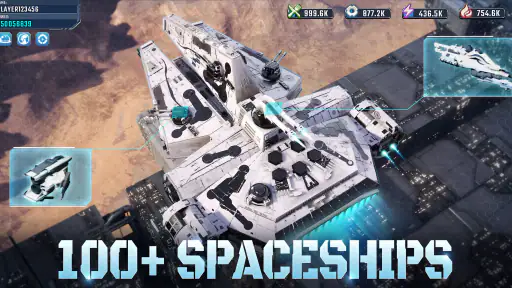




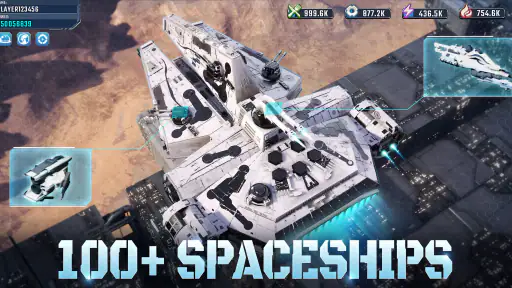


Analysis by Reviewed
Ark of War is the kind of strategy game that can quietly become a shared conversation at home. I can imagine one person checking the ship before work, another asking how the next upgrade is going, and someone else taking a quick look during a spare minute. That rhythm suits its space setting, where progress feels more like managing a moving base than finishing a short match.
Developed by SevenPirates, this free-to-play strategy game puts the focus on an ark traveling through space and on the decisions needed to keep an expanding operation moving forward. I found the appeal less about spectacular action and more about choosing what deserves attention first: development, preparation, resources, and the timing of larger decisions. It is available for Android devices running version 6.0 or later, and the current version is 4.43.0.
The game has built a sizeable audience, with over five million installs and an average rating of 4.1 from around two hundred twenty thousand ratings. Those figures suggest a well-established experience rather than a short-lived experiment, although popularity does not remove the need to decide whether its pace matches your habits.
How Ark of War fits into a shared household
A game that works around everyday interruptions
My first impression is that Ark of War is better suited to short check-ins than to a single long sitting. That matters when a device is used by more than one person or when gaming has to fit around meals, study, work, or travel. You can approach it as a game of ongoing decisions rather than something that demands an uninterrupted evening.
A realistic household scenario would be a parent checking the ark while waiting for a bus, then explaining to a teenager why a particular upgrade was chosen later that day. The useful part of that exchange is not simply showing progress. It creates a natural distinction between “what is happening now” and “what should we prepare for next?” That makes the game easier to discuss than a fast competitive title where one player’s match is over before anyone else understands it.
Still, shared interest should not be confused with shared access. If several people use the same phone or tablet, I would treat the game as belonging to one clearly identified player at a time. Strategy progress can be sensitive to accidental taps, and a curious second user may change a decision without realizing its consequences. A simple verbal rule—ask before opening or spending anything—does more for peace at home than trying to manage the game casually.
That boundary is especially important because the game is free to download but includes optional purchases ranging from $0.99 to $99.99 per item. I would not hand the device to a child or guest without making the purchase expectations clear. The safest household habit is to separate “looking at the ship” from “making a purchase” and to require the account owner’s permission for the latter.
Why account boundaries matter more than they first appear
Ark of War rewards continuity, so the person making the decisions should remain consistent. If one household member starts changing priorities while another is trying to follow a long-term plan, the result can feel confusing even when every individual action seems reasonable. I recommend giving each player a separate space or device when possible, rather than treating one developing ark as a communal sandbox.
On a shared device, I would also avoid switching between players in the middle of an important decision. Finish reviewing the current situation, leave the game in a neutral place, and tell the next person what has already been decided. That small routine prevents the common problem of opening a strategy game with no idea whether an upgrade was intentional or accidental.
This is not a game I would choose for a household that wants a completely consequence-free shared experience. A puzzle app can usually be passed around with little explanation. Here, the value comes from maintaining a line of thought. The more people involved, the more useful a clear boundary becomes.
Learning the game without rushing into every option
When I begin a strategy game with several visible systems, my instinct is to touch everything. Ark of War is more enjoyable when I resist that impulse. I would first learn what the ark currently needs, identify which actions support immediate progress, and only then explore less familiar areas. This approach reduces the feeling that the interface is asking for attention from every direction.
A practical tip is to treat the early stage as an observation period. Notice which decisions produce a clear improvement and which ones mainly open another layer of management. The difference matters: an action that strengthens the ark’s immediate position may be more valuable than one that merely creates another future task.
I also found that writing down a short priority list can help when several people discuss the same game. “Improve the current weakness first, save the next decision for later” is more useful than a vague instruction to make the ark stronger. This is one of the less obvious advantages of playing a strategy title in a household: explaining a choice forces you to understand it.
Coordination without turning play into homework
Coordination works best when it stays lightweight. I would not create a complicated schedule for a mobile game, but I would agree on who makes decisions and when another person can observe. A quick handover such as “the current plan is to strengthen the ship before trying something riskier” gives the next player context without requiring a long briefing.
The game’s space setting also helps conversation because it gives ordinary planning a clear theme. Instead of discussing an abstract collection of menus, players can talk about the ark, its direction, and whether the next move supports survival or expansion. That makes it approachable for someone who does not usually play strategy games, although the underlying decisions still require patience.
One useful coordination method is to separate scouting from commitment. Let one person inspect possibilities and explain them, while the account owner makes the final selection. This prevents a visitor from accidentally becoming responsible for a decision they did not fully understand. It also gives younger players a way to participate without handing over control of the entire account.
Another good habit is to stop before a major choice if the household is distracted. A strategy decision made while someone is cooking, rushing out, or answering messages is more likely to be regretted. The game is forgiving as a casual activity, but its management style rewards attention at the moments when priorities change.
Where the game is stronger than familiar alternatives
Compared with a traditional turn-based strategy game, Ark of War feels more continuous and less dependent on sitting down for a complete session. That makes it easier to fit into a busy day. Compared with a fast multiplayer game, it places less pressure on reflexes and more on preparation. I would recommend it to someone who enjoys checking a developing plan rather than chasing immediate wins.
It is also different from a simple idle game. The space theme and strategic framing give the player more to think about than merely collecting a reward and tapping an upgrade. The trade-off is that the experience can feel less relaxing when several choices compete for attention. If you want a game that plays itself almost entirely, this is probably too involved. If you want a deep desktop-style strategy simulation with extensive direct control, it may feel lighter than you expect.
The best comparison is perhaps a compact management game designed for mobile interruptions. You are not just waiting for progress, but you are also not controlling every moment of a battle or campaign. That middle ground is the main reason I would suggest trying it, and also the main reason I would warn action-focused players away from it.
Age context and trust on a family device
The content rating is Everyone 10+, which places it in a broad family-friendly age context while recognizing that it is not aimed at very young children. In my view, the more important question is not whether a child can understand the space theme, but whether they can handle ongoing decisions and the presence of optional purchases responsibly.
I would be comfortable introducing the game to an older child or young teenager alongside a short explanation of account ownership and spending. I would not assume that a child understands the difference between an in-game button and a real-money transaction merely because the game looks colorful or approachable. The household should decide that boundary before play begins.
Trust also applies to progress. If a child is allowed to manage the ark, adults should agree on what kinds of changes are acceptable. For example, one person might be happy for the child to handle routine development but want to approve purchases or major strategic shifts. That arrangement keeps participation enjoyable without pretending that every action has equal importance.
There is no need to make the game a formal family project. Some players will prefer complete independence, and that is reasonable. The useful point is to avoid accidental responsibility: do not let a guest make decisions on an account they do not understand, and do not treat a shared device as proof that the underlying progress should be shared.
The friction I noticed during longer use
The ongoing structure can become demanding for players who prefer a clear ending. Ark of War is built around continuation, so the satisfaction comes from improving a developing operation rather than completing a compact story in one sitting. If you enjoy finishing a level and putting the phone away, the game may feel like another task waiting for attention.
Free-to-play design also deserves a realistic warning. The presence of optional purchases does not automatically make the game unsuitable, but it changes how I would recommend it for a family device. A free entry point is useful for testing the style, yet the purchase range means that household rules should be explicit rather than assumed.
Another limitation is the potential difference between watching and playing. A family member may enjoy seeing the ark develop but lose interest when the game asks for patient planning. Likewise, someone who likes the idea of space strategy may discover that the appeal is management rather than cinematic exploration. I would try it before promising that it will suit everyone in the home.
Players should also be prepared for a learning curve that comes from understanding priorities, not necessarily from mastering controls. The challenge is deciding what deserves attention and remembering why. That can be satisfying, but it is not ideal for someone who wants immediate clarity and constant rewards.
Who should install it, and who should skip it
I would recommend Ark of War to players who like space themes, gradual development, and strategy that can be revisited throughout the day. It is particularly suitable for someone who enjoys making a plan, checking its results, and adjusting rather than repeating the same short match. The free price makes experimentation easy, provided the household treats purchases carefully.
I would also suggest it to families or friends who want a discussion-friendly game rather than a shared action challenge. One person can explain a decision while another watches, and the game’s slower rhythm leaves room for conversation. That does not make it a cooperative family game in the strict sense; it simply makes its decisions easier to observe and discuss than those in a rapid competitive title.
I would skip it if you dislike persistent management, dislike games that ask you to return repeatedly, or want a fully self-contained campaign. I would also choose something else for very young children, for a household that cannot maintain purchase boundaries, or for players who mainly want fast combat and immediate control.
Practical habits for getting more from the ark
Start each session by identifying the most urgent weakness instead of tapping the most noticeable button. This keeps the game’s many possible actions from dictating your priorities.
Before accepting a major change, explain what it is meant to improve. If you cannot describe the benefit in simple terms, wait and inspect the situation again later.
On a shared device, announce when you are finished and leave a short note for the next player. A one-line handover can prevent duplicated work and accidental changes.
Keep optional spending separate from ordinary play. Decide in advance whether purchases are allowed, who approves them, and whether the account belongs to one person or the household.
Use the game’s slower pace as a reason to pause, not as pressure to check constantly. If the ark starts feeling like an obligation, reducing your play routine is better than chasing every available action.
These habits may sound simple, but they address the main trade-off I experienced: the game gives you room to plan, yet that room can become cluttered if every option is treated as urgent. A calm priority system makes the space setting more enjoyable and keeps shared use from becoming confusing.
My household verdict
After spending time with Ark of War, I see it as a thoughtful mobile strategy game with a strong fit for players who enjoy ongoing decisions more than quick matches. Its ark-in-space premise gives the management loop a memorable identity, while its free entry point makes it easy to test. The established audience and the 4.1 average rating also suggest that it has lasting appeal for many mobile players.
My recommendation comes with conditions. I would install it on a shared household device only after agreeing on account boundaries, purchase rules, and who gets to make important decisions. For an older child, teenager, or adult who enjoys planning, it can become a pleasant routine and a good conversation starter. For a young child or an impatient action player, it is much less convincing.
SevenPirates has made a game that sits between idle progression and more demanding strategy. That middle position is its biggest strength: I can check it briefly, think about a choice, and return later without needing a full gaming session. It is also its main weakness, because players who want a definite finish may feel that the game is always asking for another decision.
Overall, I would recommend giving it a careful trial rather than downloading it with the expectation of instant excitement. Set the household rules first, learn the ark’s priorities gradually, and judge the game by whether its steady planning feels rewarding. If that rhythm suits you, Ark of War can turn a few spare minutes into a surprisingly engaging space-management habit.
Pros
- Large-scale alliances make teamwork and diplomacy meaningful.
- Many ship and commander upgrades offer long-term progression.
- Regular events provide extra objectives beyond the main campaign.
- The space setting gives the strategy game a distinctive atmosphere.
- Cross-platform availability makes it easy to continue on different devices.
Cons
- Progress can feel slow without frequent play or resource spending.
- The interface may seem overwhelming for new strategy players.
- Alliance activity strongly affects how much content you can enjoy.
- Combat outcomes can depend heavily on power levels and upgrades.
- Notifications and timers may become distracting during longer sessions.

- Category
- Strategy
- Version
- 4.43.0