5th Grader Quiz: Are You Smart
- 106.00
- 4.5
- Installs
- 100.00K
- Price
- Free
Screenshots
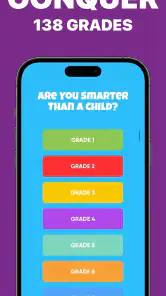
Analysis by Reviewed
I like trivia games that make general knowledge feel approachable rather than intimidating, and 5th Grader Quiz: Are You Smart is built around exactly that idea. It presents itself as a simple test of school-level knowledge, but the real appeal is the way it turns familiar subjects into quick moments of confidence, doubt, and friendly competition. I found it easiest to enjoy when I treated it as a short mental break instead of a serious examination.
This is a free trivia game from KDR Games, aimed at Everyone and available for devices running Android 7.0 or later. It has reached over 100 thousand installs and holds a 4.5 average from around 1.4 thousand ratings, which gives a useful sense of its audience: this is not a niche quiz for specialists, but a casual general-knowledge game designed to be picked up quickly.
Why the fifth-grade knowledge angle works
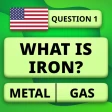
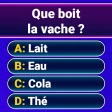
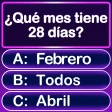
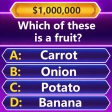
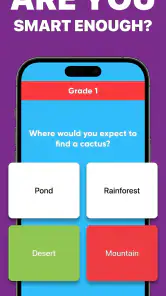
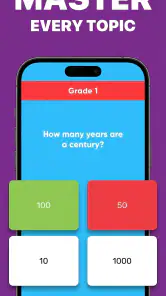
The central capability is its focus on questions that are meant to feel accessible. That matters because many trivia apps lean heavily toward obscure facts, specialist subjects, or questions designed mainly to catch the player out. Here, the school-knowledge framing gives me a clearer expectation before I begin. I am not opening it to prove that I know everything; I am opening it to see how well I remember the basics.
That distinction changes the mood of each question. A difficult specialist quiz can make a wrong answer feel inevitable, while this format often makes a miss feel more personal: I probably encountered the idea before, but I forgot it, rushed, or misunderstood the wording. The result is a game that can be both reassuring and surprisingly humbling without needing complicated mechanics.
The strongest feature is the low barrier to entry. I do not need to learn a ruleset, build a character, manage a collection, or prepare a long session. The concept is immediately understandable: answer general-knowledge questions and judge whether my everyday knowledge is as solid as I think it is. That makes it suitable for a few spare minutes, especially when I want something more active than scrolling but less demanding than a full game.
The title also creates a useful social hook. Asking whether someone is smarter than a fifth grader invites comparison without requiring a formal multiplayer system. I can imagine using it with family members, passing the phone around, or turning individual questions into conversation. A child may recognize a topic that an adult has forgotten, while an adult may have an advantage in areas that depend on broader life experience. The framing encourages that kind of playful debate.
How the quiz feels during ordinary play
In practice, the experience depends less on visual spectacle and more on the rhythm of reading, deciding, and moving on. That is a good match for a trivia title with this premise. I can start it while waiting for a bus, take a short break between tasks, or use it as a light warm-up before a longer evening of games.
My preferred way to play is to answer before overthinking. General-knowledge questions often trigger a first instinct, followed by several competing possibilities. If I spend too long arguing with myself, I can lose the simple answer that came to mind immediately. The game works best when I accept that uncertainty is part of the entertainment rather than treating every question like a high-stakes test.
A useful personal workflow is to notice the questions I miss for different reasons. Some errors come from not knowing the fact at all. Others happen because I read too quickly, confused two similar ideas, or recognized the answer only after seeing the choices. Those categories matter. The first points to a genuine knowledge gap, while the second suggests that slowing down would improve my result more than memorizing facts.
This is one of the less obvious strengths of a simple quiz format: it can become a small exercise in attention. I do not just ask whether I was right. I ask why I chose what I chose. That makes the game more worthwhile than repeatedly chasing a score without learning anything from mistakes.
At the same time, players should not expect a deep study tool. The experience is built for answering questions, not for delivering a structured lesson. If I want detailed explanations, a curriculum, flashcards, or a way to track a subject systematically, I would choose an educational app designed for that purpose. This game can spark curiosity, but it should not be mistaken for a complete learning system.
A realistic everyday use case
Imagine having ten minutes before an appointment. A large quiz game may feel too involved to start, while a word puzzle may require a different kind of concentration. This title fits that gap well. I can play a few questions, stop when my name is called, and return later without needing to remember a complicated story or strategy.
It also works during a relaxed family evening. Instead of asking everyone to sit through a formal board game, one person can read a question aloud and let others answer verbally. The fifth-grade theme keeps the conversation friendly because nobody needs to be a specialist. The fun comes from the surprise of discovering who remembers a fact and who confidently chooses the wrong answer.
For parents, the age rating of Everyone makes the concept easier to consider in a shared setting. I would still play alongside younger children rather than assuming that every question will match their school experience, but the general tone is more suitable for broad audiences than an adult-only trivia game. For adults, it can be a gentle way to revisit basic knowledge without the pressure attached to competitive quiz platforms.
Another practical use is as a conversation starter. If a question touches on history, science, geography, or everyday facts, I can pause after answering and discuss it with someone nearby. That turns a short round into a small learning moment. The game does not need to provide a long explanation for every topic to be useful in this role; sometimes the question itself is enough to send me looking for more information afterward.
Where it sits among trivia alternatives
Compared with a rapid-fire multiplayer quiz, this is a calmer choice. Competitive platforms are often better when I want live pressure, rankings, opponents, and a sense of urgency. They can also be more exciting for groups that enjoy winning against other players. The tradeoff is that their pace may leave less room to think, and the competitive layer can overshadow the knowledge itself.
Compared with a dedicated educational quiz, this game is more casual. A learning-focused alternative may organize questions by subject, explain every answer, repeat weak areas, or build a longer study plan. That would be the better option if my goal were exam preparation or measurable progress in one topic. The advantage here is simplicity: I can play without turning the session into homework.
It also differs from trivia apps built around huge databases of obscure facts. Those games reward breadth and sometimes luck, while the fifth-grade concept makes the challenge feel more familiar. I prefer this approach when I want questions that connect to common knowledge rather than a contest to see who has memorized the strangest detail.
That simplicity can be a limitation for experienced trivia fans. If I already spend a lot of time with difficult quiz content, this may feel too gentle or repetitive. The game is not the right replacement for a serious quiz league, a specialized subject app, or a competitive platform with live opponents. Its value comes from accessibility, not from pushing expert players to their limits.
The practical tradeoffs before installing
The game is free to download, which makes trying it straightforward. There are in-app purchases priced from $1.99 to $2.99 per item. That does not automatically make the free experience poor, but it is worth remembering before treating the game as a completely cost-free pastime. I would begin without buying anything and decide only after seeing whether the basic question flow gives me enough enjoyment.
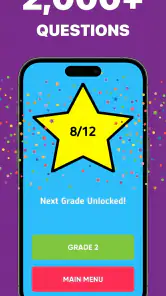
Another tradeoff is the balance between quick entertainment and lasting progress. A quiz can be satisfying in the moment, especially when I recover a forgotten fact or beat my previous performance. However, without a deliberate habit of reviewing mistakes, I may simply repeat the same pattern: answer, see the result, move on, and forget it again. My tip is to keep a mental note of a few missed topics and discuss or look them up later if I want the game to have more educational value.
The school-level framing is also not a guarantee that every question will feel equally easy. Knowledge varies by age, country, education, and personal interests. Someone may find a science question obvious but struggle with history, while another player has the opposite experience. I would not use one result as a judgment of intelligence. It is better understood as a snapshot of memory and familiarity.
There is also a social tradeoff. The game can create fun arguments, but it may be less engaging for a group that wants direct competition, detailed scoring, or a shared online match. In that situation, a multiplayer trivia alternative would probably deliver more energy. This title suits people who enjoy comparing answers informally, not necessarily players looking for a full competitive structure.
Version 11.0.4 is the current version, and the stated release date is November 24, 2019. Those details place the game in the category of an established casual title rather than a brand-new experiment. I see that as reassuring for someone who wants a familiar, straightforward quiz, although players seeking constant novelty should keep their expectations realistic and choose an app whose main appeal is frequent content change.
Who will get the most from it
I would recommend it first to casual players who want a trivia game that can be understood in seconds. It is especially suitable for someone who enjoys general knowledge but dislikes intimidating difficulty. The free entry point, broad age rating, and familiar premise make it easy to suggest to a friend without needing to explain a complicated setup.
Families may also get more from it than solo players expect. The questions can become prompts for discussion, and the age-neutral concept makes it possible for different generations to participate. I would use it as a shared activity rather than assuming that the highest score is the only goal. The best moments are often the unexpected ones: a child answering confidently, an adult forgetting something basic, or a question leading to a story from school.
It can also suit adults who want a low-pressure memory check. I like the fact that the game does not require me to present myself as an expert. I can be good at some areas, weak at others, and still enjoy the process. That makes it more welcoming than apps that constantly emphasize leaderboards or elite performance.
On the other hand, I would skip it if my main purpose were formal learning. Students preparing for a specific examination need organized material and explanations, not only general questions. I would also look elsewhere if I wanted real-time opponents, advanced statistics, a strong progression system, or specialist-level difficulty. The game’s narrow strength is its approachable general-knowledge challenge, and it is better to judge it on that basis.
Players who dislike repetition should try a short session before committing to regular use. A simple trivia loop can be enjoyable for a while, but its appeal depends heavily on the variety and personal relevance of the questions encountered. If I need a constant stream of new mechanics, this will probably feel limited. If I enjoy the familiar pleasure of testing what I remember, the straightforward design is an advantage rather than a weakness.
My recommendation after using the concept as intended
What I appreciate most is the way the fifth-grade idea lowers the emotional cost of getting an answer wrong. I can challenge myself without feeling that I am entering an expert contest. That makes the game easy to return to during small breaks and easy to share with people who normally avoid trivia because they expect it to be too difficult.
I would approach it with two expectations. First, it is a casual trivia game, not a complete educational course. Second, its best value appears when I use the questions actively: read carefully, notice why I missed something, and talk about interesting answers instead of chasing a result mechanically. Those habits turn a basic quiz into a more memorable activity.
For me, 5th Grader Quiz: Are You Smart is worth trying if I want free, accessible general-knowledge entertainment for solo breaks or informal group play. Its 4.5 average and audience of over 100 thousand installs suggest that the uncomplicated format has found its audience, but the same simplicity will not satisfy everyone. I would choose it for friendly curiosity, quick sessions, and family conversation; I would choose another app for serious study, expert trivia, or live competition.
Pros
- Covers core fifth-grade subjects in short
- manageable quiz rounds.
- Simple interface makes it easy for children to start playing independently.
- Provides quick feedback after answers
- supporting learning through mistakes.
- Works well for casual practice during short breaks or study sessions.
- Quiz format can make basic revision feel more engaging than worksheets.
Cons
- Question difficulty may vary and can feel too easy for advanced students.
- Limited explanations may not fully clarify why an answer is correct.
- Repeated questions can reduce replay value over time.
- Some children may find timed challenges stressful or distracting.
- May require adult guidance to turn quiz results into meaningful study practice.
- Category
- Trivia
- Version
- 11.0.4