Zen Idle: Gravity Meditation
- 4.39K
- 4.2
- Installs
- 1.00M
- Price
- Free

Screenshots

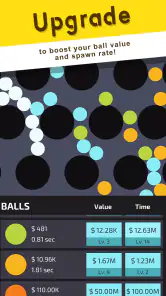

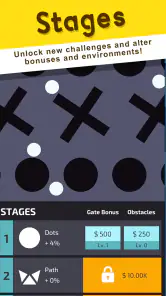




Analysis by Reviewed
I spent time with Zen Idle: Gravity Meditation expecting a game that would mostly play itself, and that is exactly the appeal. It is a simulation game from Tech Tree Games built around watching balls move through a gravity-driven setup while progress continues at a relaxed pace. The experience is less about quick reactions and more about checking in, making a thoughtful adjustment, and letting the system run.
That simplicity makes it easy to understand, but it also creates an important question: will there be enough to do once the novelty of watching the balls wear off? My answer is mixed but positive. I found it most enjoyable as a low-pressure companion for short breaks, background play, or moments when I wanted something interactive without the demands of a conventional action game. It is not the right choice if you need constant decisions, a strong story, or fast rewards every few seconds.
How the game feels during ordinary play
The first thing I noticed was the pace. Zen Idle does not try to rush me into complicated tasks. Balls tumble, progress accumulates, and the visual motion does much of the work. The speed feels intentionally calm rather than sluggish, although players who prefer rapid upgrades or frequent challenges may read that same design as slow.
That perceived speed depends heavily on how actively you engage. If I simply leave the game open and watch, it becomes almost meditative. If I return regularly to make changes and collect the results of earlier progress, the loop feels more purposeful. The game works best when I treat it as a series of small visits instead of expecting a full gaming session every time I launch it.
A realistic use case is a commute, a coffee break, or the few minutes before bed. I can open it, observe what has happened, make a decision, and close it without feeling that I have abandoned a complicated mission. That is a genuine strength. Many simulation games demand planning sessions long enough to make casual play inconvenient, while this one is comfortable with interruption.
The trade-off is that the visual rhythm can become repetitive. The falling balls are the central attraction, so there is less variety than I would expect from a management game with several different systems. I enjoyed the repetition when I wanted to unwind, but I would not recommend it as a main game for someone who needs constant novelty.
What progress feels like
The progression is designed around patience. Instead of relying on reflexes, I am encouraged to let the setup work over time and then decide how to improve my position. That makes each return feel like checking a small experiment: I leave the game running, come back later, and see whether the previous choice produced a useful result.
One practical tip is to avoid judging the game after only a short burst. Its appeal is not fully visible when I am staring at the screen waiting for immediate excitement. The better approach is to play for a few minutes, close it, and return when I naturally have another spare moment. That routine makes the idle structure feel intentional rather than empty.
Another useful habit is to make one meaningful change at a time when possible. If I alter everything at once, it becomes harder to understand which decision helped. Treating each adjustment as a small test gives the otherwise simple loop more depth and helps prevent aimless tapping.
Heavy-use moments and resource expectations
Because the main action is visually straightforward, the game does not present itself as a demanding technical showcase. My experience is that the basic play style is light enough for casual sessions, especially compared with games built around detailed 3D environments, constant combat, or large online spaces. The screen can remain active for a while without the feeling of a device being pushed through an elaborate scene.
Still, “light” does not mean every phone will behave identically. Older hardware, limited free storage, a crowded background, or a battery already under strain can change how comfortable any idle game feels over longer periods. I would be cautious about leaving it open for extended stretches on a phone that already struggles with heat or battery life, not because the game is unusually heavy, but because continuous screen activity is rarely free.
I also prefer to use it in shorter open-and-check sessions rather than treating it like a screensaver. That approach reduces unnecessary battery use and fits the game’s natural rhythm. If a player wants the absolute lowest resource demand, a text-heavy strategy game or a turn-based title may be a better match. Zen Idle’s motion is part of its charm, so turning it into a purely background process removes some of what makes it pleasant.
Network expectations are worth considering in everyday use. I would not choose this game specifically for a situation where I need a guaranteed offline pastime unless I have already tested that situation on my own device. For a dependable no-connection experience, a game explicitly built around offline play would be the safer alternative. Zen Idle is better approached as a casual mobile title whose convenience should be checked before relying on it during travel.
Stability and returning after interruptions
Reliability matters more in an idle game than it does in a short arcade game because the whole design encourages me to leave and return. If progress were difficult to recover after an interruption, the central promise would lose much of its value. In normal use, I found the return-and-check routine more important than uninterrupted marathon sessions.
My advice is to think of the game in terms of recovery from ordinary interruptions: closing it to answer a message, switching to another app, or putting the phone away for a while. A good idle title should make those breaks feel natural, and this one is structured around that expectation. Even so, I would not make it the place for progress I cannot afford to lose until I have become familiar with how it behaves on my own phone.
There is also a psychological reliability issue. The game’s calm pace means that a return may not always produce a dramatic change. That is not necessarily a malfunction; it is part of the slow progression model. Players who expect every reopening to deliver a major reward may mistake the deliberate tempo for weak performance. I found it more satisfying when I measured progress across a routine of visits rather than demanding a visible payoff each time.
Tech Tree Games keeps the presentation focused, which helps the game feel approachable. There are fewer layers competing for attention than in many larger simulation titles. That clarity is useful when returning after a break, because I do not need to relearn a large interface before making a decision.
Device constraints and spending choices
The game is free to download and has an Everyone content rating, so it is easy to recommend as a low-risk trial for a broad audience. It supports devices running Android 7.0 or later, which is helpful for people using older compatible phones, although actual comfort still depends on the condition and capabilities of the hardware.
The current version is 2.1.11, and the game includes optional in-app purchases ranging from $4.99 to $99.99 per item. That range deserves attention before anyone starts playing, especially because idle games can make convenience feel tempting. I would begin without spending money and first decide whether the slow, repetitive loop genuinely fits my habits.
For me, the best way to evaluate the purchase question is to ask whether I enjoy the basic rhythm without assistance. If the answer is no, paying to accelerate it is unlikely to solve the underlying problem. If the answer is yes, I can then decide whether optional spending adds convenience worth the cost. The free starting point makes that test possible, so I would use it before making any commitment.
Parents should also remember that an Everyone rating describes the content audience, not a promise that every purchase decision will be understood by a child. On a shared device, I would still keep an eye on purchase controls. That is ordinary good practice for any free game with optional items, and it matters more when the game is designed for repeated check-ins.
Storage and battery are practical concerns too. A phone with little room left may be a poor place to install any new game, while a device with a worn battery may not be ideal for keeping animated gameplay open. If the phone is already slow with several apps running, I would close unused apps before judging the game’s responsiveness. That separates a device limitation from a problem with the game itself.
Who will enjoy this particular loop?
I think Zen Idle suits players who like watching a system develop gradually. It is especially comfortable for people who enjoy incremental progress but do not want a game that demands constant attention. The visual movement gives the experience a soothing quality, and the simulation framing makes small decisions feel more meaningful than simply watching an animation.
It can also work for someone trying to replace unproductive scrolling with a gentler activity. A quick visit gives the hands something to do without requiring the concentration of a puzzle campaign. I would not call it a productivity tool, but it can fill a small pause more deliberately than endlessly refreshing social feeds.
On the other hand, I would steer competitive players toward a faster strategy or arcade game. There is no reason to force yourself through a slow idle structure if your favorite moments come from precise timing, high scores, or immediate opposition. Likewise, players looking for character development, exploration, or a narrative arc should choose a role-playing or adventure game instead.
It is also not ideal for anyone who dislikes repetition on principle. The game’s identity depends on returning to a familiar visual process and gradually improving it. That consistency is relaxing for me, but it can feel thin to someone who wants new environments and mechanics every few minutes.
How it compares with familiar simulation alternatives
Compared with a city-building simulation, Zen Idle is much less demanding. I do not need to manage a broad economy, plan roads, balance residents, or respond to a constantly changing map. That makes it easier to play in fragments, but it also means there is less room for long-term planning across many interacting systems.
Compared with a farming game, it offers less of the personal routine that comes from tending characters, crops, or a home. There is no substitute here for the satisfaction of decorating a space or building relationships. Zen Idle instead focuses on motion, accumulation, and the quiet pleasure of watching a mechanism work.
Against a conventional idle clicker, the physical movement gives it a more distinctive mood. The balls provide something concrete to watch, so the screen feels less like a list of counters. The downside is that anyone who wants a dense upgrade tree or a constant stream of unlocks may find the presentation too restrained.
This comparison helped me understand its proper place. It is not trying to replace every simulation genre at once. It is a narrow, calm experience that makes sense when I want a visual idle toy with enough decision-making to keep it from being completely passive.
Small strategies that make the experience better
My first recommendation is to establish a return pattern instead of opening the game randomly all day. A few deliberate check-ins make progress easier to notice and reduce the temptation to keep the app open simply because something is happening on screen. This is particularly useful on a phone where battery life matters.
Second, use the game as a decompression tool rather than a reward machine. The slow motion is more effective when I am willing to watch for a moment, not when I am impatiently waiting for a large result. If I approach every visit with the question “what can I improve or learn from this setup?” the loop feels more engaging.
Third, separate enjoyment from optimization. It is possible to focus so heavily on the most efficient decision that the relaxing quality disappears. I found a better balance by making sensible adjustments but still allowing myself to watch the balls without turning every session into an efficiency test.
Finally, test it under the conditions in which you actually plan to use it. If you want a travel companion, try it with the same battery level and connectivity limitations you expect on the trip. If you want a bedtime game, see whether the screen activity encourages relaxation or keeps you engaged longer than intended. The right answer depends less on the store category than on your routine.
My performance verdict
Zen Idle: Gravity Meditation succeeds because it understands that a mobile game does not always need to demand attention. Its perceived speed is calm, its visual workload feels modest in ordinary play, and its structure makes short returns more natural than long sessions. I appreciate that I can engage with it without preparing for a complicated objective.
The limitations are equally clear. Progress can feel slow, the central visual idea can become repetitive, and players who want rich simulation management may outgrow it. I would also avoid assuming that every device or travel situation will provide the same experience; older hardware, battery condition, and connectivity can affect convenience even when the game itself is simple.
With an average rating of 4.2 from around 44 thousand ratings and more than a million installs, it has found a substantial audience, and I can understand why. The game is free, approachable, and easy to sample, while the Everyone rating keeps its content broadly accessible. The optional purchases, including items priced as high as $99.99, are the main reason I would play first and spend later, if at all.
My final recommendation is straightforward: try it if you want a quiet simulation game for small pockets of time and enjoy watching gradual progress unfold. Skip it if you need constant action, deep management, or a clear story. For the right player, the restrained design is not a weakness but the whole point. It works best when you let the game stay slow, make occasional thoughtful choices, and judge it as a relaxing routine rather than a high-intensity challenge.
Pros
- Simple one-touch gameplay is easy to learn and play casually.
- Offline play makes it convenient during commutes or without a connection.
- Satisfying physics effects give each ball drop a relaxing visual rhythm.
- Frequent upgrades provide steady progress even during short sessions.
- Minimal controls make it accessible for players of many ages.
Cons
- Progress can feel slow unless you watch ads or spend premium currency.
- Gameplay becomes repetitive after extended sessions.
- The idle system offers limited strategic depth for experienced players.
- Some upgrades and rewards are heavily tied to advertising.
- Battery use may increase during long sessions with animations enabled.

- Category
- Simulation
- Version
- 2.1.11