Zapp Chess: Online Chess Game
- 23.00
- 4.3
- Installs
- 100.00K
- Version
- 1.1.104
Screenshots
Analysis by Reviewed
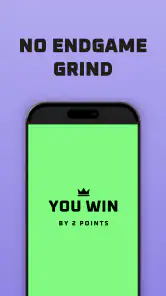
I usually approach mobile chess with one question: do I want to study, compete, or simply play a useful little game during a spare moment? Zapp Chess: Online Chess Game is aimed at the third situation, while still giving beginners a gentle way into the board game. It is a free board game from DAB Games, rated for Everyone, and its central promise is speed rather than a long lesson about openings, notation, or endgame theory.
That focus immediately makes it easier to judge. This is not the kind of chess app I would choose when I want a deep training library or a serious tournament routine. I would choose it when I want a compact match that feels approachable, especially if traditional chess apps make the first move seem more intimidating than it needs to be. The important question is whether that simplicity matches your habits.
What I looked for before recommending it
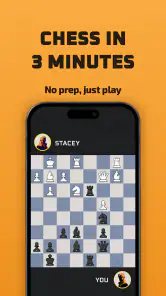
My first decision criterion is the time commitment. A short chess session is very different from sitting down for a full game with a clock, a board, and a notebook. Zapp Chess is built around matches that can be completed in about three minutes, so it suits the gaps that appear between other tasks. I can imagine opening it while waiting for a friend, taking a quick break, or giving a child a simple introduction to chess without promising an entire evening of play.
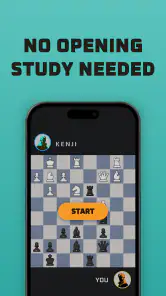
The second criterion is the learning curve. Chess beginners often get stuck before they enjoy the game because they think they need to memorize an opening name or understand every endgame pattern immediately. The appeal here is that the app puts the act of playing first. I can make a move, see what happens, and gradually notice basic ideas such as protecting pieces, looking for checks, and avoiding careless exchanges.
The third criterion is whether quick play still feels meaningful. A short format can be convenient, but it can also make every match feel disposable. For me, the value depends on how I use it. If I treat each game as a small puzzle about one decision, the limited length becomes a strength. If I want a complete strategic battle with time to build a position, the format may feel too compressed.
There is also a practical question about access. The game is free to install, supports Android from version 7.0 onward, and carries an Everyone age rating. That makes it a relatively easy recommendation for households with older Android devices or families looking for a simple board game. The presence of in-app purchases, ranging from $0.49 to $149.00 per item, is worth keeping in mind before handing the phone to a child or treating the game as entirely cost-free.
The public response is encouraging without being a reason to ignore personal fit: it holds a 4.3 average from around 1.5 thousand ratings, with over 100 thousand installs. I read those figures as signs that the basic idea is connecting with players, not as proof that every chess fan will prefer it. The current version is 1.1.104, and the release date is January 26, 2026, so I would still judge it primarily by the experience on my own device rather than by assuming it has the maturity of a long-established chess platform.
Why the short format changes the way I play
In ordinary chess, I can spend several minutes on one position and still feel that I am only beginning to understand it. A three-minute match changes my priorities. I start looking for safe, useful moves instead of trying to construct a perfect plan. That makes the game less frightening for a new player, but it also exposes a trade-off: rushed choices may teach speed before they teach accuracy.
I found the best way to approach that trade-off is to give each game a single purpose. In one match, I might concentrate on developing pieces rather than moving the same piece repeatedly. In another, I might watch for attacks on undefended pieces. This turns a quick loss into something more useful than a simple result. The short clock becomes a framework for practicing one habit at a time.
A realistic everyday scenario would be a commuter with a few minutes before a train arrives. A full chess service may encourage a longer game that has to be abandoned, while a traditional physical board is inconvenient to set up. Zapp Chess makes more sense in that gap. I can play one focused match, put the phone away, and return later without having committed to a large session. That convenience is not a minor detail; it is the main reason I would keep it installed.
Where this game is especially welcoming
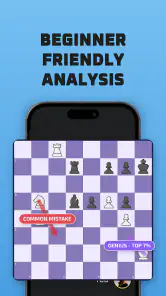
The strongest part of the experience is its beginner-first attitude. I would recommend it to someone who knows how the pieces move but feels lost when a chess app starts discussing openings and endgames as if those ideas were prerequisites. Here, the player can begin with the basic rhythm of choosing a move, responding to a threat, and trying to checkmate.
That also makes it useful for casual family play. An adult can sit beside a child and focus on visible choices: “What is that piece attacking?” or “Is your king safe after this move?” The short games leave room for several attempts without making a mistake feel like a major event. Because the age rating is Everyone, it is positioned as an accessible game rather than a niche product for experienced players.
Another subtle strength is that quick matches reduce the emotional cost of experimentation. In a long game, a bold move can feel dangerous because the consequences may follow me for half an hour. In a short game, I can test whether an idea works and learn from the result. I would use that freedom to try simple plans, such as bringing out both bishops early or checking whether an apparently free piece is protected.
There is a useful distinction between learning chess concepts and learning chess vocabulary. Zapp Chess is better suited to the first. I can develop an instinct for threats and exchanges without first memorizing labels. That does not replace formal study, but it can create the confidence needed to make later lessons less abstract.
Three practical habits that make it more useful
My first tip is to pause mentally before every capture. Fast chess encourages the reflex of taking a piece simply because it is available. Instead, I would ask what recaptures or attacks follow. This one-second check is especially valuable in a short game because it prevents the most common beginner losses without requiring advanced theory.
My second tip is to treat the opening as a safety check, not a memory test. I would aim to bring pieces into play, avoid unnecessary queen trips, and make sure the king is not left exposed. The point is not to reproduce a famous opening. It is to reach the middle of the game with usable pieces and fewer immediate problems.
My third tip is to review the reason for the loss immediately after a match, even if the app does not turn that moment into a formal lesson. I would identify one decisive mistake: a hanging piece, a missed check, or a move made without noticing an attack. Recording one lesson mentally is more realistic than trying to analyze every move of a three-minute game.
A fourth use is social teaching. Instead of giving a beginner a long explanation of chess strategy, I would play several short games and stop after a key position to ask what each side is threatening. The compact format allows the learner to see recurring patterns quickly. That is a more approachable introduction than beginning with a dense list of rules and theory.
Where another chess option may fit better
The biggest limitation is also the defining feature: speed. Players who enjoy slow positional planning may find three-minute matches too restrictive. If your goal is to practice calculation, compare candidate moves, or build a detailed opening repertoire, a conventional chess platform with longer time controls and extensive analysis will be a better fit. I would not replace a serious study tool with this game.
It may also be the wrong choice for someone who wants a broad competitive ecosystem. Established chess services commonly appeal through ranked play, large player communities, puzzles, lessons, game archives, and detailed statistics. I am not treating those as features of Zapp Chess; they are simply the kinds of tools that make the alternatives attractive. If tracking long-term progress matters more to you than getting a fast match, compare those categories before switching.
There is a similar issue for players who prefer a physical board. A phone screen is convenient, but it changes how I see the position. On a real board, I can scan the whole arrangement naturally and move pieces with my hands. On a small display, I need to be more deliberate about checking lines and remembering which pieces are defended. For a child learning piece movement, a physical set may still be the clearer first step.
The purchase model deserves a calm look as well. The game is free, which lowers the barrier to trying it, but optional items can cost from $0.49 up to $149.00. I would check the purchase flow before allowing unsupervised use, particularly on a shared family device. A free download can be a good way to test the format, but I would not assume that every part of the experience is covered without spending.
The release timing is another reason I would keep expectations sensible. Since it arrived on January 26, 2026, and is currently at version 1.1.104, it presents itself as a relatively new option rather than a legacy chess institution. That can be positive if you like trying focused apps early, but players who depend on years of accumulated tools, records, and community knowledge may prefer a more established alternative.
Who should switch, and who should stay with a familiar platform?
I would switch to Zapp Chess if my current chess routine keeps failing because it asks for too much time. The cost of switching is low: it is free to try, it runs on Android 7.0 or later, and the core idea is easy to understand. I do not need to redesign my whole hobby around it. I can use it as a quick side game while keeping a deeper chess app for study.
I would also switch if I am introducing chess to someone who feels embarrassed by losing long games. Short matches make repetition easier, and repetition is often what a beginner needs. The player can try a different first move soon after a mistake instead of waiting through a lengthy position that has already become unpleasant.
I would not switch completely if my priority is serious improvement through analysis. In that situation, I want tools that help me inspect why a move failed, compare alternatives, and follow progress over time. Zapp Chess can provide playing practice, but it should not be mistaken for a complete chess curriculum simply because it makes the first games approachable.
I would also stay with a different option if I dislike in-app purchase systems or need a tightly controlled child experience. The Everyone rating is reassuring as an age classification, but it does not by itself answer every family question about spending habits. I would make the purchase decision with the device settings and household rules in mind.
How I would fit it into a balanced chess routine
My preferred setup would be to use this game for quick decision-making and another resource for reflection. I might play one or two short matches, then spend a few minutes thinking about the most important error. That combination keeps the app from becoming mindless tapping while avoiding the opposite problem of turning every casual session into homework.
For a complete beginner, I would start by learning the legal movement of each piece, then use the app to practice recognizing checks and threatened pieces. I would resist the urge to memorize openings too early. Once the player can reliably protect pieces and notice simple tactics, a longer-format chess app or a physical board becomes more valuable because there is enough understanding to benefit from slower analysis.
For an experienced player, I see a narrower but still legitimate role. The game can be a warm-up before a longer match, a way to test whether I am alert, or a compact break from study. It is less useful as the only place I play, because speed alone does not expose every strategic weakness. A fast result can tell me that I missed something, but it may not explain the deeper reason.
One practical boundary is session length. I would stop after a small number of games if I noticed myself moving automatically. The format makes “just one more” easy, and repeated rushed play can reinforce bad habits. The most productive use is deliberate: choose a focus, play, identify one lesson, and leave.
My recommendation for different kinds of players
For a complete beginner who wants chess to feel approachable, I recommend trying it. The short matches, simple entry point, free installation, and Everyone rating make the decision uncomplicated. I would present it as a place to become comfortable with the board, not as a replacement for every form of chess learning.
For a casual player with only a few spare minutes, I recommend it even more strongly. This is where the design makes the most sense. It fits naturally into small breaks, and the limited commitment removes the frustration of starting a game that cannot be finished.
For a dedicated competitor or student, my recommendation is conditional. Keep it as a supplementary speed-play option if you enjoy that style, but choose a more comprehensive chess service when analysis, long games, structured lessons, or detailed progress tracking are central to your goals. The right comparison is not “which app is best?” but “which part of chess do I want to practice today?”
Overall, DAB Games has made a focused board game rather than an all-purpose chess school. That focus is its reason to exist. If you want a friendly, fast way to play without opening theory getting in the way, Zapp Chess is worth installing and testing for yourself. I would keep my spending cautious, use each short match with a clear learning goal, and move to a deeper alternative when I need slower thinking or serious analysis.
My final view is positive but specific: this is best as an accessible doorway and a convenient quick-play companion. It wins when time, confidence, and simplicity matter more than exhaustive chess tools. It loses when the player wants a full competitive home for the game. Knowing that boundary makes the recommendation straightforward, and it is also why I would happily suggest Zapp Chess: Online Chess Game to a friend who keeps saying they would like to learn chess but never has enough time to start.
Pros
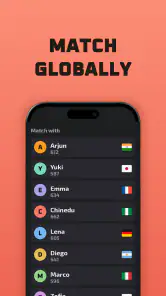
- Quick matchmaking makes it easy to find online opponents.
- Clean board design keeps pieces and legal moves easy to follow.
- Supports short games for players with limited free time.
- Online competition provides a useful way to test your progress.
- Suitable for casual players and regular chess practice.
Cons
- Connection problems can interrupt an otherwise enjoyable match.
- Skill differences may lead to uneven games for newer players.
- Online play can feel stressful when facing experienced opponents.
- Some features may require in-app purchases or premium access.
- A stable internet connection is needed for the best experience.