Z Survivor: Backpack Shooter
- 1.92K
- 4.3
- Installs
- 1.00M
- Price
- Free

Screenshots
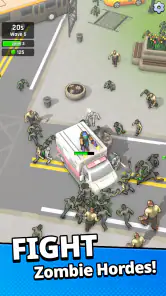
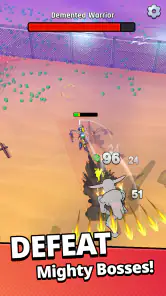
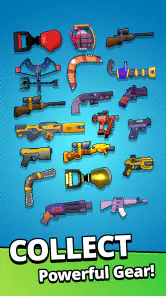
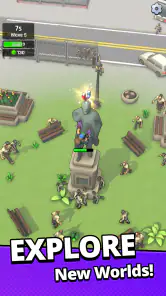
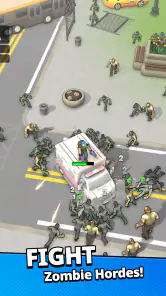
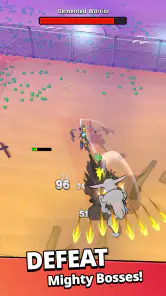
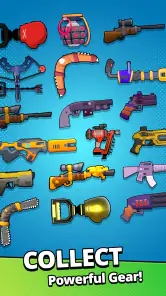
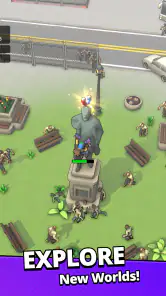
Analysis by Reviewed
I spent time with Z Survivor: Backpack Shooter as a quick-action survival game, and my first impression was that its appeal is easy to understand: collect what you can, keep moving, and stay alive while the pressure builds. It is free to play, made by Tapped Ltd, and aimed at players aged Everyone 10+, so it sits in a comfortable space for people who want something more active than a puzzle but less demanding than a full console-style action game.
The important thing is that this is not a game I would recommend because it has a complicated story or a huge list of modes. I recommend it for the short decision-making loop. You enter a dangerous situation, look for useful resources, manage the space and value of what you carry, and try to survive long enough for the run to feel worthwhile. That simple structure gives each attempt a clear purpose, even when you only have a few minutes to play.
How the early goals make each run feel useful
The opening hours work best when I treat every run as a small experiment rather than a test I must immediately master. The basic goal is obvious: collect and survive. What makes that goal more interesting is the need to decide whether a tempting pickup is worth the risk of staying in one place or changing direction. That choice gives the early game more texture than simply moving forward and attacking everything in sight.
I found it helpful to set a personal objective before starting. Sometimes that meant prioritizing survival, while other attempts were about being more ambitious with collection. This approach prevents the game from feeling like a string of identical rounds. Even when the reward is not spectacular, a run can still teach you which situations are safe, which choices waste time, and when greed turns a manageable attempt into a bad one.
The backpack theme also gives the collecting objective a practical identity. I am not gathering items just because a counter needs to increase; I am constantly thinking about what deserves space and attention. That creates a useful tension between immediate safety and long-term value. A player who grabs everything without considering the route ahead can make the next decision harder, while a cautious player may survive but leave useful opportunities behind.
For a newcomer, I would avoid trying to play perfectly from the first attempt. Learn the rhythm of movement, notice how quickly danger can change the situation, and use the first sessions to understand what kind of risk the game expects. The early goals are strongest when they encourage observation. If you approach every run as a race for maximum collection, the pressure can feel frustrating before the controls and pacing become familiar.
What progress feels like during ordinary play
The most convincing progress signal is not a dramatic story reveal. It is the feeling that I understand the run better than I did before. I begin to recognize when a detour is sensible, when a pickup is not worth the exposure, and when continuing forward is safer than trying to recover something I missed. That knowledge makes later attempts feel more deliberate, even if the basic objective remains familiar.
This matters because action survival games can become repetitive when every failure feels random. Here, the collection-and-survival structure gives mistakes a readable cause. If I stay too long for one more reward, I can identify that decision. If I move carelessly into trouble, I know the problem was my route rather than a vague lack of progress. That clarity is valuable for players who enjoy improving through small adjustments.
I also like that the game can fit different levels of attention. When I am relaxed, I can focus on making better choices and stretching a run further. When I am tired, I can play more conservatively and still get a compact action session. It is not a substitute for a deep role-playing progression system, but it does provide a satisfying sense of learning through repetition.
One practical tip is to judge a run by the quality of its decisions, not only by its final result. A failed attempt that teaches you to leave a dangerous area earlier can be more useful than a lucky run where you never had to make a difficult choice. This mindset also lowers the frustration of restarting, which is important in a game built around repeated survival attempts.
Where the difficulty curve starts to matter
The challenge works best when it makes collection feel dangerous rather than decorative. If gathering resources were always safe, the central idea would lose much of its force. The pressure comes from balancing movement, attention, and ambition. I need to keep an eye on the immediate threat while also thinking about whether the next pickup will improve the run or simply create another reason to take a bad risk.
That balance gives the game a more thoughtful pace than the word “shooter” might suggest. I am not only reacting to enemies. I am also deciding how much time to spend, how far to move, and whether the current situation is worth pushing. The action remains accessible, but the better results come from controlling my impulses rather than constantly chasing the most obvious reward.
There is a trade-off here. Players who want a fast, forgiving arcade experience may find the survival pressure more restrictive than expected. The game asks me to respect danger, and that can make a run feel slow if I am waiting for a safer opportunity. On the other hand, players who enjoy extracting value from risky situations will probably appreciate that restraint. The tension is not just about aiming; it is about knowing when enough is enough.
I would not describe the challenge as ideal for someone looking for a completely passive experience. Even in a short session, I need to stay engaged with what is happening around me. That makes it a good choice for a quick mental reset, but not necessarily for playing while distracted by another screen. The game rewards attention in a way that many very casual action titles do not.
How the pacing supports short and longer sessions
The pacing is one of the reasons I can imagine returning to it during an ordinary day. A short session can have a clear beginning, a period of rising pressure, and a conclusion shaped by either survival or failure. That structure suits a commute, a waiting room, or a break between tasks because I do not need to commit to a long narrative chapter before the game becomes interesting.
At the same time, the collection goal gives longer sessions a reason to continue. I can try to improve the quality of my choices, take on more ambitious routes, and see whether a more confident approach produces a better result. The danger is that repeated runs can begin to blend together if my personal objective never changes. I get more from the game when I actively vary my approach instead of repeating the safest possible pattern.
That is where the pacing becomes a matter of personal taste. If I enjoy gradual mastery, repeated attempts feel productive. If I need constant new content, the core loop may eventually feel narrow. The game is at its best when I want to sharpen my judgment inside a focused format, not when I am expecting a large campaign with frequent surprises.
My most useful routine was to alternate between careful runs and experimental ones. A careful run helped me rebuild confidence after a failure. An experimental run showed me whether I had become too conservative. This simple rotation kept the collect-and-survive structure from becoming purely mechanical and gave each session a slightly different purpose without pretending that the game is something it is not.
Unlocks, motivation, and the pressure to keep playing
The strongest reason to continue is the desire to turn experience into better decisions. I like games where a defeat leaves me with a clear lesson, and this one can provide that when I pay attention to the relationship between collection and survival. The motivation is less about being carried by a story and more about proving that I can handle a situation that previously overwhelmed me.
That kind of motivation will not work equally well for everyone. Some players need a visible chain of unlocks, frequent rewards, or a strong sense of character growth to stay interested. If that is what keeps you playing, you should approach this game with realistic expectations. Its appeal is concentrated in the run itself and in the improvement that comes from understanding its pressures, rather than in a broad role-playing structure.
There is also a monetization point worth considering. The game can be downloaded for free, but in-app purchases range from $0.99 to $99.99 per item. That wide range is a reason to decide in advance how you want to play. I would begin without spending, learn whether the core loop genuinely holds my attention, and only then consider whether an optional purchase adds meaningful convenience for my own habits. A free download does not automatically mean the entire experience will feel equally comfortable for every spending style.
For younger players, the Everyone 10+ rating is useful context for families deciding whether it fits. I would still recommend that parents discuss purchases before handing over a device, especially because the available item prices cover a broad span. The action is approachable, but the spending decision deserves the same attention as the gameplay decision.
Who will enjoy this particular action game
I think Z Survivor: Backpack Shooter is a good match for someone who enjoys compact survival challenges, collecting under pressure, and learning from repeated attempts. It suits players who like having a simple goal but several ways to approach it. You do not need to memorize a complicated story to begin, and the early objective is clear enough to make the first session understandable.
It is also a sensible choice for players who prefer action games that can be played in short bursts. The run-based structure gives me a natural stopping point, which is useful when I do not want to begin a multi-hour adventure. The game has enough tension to make a short session feel active, but it does not require the kind of long-term commitment associated with a large narrative game.
I would skip it if your priority is a deep campaign, elaborate character customization, or a constantly changing set of activities. I would also look elsewhere if you dislike repeating attempts after failure. The game’s identity depends on returning to the same basic challenge with improved judgment. That is a strength for players who enjoy mastery, but a limitation for anyone who sees repetition as wasted time.
Compared with a conventional action game, this title places more weight on route choice and resource judgment. Compared with a pure collecting game, it adds enough danger to make every pickup feel consequential. That middle position is its clearest advantage. It will not replace a story-driven shooter or a relaxed collection app, but it can fill the space between them for players who want action with a little more restraint.
Practical advice before you commit
Start by playing without trying to maximize every run. Your first goal should be to understand how the game expects you to balance movement, collection, and survival. Once that rhythm feels natural, begin taking calculated risks. The important word is calculated: a risky choice should have a reason, not simply come from impatience.
Keep an eye on how you react to setbacks. If a failed run makes you curious about what to change, the game is probably offering the kind of challenge you enjoy. If it only makes you want to quit, no amount of extra repetition will necessarily solve the problem. This is a title where your response to failure is part of the buying decision.
Device compatibility is relatively broad, since the game requires Android 6.0 or later. The current version is 1.27, and the title has already attracted more than 1 million installs. It also holds an average rating of 4.3 from around 51 thousand ratings, with roughly 1.9 thousand written reviews. Those figures suggest a substantial audience, but they do not replace personal testing: the central question is whether its repeated survival loop matches your preferred pace.
I would also make the purchase choice deliberately rather than impulsively. Because the game is free to start and includes optional items across a wide price range, I would first decide whether the collecting and survival decisions are enjoyable on their own. If they are, the game has a fair chance of becoming a regular short-session title. If they are not, spending more is unlikely to fix the underlying mismatch.
My verdict on the long-term loop
After weighing the early goals, the progress I felt from better decisions, and the pressure created by risky collection, I see this as a focused action game rather than an all-purpose mobile adventure. Its best quality is the way a simple objective can produce meaningful trade-offs. I am always balancing what I want to collect against how much danger I am willing to accept, and that gives the runs a clear identity.
The main limitation is equally clear: the experience depends heavily on whether repeated attempts are satisfying to you. Players who need constant novelty may reach its boundaries quickly, while players who enjoy refining a strategy can find plenty of value in small improvements. The pacing is strongest when I play with a specific intention, such as testing a bolder route or practicing better restraint.
For me, the progression verdict is positive but specific. I would recommend it to a friend who wants free, accessible action built around collecting and surviving, especially for short sessions and gradual improvement. I would not recommend it as a replacement for a deep campaign or a feature-heavy role-playing game. The best reason to play is the decision-making inside each run, not the promise of endless variety.
Tapped Ltd has shaped the game around a clear loop that is easy to understand but not entirely mindless. If you enjoy learning when to push forward and when to leave a reward behind, it is worth trying at no upfront cost. If you prefer games that constantly unlock new systems and tell a large story, you may be happier with a different action title. My final advice is simple: give it a few focused sessions, play without spending at first, and judge whether each failure teaches you something useful.
Pros
- Easy-to-learn shooting controls suit quick mobile sessions.
- Backpack organization adds strategy beyond basic shooting.
- Runs well on many mid-range phones.
- Frequent rewards help free players make steady progress.
- Different weapons and gear encourage varied playstyles.
Cons
- Inventory management can feel awkward during intense battles.
- Upgrade costs rise quickly as stages become more difficult.
- Random gear drops may make progress feel inconsistent.
- Repeated missions can become monotonous after extended play.
- Some useful resources may be tied to ads or in-app purchases.

- Category
- Action
- Version
- 1.27