Yatzy - Classic Dice Game
- 675.00
- 4.9
- Installs
- 100.00K
- Price
- Free

Screenshots






Analysis by Reviewed
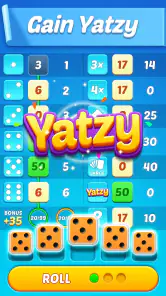
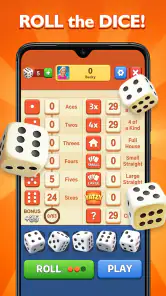
I like dice games that are easy to begin but still give me something to think about after the first few turns. Yatzy - Classic Dice Game fits that space well. It is a free board game from TerranDroid built around the familiar Yatzy formula: roll dice, decide which results to keep, and place the outcome in the scoring area before the useful combinations disappear. My overall impression is that it works best as a quick, low-pressure pastime rather than as a feature-heavy gaming experience. Its greatest strength is the clean decision-making at the heart of every roll.
That simplicity is also why I can imagine recommending it to someone who wants a board game that does not demand a long tutorial. You can understand the basic idea almost immediately, yet the choices are not completely automatic. A good roll still leaves me weighing short-term points against the chance of building a stronger combination later. The game is rated for Everyone, so it is an approachable choice for mixed-age households and casual players who do not want complicated rules.
Why the classic dice format still works here
The appeal comes from the tension between luck and control. The dice decide what I have to work with, but I still get meaningful choices about what to hold and what to reroll. That makes each turn feel more personal than simply tapping a random result. A weak opening can sometimes be rescued by a sensible decision, while an excellent roll can be wasted if I chase an unlikely outcome for too long.
In practice, I find the game most enjoyable when I treat each turn as a small planning problem. If the dice already support a useful combination, locking in a safe result can be wiser than gambling for a perfect one. On another turn, taking a risk may be worthwhile because a difficult scoring category is still open. This is a useful habit for new players: do not judge a roll only by what it could become. Consider what scoring opportunities remain and how expensive a failed attempt would be.
That second layer is where the board-game identity matters. This is not just a dice roller with a decorative interface. The scoring structure gives the session a rhythm, with early decisions affecting what remains possible later. I enjoy that feeling because it creates a modest sense of consequence without making the game stressful. A poor choice does not ruin an entire evening, but it can make the next few turns more interesting.
The game’s store rating sits at 4.9 from around 10 thousand ratings, and that high average makes sense to me when the expectation is a traditional Yatzy experience rather than a large collection of modes. It has also passed 100 thousand installs, which places it comfortably among recognizable casual board-game downloads. Those figures do not make it automatically suitable for everyone, but they do suggest that the straightforward format has found an audience.
A useful game for short breaks
My favorite use case is a short break where I want something interactive but not demanding. I can start a round while waiting for an appointment, during a quiet commute, or after finishing a task, and the rules do not require me to remember a story, manage a large collection, or learn a complicated control scheme. The dice provide immediate feedback, while the scoring choices give the session enough substance to avoid feeling like a completely mindless tap.
You May Like

Clash of Clans Is Won Between the Battles

Android Auto Makes the Case for Quieter Car Software

MobiOffice: Transforming Mobile Productivity with Seamless Integration

EA SPORTS FC™ Mobile Soccer: Redefining Mobile Sports Gaming

How Microsoft OneDrive Became a Mobile Productivity Giant

How Google Translate Breaks Language Barriers Effortlessly
It also works well as a relaxed pass-around game in a household. Someone who has never played digital board games can understand the basic turn structure quickly. A parent and child can discuss whether to choose a safe score or take a chance, and that conversation becomes part of the entertainment. Because the content rating is Everyone, the game is easier to consider for family use than a board title designed around mature themes or intense competition.
There is a practical advantage to this kind of design: the game does not ask me to reorganize my schedule around it. I can play when I have a few spare minutes, stop when I need to, and return later without having to reconstruct a complicated strategy. That makes it more useful than many larger mobile games for people who want a small daily diversion instead of a second hobby.
Where the decisions become more interesting
New players often focus too heavily on the biggest possible combination. I think a better approach is to divide the scorecard into three types of decisions. First, there are the reliable points that keep a turn from being wasted. Second, there are combinations that are plausible but require a favorable reroll. Third, there are ambitious targets that should be attempted only when the current dice give a genuine foundation.
This way of thinking helps prevent one of the most common Yatzy mistakes: spending too many turns chasing a dramatic result and then being forced into an unpleasant score later. I prefer to protect flexible categories early and reserve the most awkward choices for a moment when the dice are already telling me what kind of turn I have. That is not a hidden rule or a special feature; it is simply the most effective way I found to get more value from the classic scoring design.
Another useful tip is to look at the whole scorecard before committing. A combination that seems attractive in isolation may be less valuable if another category is much harder to fill. For example, a modest result can be strategically important when it removes a difficult obligation from the remaining choices. Thinking one turn ahead makes the game feel less like repeated luck and more like a compact exercise in risk management.
I also recommend using the first few rounds to learn your own risk tolerance. Some players will enjoy pushing for high-value combinations, while others will prefer consistent scores. Neither approach is automatically correct. The important point is to choose deliberately rather than rerolling simply because the current result looks ordinary. That small pause before tapping can make the difference between a satisfying turn and a frustrating one.
The main limitation: classic simplicity has a ceiling
My biggest reservation is that the traditional format can feel narrow if I play for a long stretch. The same core loop that makes the game welcoming also limits its variety. Once I understand the scoring decisions, the experience depends heavily on whether I enjoy repeating that pattern. Players looking for a campaign, a deep progression system, a large collection of boards, or a constantly changing challenge may find this too restrained.
This matters when comparing it with other mobile board games. A digital chess app usually offers deeper long-term study and a wider range of skill levels. A card battler may provide more changing combinations and collection goals. A larger board-game adaptation can offer several rule sets or a stronger social layer. Yatzy - Classic Dice Game is not trying to replace those experiences. It is better viewed as a focused dice game that does one familiar activity without asking me to learn a whole ecosystem.
The free price is a clear advantage for trying it, but the presence of in-app purchases from $1.99 to $49.99 per item means I would still advise checking the purchase flow before handing the device to a child. The game remains easy to sample without paying, yet anyone who prefers a completely purchase-free environment should take that detail seriously. I would not choose it solely because it is listed as free; I would choose it because the basic dice format is what I actually want.
There is also a difference between playing casually and expecting a rich competitive platform. If I want a game to discuss with a large online community, track elaborate rankings, or build a long-term identity around, this would not be my first choice. Its value is concentrated in the turn-by-turn decisions, not in a broad surrounding feature set. That is a fair trade, but it should be clear before downloading.
Who should give it a try
I think it is a strong fit for people who already enjoy classic dice games and want a convenient mobile version. It is also suitable for beginners because the central idea is easy to grasp, while the scoring choices give experienced players room to develop better habits. Someone who enjoys probability, light strategy, or friendly family competition will probably get more from it than someone who wants constant novelty.
It can be especially useful for players who are tired of mobile games that interrupt every few seconds with complicated objectives. Here, the main focus stays on the roll and the decision that follows. I appreciate that narrow focus when I want to relax without feeling that I am falling behind an enormous progression track. The game is also a sensible option for an older phone, since it supports Android 5.0 and later rather than requiring a recent operating system.
On the other hand, I would skip it if my priority were a highly social multiplayer experience, a story-driven board game, or strategy that grows dramatically over dozens of hours. I would also look elsewhere if I disliked repeating familiar rules. The best reason to install this title is not the promise of endless content; it is the pleasure of making small, thoughtful choices with a handful of dice.
For a family member asking whether it is difficult, my answer would be no at the rules level, although better play does require patience. For someone asking whether it is truly free to start, the answer is yes, with optional purchases listed between $1.99 and $49.99 per item. For a person wondering whether an older Android device can run it, Android 5.0 is the minimum requirement. Those details make it relatively easy to decide whether it belongs on a particular phone.
What the current release tells me
The game was released on January 14, 2025, and the current version is 1.3.6. I see that as a reasonably current product rather than an abandoned classic sitting unchanged in an app store. TerranDroid is the developer behind it, and the title’s identity remains focused on the recognizable Yatzy board-game structure instead of trying to turn the concept into something unrelated.
That focus helps set expectations. I would install it when I want a familiar dice session with a digital interface, not when I am searching for a broad catalog of board games in one app. The rating of Everyone supports its approachable presentation, while the free entry point makes experimentation simple. The important question is whether I enjoy the underlying loop, because no amount of extra polish can make repeated dice decisions appealing to someone who does not like that kind of game.
One small but valuable habit is to decide in advance how long I want to play. Since the format is easy to restart, it can be tempting to continue after a disappointing round simply to improve the next result. Setting a short limit keeps the game relaxing and prevents a casual break from turning into an unplanned time sink. Conversely, when I am playing with another person, several rounds can create a friendly rivalry without needing a complicated match structure.
I also like using it as a way to introduce probability without making the lesson feel formal. Asking whether a reroll is worth the risk, or why a safe category might be preferable, turns ordinary play into a simple discussion about chance and trade-offs. That is an understated strength: the rules are light, but they can support more thoughtful play than the store summary suggests.
My verdict after weighing the trade-offs
Yatzy - Classic Dice Game succeeds because it understands the appeal of its source format. The dice are immediate, the choices are readable, and each turn offers just enough uncertainty to keep me involved. I especially recommend it for short sessions, family-friendly play, and anyone who wants a familiar board game without the setup of physical dice and a score sheet.
I would keep my expectations measured. The experience is not designed to become a large, evolving hobby, and the optional purchase range may make some users more cautious about sharing the device with children. Players who need deep progression or a wide selection of modes will likely be happier with a more ambitious board-game app. Those are meaningful limitations, not flaws to hide.
For the right audience, though, the narrow focus is precisely the point. I can open it, make a few decisions, and enjoy the small satisfaction of turning an uncertain roll into a useful score. If you want a calm, recognizable dice game rather than a sprawling mobile system, this is an easy recommendation. I would choose it for quick breaks and relaxed competition, while steering friends toward chess, card games, or fuller board-game adaptations when they want greater depth and variety.
Yatzy - Classic Dice Game Frequently Asked Questions
What is Yatzy - Classic Dice Game?
Yatzy - Classic Dice Game is a digital version of the traditional dice game in which you roll five dice and try to complete different scoring combinations. During each turn, you can usually roll up to three times and choose which dice to keep. The objective is to fill the scorecard strategically and finish with more points than your opponents or the game’s artificial intelligence.
What does a typical turn involve, and is there strategy beyond rolling dice?
A turn is about choosing which dice to keep and which to roll again as you work toward a scoring combination on the scorecard. Luck plays a part, but deciding when to pursue a particular combination and when to use a roll elsewhere gives the game a thoughtful edge. If you enjoy casual board games with simple rules and small strategic choices, Yatzy offers a familiar, easy-to-follow format.
Can I play Yatzy - Classic Dice Game offline?
Yes, the game is generally suitable for offline play, which makes it convenient when you are traveling or do not have a reliable internet connection. You can practice against computer-controlled opponents and enjoy the core dice-rolling experience without needing to stay online. However, certain features, such as advertisements, online leaderboards, multiplayer services, or cloud-related options, may require an internet connection.
Does Yatzy - Classic Dice Game support multiplayer?
Yatzy - Classic Dice Game may offer several ways to compete, depending on the version and platform, including matches against computer opponents, local pass-and-play sessions, or online multiplayer. Local play is especially useful for sharing one device with friends or family. Before downloading, check the current store listing because available multiplayer modes and requirements can vary between Android and iOS.
Is Yatzy - Classic Dice Game free to download?
The game is free to download, so you can try the main Yatzy gameplay without paying upfront. It also offers optional in-app purchases, with prices ranging from $1.99 to $49.99 per item. Review the purchase settings before playing, particularly if a child will use the device, so you know purchases are handled as you expect.
Pros
- Simple rules make it easy for beginners to start playing.
- Quick rounds fit well into short breaks or casual sessions.
- Solo play works without needing an internet connection.
- Dice animations and sound effects make rolls feel satisfying.
- Multiple scoring choices add a small layer of strategic decision-making.
Cons
- Luck can outweigh strategy
- especially during unfavorable rolls.
- The classic format may feel repetitive after extended play.
- Some features or content may be limited without in-app purchases.
- Ads can interrupt the experience for users on the free version.
- Small interface elements may be less comfortable on compact screens.

- Category
- Board
- Version
- 1.3.6