Wizard of Bingo
- 12.31K
- 4.7
- Installs
- 1.00M
- Version
- 20.10.200
Screenshots
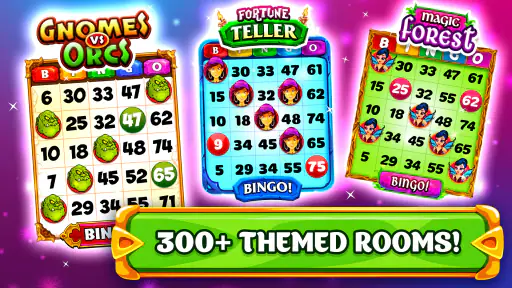
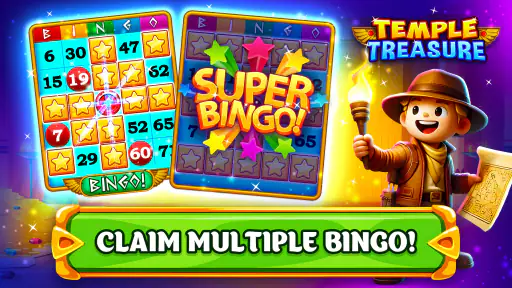
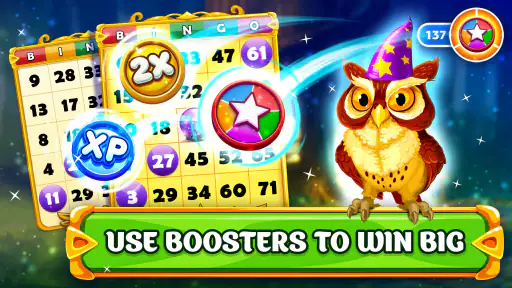
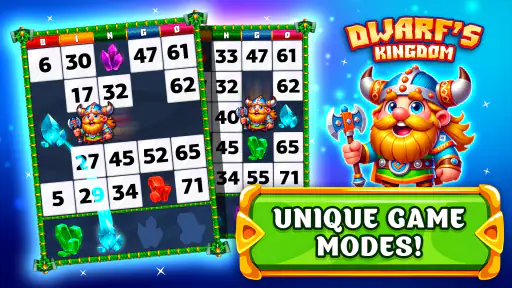
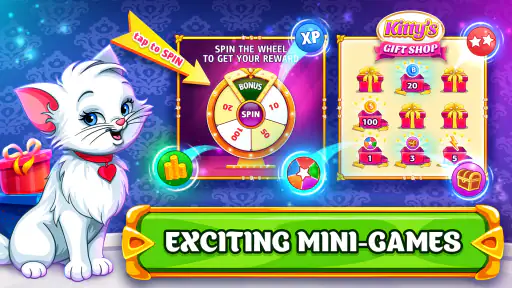
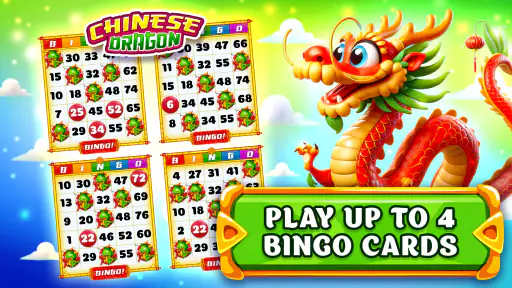
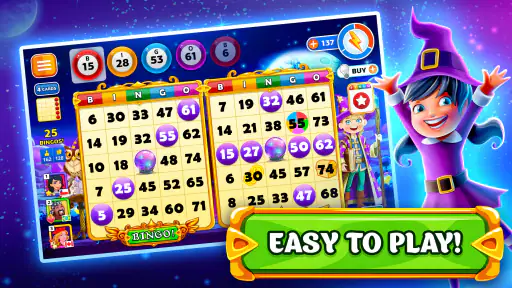
Analysis by Reviewed
I tried Wizard of Bingo as a casual board game and quickly understood its appeal: it turns familiar bingo into a more playful, fantasy-themed session that works well when I want something light rather than a demanding strategy game. It is free to start, made by Dynamic Games Ltd., and sits in the board-game category, but the “wizard” theme gives it a different mood from a plain digital bingo card.
My most useful impression is that it fits short, informal play. I can imagine opening it during a quiet break, passing time while waiting, or letting several people in the same household take turns on one device. It is not the kind of game I would choose when I want a deep campaign, a serious competitive board experience, or a completely distraction-free activity. Its strength is the easy rhythm of bingo combined with a more colorful game presentation.
How it feels in a shared household
A realistic use case is a family sharing a tablet or phone in the evening. One person can play for a few minutes, hand the device over, and let someone else have a turn. Because bingo is already familiar to many players, nobody needs a long explanation before getting started. That makes it more approachable than a strategy board game with a rulebook, several resources, and a lengthy tutorial.
At the same time, I would not treat it as a fully organized family activity without first agreeing on how the device will be used. The game is best approached as a casual entertainment option, not as a substitute for a physical bingo set where everyone can see the same board at once. On a shared phone, the screen naturally belongs to one player at a time, so the group needs to coordinate turns rather than expect simultaneous participation.
That small distinction matters. If your household wants a game that creates a shared conversation, this can work when everyone is comfortable watching and taking turns. If the goal is a fast multiplayer contest with clear player identities and a communal board, a dedicated local board game may be a better fit. Wizard of Bingo is more naturally suited to individual sessions that happen to be shared around the household.
Why the bingo format lowers the learning curve
The central advantage is recognition. Most people understand the basic idea of marking called numbers, so the fantasy presentation does not force the player to learn an entirely unfamiliar system. I found that useful when thinking about younger or less experienced players: the theme may attract attention, while the underlying bingo structure keeps the first session understandable.
That simplicity also makes it suitable for short attention spans. A player does not have to remember a large set of rules between sessions. The experience is easier to pick up than many board games that depend on planning several turns ahead. For a household, that means less time spent explaining and more time actually playing.
There is a trade-off, though. Familiar rules can become repetitive for players who want constant novelty or meaningful strategic decisions. Bingo is driven more by anticipation and luck than by careful long-term planning. The wizard theme adds personality, but it does not turn the game into a complex tactical board game. I would recommend it to someone who enjoys the suspense of waiting for useful numbers, not to someone looking for a game where every outcome depends on skill.
Setting expectations before sharing the device
Since the game is free to download, the initial barrier is low. That makes it easy to try on a personal device or a household tablet without committing to a purchase up front. However, free access and spending are not the same thing. The game includes in-app purchases ranging from $0.99 to $199.99 per item, so I would make the payment boundary clear before allowing a child or another family member to play on a device connected to a payment method.
This is not a criticism of the bingo format itself; it is a practical household precaution. I would decide who is allowed to make purchases, keep the device owner in charge of any transaction, and avoid handing over a phone with an unlocked payment flow. A simple agreement such as “play is fine, purchases require permission” prevents an enjoyable shared session from becoming an unexpected billing discussion.
For a shared tablet, I would also recommend using a separate time window for play rather than leaving the game open indefinitely. That helps keep the experience recreational and avoids the assumption that the device is always available. The game can be part of a routine—perhaps a short evening turn or a weekend break—without becoming the default activity whenever someone is bored.
One practical tip is to let each player decide in advance whether they are playing for a quick session or settling in for longer. That sounds obvious, but bingo-style games can encourage “one more round” thinking. In a household, agreeing on the stopping point before opening the game makes turn-taking easier and reduces arguments over who gets the device next.
Coordination, trust, and the age context
Who should control the account and device
Wizard of Bingo is marked for a Teen audience, which is important when deciding where it belongs in a shared household. I would not assume that an age label automatically answers every family’s question about suitability. Parents and guardians still need to consider the individual child, the way the device is configured, and whether the child understands that optional purchases may exist.
The cleanest arrangement is for the adult who owns the device or store account to remain responsible for installation and payment decisions. Other household members can play, but the account boundary should be clear: access to the game does not automatically mean access to the account’s purchasing ability. This is especially relevant when a child uses a parent’s phone or when several people share a tablet.
I also prefer keeping personal play habits separate when possible. If several people use the same device, progress or preferences may not feel private or consistent from one player to another. Rather than assuming that every household member will have a distinct profile or separate saved space, I would treat the device as a shared entertainment screen and agree on how turns are handled. That avoids disappointment if one player expects the game to preserve a personal routine.
Making turns fair without overcomplicating things
The simplest coordination method is a visible order: one person plays, then passes the device to the next person. This works better than letting the most enthusiastic player keep control. A household can use a timer, a fixed number of rounds, or a rotating order, depending on how competitive the group becomes.
Another useful approach is to separate “watching” from “playing.” Someone who is waiting can still comment or enjoy the theme, but the player holding the device remains responsible for the current decisions and pace. This keeps the session relaxed and prevents several people from tapping at once or arguing over what should happen next.
For younger players, I would sit with them during the first session rather than handing over the device and walking away. That gives an adult a chance to explain the difference between normal play and optional spending, observe whether the pace is comfortable, and decide whether the Teen rating suits that particular child. It is a more reliable approach than judging the game only by its colorful presentation.
Where the game fits among other board-game choices
Compared with physical bingo, this version is more convenient when the household does not want to prepare cards, markers, or a caller. There is less setup, and a phone is easier to carry than a box of components. The cost of trying it is also low because the game is free to start. The physical alternative remains stronger when several people want to sit around one table and share one visible playing area.
Compared with a traditional board-game app built around strategy, Wizard of Bingo asks less of the player’s memory and planning. That is a benefit during a tired evening or a short break, but it also means there is less room for a highly skilled player to control the result. If you enjoy optimizing moves, building an engine, or outthinking opponents, a strategy-focused board game will probably hold your attention longer.
Compared with other casual games, the bingo structure gives it a slower, more anticipatory pace. It is not necessarily the best choice for someone who wants constant action or rapid reactions. I see it as a middle ground between a simple pastime and a themed board experience: more characterful than plain number calling, but less demanding than a full strategy title.
What the rating and popularity suggest—and what they do not
The game has a 4.7 average from around 61,000 ratings, with over 1 million installs and roughly 12,000 written reviews. Those figures show that it has attracted a substantial audience and that many players respond positively to it. I would take that as a reason to try it, not as proof that every household will enjoy the same style of play.
Popularity is particularly easy to misread with casual games. A large audience may include people who only wanted a quick bingo session, players who enjoy the theme, and users who prefer a low-pressure game. Someone looking for competitive depth could still find the experience too dependent on luck, even if the overall rating is strong.
The game was released on August 28, 2016, and its current version is 20.10.200. It supports Android 7.1 and later, which makes it accessible on a range of older compatible devices. Before installing it on a household phone or tablet, I would still check that the device has enough free space and runs comfortably with other everyday apps, especially if it is an older model used by several people.
My household verdict after using it
I would recommend Wizard of Bingo to households that want an easy, themed bingo game for occasional solo play or orderly turn-taking. It is especially suitable for people who enjoy familiar rules, short sessions, and a little fantasy flavor without having to learn a complicated board system. The free starting point makes experimentation simple, while the Teen content rating and optional purchases mean an adult should remain involved in deciding who plays and how the device is used.
I would skip it if your priority is a fully shared tabletop experience, deep strategy, or a game where skill consistently matters more than chance. I would also avoid presenting it to a child as an unrestricted activity on an adult’s payment-enabled device. The right setup is not complicated, but it does require clear boundaries around turns, account responsibility, and spending.
The most effective way to enjoy it is to treat it as a compact household pastime rather than the centerpiece of a game night. Set a turn order, agree on a stopping point, keep purchases under the account owner’s control, and let the player holding the device take responsibility for the session. Those small habits address the main friction points without taking away from the relaxed appeal.
In my experience, the game succeeds because it keeps bingo approachable while giving it enough theme to feel less ordinary. Its limitations are equally clear: the format is luck-led, shared-device play needs coordination, and the Teen label deserves attention rather than being ignored. If that balance matches what you want, I think it is worth trying. For a casual bingo session with a household-friendly turn-taking routine, it is an enjoyable choice; for a serious board-game night, I would choose something more strategic and more deliberately multiplayer.
Pros
- Simple controls make it easy for beginners to start playing.
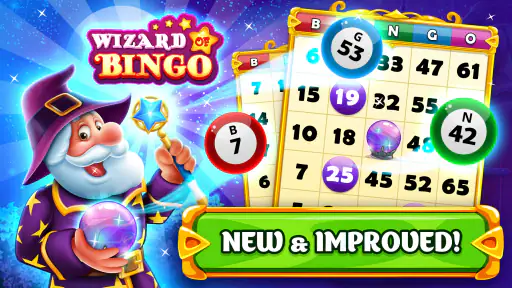
- Bright wizard-themed graphics give the game a distinctive visual style.
- Short bingo rounds work well for quick sessions.
- Frequent rewards can help maintain interest between sessions.
- The interface is generally clear and easy to navigate.
Cons
- Progress may feel slow without regular play or extra resources.
- Some features and rewards can depend heavily on chance.
- Ads may interrupt gameplay
- especially for free players.
- The fantasy theme may not appeal to traditional bingo fans.
- Online features may require a stable internet connection.