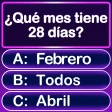
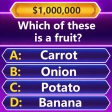
Who am I? Celeb Quiz Trivia
- 19.00
- 4.7
- Installs
- 10.00K
- Price
- Free

Screenshots

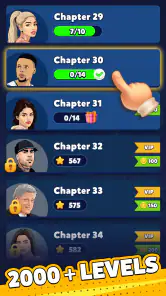
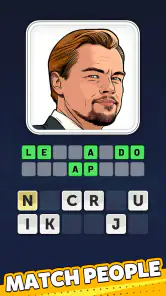
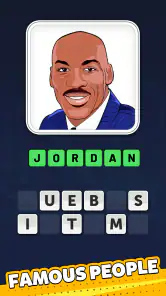
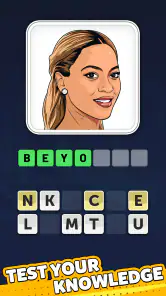

Analysis by Reviewed
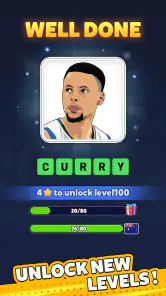
I approached Who am I? Celeb Quiz Trivia expecting a light character-guessing game, and that is exactly where it works best: as a quick mental break built around questions and recognition. The basic idea is easy to understand. You try to identify a character by asking or answering questions, then use what you know about famous people and fictional personalities to narrow down the possibilities. It is a trivia game rather than a deep strategy title, but it still rewards careful thinking instead of random tapping.
What makes it appealing is the low barrier to entry. I do not need a long tutorial or a large time commitment before getting into a round. The “Who am I?” premise is familiar enough for anyone to understand immediately, while the character-focused format gives the game a social quality that standard fact quizzes often lack. I can imagine playing it alone while waiting somewhere, passing a phone around with friends, or using it as a casual conversation starter.
How the current version feels to play
The game is published by hopes studio and sits in the trivia category. It is free to start, with optional in-app purchases ranging from $0.99 to $10.99 per item. That combination makes it easy to try without making an upfront commitment, although anyone who dislikes purchase prompts should pay attention to how the free experience is presented on their device.
The current release is version 1.2.0, and the game was released on March 7, 2025. Those details matter because this feels like a relatively young product rather than a long-established quiz platform with years of accumulated systems. I see that as both an opportunity and a limitation: the central idea is clear, but the overall experience will depend heavily on how consistently the developer expands and refines it.
At its best, the question format encourages me to think in categories. Instead of throwing out guesses immediately, I can consider whether the character is real or fictional, whether the person is associated with a particular field, or whether a recognizable clue points toward a familiar name. That makes each turn feel more satisfying than simply selecting an answer from a list.
The most useful habit is to begin with broad questions and only become specific after the possibilities have been reduced. Asking about a profession, type of character, or general area of fame is usually more efficient than jumping straight to a narrow guess. This is a small tactical difference, but it gives the game more texture and helps prevent a round from becoming a sequence of uninformed guesses.
A good fit for short sessions
I would use this game in short bursts rather than planning an extended evening around it. It suits the moments when I have a few spare minutes and want something more engaging than scrolling. The quick-question structure also makes it suitable for sharing with another person: one player can answer while the other tries to infer the identity, then they can switch roles.
A realistic everyday scenario would be a family gathering where people have different levels of gaming experience. Someone who rarely plays mobile games can understand the objective immediately, while more competitive players can focus on reducing the number of questions or improving their recognition skills. Because the subject is characters and celebrities, the conversation can continue even after a round ends.
That social usefulness is one of the game’s stronger qualities. Many trivia apps are designed around individual scores and fixed multiple-choice questions. Here, the identity puzzle creates room for discussion, disagreement, and hints. If a group enjoys guessing games, this is more naturally interactive than a conventional quiz screen.
What the rating and audience suggest
The game holds a 4.7 average from around 160 ratings, with roughly 20 written reviews, and it has passed 10 thousand installs. I would treat that response as encouraging rather than definitive. It shows that the concept has found an audience, but the relatively modest reach also means a new player should approach it as a focused niche game, not as a huge trivia community with endless activity.
Its Everyone age rating makes the concept broadly accessible. That does not mean every character or clue will appeal equally to every age group, of course. Recognition depends on personal interests, media habits, and cultural familiarity. A player who follows entertainment closely may move quickly, while someone who is less familiar with celebrity culture may find some rounds more dependent on hints or educated guesses.
This is also where the game differs from general knowledge alternatives. A broad quiz app can test geography, science, history, and language in one sitting. This title concentrates on identifying characters. That narrower focus is a strength when I want a themed guessing experience, but it is a weakness if I am looking for a complete knowledge workout.
How I approach a difficult round
My preferred method is to treat each answer as information rather than as a direct clue to the final name. If a question rules out an entire group, I mentally remove those possibilities before considering individual candidates. This prevents the common mistake of locking onto the first familiar person who comes to mind.
A second useful technique is to separate recognition from certainty. Sometimes I recognize the general type of character without knowing the exact identity. In that situation, I use the next question to test my assumption instead of spending a turn on a guess. That approach is especially helpful when several people share a profession, appearance, or area of popularity.
For group play, I would suggest agreeing on whether hints are allowed before starting. Without that small rule, one person may treat the game as a pure deduction challenge while another gives away the answer through conversation. Establishing the format first makes the result feel fairer and turns the game into either a relaxed party activity or a more competitive challenge, depending on what the group wants.
The strongest practical tip is to value information over speed. The game becomes more enjoyable when I use questions to shrink the field instead of treating every turn as a race to name someone. That mindset also makes wrong guesses less frustrating because they become part of the deduction process.
What version 1.2.0 means for players
Version 1.2.0 is the release I would evaluate as a new user, and it is also the clearest point of reference for existing players deciding whether to return. A version number by itself does not tell me how extensive an update is, so I would avoid assuming that it represents a major redesign. What I can say is that the game is being presented as an actively evolving product rather than a completely static release.
For someone already playing, the practical question is whether the current build feels stable and enjoyable enough to keep installed. If the central question-and-answer loop is what attracted you, the update does not change the basic identity of the product: it remains a character trivia puzzle designed for accessible play. Existing users who prefer a simple format may appreciate that continuity.
New players should also keep expectations realistic. A young trivia game may feel fresher and less overloaded than a mature platform, but it may not yet offer the breadth, polish, or variety that people associate with the biggest quiz apps. I would install it because the character-guessing idea interests me, not because I expect a massive catalog or a fully developed competitive ecosystem.
The free entry point is helpful for testing that distinction. I can see whether the available experience matches my interests before spending anything. If optional purchases appear, I would consider them only after deciding that I enjoy the core loop and understand what the purchase adds. Paying to continue with a game I do not actually enjoy is rarely worthwhile, especially in a category with many free alternatives.
There is also a device consideration. The minimum operating system is Android 7.0, which makes the game accessible to a wide range of Android users with older phones. That is useful for families or groups sharing devices, although compatibility alone does not guarantee identical performance on every handset. On an older phone, I would close background apps and check the experience during a normal round rather than judging it from the installation screen.
Where it stands against familiar alternatives
Compared with multiple-choice trivia, this game asks me to participate in the reasoning. A standard quiz usually gives me a question and several visible answers; here, the challenge comes from identifying the person or character through a sequence of clues. That feels more personal and conversational, but it can also be less predictable. Players who want clear right-or-wrong questions may prefer a conventional quiz.
Compared with word-guessing games, the subject matter is more dependent on cultural knowledge. Word games often provide letters, patterns, or vocabulary hints that anyone can manipulate. Character trivia relies more on recognition. That makes it exciting when I know the subject, but more difficult when the chosen character falls outside my interests.
Compared with party guessing games played without a phone, this app offers structure and a ready-made prompt system. I do not have to prepare a list of names or invent questions for every turn. The trade-off is that the experience is limited by the game’s own content and logic, whereas a human host can adapt instantly to the group.
For a player who wants a serious knowledge-training tool, I would choose something broader. For a player who wants a relaxed identity puzzle that can work alone or with friends, this is a more natural match. The distinction is important: the game’s value comes from its focused format, not from trying to replace every other trivia style.
Small frustrations and remaining gaps
The narrow theme can become repetitive if I play for too long in one sitting. Even a good guessing mechanic loses some impact when the same type of recognition challenge is repeated without a change of pace. I would manage that by treating the game as a short-session title and alternating it with another activity rather than forcing a long marathon.
Another possible friction point is uneven familiarity. A round can feel clever when the character is recognizable but challenging; it can feel arbitrary when I have no useful connection to the subject. This is not necessarily a flaw in the question system, but it affects how fair the game feels from one player to another. In a group, differences in age and interests may create a noticeable advantage for the person with the broadest entertainment knowledge.
The free-to-play structure deserves attention as well. Optional purchases between $0.99 and $10.99 per item are not automatically a problem, but I would prefer to understand their role before buying. Players who want a completely uninterrupted experience should be prepared to evaluate the purchase flow carefully and use device-level purchase protections when children may access the phone.
I would also not choose this app if my priority is a large, constantly changing trivia curriculum across many academic subjects. Its appeal is more specific. The best experience comes from enjoying the act of identifying people and characters, not from expecting lessons, detailed explanations, or a comprehensive examination of general knowledge.
Who should try it and who should skip it
I recommend giving it a chance if you enjoy celebrity quizzes, character recognition, deduction games, or casual party challenges. It is particularly suitable for people who want something that can be understood in moments and played without a long setup. Families and friends may find more value in it than solitary players who only care about personal score optimization.
I would be more cautious if you dislike guessing based on cultural references. If you prefer puzzles with objective clues, visible progress systems, or a broad mix of subjects, another trivia format will probably serve you better. The game’s focused identity is exactly what makes it approachable, but that same focus limits its variety.
For younger players, the Everyone rating makes the age positioning straightforward, but adults should still consider whether the character pool suits the child’s interests and knowledge. The game can encourage conversation and recall, yet it should be treated as entertainment rather than a substitute for structured learning.
What I would watch as the game develops
Because the product is still relatively early in its life, I would watch for improvements that increase variety without making the central loop complicated. More meaningful ways to handle unfamiliar characters, better pacing between rounds, and clearer value around optional purchases would all make a difference to long-term appeal.
I would also look for signs that returning players have reasons to come back. A character quiz needs freshness, whether through new material, improved question quality, or better ways to play with other people. I am not assuming that any particular feature is planned; these are simply the areas that will determine whether the current concept remains interesting after the novelty fades.
Existing users should judge future updates by how they affect the fundamentals: Are rounds still quick to start? Do questions help narrow the answer fairly? Does the game remain enjoyable without requiring a purchase? Those are more meaningful tests than a larger version number alone.
My current verdict is positive but measured. Who am I? Celeb Quiz Trivia has a clear personality, an accessible premise, and enough deduction in its question flow to feel more engaging than a basic answer-selection quiz. I like it most as a compact social game and a casual way to test recognition. I would not present it as a complete trivia platform, but if identifying famous characters sounds more fun than answering a long list of unrelated facts, this free game is worth trying. Its future success will depend on keeping that simple idea fresh while making the experience fair and comfortable for both new and returning players.
Pros
- Simple rules make it easy for anyone to start playing immediately.
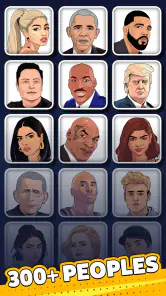
- Large celebrity-focused question pool offers familiar faces and topics.
- Short rounds work well for quick sessions during breaks or travel.
- Guessing clues can help players discover lesser-known celebrities.
- Suitable for casual group play at parties or family gatherings.
Cons
- Some clues may feel too easy for experienced trivia players.
- Celebrity coverage may favor mainstream English-speaking personalities.
- Repeated questions can reduce variety after extended play.
- Ads may interrupt gameplay or appear frequently between rounds.
- An internet connection may be needed for certain features or content.

- Category
- Trivia
- Version
- 1.2.0