Versle | Daily Bible Games
- 53.00
- 4.8
- Installs
- 10.00K
- Price
- Free

Screenshots
Analysis by Reviewed
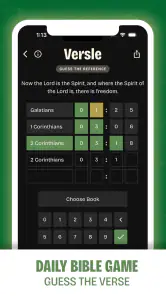
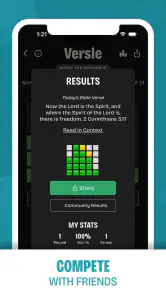
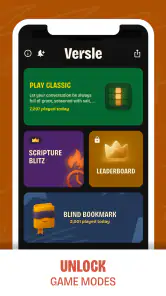
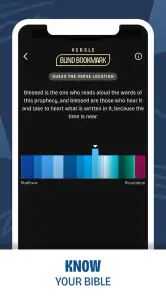
I approached Versle | Daily Bible Games as a small daily trivia game rather than a replacement for a full Bible study app. That distinction matters. Its appeal is the combination of a daily verse, crossword-style play, and Scripture memory practice, all wrapped in a short routine that can fit into a quiet morning or a few spare minutes. After spending time with it, I found the concept more thoughtful than a standard question-and-answer quiz, although its focused religious theme will naturally make it a poor match for some players.
The game comes from Toast - Apps & Software LLC and is free to install, with optional in-app purchases ranging from $3.99 to $24.99 per item. It is rated for Everyone, runs on Android 7.0 or later, and has reached over 10K installs. Its average rating is 4.8 from around 994 ratings, which suggests that the audience it reaches tends to respond well to the format. The current version is 2.18.1, and the release date was February 24, 2024.
How Versle feels during a normal daily session
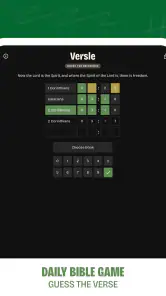
The first thing I noticed is that this is built around consistency rather than long play sessions. A conventional trivia game often pushes you toward another round through streaks, leaderboards, broad subject categories, or increasingly difficult question sets. Versle takes a quieter route. The daily verse gives the session a clear starting point, while the crossword and memory elements encourage me to look at the same material in more than one way.
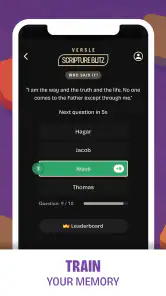
That structure makes the game easy to understand without making it feel like a generic Bible quiz. I am not simply tapping an answer and moving on. The crossword format asks me to connect clues and wording, while Scripture memory turns recognition into recall. Those are different mental tasks, and that difference gives the short session more substance than a row of disposable multiple-choice questions.
I would describe the pace as deliberate rather than frantic. That is a strength when I want a reflective break, but it is also the reason players looking for rapid-fire competition may lose interest. The game is better suited to a personal routine than to a noisy group challenge. I can imagine opening it with coffee, completing the available activities, and putting the phone away without feeling that I have started an endless gaming commitment.
In practical terms, I would not choose this for a long commute if my goal were to stay entertained for an hour. I would choose it for the small spaces around a day: waiting for an appointment, taking a short lunch break, or winding down before bed. The design idea works because the activities have a natural stopping point. That also helps the app feel less demanding on attention than many trivia alternatives.
What the three-part format adds
The daily verse is the anchor, but the other activities change how I engage with it. A crossword can make familiar words stand out in a new arrangement, while memory practice exposes whether I actually remember the passage or only recognize it when I see it. That distinction is one of the most useful aspects of the game. Recognition feels easy; recall is where the learning challenge begins.
My practical tip is to avoid rushing through the verse just to reach the puzzle. I get more from the session when I read it once for meaning, then return to the wording while solving. This creates a simple two-pass routine: first understand the text, then use the game to reinforce details. It is a small change, but it makes the app feel more like a learning aid and less like a themed time filler.
Another useful approach is to treat mistakes as prompts to revisit the verse rather than as failures. The crossword and memory elements are most valuable when they reveal a weak spot. If I miss a phrase, I can pause and read the passage again instead of immediately trying to protect a streak. That makes the experience more sustainable for people who care about retention rather than merely completing a daily check-in.
Speed during light and heavy use
For ordinary use, the app’s focused scope should work in its favor. It is not presenting itself as a large social platform, a video service, or a broad content library. The core idea is compact, so I expect a typical session to feel more immediate than an app that has to load many media-heavy sections. Still, the actual experience will depend on the phone, the Android version, and the surrounding connection conditions, so I would not treat the high rating as a guarantee of identical performance on every device.
The more demanding moment is not necessarily solving one puzzle; it is repeated use over several sessions. Someone who opens it briefly each day is using it in the way the concept naturally supports. Someone who repeatedly restarts activities, moves between sections, or keeps it open while switching to other apps may notice the usual differences between a newer phone and an older one. I would judge it as a lightweight daily game, but I would not promise that every transition will feel equally quick on every supported handset.
That distinction is important for older Android users. Android 7.0 support makes the game accessible to a wide range of devices, but compatibility does not mean identical responsiveness. A phone that handles simple puzzle interaction comfortably may still take longer when opening an app after it has been removed from memory. If the first launch is slow, I would try closing unused apps and reopening it before deciding that the game itself is unreliable.
I also prefer to keep expectations realistic about resource use. Nothing in the game’s premise suggests that it needs the sustained processing associated with a 3D action title or a video-heavy social app. Its likely workload is closer to a compact puzzle utility than an intensive game. That makes it a sensible candidate for short sessions on modest hardware, while leaving room for normal variation caused by storage pressure, background activity, or an aging battery.
Reliability and recovering from interruptions
A daily game lives or dies by routine. If I open it during a spare moment and an interruption breaks the session, I want to be able to return without feeling that the whole attempt has been wasted. Versle’s compact format is helpful here because a short activity is easier to resume than a long campaign. I can also choose to stop after one element instead of committing to a lengthy sequence.
My recovery advice is simple: if the app is interrupted, reopen it and check the current activity before repeating taps or trying to rush through the same answer. On any mobile game, repeated input during a delayed transition can create confusion, especially on an older device or a busy connection. A calm restart is usually better than assuming that every pause means progress has disappeared.
I would also avoid making the game the only place where I keep a personal memory goal. If a verse is especially meaningful, I would read it outside the app as well. That is not a criticism of Versle; it is a sensible way to separate the convenience of a game from the importance of the material. The app can prompt and reinforce practice, while a separate reading habit gives the content more context.
The rating of 4.8, based on around 994 ratings, is encouraging, and the 53 written reviews provide additional evidence that the experience has connected with users. Even so, ratings are a broad signal rather than a device-by-device performance test. I see them as support for the app’s general appeal, not proof that every player will have identical loading or recovery behavior.
Device fit, age rating, and purchase decisions
The Everyone content rating makes the game approachable for households where the subject matter is suitable for the family. That does not mean every child will find it equally engaging. The strongest audience is likely people who already enjoy Bible reading, devotional routines, word puzzles, or memory exercises. Younger players may need help with vocabulary or context, while adults may appreciate the calm structure more immediately.
Because the game is free to install, I can test the basic routine without making an upfront commitment. That is the right way to approach it. I would first see whether the daily verse, crossword, and Scripture memory format fits my habits, then decide whether optional purchases are worthwhile. The listed purchase range runs from $3.99 to $24.99 per item, so I would pay attention at the point of purchase and avoid assuming that every useful part requires spending.
This is also where Versle differs from a traditional Bible app. A reading app is usually the better choice when I want broad navigation, extended study, or a reference tool. A general crossword game is better when I want wordplay without a religious focus. A conventional trivia app is better when I want variety across science, history, entertainment, or current events. Versle wins only when its specific blend of faith content and puzzle practice is what I am looking for.
That trade-off is not a weakness in itself, but it does define the audience. If I am not interested in Scripture, I would skip the download even if I enjoy crosswords. If I want a serious study workflow, I would pair this with a dedicated reading or reference app rather than expecting one short daily game to cover everything. Its value comes from focus, not breadth.
Three ways to get more from the routine
First, I would use the game as a recall check instead of treating it as a score chase. After reading the verse, I would look away briefly and try to summarize its central idea before solving anything. Then I would notice which words the crossword makes me retrieve. This exposes the difference between remembering a message and remembering exact wording, which is a useful distinction for anyone practicing memorization.
Second, I would schedule it at a stable point in the day rather than opening it randomly whenever I feel bored. The app’s daily structure makes it suitable for a small anchor habit. A morning session can frame the day; an evening session can serve as a quiet review. The best time depends on the player, but consistency matters more than duration. A short routine that survives busy days is more useful than an ambitious session that happens only occasionally.
Third, I would use the crossword as a vocabulary signal. If a clue or phrase repeatedly slows me down, I would take that as a reason to examine the verse’s wording and surrounding meaning. This turns friction into a learning opportunity. It also prevents the common mistake of guessing until the puzzle is complete without understanding why an answer fits.
These approaches are more effective for me than simply tapping through the daily content as quickly as possible. They also clarify the app’s limits: it can support reflection and recall, but it cannot replace personal interpretation, a broader reading plan, or conversation with someone who can provide context.
Who should install it, and who should pass?
I would recommend Versle to a person who wants a gentle daily Bible-related activity and enjoys word puzzles. It is especially suitable for someone who finds a full study session intimidating but still wants a repeatable way to interact with Scripture. The short format can also work for families, provided an adult is ready to explain unfamiliar language rather than treating the game as a standalone lesson.
I would be more cautious recommending it to competitive trivia fans. The appeal here is not broad subject coverage or intense head-to-head pressure. Players who need constantly changing categories, elaborate progression, or long sessions may find the focused format too narrow. Likewise, anyone seeking a complete Bible reference library should look elsewhere or use Versle alongside one.
For people concerned about an older phone, the minimum Android requirement is 7.0, which gives the game a reasonable compatibility range. I would still leave some free storage, close demanding background apps, and keep the operating system in a stable condition. Those are ordinary precautions, but they matter more on devices that are already close to their limits. On a recent phone, the modest nature of the activities should make it a comfortable fit for casual use.
My performance verdict after weighing the trade-offs
Versle | Daily Bible Games succeeds because it keeps its purpose clear. The daily verse, crossword, and Scripture memory elements form a coherent loop instead of feeling like unrelated features placed together. I like that the experience can be completed in a small pocket of time, and I find the recall angle more meaningful than a standard quiz that disappears from memory as soon as the answer is selected.
Its performance profile should be understood as that of a focused, lightweight daily game, not an all-day entertainment platform. That makes it a sensible choice for modest devices and short sessions, while older or heavily loaded phones may still need a little patience when reopening or recovering from interruptions. The app’s strong average rating and growing install base support the idea that the format works for its intended audience, but they do not remove the need to judge it against personal expectations.
My recommendation is straightforward: try it if you want a calm Scripture-centered habit with puzzle and memory practice, but skip it if you want broad trivia, competitive intensity, or full study tools. Since the initial download is free, the most sensible test is to use it through several daily sessions, notice whether the routine feels natural, and only then consider any optional purchase. For the right player, it is a compact way to turn a few quiet minutes into deliberate practice rather than another burst of disposable screen time.
Pros
- Quick daily rounds make it easy to fit into a busy schedule.
- Bible-based puzzles offer a fun way to revisit familiar verses.
- Simple controls are accessible for casual players of all ages.
- Daily challenges can encourage a consistent Scripture-reading habit.
- A calm
- reflective format suits short moments of personal devotion.
Cons
- Limited daily content may feel repetitive for frequent players.
- Some answers can depend on a specific Bible translation.
- Players wanting extensive levels may find the overall scope small.
- A daily puzzle format offers little to do after the challenge is finished.
- Religious content makes the app unsuitable for users seeking general word games.

- Category
- Trivia
- Version
- 2.18.1